Category: Corporate Media

Professional corporate event photography and videography in Oahu, capturing conferences, product launches, and business events with polished media coverage.

  • What is memorial videography? Creating meaningful tributes

    What is memorial videography? Creating meaningful tributes


    TL;DR:

    • Memorial videography weaves photos, footage, music, and stories into lasting tributes.
    • Services range from full-event recordings to short highlight or slideshow montage videos.
    • Key focus is on content personalization, technical reliability, emotional tone, and careful editing.

    Losing someone you love is one of the hardest things a family goes through, and the question of how to honor that person’s life often feels overwhelming. Many families in Oahu aren’t sure what “memorial videography” actually means, whether it’s just someone recording the ceremony or something far more personal and lasting. The truth is, memorial videography goes well beyond pointing a camera at a service. It’s a form of storytelling that weaves together photos, footage, music, and memories into something families can hold onto for generations. This guide breaks down exactly what it includes, how it works, and what to look for when choosing the right team.

    Table of Contents

    Key Takeaways

    Point Details
    More than recording Memorial videography involves capturing the ceremony and creating meaningful tribute videos honoring your loved one’s life.
    Types of tributes Options range from live event coverage to custom highlight reels and slideshow montages with personal touches.
    Workflow matters The creation process requires careful planning, content collection, editing, and reviewing for a reliable and personal result.
    Quality essentials A great memorial video balances emotion, technical excellence, and file compatibility for seamless sharing and playback.
    Local expertise helps Working with Oahu specialists ensures respectful production, cultural understanding, and helpful service through a difficult time.

    What is memorial videography and why does it matter?

    At its core, memorial videography is the professional capture and often editing of memorial or funeral services, as well as the creation of tribute videos that honor a loved one’s life through audio-visual materials. That definition covers a wide range of work. On one end, it means a videographer attending the service and recording eulogies, music, and shared moments. On the other end, it means building a carefully crafted tribute video from family photos, home videos, meaningful songs, and handwritten captions.

    What separates memorial videography from general event videography is purpose. A wedding video captures joy and celebration. A memorial video captures legacy. It’s designed to comfort, to remind, and to preserve a person’s story in a way that words alone can’t fully achieve. Families who have experienced loss often describe these videos as one of the most treasured things they have.
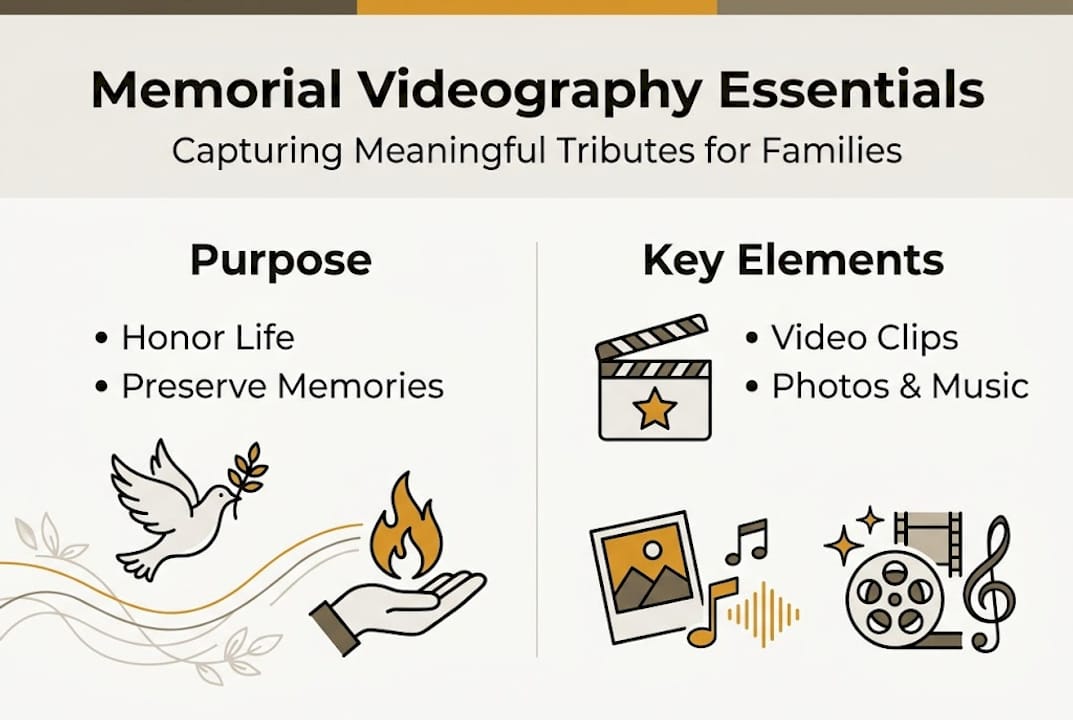
    Infographic on essentials of memorial videography

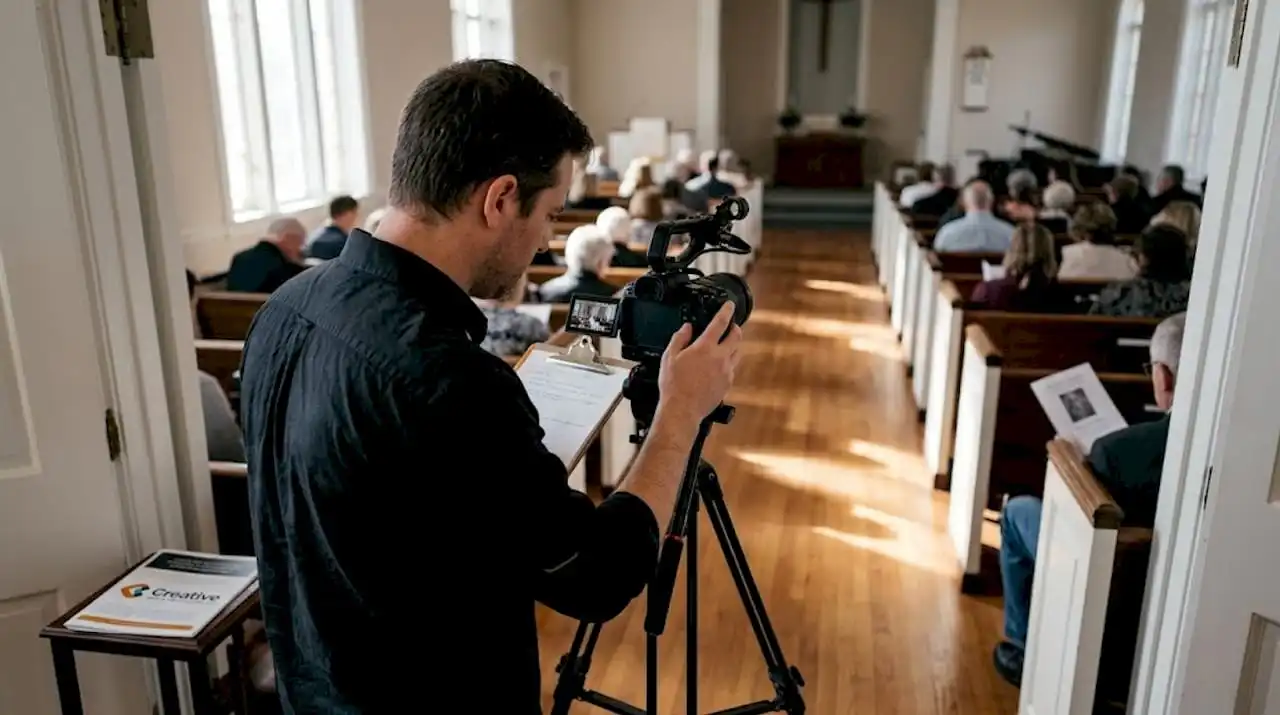
    Our funeral videography services are built around this understanding. We also offer funeral photography and work closely with families as a memorial service photographer to ensure every important moment is documented with care.

    A typical memorial video may include:

    • Family photos spanning childhood through recent years
    • Video clips from home recordings or shared family footage
    • Licensed or personal music that reflects the loved one’s personality
    • Captions and text overlays with names, dates, and meaningful quotes
    • Narration or voiceover to guide the viewer through the story
    • Edited highlight presentations designed for service playback or digital sharing

    The emotional weight of these videos is real. For relatives who couldn’t travel to Oahu for the service, a tribute video may be the only way they experience the memorial. For children who are too young to fully understand what’s happening, it becomes a gift they’ll appreciate decades later.

    “A well-made memorial video does more than document a service. It gives families a way to revisit their loved one’s life at their own pace, in their own time, and to share that story with people who never had the chance to meet them.”

    Types of memorial videos and service options

    Not every family needs the same thing, and that’s exactly why memorial coverage commonly goes beyond the ceremony itself. Many services include highlight videos and slideshow tribute montages built from family-supplied photos and clips. Understanding your options makes it much easier to choose what fits your situation.

    Here are the three core service types most families consider:

    1. Full-service live coverage records the entire ceremony, including eulogies, musical performances, and any readings or rituals. This is ideal for families who want a complete record of the service.
    2. Highlight or recap videos condense the ceremony into a shorter, emotionally focused edit, usually three to six minutes long. These are easier to share and watch repeatedly.
    3. Slideshow tribute montages are created entirely from family-supplied materials. No live filming is required. These are often played during the service itself and then shared digitally afterward.
    Service type Best use case Typical duration Delivery format
    Full live coverage Complete service record 60 to 120 minutes USB, digital download
    Highlight recap video Shareable emotional summary 3 to 6 minutes Digital, streaming link
    Slideshow tribute montage Service display and family sharing 4 to 8 minutes Digital, USB, DVD

    Many families choose a combination. For example, a slideshow plays during the service, and the full ceremony is recorded for family members who couldn’t attend. You can explore a detailed tributes planning guide to help you map out what makes sense for your situation.

    Common add-ons and upgrades include:

    • Custom voiceover narration recorded by a family member or professional
    • Licensed music selection with rights cleared for sharing
    • Extra editing rounds for longer or more complex stories
    • Multiple format exports for different devices and platforms

    All of these service options for Oahu can be discussed during your initial consultation so you’re never paying for something you don’t need.

    How memorial videos are created: The step-by-step process

    A quality memorial video doesn’t happen by accident. Organizing content into a clear story and then editing for pacing and playback reliability is the foundation of every well-made tribute. Here’s how the process typically unfolds:

    1. Initial consultation — The family meets with the videographer to discuss the loved one’s story, key moments, and the tone they want to set.
    2. Media gathering — Photos, video clips, and any existing recordings are collected from family members.
    3. Organizing by theme or chapter — Content is sorted into a narrative arc, often moving from early life through to recent years.
    4. Scanning and digitizing — Printed photos or old film are scanned and converted to digital files.
    5. Music selection — Songs are chosen to match the emotional tone of each section.
    6. Captions and narration — Text overlays, names, and dates are added. Voiceover is recorded if included.
    7. Editing and pacing — The videographer assembles the full video, adjusting timing and transitions for emotional flow.
    8. Quality review — The family reviews a draft and requests any changes.
    9. Final delivery — The finished video is exported in agreed formats and delivered digitally or on physical media.
    Step Who handles it Typical timeframe
    Media gathering Family 1 to 3 days
    Organizing and digitizing Videographer 1 to 2 days
    Editing and music Videographer 2 to 4 days
    Family review Family 1 day
    Final export and delivery Videographer Same day

    Collaboration between the family and the videographer is what makes the difference between a generic video and one that truly reflects a person’s life. You know the stories. We know how to tell them visually. When you’re planning a tribute video, the more detail you can share early, the better the result.
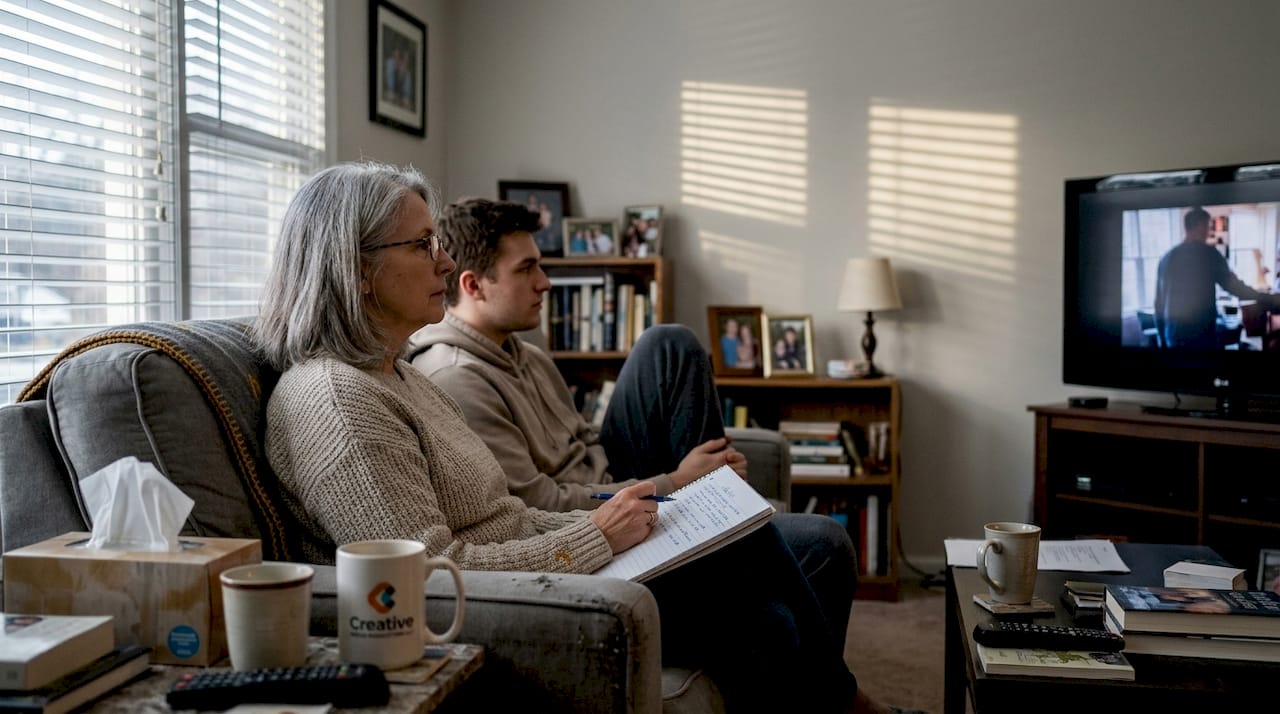
    Family reviewing memorial video draft together

    Pro Tip: Always test the final video on the exact screen and speakers that will be used at the service. A file that plays perfectly on a laptop may behave differently on a venue’s AV system.

    What makes a quality memorial video? Expert advice and common pitfalls

    There’s a real difference between a video that plays at a service and one that moves people to tears in the best possible way. The playback reliability of the final file matters enormously. Families are specifically advised to test the final file on the exact screen and speakers used at the service and to export in a reliable format to prevent issues that only appear at the worst possible moment.

    Beyond technical reliability, quality comes down to these must-haves:

    • Balanced audio — Music should never overpower spoken words or narration
    • Clear, proofread captions — Spelling errors in someone’s name or date are deeply upsetting
    • Appropriate pacing — Not too fast to absorb, not so slow it loses attention
    • Tasteful transitions — Simple fades work better than flashy effects at a memorial
    • Consistent tone — The emotional feel should match the person being honored

    And here are the most common pitfalls to avoid:

    • Rushed edits that skip quality checks
    • Poor file compatibility with venue equipment
    • Unproofed captions with errors in names or dates
    • Impersonal style that could apply to anyone
    • Overly long videos that lose the audience’s attention

    Working with a team that understands the videography steps involved in professional production makes all of these risks much smaller. There are also clear reasons using a professional matters when the stakes are this high and there’s no opportunity for a second take.

    Pro Tip: Ask your videographer for a draft version at least two days before the service. Review it with one or two trusted family members who knew the loved one well. Fresh eyes catch things that tired ones miss.

    Our perspective: What families should truly prioritize with memorial videography

    After working with families across Oahu for over 15 years, we’ve noticed something consistent. The videos that matter most are rarely the ones with the highest production budgets. They’re the ones where the family took the time to share real stories, specific memories, and genuine details about who their loved one was.

    High-definition footage is easy to achieve. Capturing personality is not. A video that includes a clip of someone laughing at their own jokes, or a photo from a fishing trip in Kailua, will always land harder than a polished montage of generic posed portraits.

    The biggest mistake families make is focusing entirely on technical specs and not enough on content. Our advice is to get personal with tributes from the very first conversation. Bring the messy, imperfect photos. Share the funny stories. Tell us what made your loved one them, not just who they were on paper.

    The families who do this walk away with something they’ll return to for the rest of their lives.

    Explore memorial and event videography with Oahu experts

    If you’re in the early stages of planning a memorial service and wondering where to start with video, you don’t have to figure it out alone. Our team has guided hundreds of Oahu families through this process with care, professionalism, and a genuine commitment to honoring each person’s story.
    https://creativemediaprod.com

    We understand both the technical and emotional sides of this work. Whether you need a full ceremony recording, a slideshow tribute, or a combination of both, we’re here to help you make something lasting. You can learn more about our videography process for events, explore event photography types available for memorials, or connect directly with our Oahu videography team to talk through what you need.

    Frequently asked questions

    What details should families prepare for a memorial video?

    Families should gather key photos, video clips, favorite songs, and notes for captions or narration. Collecting and organizing content early in the process makes the entire production smoother and more personal.

    Can memorial tribute videos be shared online or sent to distant relatives?

    Yes, most tribute videos are delivered digitally and can be easily shared with loved ones near and far. A 4 to 6 minute tribute is typically provided as a digital file ready for sharing via email or streaming link.

    How long does it take to complete a professional memorial video?

    Most tribute and highlight videos are completed within several days to a week. Custom production workflows that include narration, digitizing, or extra editing rounds may take a few days longer depending on content volume.

    Is live recording of the ceremony included in every memorial videography service?

    Not always. Some providers specialize in created montage tributes rather than live coverage, while others offer both. Many families choose a slideshow and highlight video built from family materials rather than a full ceremony recording.
  • When Should Wedding Video Start?

    When Should Wedding Video Start?

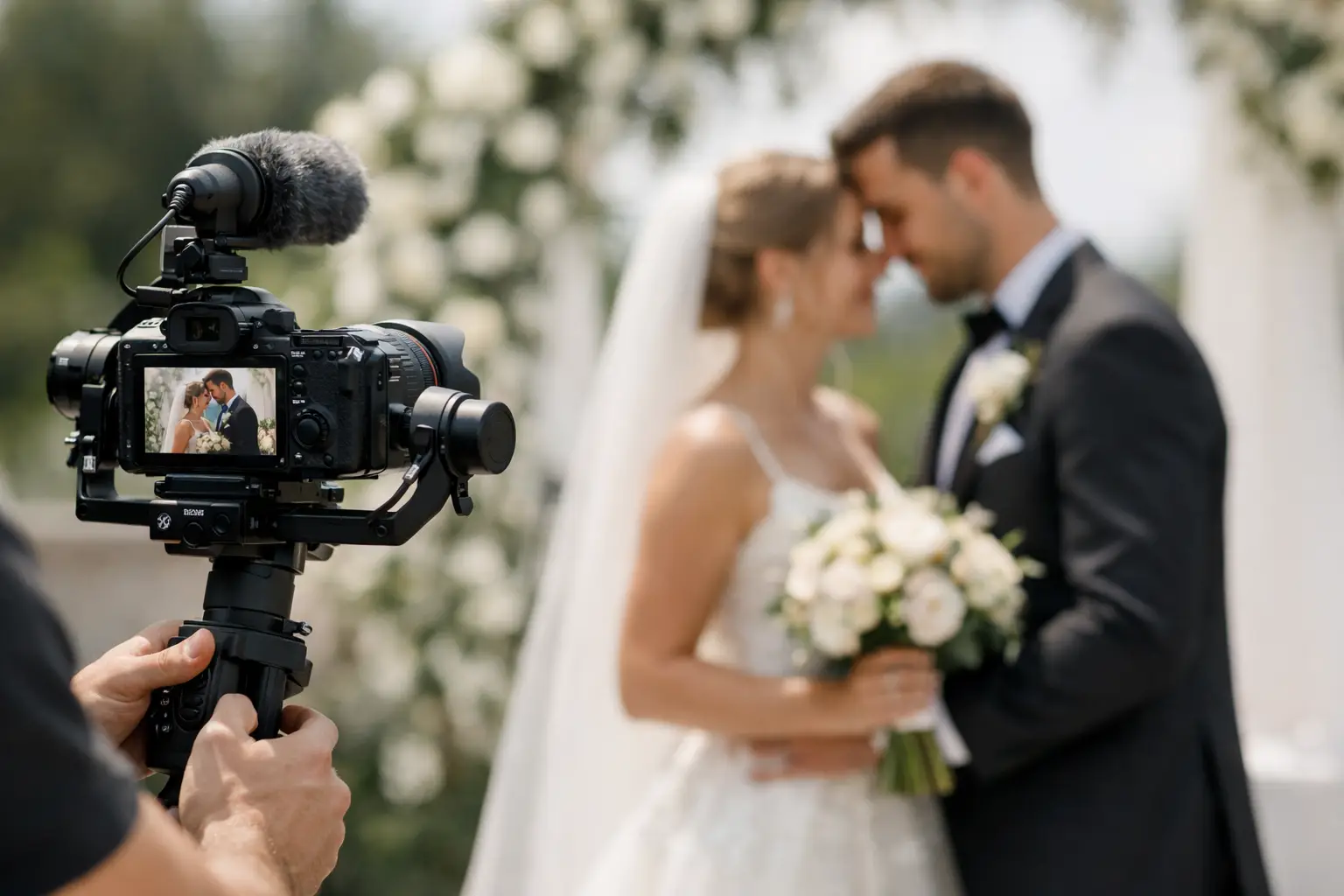
    A lot of couples ask this after they book a venue and timeline starts getting real – when should wedding video start? The short answer is usually earlier than you think. If you want a film that feels complete, natural, and cinematic, video should often begin during getting ready, not right before the ceremony.

    That said, the right start time depends on the kind of story you want captured. Some couples care most about vows and major events. Others want the full emotional arc of the day – the nerves, the laughter in the bridal suite, the quiet moments before guests arrive, and the reactions that happen when no one is trying to pose. The best coverage start time is the one that matches your priorities, not a generic template.

    When should wedding video start for most weddings?

    For most weddings, videography should start 2.5 to 4 hours before the ceremony. That window gives enough room to capture meaningful prep footage without rushing and to transition smoothly into first looks, detail shots, guest arrivals, and the ceremony itself.

    If hair and makeup are still in full swing when the video team arrives, that is usually not a problem. In fact, some of the most natural footage comes from that part of the day. It shows movement, anticipation, and the atmosphere in the room. A polished wedding film is not built only from the big milestones. It is built from context.

    Starting too late is one of the most common regrets couples have. If coverage begins 30 minutes before the ceremony, the final film may still look beautiful, but it can feel compressed. You lose the build-up. You also lose flexibility if the schedule shifts, which it often does.

    The real answer depends on what you want captured

    There is no single start time that fits every wedding. A beachfront ceremony on Oahu with minimal prep needs a different approach than a large resort wedding with separate locations, multiple outfits, and a formal first look.

    If your top priority is simply documenting the ceremony and reception events, a later start time can work. If your priority is a story-driven film with emotional depth, then earlier coverage is worth it. That is where video and photography planning matter. A professional team will help you decide what is essential, what is optional, and where you can save time without losing the heart of the day.

    Here is how that usually breaks down.

    Start with getting ready if you want a complete story

    Getting ready coverage is often the best starting point because it captures the emotional opening of the day. This is where letters are read, family members step in to help, friends react to the dress, and small details finally come together.

    It is also where your videographer can film the dress, shoes, rings, invitation suite, lei, jewelry, and other personal details while the room is still relatively calm. These shots do more than fill space. They help create a polished edit and connect the visuals of your day in a way that feels intentional.

    For couples who want a cinematic film, this is usually the ideal place to begin.

    Start before the first look if you are skipping prep footage

    If you do not care about hair, makeup, or suite coverage, the next best start time is before the first look. This still gives space to capture anticipation, reactions, and portraits before the ceremony.

    This option can be a strong middle ground. You get meaningful footage before the formal events begin, but you do not need as many hours of coverage. For couples balancing budget and priorities, this is often a smart choice.

    Start before the ceremony only if your goals are very focused

    If you are keeping coverage lean, video can start 30 to 60 minutes before the ceremony. But this works best when expectations are clear. In that case, the film will focus more on the ceremony, cocktail hour, key reception moments, and less on the full narrative of the day.

    There is nothing wrong with that approach. The trade-off is simply that the final film will feel more event-based than story-driven.

    What happens if wedding video starts too late?

    When couples ask when should wedding video start, they are often trying to avoid paying for hours they may not need. That makes sense. But starting too late can cost more in missed moments than it saves in coverage.

    The first issue is stress. If your videographer arrives right as the day becomes hectic, there is less room to create clean audio setups, film details, coordinate with your photographer, or adapt if transportation runs behind. A rushed start can affect the quality of both the footage and the experience.

    The second issue is storytelling. Wedding films feel more powerful when they show progression. Seeing you already at the ceremony site in full event mode is very different from seeing how the day began. Even a short highlight film benefits from those opening scenes.

    The third issue is missing moments you did not know would matter. Parents helping with final touches. Your wedding party joking around. A private breath before walking down the aisle. These are not always on the timeline, but they are often the moments couples replay the most.

    How much prep time should videographers have?

    A reliable rule is to have your video team arrive when key visual moments are about to begin, not after they are underway. If you want getting ready captured, the videographer should usually arrive when hair and makeup are close to wrapping for one partner, or when detail styling can begin.

    That often means around 60 to 90 minutes before you get dressed. It gives enough time for detail shots, candid footage, and staged elements that still feel natural, like putting on jewelry or buttoning a jacket once the room is ready.

    For larger weddings or separate prep locations, more time may be needed. Travel between locations, parking, and setup all affect timing. On Oahu, this matters even more if your day includes multiple stops or traffic-sensitive areas. Building in margin is part of premium service, and it helps the day feel calm instead of compressed.

    When should wedding video start if you have a first look?

    If you are doing a first look, video should start well before it. Ideally, coverage begins at least 90 minutes to 2.5 hours before the first look, depending on whether you want prep footage.

    The first look is one of the most emotional parts of the day, and it should not feel rushed. Your team needs time to set up, position discreetly, and coordinate with the photographer so both can work smoothly without getting in each other’s frame.

    If the videographer walks in minutes before the first look, you may still get the moment, but not with the same level of polish, audio quality, or visual variety.

    Reception timing matters too

    Start time is only half the equation. Couples sometimes book an early start but underestimate how late coverage should go. If you care about toasts, dances, cake cutting, or an energetic dance floor, your end time needs just as much planning as your beginning.

    A wedding film feels balanced when the opening and closing both have intention. If your coverage starts early and ends before the reception settles in, the story can feel unfinished. Good planning protects both ends of the day.

    The best way to choose your start time

    The smartest question is not only when should wedding video start. It is what do you want your film to feel like when you watch it years from now?

    If you want a clean record of the ceremony and major reception events, a shorter coverage window may be enough. If you want a film that captures personality, atmosphere, and emotion from the inside out, start earlier.

    A trusted, professional team will not push hours you do not need. They will help you build coverage around your actual timeline, your locations, and the moments that matter most to you. That is how you get a final film that feels intentional instead of pieced together.

    At Creative Media Production LLC, that planning process is part of the service. The goal is not just to show up and film. It is to create dependable, story-driven coverage that reflects the day with polish, care, and fast turnaround.

    If you are deciding where to begin, err on the side of giving your video team a little more room. A wedding day moves quickly. The right start time gives your memories space to breathe.

  • 5 unique photobooth experiences for Oahu events 2026

    5 unique photobooth experiences for Oahu events 2026


    TL;DR:

    • Choosing the right photobooth depends on venue size, guest profile, and event flow.
    • Enclosed booths offer privacy and nostalgic charm, ideal for weddings.
    • Open-air and high-tech booths generate social energy and visual impact for larger or modern events.

    Planning an event on Oahu means competing with stunning sunsets, ocean views, and natural beauty that guests already expect. The real challenge is finding entertainment that pulls people away from their phones long enough to make a shared memory. Photobooths have quietly become the secret ingredient that top event planners reach for first. They give guests something to do, something to keep, and something to post. But not every booth fits every event. With so many options now available across Honolulu, Waikiki, and Kailua, choosing the wrong one can leave you with wasted floor space and underwhelmed guests.

    Table of Contents

    Key Takeaways

    Point Details
    Photobooth selection matters Choosing the right type elevates event fun and creates memorable keepsakes.
    Know your options Enclosed, open-air, digital, mirror, and 360-degree booths each offer unique benefits.
    Fit experience to event Consider your venue, guest list, and theme to pick the best booth style.
    Technology adds wow-factor High-tech booths with instant sharing and video features impress modern guests.

    How to choose the right photobooth experience for your event

    The best photobooth for your event is the one your guests actually use. That sounds simple, but it means thinking through a few real factors before you book anything.

    Start with your venue. Oahu venues range from beachfront open lawns to intimate hotel ballrooms, and the space you have shapes everything. A 360° booth needs a footprint of at least 10 by 10 feet. An enclosed classic booth needs height clearance plus a line queue area. If you are working with a tight setup, a compact digital station or open-air backdrop might serve you better.

    Next, think about your guest profile. A multigenerational family reunion calls for something intuitive and familiar. A corporate launch party might want branded output and instant social sharing. A wedding of 200 guests needs throughput, meaning the booth must serve guests quickly so no one stands in line for 20 minutes.

    Here are the key factors to weigh before you decide:

    • Venue size and layout (indoor vs. outdoor, square footage available)
    • Guest count and expected booth traffic flow
    • Event theme (tropical, modern, formal, casual)
    • Output preference (printed strips, digital GIFs, video clips, branded overlays)
    • Budget range and what is included in the rental package
    • Sharing options (email, SMS, or social media upload)

    One thing that often gets overlooked is what photobooth services offer in terms of personalization. Custom overlays, props, and attendant support all affect the guest experience. For venue-specific logistics, setting up photobooths in Oahu venues requires extra planning around power access, lighting conditions, and foot traffic patterns.

    Pro Tip: Always confirm whether the rental includes instant digital sharing alongside prints. Guests love walking away with both a physical strip and a shareable file they can post the same night.

    Classic enclosed booths: Traditional charm with a private twist

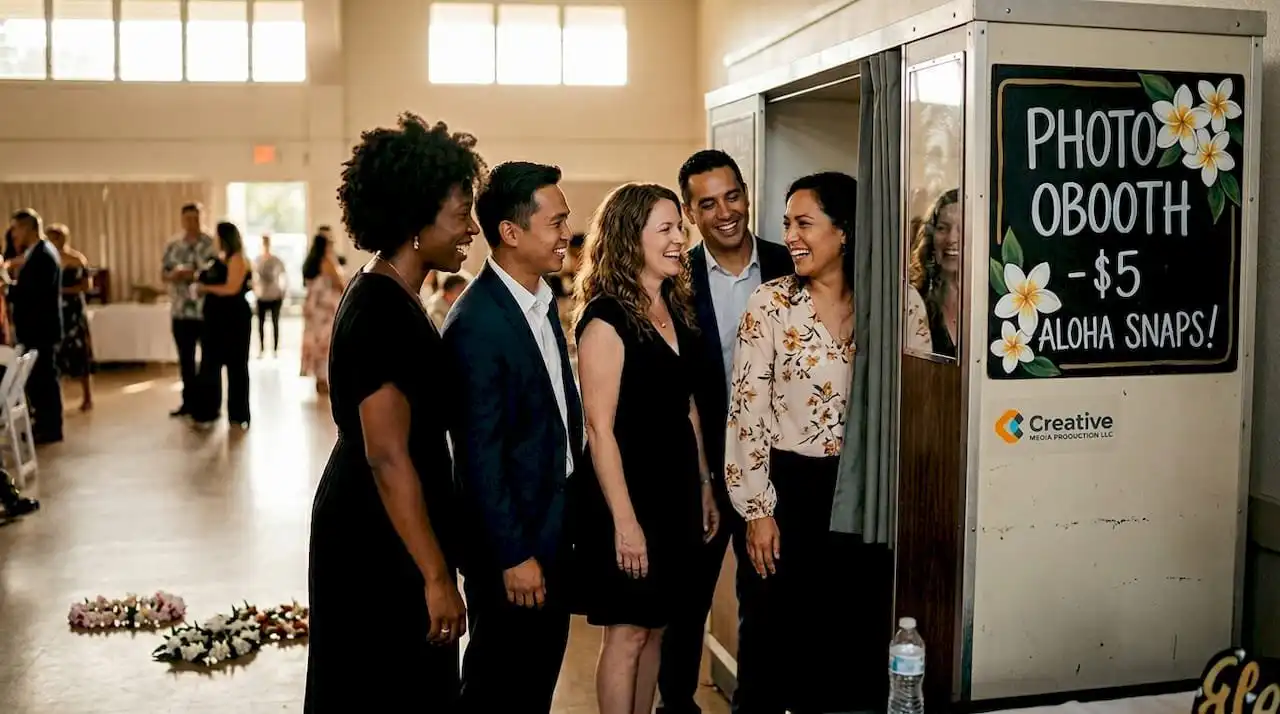
    There is something genuinely special about stepping behind a curtain. Classic enclosed photobooths tap into that nostalgic pull, and for weddings in particular, the reaction from guests is always warm.

    These booths typically feature a small enclosed chamber with a bench or standing area, a camera system, and a direct print output. Guests step in, pull the curtain, and have a moment that feels genuinely private. That privacy changes behavior. People relax, laugh harder, and strike poses they would never attempt in front of a crowd.

    Key strengths of enclosed booths include:

    • Privacy boosts candid expression, giving guests permission to be silly or tender
    • Retro aesthetic fits formal and classic wedding themes beautifully
    • Printed strips come out in seconds, doubling as a keepsake and a guest book contribution
    • Low noise footprint, making them ideal for seated dinner receptions

    The main limitation is space. Enclosed booth setup tips recommend at least 6 by 8 feet of floor space plus a small queue area. They also create less visual spectacle from across the room compared to an open-air setup.

    Enclosed booths grant privacy, encouraging candid expressions and fitting traditional wedding themes naturally. That combination is hard to replicate with any other booth type.

    Pro Tip: Dress the exterior of the booth with fresh tropical flowers, banana leaf prints, or custom signage in Hawaiian fonts. It transforms a standard rental into a décor element that photographs beautifully from across the room.

    Open-air photobooths: Social, stylish, and versatile

    If you want guests mingling, laughing together, and pulling strangers into the frame, an open-air photobooth is built for that energy. There are no walls, no curtain, and no limit on how many people pile in for one shot.

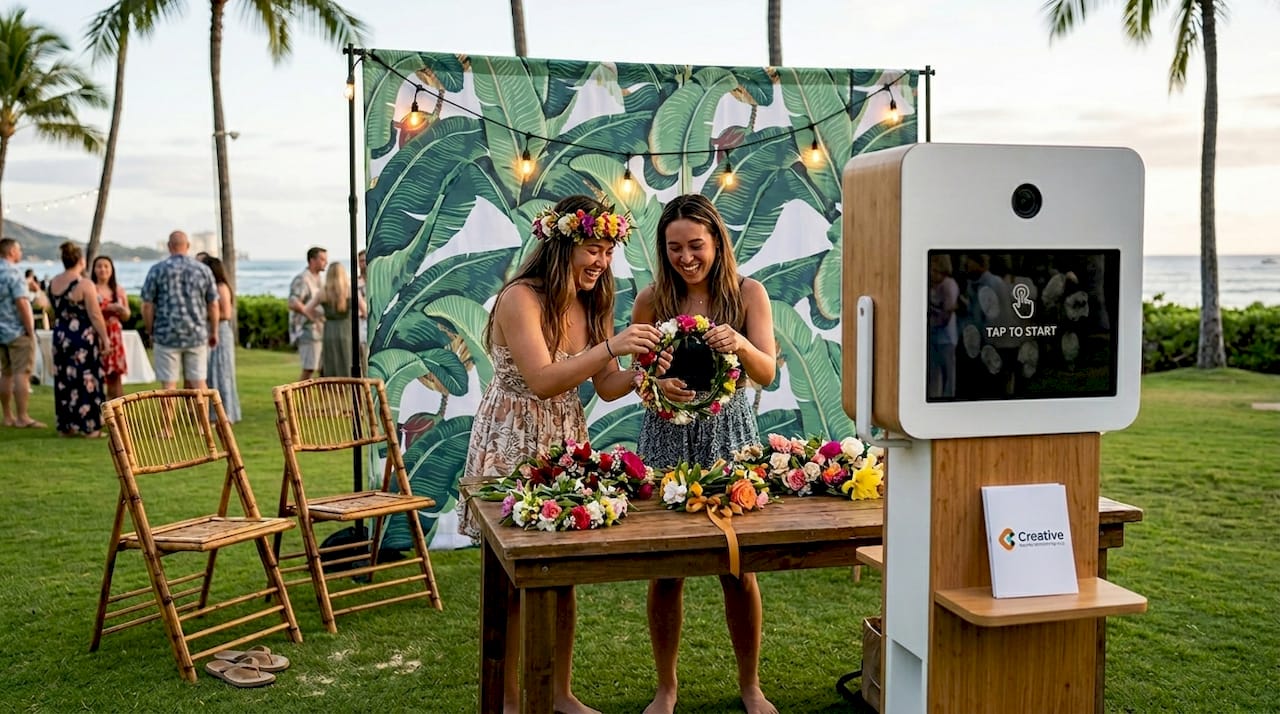
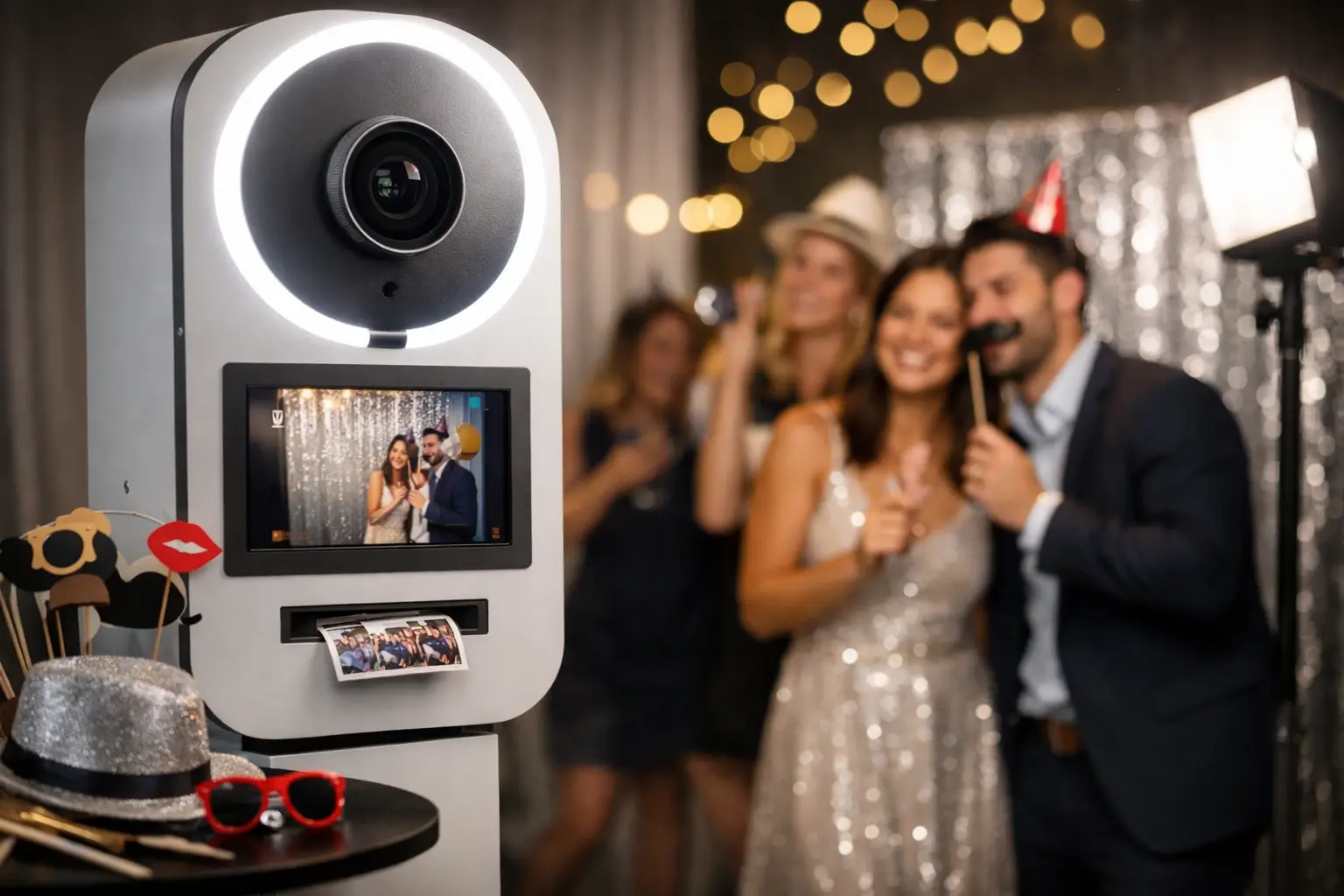
    Open-air photobooth setup at Oahu outdoor event

    Open-air setups use a backdrop (fabric, floral, neon, or LED-lit), a camera on a stand or mounted arm, and a touchscreen or remote trigger. Guests can see the live preview on a monitor, adjust their pose, and get the shot in seconds. The result feeds directly to a printer or a digital delivery system.

    Open-air booth benefits extend beyond the photos themselves. Because the setup is visible to the whole room, it naturally draws a crowd and generates energy throughout the event.

    Here is what makes them stand out:

    • Groups of any size can participate without squeezing into a tight space
    • Backdrop customization is nearly unlimited, from custom printed vinyl to fresh floral walls
    • Works indoors and outdoors, which matters for Oahu events where the setting itself is part of the story
    • Modern, visual appeal photographs well on social media

    Open-air booths encourage group shots and are highly customizable for themed celebrations, making them the most flexible choice across different event styles. For open-air booth setup outdoors on Oahu, always account for wind, direct sunlight, and power source proximity.

    The one trade-off is visibility. Since every pose happens in front of the whole room, some guests feel self-conscious. That said, most people warm up after watching others go first.

    Digital, mirror, and 360° photobooths: High-tech options for modern events

    These three booth types share one quality: they feel like an experience, not just a photo stop. Guests talk about them after the event. They share the content immediately. And for couples and planners who want a wow moment built into the program, they deliver.

    Digital-only booths capture GIFs, boomerangs, and short video clips. They skip the print entirely and focus on instant digital delivery via email or SMS. They are compact, easy to set up, and allow rapid theme customization with branded overlays.

    Mirror booths use a large touchscreen mirror interface where guests interact with animated prompts, sign their names on screen, and watch their photo come to life before printing. The mirror itself becomes a décor statement.

    360° booths place guests on a platform while a camera arm rotates around them in slow motion. The output is a dramatic slow-motion video clip, shareable within minutes. These are taking over social feeds for a reason.

    Here is a quick comparison of tech features:

    Booth type Interactivity Output format Social sharing Space needed
    Digital only Medium GIF, boomerang, photo Instant via SMS/email Small
    Mirror booth High Printed photo, digital Email or print Medium
    360° video Very high Slow-motion video clip Instant upload Large

    Interactive booths like 360°, mirror, and instant-share are trending for Oahu events in 2026, particularly for weddings and upscale corporate gatherings. Explore digital and print options to understand which output format fits your guest experience goals.

    Pro Tip: Digital booths are the easiest to relocate mid-event if the original spot is not working. Their compact footprint makes last-minute repositioning stress-free.

    Comparison chart: Which photobooth experience fits your celebration?

    Still weighing your options? This side-by-side view maps each booth type to real event scenarios so you can land on the right call faster.

    Different photobooth experiences suit various event goals, from formal weddings to energetic corporate parties, and matching the booth to the event type makes a visible difference in guest engagement.

    Booth type Best for Guest capacity per session Output Budget level
    Classic enclosed Intimate weddings, anniversaries 2 to 4 guests Printed strips Moderate
    Open-air Large weddings, birthdays, luaus 4 to 10+ guests Prints and digital Moderate
    Mirror booth Upscale receptions, sweet 16s 2 to 6 guests Printed and digital Higher
    360° video Corporate events, trendy weddings 1 to 4 guests Digital video Premium
    Digital only Outdoor events, casual gatherings Any size Digital only Lower

    Use this as your quick-reference during final planning. For the most thorough overview of layout requirements and timeline logistics, the complete booth setup guide walks through every scenario in detail.

    Pairing the right booth type to your venue size, guest profile, and memory-making goals is not guesswork. It is a decision you make once, and it shapes how guests remember the entire event.

    Our honest take on photobooth decisions

    After years of working events across Oahu, from intimate beachside ceremonies in Kailua to large corporate galas in Waikiki hotel ballrooms, we have noticed something that rarely gets said directly: most couples and planners over-prioritize novelty and under-prioritize flow.

    The 360° booth looks spectacular in the videos. But if your venue has 150 guests and one hour of cocktail time, a slow-rotation platform that serves four people at a time will leave most guests standing around watching instead of participating. The energy peaks early and fades.

    Conversely, a well-placed open-air booth with a tropical floral backdrop and an enthusiastic attendant will run at full speed for three hours and leave every table with a printed memory to take home. Less flashy, more effective.

    The uncomfortable truth is that the right booth is rarely the most expensive one. It is the one sized correctly for your guest count, positioned where natural foot traffic flows, and staffed by someone who actually draws people in. Technology is a multiplier. It amplifies a good setup and cannot rescue a poor one.

    Our advice: choose the booth that fits the rhythm of your event, not just the aesthetic of your inspiration board.

    Ready to find your perfect photobooth for your Oahu event?

    Choosing the right photobooth is one of the highest-impact decisions you will make for guest experience. At Creative Media Production, we have spent over 15 years setting up photobooth experiences across Honolulu, Waikiki, Kailua, and surrounding areas. We know which setups thrive in beachfront wind, which booths pack the most punch in compact hotel suites, and how to match your vision to the right equipment.

    https://creativemediaprod.com

    Whether you are planning an intimate wedding reception or a large birthday celebration, our team will help you select, customize, and execute a photobooth experience your guests will genuinely remember. Reach out through creativemediaprod.com to discuss your event date, venue, and vision. We keep our calendar open for consultations and love helping Oahu couples and planners get this decision right.

    Frequently asked questions

    What is the difference between open-air and enclosed photobooths?

    Open-air booths allow for creative group interaction with visible backdrops, while enclosed booths feel more intimate and encourage candid, private moments that guests tend to treasure.

    Are digital photobooths suitable for outdoor Oahu events?

    Digital booths are popular for Oahu outdoor events and allow instant social sharing, but always confirm your rental includes weather-protective housing and a backup power source for outdoor setups.

    Do mirror or 360-degree photobooths offer printed photos?

    Mirror booths usually include instant prints as part of the experience, while 360° booths focus primarily on shareable slow-motion video clips delivered digitally.

    How early should I book a photobooth for my Oahu wedding or event?

    High-demand photobooth services recommend booking at least 3 to 6 months in advance, particularly for peak wedding season dates and specialty booth types like 360° or mirror setups.

  • How to Plan Corporate Event Photography

    How to Plan Corporate Event Photography

    A corporate event can look polished in person and still fall flat afterward if the photography was treated like an afterthought. The strongest event images do more than prove the event happened. They show energy, leadership, brand presence, guest engagement, and the moments your team will actually want to share. If you are figuring out how to plan corporate event photography, the goal is simple: make sure the final gallery supports both the live experience and the business purpose behind it.

    That starts well before the first camera comes out. Good planning reduces missed moments, keeps the event running smoothly, and gives your photographer the clarity needed to work efficiently under real event conditions.

    Start with the reason the Event is being Photographed

    Not every corporate event needs the same kind of coverage. A leadership summit, product launch, networking mixer, awards dinner, and holiday party all have different priorities. Before you talk about lenses, timelines, or shot counts, define what the images need to do.

    Sometimes the main priority is marketing. Your team may need clean, high-quality photos for social media, recruiting, press use, internal communications, or next year’s event promotion. In other cases, documentation matters more. You may need a reliable record of speakers, sponsor signage, VIP attendance, and audience turnout. Many events need both, but one usually matters more.

    That distinction changes how coverage should be planned. If the gallery is meant to support brand promotion, you will want more candid interaction, environmental details, and polished crowd scenes. If documentation is the priority, the photographer needs a clear list of required people, moments, and branded assets.

    How to plan corporate event photography around business goals

    Once the purpose is clear, translate it into a practical shot plan. This is where many event teams stay too general. Saying “get some good photos” is not enough. A professional photographer can work creatively, but better direction leads to stronger results.

    Think in categories. You may need speaker photos, audience reactions, team interactions, venue wide shots, branded signage, sponsor visibility, executive portraits, award handoffs, product displays, and guest networking. If there are key stakeholders involved, note them by name. If there are brand elements that matter, identify those too.

    It also helps to decide what style fits the event. Some companies want a clean editorial look with natural interaction. Others want crisp, formal documentation. Some want a balance of candid storytelling and polished brand-forward imagery. None of those choices are wrong, but they produce different galleries.

    When clients come to Creative Media Production LLC for corporate coverage, the best results usually happen when the vision is both creative and specific. Story-driven photography works best when the team knows which business outcomes matter most.

    Build a timeline that protects the important moments

    A strong event timeline does more than keep vendors organized. It tells the photographer where to be, when the pressure points happen, and which moments cannot be repeated.

    Start with the event schedule, then tighten it for photography. Include setup details, room reveals, guest arrival, welcome remarks, presentations, breakout sessions, networking, sponsor interactions, awards, entertainment, and closing moments. Add buffer time where events often run long, especially before stage programming.

    It is smart to flag moments that happen fast. Ribbon cuttings, applause after a keynote, a handshake on stage, or a quick award presentation can be over in seconds. If those are important, they need to be clearly marked ahead of time.

    This is also where trade-offs come in. If you book shorter coverage, your photographer may need to prioritize peak moments over full-event storytelling. If your schedule includes simultaneous sessions in different rooms, one photographer may not be enough. Good planning means being realistic about what can be covered well within the time and staffing available.

    Create a shot list, but do not over-control it

    A shot list is useful when it identifies what must be captured. It becomes a problem when it is so rigid that it blocks natural coverage.

    The most effective shot lists usually include the non-negotiables: key executives, sponsors, award recipients, panelists, branded installations, wide room shots, and any staged group photos. From there, leave room for candid moments that show the event as it actually felt.

    That balance matters. Corporate galleries often fail in one of two ways. They are either too stiff, with rows of posed photos that feel lifeless, or too loose, with plenty of atmosphere but missing the CEO, the headline speaker, or the sponsor branding the marketing team needed. A reliable photographer should be able to deliver both structure and spontaneity, but your planning should support that outcome.

    Share brand guidelines before the event

    If the photos will be used externally, your photographer should understand the brand environment they are working in. That includes event colors, preferred backdrops, sponsor requirements, and how formal or relaxed the company wants to appear.

    This does not mean every image needs to feel heavily staged. It means the photographer can make better decisions in real time. They will know whether to prioritize clean branded compositions, more candid team culture moments, or a polished mix of both.

    If there are any visual sensitivities, mention them early. Some companies want minimal alcohol imagery, limited phone-use shots, or no photos of certain name badges, documents, or presentation slides. Some executives prefer specific angles or quick direction for portraits. These are small details, but they matter when speed and professionalism are expected.

    Confirm the logistics that affect image quality

    Even the best photographer works within the conditions of the event. Lighting, room layout, stage design, and access all directly affect the final result.

    Low light is one of the most common challenges at corporate events, especially dinners, receptions, and ballroom programs. Dim lighting can create atmosphere for guests while making photography more demanding. If image quality is a priority, it helps to discuss lighting conditions in advance. A photographer can adapt, but knowing the setup ahead of time leads to better planning.

    Venue access matters too. Find out where the photographer can move, whether there are restricted areas, and if there is a clear line of sight to the stage. If presentations use projection screens, be aware that those can create exposure challenges. If your event includes a step-and-repeat, branded photo area, or photo booth, placement should support traffic flow without crowding the room.

    Parking, loading access, and check-in details may sound minor, but they affect punctuality and setup. A premium service experience depends on smooth logistics as much as creative skill.

    Decide how many photographers you actually need

    This depends on the scale and complexity of the event, not just guest count. A 75-person executive event with multiple rooms and VIPs may need more coverage than a 200-person single-room dinner.

    One photographer may be enough for a straightforward event with one main program and a clear shot list. Two or more are often worth it when there are concurrent sessions, large guest counts, fast-moving stage moments, or a need for both candid coverage and formal group shots. If video is also involved, coordination becomes even more important so teams can work efficiently without getting in each other’s way.

    This is one area where trying to cut corners can show in the final gallery. If the schedule asks one person to cover registration, cocktail networking, sponsor booths, keynote reactions, and executive portraits at the same time, something will be missed.

    Plan for post-event use, not just event-day capture

    A lot of corporate teams focus on getting through the event and only think about usage later. That creates frustration when the gallery arrives and nobody aligned on what was needed.

    Before the event, decide how the photos will be used in the days and weeks after. Do you need a fast turnaround for social posting or a next-day recap? Will the marketing team need a folder of brand-ready selects? Are there priority images for sponsors, PR, recruiting, or internal announcements?

    Those answers shape coverage. If quick promotional use matters, let your photographer know which moments need to be delivered first. If the company wants long-term brand assets, make sure the event includes time for polished environmental portraits, detail shots, and clean interactions that will stay useful beyond a single recap post.

    Communicate with one point person

    On event day, photographers need one reliable contact who can answer questions quickly. This should be someone who knows the schedule, can identify VIPs, and can help solve access issues without confusion.

    Without that point person, small problems become avoidable misses. The photographer may not know that an executive arrived early, that the sponsor requested a group photo, or that the awards order changed five minutes before stage time. Clear communication protects the coverage and keeps the experience stress-free for your team.

    Leave room for real moments

    The most useful corporate photography is organized, but it should not feel overmanaged. Guests can tell when every interaction is being staged, and those images rarely carry the energy companies want to share later.

    Plan the essentials carefully, then let your photographer watch for the moments in between – a speaker connecting with the audience, a team laughing at check-in, a quiet conversation between leadership and guests, or the split second after an award is handed off. Those are often the images that make an event feel credible, polished, and worth remembering.

    When corporate event photography is planned well, the event runs smoother and the final images work harder for your business long after the room is cleared. The best approach is simple: be clear about what matters, give your creative team the right information, and make space for both precision and real human connection.

  • Oahu Wedding Photography Checklist: Essential Shots & Tips

    Oahu Wedding Photography Checklist: Essential Shots & Tips


    TL;DR:

    • Building a detailed, customized photography checklist ensures all key moments are captured on Oahu’s outdoor venues.
    • Effective collaboration with the photographer, including timeline buffers and backup plans, mitigates weather and technical issues.
    • Prioritizing emotional candid shots and trusting local experts enhances the storytelling and uniqueness of Hawaii wedding albums.

    Planning a wedding in Oahu means juggling breathtaking venues, unpredictable tropical weather, and the very real fear of missing a once-in-a-lifetime moment. The golden light at Lanikai Beach fades fast. A sudden shower can roll in over the Ko’olau Mountains with almost no warning. Couples who walk into their wedding day without a structured photography checklist often end up with beautiful but incomplete albums, missing the candid laugh during the first look or the tearful embrace after the ceremony. This guide walks you through building a complete, Oahu-tailored wedding photography checklist so every moment, planned or spontaneous, gets captured beautifully.

    Table of Contents

    Key Takeaways

    Point Details
    Checklist categories matter Dividing your wedding photography checklist into clear categories ensures no major moment is missed.
    Prep for Oahu’s lighting Accounting for venue-specific light and weather makes photo results more consistent and beautiful.
    Coordinate early Early checklist and timeline talks with your photographer lead to customized, stress-free wedding albums.
    Balance formal and candid Mixing posed shots with authentic candids captures the true spirit of your Oahu wedding day.
    Have backup plans Backups for equipment and logistics safeguard memories from unexpected Oahu mishaps.

    How to build your Oahu wedding photography checklist

    A wedding photography checklist is not just a wish list. It is a working document that keeps you, your photographer, and your wedding party aligned from the first shot of the morning to the last dance of the night. Standard wedding photography checklists include categories like detail shots, getting ready, first look, ceremony, portraits, and reception. These six categories form the backbone of any solid checklist, and they translate directly to Oahu weddings with a few important local adjustments.

    Start by dividing your checklist into those core categories. Within each one, list the specific moments that matter most to you as a couple. Do you want a wide shot of the ceremony with Diamond Head in the background? Write it down. Is there a meaningful piece of jewelry you want documented? Add it to the detail shots section. The more specific you are, the easier it is for your photographer to execute.

    Oahu’s outdoor venues introduce variables that indoor venues simply do not. Lighting shifts dramatically depending on the time of day, the season, and whether you are shooting on the windward or leeward side of the island. For example, a beachside ceremony at Waimea Bay in late afternoon will have stunning warm tones, but the sun moves quickly. Building buffer time into your Oahu timeline planning is not optional. It is essential.

    Pro Tip: Ask your photographer to share sample shot lists from past Oahu weddings. Seeing what worked at a similar venue gives you a concrete starting point and often surfaces moments you had not thought to include.

    Here are the standard must-have categories to include in your checklist:

    • Detail shots: rings, invitation suite, bouquet, shoes, dress, and any personal mementos
    • Getting ready: hair and makeup, candid laughter with the wedding party, quiet reflection moments
    • First look: the reveal, the reaction, and the embrace
    • Ceremony: processional, vows, ring exchange, first kiss, and recessional
    • Portraits: couple portraits, wedding party, and immediate family groupings
    • Reception: first dance, parent dances, cake cutting, toasts, and candid guest moments

    For media services for Oahu weddings, working with a local team means they already know which angles work best at popular venues and which lighting conditions to anticipate. That local knowledge shortens the learning curve significantly.

    Must-have shots: The ultimate wedding photo list

    With your checklist structure established, let’s dive into the must-have moments every Oahu wedding album needs. Think of this list as your safety net. Even if the day runs behind or the weather shifts, these are the shots your photographer should prioritize above all else.

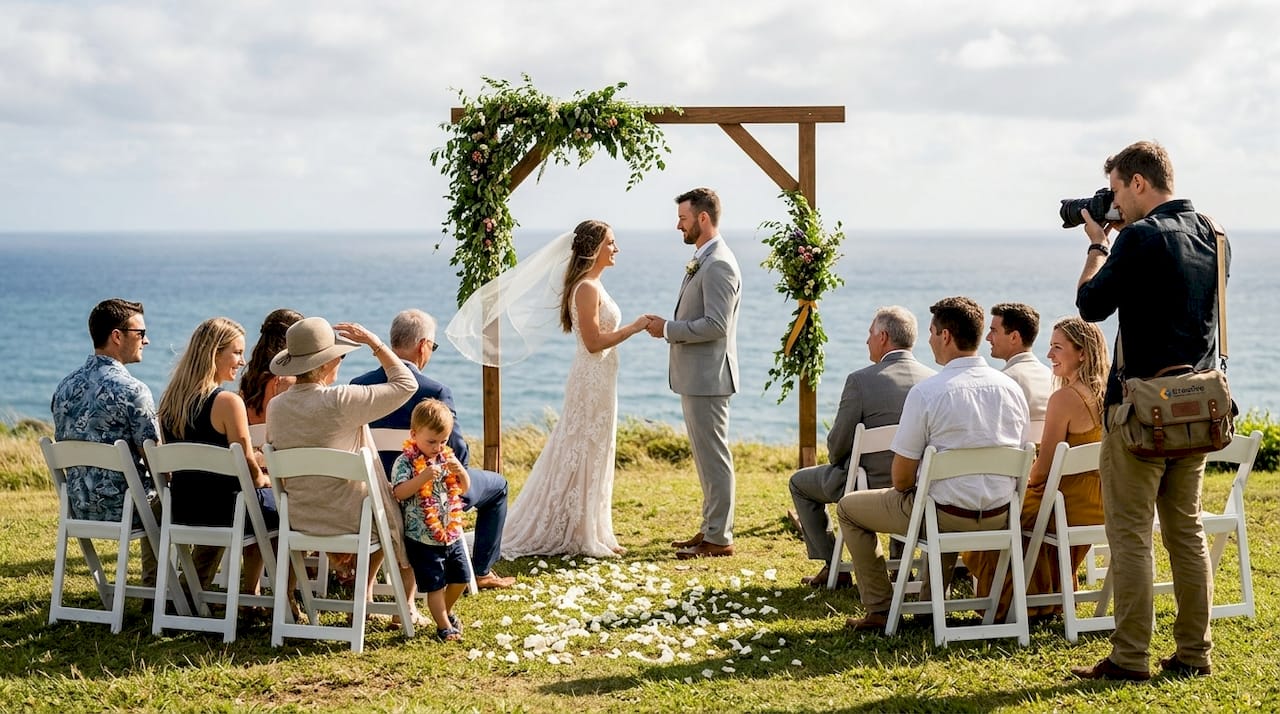
    Oahu outdoor wedding ceremony candid moment

    Detail shots include the invitation, rings, dress, shoes, and bouquet. These images set the visual tone of your entire album and are often overlooked in the rush of the morning. Schedule at least 20 minutes specifically for detail photography before the getting-ready sequence begins.

    Here is a numbered list of essential photo moments organized by the flow of your wedding day:

    1. Flat lay of invitation suite, rings, and florals
    2. Dress hanging near a window or against a textured wall
    3. Bride and bridesmaids during hair and makeup
    4. Groom and groomsmen getting dressed and sharing a quiet moment
    5. First look reaction and the moments immediately after
    6. Wedding party portraits in a shaded outdoor location
    7. Processional with guests’ expressions visible
    8. Exchange of vows with close-up and wide-angle coverage
    9. Ring exchange with a tight macro shot
    10. First kiss framed against the Oahu skyline or ocean
    11. Recessional with confetti, petals, or sparklers
    12. Couple portraits during golden hour
    13. Reception entrance and first dance
    14. Parent dances and toasts
    15. Candid guest moments throughout the evening

    Balancing formal and candid shots is where many couples struggle. The table below breaks down the key differences:

    Shot type Best for Emotional value Timing
    Formal posed Albums, wall prints, family High for legacy Scheduled blocks
    Candid Storytelling, emotion Highest for authenticity Throughout the day
    Environmental Venue, landscape context Medium, sets the scene Ceremony and portraits
    Detail Keepsakes, editorial style Medium, visual richness Morning and setup

    “The most memorable wedding images are rarely the perfectly posed ones. They are the stolen glances, the nervous laughs, and the moments couples did not even know were being photographed. Prioritize emotion over perfection every single time.”

    For a deeper look at best checklist moments specific to Oahu venues, reviewing curated local examples helps you visualize what is possible at your exact location. You can also explore Oahu wedding photography insights to understand how the island’s unique light and landscape shape storytelling. And if you want to see how candid wedding photos translate into genuine emotion, real examples from Hawaii weddings are worth studying closely.

    Insider tips for coordinating with your photographer

    After curating your wedding’s must-have shots, it is time to collaborate with your photographer for a picture-perfect plan. Communication before the wedding day is just as important as the photography itself. Couples who share a detailed checklist and timeline early in the planning process consistently end up with more complete, story-driven albums.

    Discuss your checklist early with your photographer, customize it for your venue, lighting conditions, and weather possibilities, and make sure candid moments are explicitly prioritized alongside formal shots. This conversation should happen at least 60 days before the wedding, not the week before.

    One of the most practical things you can do is build buffer time into every transition on your timeline. Good photographer coordination includes equipment backups, timeline buffers, lighting plans, and organized family shot lists. A general rule is to add 15 to 20 percent extra time to every scheduled photography block. If you think family portraits will take 30 minutes, schedule 36 to 40 minutes. That buffer absorbs delays without compressing the next segment.

    Oahu’s light is extraordinary but demanding. Harsh midday sun creates unflattering shadows, especially on the beach. Open shade under a canopy of trees or the shaded side of a building produces soft, even light that flatters every skin tone. If your ceremony falls between 11 a.m. and 2 p.m., discuss flash fill and diffusion options with your photographer in advance. These are not afterthoughts. They are part of your wedding photographer questions checklist.

    Here are key tips for building an effective family shot list:

    • Write out every family grouping you need, including step-families and blended families
    • Number the groupings in order of priority so the most important shots happen first
    • Designate a family wrangler, someone who knows both families and can gather people quickly
    • Share the list with the wrangler at least one week before the wedding
    • Keep each grouping to under 10 people when possible to reduce setup time

    Pro Tip: Print your family shot list and give a physical copy to both your photographer and your family wrangler. A printed list does not get lost in a text thread or buried in an email inbox.

    Backup plans and Oahu-specific logistics

    Equipped with photographer coordination strategies, ensure your plan stays flexible with smart Oahu logistics and backup preparation. Even the most carefully planned wedding day will encounter something unexpected. On Oahu, that something is often weather. The island receives over 20 inches of rain annually in many areas, and afternoon showers on the windward side are common even in summer.

    Equipment backups should include extra batteries, memory cards, and lenses as core components of any professional photographer’s kit. If you are hiring a photographer for your Oahu wedding, ask directly whether they carry backup camera bodies. A single camera failure without a backup can mean missed ceremony coverage that cannot be recreated.

    Here is a data table comparing essential versus optional backup gear:

    Equipment Essential Optional
    Backup camera body Yes
    Extra batteries (x4 minimum) Yes
    Extra memory cards (x4 minimum) Yes
    Telephoto lens Yes
    Macro lens for details Yes
    External flash Yes
    Portable diffuser Yes
    Weather-sealed camera bag Yes

    For outdoor and beach venues, weather-proofing your logistics is non-negotiable. Here are practical tips:

    • Identify a covered backup location at your venue before the wedding day
    • Confirm with your venue coordinator what happens if rain begins during the ceremony
    • Ask your photographer whether their equipment is weather-sealed
    • Keep a small umbrella or canopy available for gear protection during transitions
    • Schedule portraits earlier in the day when Oahu weather is typically more stable

    Working with a professional photographer for your Hawaii wedding who has experience at your specific venue means they already know the backup spots, the lighting quirks, and the best angles when conditions change. Reviewing a photographer’s Oahu photography portfolio specifically for outdoor and beach work tells you a great deal about how they perform under real conditions.

    Wedding photography wisdom: Beyond checklists

    With logistics sorted, let’s explore what transforms wedding albums from routine to truly memorable. After working with couples across Oahu for over 15 years, one pattern stands out clearly. The couples who end up with the most powerful albums are not the ones with the longest checklists. They are the ones who left room for the unexpected.

    A checklist is a floor, not a ceiling. It guarantees the essential moments are covered. But the photographs couples return to most often are the ones nobody planned. The grandmother wiping a tear during the vows. The flower girl spinning in circles during the reception. The groom’s hands shaking slightly as he reads his vows.

    Oahu’s landscapes amplify these moments in ways that are hard to replicate anywhere else. The interplay of volcanic rock, turquoise water, and tropical greenery creates a backdrop that makes even a simple candid feel cinematic. But capturing that magic requires a photographer who knows when to put the checklist down and simply watch. Trusting your photographer’s real-moment instincts is one of the most important decisions you will make.

    Pro Tip: Build at least 15 unstructured minutes into your portrait session. Tell your photographer you want to just walk and talk. Some of the best images come from those quiet, unscripted moments between the formal shots.

    Discover Oahu wedding photography solutions

    Your checklist is ready. Your timeline has buffers. Your backup plan is in place. Now it is time to make sure the person behind the camera is as prepared as you are.

    https://creativemediaprod.com

    At Creative Media Productions, we have spent over 15 years capturing weddings across Oahu, from intimate beachside ceremonies in Kailua to grand receptions in Waikiki. Our team knows the light, the venues, and the moments that make each wedding uniquely yours. Explore our Oahu wedding media services to find the right package for your vision. Browse our curated wedding photo moments gallery for inspiration, or connect with our event photographer in Oahu team to start planning your perfect day.

    Frequently asked questions

    What shots should never be missed during an Oahu wedding?

    Essential wedding shots span six categories: details, getting ready, first look, ceremony, couple portraits, and candid reception highlights. Prioritizing these ensures your album tells a complete story from start to finish.

    How do you customize a wedding photo checklist for Oahu venues?

    Adapt your checklist for outdoor lighting shifts, potential afternoon rain, and the specific geography of your venue. Timeline buffers and lighting plans are especially critical for beach and garden settings on Oahu.

    Why is a family shot list important?

    A family shot list keeps group portraits efficient and prevents anyone from being accidentally left out. Designating a wrangler who knows both families speeds up the process significantly.

    What backup equipment do Oahu photographers recommend?

    Always confirm your photographer carries spare batteries, extra memory cards, backup lenses, and a second camera body. Equipment backups are a standard part of professional preparation for outdoor Hawaii weddings.

    How early should couples discuss their checklist with their photographer?

    Start the conversation at least 60 days before your wedding. Early checklist discussions allow your photographer to customize the shot list for your specific venue, lighting conditions, and personal priorities.

  • Choosing premium photography packages for Hawaii weddings

    Choosing premium photography packages for Hawaii weddings


    TL;DR:

    • Premium Hawaii wedding photography costs $5,000 to over $12,000, reflecting experience and personalized service.
    • Local Hawaii expertise ensures better planning, lighting, permits, and access to prime locations.
    • Choosing the right package involves assessing priorities, verifying experience, and ensuring clear contracts and delivery timelines.

    Planning a Hawaii wedding is exciting, but choosing the right photographer can feel genuinely overwhelming. The market is flooded with photographers calling their work “luxury” or “premium,” and it’s hard to know what that actually means when you’re comparing packages side by side. Premium Hawaii wedding photography typically runs from $3,000 to $12,000 or more, with high-end options starting around $6,900. That’s a wide range, and the difference between the low and high end isn’t just hours of coverage. It’s experience, local knowledge, what’s included, and how well the photographer fits your vision. This guide breaks it all down so you can choose with confidence.

    Table of Contents

    Key Takeaways

    Point Details
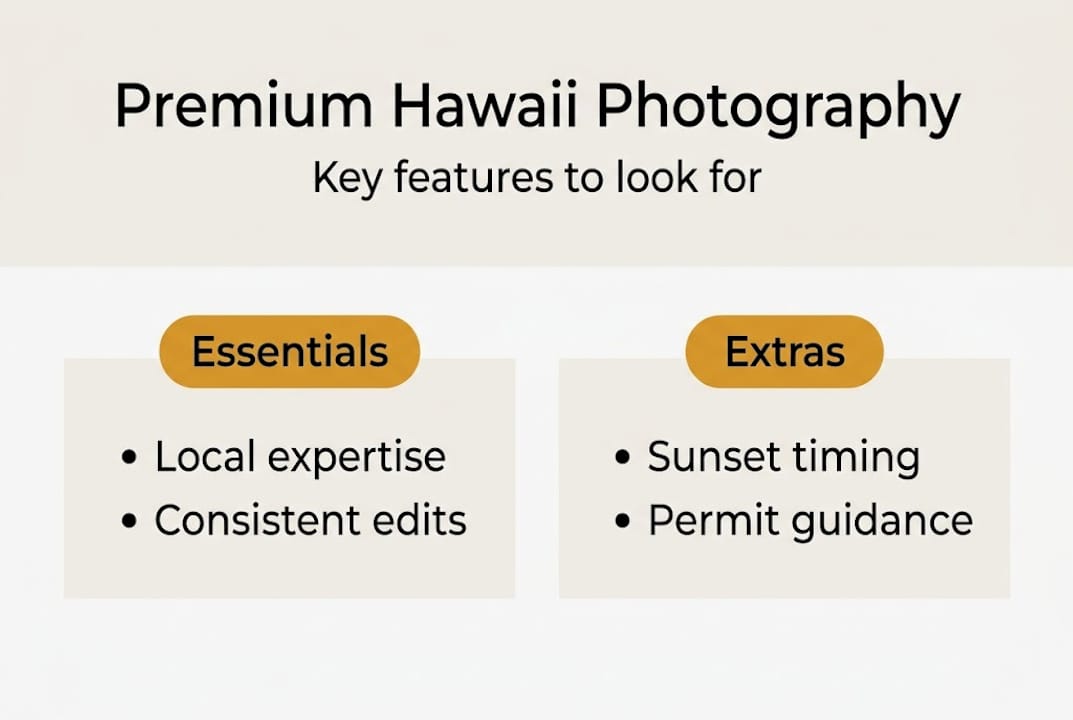
    Premium package essentials Local expertise, consistent quality, and personalized service define top photography packages in Hawaii.
    Smart comparison Compare packages by inclusions, contract clarity, flexibility, and client reviews.
    Budget with confidence Set aside 20–50% of your wedding budget for high-quality photography that captures every moment.
    Customization is key Tailor premium packages to your specific wedding vision for a seamless, stress-free day.

    What makes a photography package ‘premium’ in Hawaii?

    With the premium price tag, it’s essential to understand what exactly sets these packages apart from standard wedding photography services.

    The word “premium” gets used loosely, but in Hawaii’s wedding market, it has real meaning. Premium Hawaii wedding packages average $5,000 to $7,000, with customizable collections starting at $6,900. That investment reflects more than just extra hours. It reflects depth of experience, the quality of deliverables, and the level of personalized service you receive from first inquiry through final delivery.

    Here’s what premium pricing typically covers:

    • Full-day coverage (8 to 10 hours or more)
    • Second shooter for wider coverage and candid moments
    • Engagement session included before the wedding
    • Professionally designed album with archival-quality printing
    • Consistent, polished editing across every image
    • Print release rights so you can reprint without restrictions
    • Dedicated pre-wedding consultation and timeline planning

    Beyond the checklist, a premium experience feels different. Your photographer arrives early, scouts the light before you do, and handles the unexpected without missing a beat. You’re not just buying photos. You’re buying peace of mind on one of the most important days of your life.

    Package tier Price range Key features
    Standard $1,500–$3,000 4–6 hours, basic edits, digital gallery
    Mid-range $3,000–$5,000 6–8 hours, some extras, basic album
    Premium $5,000–$12,000+ Full day, second shooter, album, engagement session

    For a closer look at how Oahu photography pricing breaks down locally, it helps to compare packages side by side before committing. And if you’re still on the fence about going professional, the case for professional photographer benefits for Hawaii weddings is worth reading before you decide.

    Pro Tip: Don’t confuse the most expensive package with the best fit. A $10,000 package loaded with features you don’t need is a worse investment than a $6,500 package that matches your priorities perfectly.

    Must-have inclusions: What to look for in high-end wedding photography

    Once you know what counts as premium, here’s a closer look at the details that add real value.

    Not all premium packages are created equal. Some photographers charge top dollar but deliver inconsistent editing, vague contracts, or albums that feel generic. Knowing what to look for protects your investment.

    Couple researching Hawaii wedding photographers

    Start with editing consistency. Review full galleries for natural tones, balanced light, and a style that matches your taste across an entire wedding, not just the hero shots. A photographer’s Instagram feed shows their best work. Their full galleries show their real work.

    Here are the non-negotiables for a high-end Hawaii wedding package:

    • Second shooter included for ceremony coverage from multiple angles
    • Engagement session to build comfort and test chemistry before the wedding
    • 14-day or faster turnaround on edited images
    • High-quality physical album with lay-flat binding and archival paper
    • Full print rights included in writing
    • Drone photography option for Hawaii’s sweeping coastal scenery
    • Clear, detailed contract covering cancellation, weather contingencies, and delivery timelines

    When evaluating photographers, use this checklist in order:

    1. Request a full wedding gallery (not just highlights)
    2. Read third-party reviews on platforms like The Knot or Google
    3. Confirm Hawaii-specific experience in writing
    4. Verify turnaround time and delivery format
    5. Review the contract for usage rights and cancellation terms

    “Top-rated Honolulu photographers consistently earn 5-star reviews for calm energy, clear communication, and seamless handling of destination weddings.”

    For couples still deciding on a photographer, choosing your Oahu photographer involves more than browsing portfolios. And if you want a broader framework, this guide on hiring event photographers walks through the full evaluation process step by step.

    Local Hawaii expertise: Why it matters for your photos

    Knowing the must-haves is just the start. Local expertise is what truly brings your wedding story to life.

    Hawaii looks effortless in photos, but shooting here is genuinely challenging. The light changes fast. Tides shift. Certain beaches require permits. Wind can flatten a veil or scatter a bouquet in seconds. A photographer who flies in from the mainland for your wedding may have a stunning portfolio, but they’re working without the instincts that only come from shooting in Hawaii regularly.

    Local Hawaii experience means knowing beach lighting patterns, tide charts, and permit requirements before you even arrive at the venue.

    Infographic premium Hawaii wedding package features

    Factor Local photographer Non-local photographer
    Golden hour timing Knows exact window by location Relies on general estimates
    Permit knowledge Handles in advance May not know requirements
    Backup locations Has 2–3 ready Unfamiliar with alternatives
    Tide and weather Plans around local forecasts Reactive, not proactive
    Vendor relationships Connected to local vendors Starting from scratch

    Before booking, ask your photographer these questions directly:

    • How many Hawaii weddings have you shot in the past two years?
    • Which beaches or venues do you know best on Oahu?
    • How do you handle permit requirements for state parks or beach access?
    • What’s your backup plan if weather shifts during the ceremony?
    • Have you worked with local vendors like florists or planners before?

    Signature Hawaii moments, like a sunset ceremony at Lanikai, a lei exchange on the North Shore, or a cliffside portrait at Makapuu, require a photographer who knows exactly where to stand and when. That’s not something you can learn from a scouting trip the morning of your wedding.

    For couples considering video alongside photography, wedding videographers in Honolulu who work locally bring the same advantages. And if you’re planning a more intimate shoot, a Waikiki couple photoshoot with a local photographer is a great way to test the experience before the big day.

    Comparing and customizing packages: How to make the best choice for your day

    With local expertise in mind, here’s how to confidently compare and personalize your top options.

    Comparing photography packages can feel like comparing apples to mangoes. Every photographer structures their offerings differently, which makes direct comparison tricky. A clear process helps.

    Follow these steps when evaluating your top choices:

    1. List your priorities first. Album quality, hours of coverage, engagement session, or drone footage. Know what matters most before you open a single proposal.
    2. Build a comparison sheet. List each photographer’s inclusions, price, turnaround time, and contract terms side by side.
    3. Request itemized pricing. Ask what each add-on costs separately so you understand the real value of the bundle.
    4. Ask about customization. Most premium photographers will adjust hours, add a second shooter, or include travel coverage if you ask.
    5. Confirm communication style. How fast do they respond? Do they offer a pre-wedding call? Post-wedding check-in?

    One stat worth knowing: photography represents 20–50% of the total budget for Hawaii elopements and weddings, which range from $3,000 to $12,000. That’s a significant portion, so treat it like the investment it is.

    When negotiating, don’t just ask for a lower price. Ask for more value. An extra hour of coverage, a parent album, or a faster delivery timeline often costs the photographer less than a discount would.

    For more on how to approach the planning side, planning a professional photoshoot for weddings and events offers a practical framework that applies directly to Hawaii couples.

    Pro Tip: Ask for a confirmed delivery timeline in writing before you sign. “A few weeks” is not a delivery date. Get the specific number of days in the contract.

    Our perspective: What most couples miss when choosing premium packages

    After more than 15 years behind the camera at Hawaii weddings, the biggest mistake we see isn’t choosing the wrong editing style. It’s choosing a photographer based on a portfolio without ever testing the relationship.

    Couples spend hours comparing preset styles and Instagram aesthetics, then overlook the questions that actually matter on the day itself. How does this photographer handle a delayed ceremony? What happens if the officiant runs 40 minutes late and the golden hour window closes? Does this person stay calm, adapt, and still deliver?

    A beautiful portfolio tells you what a photographer can do under ideal conditions. It tells you almost nothing about how they perform under pressure. The photographers who deliver at Hawaii weddings consistently are the ones with strong logistics, clear communication habits, and a genuine ability to read a room.

    We also see couples undervalue post-wedding service. What happens after the gallery is delivered? Can you request reshoots of edited images? Is there a support process if files are corrupted or lost? These aren’t paranoid questions. They’re the right ones.

    When you’re building your photo and video team for Oahu, prioritize fit and process over filters. The best wedding photos come from trust, not just talent.

    Ready for your perfect Hawaii wedding photos?

    If you’ve made it this far, you already know more than most couples do when they start their search. You know what premium really means, what to look for in a contract, why local expertise matters, and how to compare packages without getting lost in the details.

    https://creativemediaprod.com

    At Creative Media Productions, we’ve spent over 15 years covering weddings across Oahu, from intimate Waikiki ceremonies to full-day celebrations in Kailua and beyond. Our Oahu wedding media services are built for couples who want artistry, reliability, and a team that treats your day like it’s the only one on the calendar. Not sure whether to add video? This breakdown of wedding photography vs videography can help. And when you’re ready to plan your shot list, our wedding photo checklist covers every moment worth capturing.

    Frequently asked questions

    How much should couples expect to spend on premium photography in Hawaii?

    Expect to spend between $5,000 and $7,000 for premium Hawaii wedding photography, with packages ranging from $3,000 to over $12,000 depending on coverage hours and inclusions.

    What specific features set premium photography packages apart?

    Premium packages typically include expert local photographers, extended full-day coverage, consistent editing style, second shooters, and high-quality albums. Confirm clear contracts and fast delivery as part of the package before signing.

    How can couples verify a photographer’s Hawaii experience?

    Check portfolios for local beach shoots, read third-party reviews on The Knot or Google, and ask directly about handling beach lighting, tides, and permit requirements specific to Hawaii.

    What percentage of the wedding budget typically goes to photography?

    Photography represents 20–50% of the total budget for Hawaii elopements and weddings, making it one of the largest single investments in the entire event.

  • Is Photo Booth Worth It for Your Event?

    Is Photo Booth Worth It for Your Event?

    You can usually tell within the first hour of an event whether guests are merely attending or actually engaging. A good photo booth changes that dynamic fast. If you are asking, is photo booth worth it, the real question is not whether people like taking pictures. They do. The question is whether it adds enough energy, keeps guests involved, and gives you something lasting beyond what your main photographer already captures.

    For many events, the answer is yes. But not automatically. A photo booth is worth it when it fits the event, the guest list, and the experience you want people to remember. It is less valuable when it is treated like filler or booked without thinking through placement, timing, and quality.

    Is photo booth worth it for every type of event?

    Not every event needs the same kind of coverage. A wedding has different goals than a corporate mixer, and a child’s birthday has a different pace than a memorial gathering. That is why the value of a photo booth depends on what role you want it to play.

    At weddings, a booth often works best as a second layer of entertainment. Your photographer is there to tell the full story – ceremony, portraits, reactions, details, and candid moments. The booth does something different. It gives guests a place to be playful, spontaneous, and social on their own terms. That matters, especially during cocktail hour or reception downtime, when people are waiting between formal moments.

    For birthdays and family celebrations, the value is usually immediate and obvious. Guests of different ages know exactly what to do with a photo booth. It gives kids something fun, adults something shareable, and families an easy way to create group photos without organizing everyone into one formal shot.

    For corporate events, the booth can be more strategic. It can increase engagement, encourage networking, and produce branded content guests actually want to keep. If the event includes a product launch, holiday party, conference, or community activation, a booth often becomes part entertainment, part marketing asset.

    There are also events where a booth may not be the right fit. More intimate gatherings with a very short timeline, highly formal occasions with little open social time, or sensitive services where a playful station would feel out of place may be better served by focused photography alone.

    What a photo booth adds that a photographer does not

    This is where many clients hesitate, and fairly so. If you are already investing in professional photography, why add a photo booth at all?

    The answer is that these are different experiences, not duplicate services. A photographer documents moments as they unfold. A photo booth invites guests to create moments on purpose. One is observational. The other is interactive.

    That difference matters because some guests are camera-shy in front of a roaming photographer but loosen up in a booth with friends. Others may not get much one-on-one time with the main camera coverage, especially at larger events. A booth gives them a chance to be seen, included, and remembered.

    There is also the practical side. Booth sessions produce instant keepsakes. Prints can go home the same night. Digital shares can happen on the spot. That speed adds value because guests leave with something tangible, while the event is still fresh.

    When is photo booth worth it most?

    A photo booth tends to earn its keep when guest experience matters as much as documentation. If you want people to interact, laugh, stay longer, and leave with a personalized memory, it usually performs well.

    It is especially worth considering if your event has one or more of these conditions: a guest count large enough that not everyone will get equal camera time, a reception or social block longer than two hours, mixed age groups, or a goal of encouraging people to mingle. In those situations, the booth is not just an add-on. It helps shape the flow of the event.

    It can also be worth it if you care about shareable content. Instant digital delivery gives guests a clean, polished photo they are likely to post or text right away. For corporate clients, that means more event visibility. For weddings and private parties, it means your celebration continues showing up in group chats and social feeds long after the music ends.

    When a photo booth may not be worth it

    There are cases where the investment does not land the way clients hope.

    If your event is very short, guests may not have enough time to use it. If the timeline is packed with formal programming, speeches, or performances, the booth may sit idle during key stretches. If the setup is tucked into a poor location, people may not notice it until late in the event.

    Quality is another factor. A cheap booth with weak lighting, slow prints, or clunky sharing can feel like an afterthought. That does more harm than good at a premium event. If the visuals look flat or the process feels frustrating, guests stop using it, and the value drops quickly.

    There is also the guest profile to consider. Some audiences naturally jump into booth photos. Others need more encouragement. A booth works best when the energy of the event supports interaction. Without that, even a great setup can be underused.

    How to decide if the cost makes sense

    The best way to judge cost is not to ask whether a booth is cheap or expensive. Ask what problem it solves.

    If your concern is guest entertainment, a booth may be more cost-effective than adding another activity that does not produce a keepsake. If your concern is giving sponsors or attendees branded imagery at a corporate event, the booth can justify itself through engagement and usable content. If your concern is making sure guests leave with a personal memento, prints and digital galleries carry obvious value.

    On the other hand, if your budget is already tight and your top priority is strong core coverage, photography and videography should come first. The booth should enhance a well-covered event, not replace essential documentation.

    That is often the clearest answer to is photo booth worth it: yes, after your foundational coverage is handled well. Once those essentials are in place, a booth can elevate the guest experience in a way that feels visible and immediate.

    Questions to ask before you book

    The quality of the service matters as much as the idea itself. Before booking, ask what kind of prints are included, how digital sharing works, whether an attendant is on-site, how much space is needed, and how the booth is styled to fit the event.

    You should also ask about setup timing and guest flow. A reliable team will think through logistics before event day so the booth feels integrated, not dropped into a corner at the last minute. Premium service means the experience is polished from start to finish, from lighting and backdrop to print quality and punctual setup.

    If your event includes professional photography and a booth, coordination matters too. The two services should complement each other, not compete for attention. At Creative Media Production LLC, that balance matters because the goal is not just to add another feature. It is to create a clean, enjoyable experience that looks polished and runs smoothly.

    Is photo booth worth it for weddings and corporate events?

    For weddings, it is often worth it when you want to give guests their own experience, not just observe yours. A booth keeps the reception lively and creates a second stream of memories that feel personal, unscripted, and fun.

    For corporate events, it is worth it when guest engagement is part of the objective. Whether the goal is team participation, branded exposure, or stronger event energy, a well-run booth turns passive attendance into active involvement.

    In both cases, the deciding factor is not novelty. It is usefulness. Does it fit the event style? Will guests actually use it? Will the output look good enough to keep, share, or post? If the answer is yes, the booth can provide more value than its line item suggests.

    A good photo booth is not magic, and it is not mandatory. It is simply one of the few event add-ons that can entertain guests, create instant keepsakes, and extend the life of your event after everyone goes home. If that aligns with what you want your event to feel like, it is probably money well spent.

  • Essential birthday party photography steps for Oahu families

    Essential birthday party photography steps for Oahu families


    TL;DR:

    • Proper preparation and equipment are essential for capturing quality birthday photos.
    • Following a structured sequence ensures all key moments are documented effectively.
    • Candid, emotion-filled images are more meaningful than perfect posed shots.

    You’ve planned every detail of your child’s Oahu birthday party: the decorations, the cake, the guest list, the activities. But when the day is over and you scroll through the photos, something feels off. The magic you felt in the room just isn’t there in the pictures. Blurry candle-blowing shots, dark indoor group photos, and missed candid smiles are more common than most families realize. With a clear, step-by-step approach, you can make sure every irreplaceable moment is captured beautifully, whether you’re working with a professional photographer or coordinating your own coverage.

    Table of Contents

    Key Takeaways

    Point Details
    Preparation matters Gathering the right tools and pre-planning ensures no magical moment is missed.
    Follow key steps Photograph birthday events in a clear sequence to cover all the highlights and spontaneous moments.
    Get creative Personalizing photos makes your party memories more special and lasting.
    Check and adjust Review photos and make corrections as you go to guarantee high-quality results.

    Get ready: Tools and essentials

    Great birthday party photography starts long before the first guest walks through the door. Professional preparation prevents missed moments during birthday parties, and that means getting your gear, your timeline, and your team sorted well in advance.

    Start with a solid equipment checklist. Missing a memory card or running out of battery mid-party is a frustrating and avoidable mistake.

    Essential gear checklist:

    • Camera body (plus a backup if available)
    • At least two fully charged batteries
    • Multiple memory cards with extra storage capacity
    • A fast prime lens (50mm or 85mm) for low-light indoor shots
    • A wide-angle lens for group photos and venue shots
    • External flash or portable LED light panel
    • Lens cleaning cloth
    • Weather-appropriate bag or cover if shooting outdoors

    Beyond gear, preparation means studying the party timeline. Talk to the family or event planner and identify the key moments you absolutely cannot miss: the cake cutting, the first look at decorations, the birthday child opening gifts, and the group sing-along. Write these down and keep the list accessible during the event.

    Preparation task Why it matters
    Pre-scout the venue Find best lighting spots and backgrounds
    Charge all batteries Avoid power failure mid-event
    Format memory cards Prevent corrupted files
    Review party timeline Know when key moments happen
    Clean all lenses Eliminate smudges and blur

    If you’re working with family members or a second shooter, delegate specific tasks. One person can focus on candids while another handles posed group shots. Clear roles prevent duplicate coverage of the same moments and gaps in others.

    Pro Tip: Visit the venue at the same time of day as the party, even just a few days before. Note where natural light falls, which corners are too dark, and where the best backdrops are. This 15-minute visit can save hours of frustration on the actual day.

    Exploring birthday photography basics before the event gives you a strong foundation for everything that follows.

    Infographic showing steps for party photos

    Step-by-step: Capturing every key birthday moment

    Professional photographers follow a sequence to ensure complete coverage of each birthday milestone. Following a similar structure keeps you organized and confident throughout the event.

    1. Arrive early and shoot the setup. Capture the decorated venue before guests arrive. Empty tables, balloon arrangements, the birthday banner, and the cake display all tell the story of how much effort went into this celebration.
    2. Photograph guest arrivals. Position yourself near the entrance. Genuine reactions when guests arrive, especially grandparents or close friends, produce some of the most authentic expressions of the day.
    3. Document themed activities and games. Focus on action, laughter, and group interaction. Move around the space rather than staying in one spot. Get low for kids’ eye-level shots.
    4. Nail the cake moment. This is the most anticipated shot of any birthday party. Position yourself slightly to the side and at eye level with the birthday child. Shoot in burst mode to capture the exact moment the candles go out.
    5. Organize group and family portraits. Do these while energy is still high and before younger guests get tired. Keep posing fun and relaxed.
    6. Capture the goodbye moments. Hugs, gift bags, and final laughs as guests leave round out the full story of the day.

    Pro Tip: Use burst mode during the cake cutting and any action sequences. Shooting 8 to 10 frames per second gives you the best chance of catching peak expressions that a single shot would miss.

    Standard shot approach Creative shot approach
    Posed group in a line Candid group mid-laugh
    Cake on table, straight on Low angle looking up at candles
    Birthday child facing camera Child reacting to surprise
    Guests sitting at tables Guests mid-activity or game

    Familiarizing yourself with Oahu party photography steps and understanding different event photo styles will help you decide which approach fits each moment. Brushing up on essential photo terms like burst mode, depth of field, and white balance also makes communication with any co-photographers much smoother.

    Candid group birthday photo in backyard

    Creative ideas: Personalizing birthday photo stories

    Once you have the standard shots covered, the real fun begins. Personalized photo concepts create more lasting family memories, and the best way to achieve that is by weaving the birthday child’s personality into every frame.

    Think about what makes this child unique. Are they obsessed with dinosaurs, surfing, or a favorite cartoon character? Bring those elements into the shoot through props, backgrounds, and activities. A child holding their favorite toy while blowing out candles tells a much richer story than a generic posed shot.

    Creative personalization ideas:

    • Use themed props that match the party concept (crowns, signs, themed frames)
    • Set up a simple photo booth corner with a custom backdrop and fun accessories
    • Incorporate the birthday child’s hobby into at least one dedicated photo sequence
    • Capture detail shots: shoes, handmade decorations, a handwritten birthday card
    • Mix candid journalistic shots with a few intentionally posed creative portraits
    • Ask family members to write a short message on a chalkboard for a photo

    The mix of candid and posed shots is worth thinking about carefully. Candid photos capture real emotion and spontaneous joy. Posed photos give you clean, shareable images that work well for framing or announcements. The strongest albums include both, in roughly equal measure.

    A photo booth setup is especially popular at Oahu birthday parties. It gives guests something fun to do, and it produces a collection of joyful, personality-filled images that complement the main event coverage beautifully.

    Pro Tip: Before the party, sit down with the family and create a short “favorite moments” shot list. Include 5 to 8 specific moments or images that matter most to them. This list acts as a creative brief and ensures nothing personally important gets overlooked.

    For more inspiration on personalizing event photography, reviewing examples from past Oahu birthday sessions can spark ideas that fit your child’s unique personality.

    Troubleshooting and ensuring perfect results

    Even experienced photographers run into challenges at birthday parties. Knowing how to handle them quickly keeps your coverage on track.

    Reviewing your shots before the event ends ensures you collected all essential memories. Build a quick review habit into your workflow: check your images every 30 to 45 minutes rather than waiting until you get home.

    1. Check white balance regularly. Indoor lighting, outdoor sunlight, and colored party lights all affect color tone. Adjust your white balance setting when you move between spaces.
    2. Verify focus sharpness. Zoom into a few recent shots on your camera screen to confirm they are sharp. Soft focus is hard to fix in editing.
    3. Back up files during the event. If you have a dual-card camera, use both slots simultaneously. If not, transfer files to a laptop or external drive during a natural break.
    4. Deal with low light proactively. Move guests closer to windows or well-lit areas for key shots. Raise your ISO gradually and use a wide aperture. For more detailed strategies, low light tips specific to event settings are worth reviewing before any indoor party.
    5. Handle crowded spaces with patience. Wait for natural gaps in movement rather than forcing shots. Positioning yourself slightly elevated, even standing on a chair, gives you a cleaner line of sight.

    Before you pack up and leave the venue, scroll through your full card and confirm you have all the essential shots: setup, arrivals, cake, group portraits, and candid moments. Missing a key image is much easier to fix before guests leave than after.

    A quick post-party review and a few basic edits, adjusting exposure, cropping for composition, and correcting color, can transform good images into great ones. Understanding the professional event photo workflow used by experienced photographers gives you a reliable structure to follow every time.

    Why real birthday photo stories matter more than perfect poses

    After more than 15 years of covering events across Oahu, one pattern stands out clearly: the photos families return to again and again are almost never the perfectly posed ones. They are the candid shot of a grandparent laughing with a grandchild, the blurry but joyful image of a child mid-jump, or the quiet moment between siblings before the party chaos begins.

    Conventional wisdom in photography pushes toward technical perfection. Sharp focus, clean backgrounds, ideal exposure. Those things matter. But in family event photography, story and emotion consistently outrank polish. A slightly underexposed image of a genuine reaction will always be more meaningful than a perfectly lit, perfectly composed, but emotionally flat portrait.

    The uncomfortable truth is that chasing perfection at a birthday party often means missing the real moments. When you are too focused on getting the “right” shot, you stop seeing what is actually happening. The value of real moments in birthday photography comes from presence and awareness, not just technical skill. The best approach is to prepare thoroughly, then let go of perfection and follow the emotion in the room.

    Ready for stress-free birthday photography in Oahu?

    Now that you have a clear picture of what great birthday party photography looks like, you don’t have to tackle it alone. At Creative Media Production, we’ve spent over 15 years capturing the real stories behind Oahu’s most memorable celebrations.

    https://creativemediaprod.com

    Whether you want to explore all event photography types or are ready to hire an Oahu photographer for your child’s next birthday, we offer personalized packages built around your family’s vision. From intimate backyard parties to large venue celebrations, our team handles every detail so you can be present and enjoy the day. Visit Creative Media Production to explore our work and book a free consultation.

    Frequently asked questions

    What is the best time to take group birthday photos?

    Group shots are easiest before guests get busy with activities, so aim to organize them early in the party when everyone is fresh, present, and in good spirits.

    How do you handle low-light situations at indoor parties?

    Use a fast lens with a wide aperture, raise your ISO setting, and position guests near windows or well-lit areas. Proper gear and technique make a significant difference in low-light results.

    What photos are essential for every birthday party?

    Key shots include venue decor, guest arrivals, the cake moment, games or activities, and candid family interactions. Professional photographers capture a defined series of moments to tell the full story.

    How far in advance should you book a photographer in Oahu?

    Booking well in advance ensures your preferred photographer is available. Aim to book 1 to 2 months ahead, especially for popular weekend dates.

    Can I get creative, personalized photo ideas included in my photography package?

    Absolutely. Many photographers offer customized concepts, and personalized concepts add value to your package. Just bring your ideas to the initial consultation and build from there.

  • Photography portfolio guide: essential tips for Oahu events

    Photography portfolio guide: essential tips for Oahu events


    TL;DR:

    • A strong photography portfolio is essential for attracting clients and showcasing event-specific skills.
    • Effective portfolios include varied, candid, and high-quality images that reflect real event conditions.
    • Regularly updating and curating your portfolio ensures it accurately represents your current best work.

    One weak photo in a photographer’s portfolio can cost you a booking before a single word is exchanged. That’s not an exaggeration. A photography portfolio is a curated collection of a photographer’s best work designed to showcase skills, style, and experience to potential clients. For couples planning a wedding in Oahu or families organizing a reunion shoot in Kailua, reviewing a portfolio is often the first and most decisive step. This guide will show you exactly what to look for, how effective portfolios are built, and how to use that knowledge to make smarter decisions for your next event.

    Table of Contents

    Key Takeaways

    Point Details
    Curate for quality Only your best, most relevant images should make it into your portfolio.
    Show event diversity Include a mix of portraits, candids, and detail shots to reveal your storytelling ability.
    Organize for clarity Keep galleries concise and themed to avoid overwhelming viewers.
    Update often Refresh your portfolio quarterly or when you create standout new work.
    Optimize for mobile With most clients browsing on their phones, a mobile-first portfolio is essential.

    Defining a photography portfolio for Oahu events

    A photography portfolio is far more than a folder of pretty pictures. It’s a professional tool that communicates a photographer’s vision, reliability, and range before you ever speak with them. Think of it as a visual resume. It answers the question every event planner or couple should be asking: “Can this photographer handle my event, in my setting, under real conditions?”

    “A photography portfolio is a curated collection of a photographer’s best work for potential clients or employers, primarily hosted online for visibility.”

    For Oahu events specifically, online accessibility matters a great deal. You may be planning from the mainland, coordinating across time zones, or simply researching vendors late at night. A well-built online portfolio lets you evaluate a photographer’s work on your schedule, without a sales call.

    Here’s what a strong event photography portfolio should include:

    • Variety of moments: Candid laughter, quiet in-between moments, group shots, and intimate portraits
    • Consistent style: Whether the look is bright and airy or warm and moody, it should feel cohesive throughout
    • Honest representation: Images should reflect actual events, not just staged editorial shoots
    • Narrative flow: The portfolio should tell a story, not just display random highlights
    • Event-specific relevance: A wedding portfolio should look like weddings, not fashion shoots

    When you browse an Oahu photographer’s portfolio, you’re not just admiring images. You’re evaluating whether this person can show up to your wedding at Waimea Bay at golden hour and deliver something meaningful. That’s the real purpose of a portfolio, and it’s why the curation behind it matters as much as the images themselves.

    A portfolio that mixes corporate headshots with beach weddings and birthday parties sends a confusing signal. It suggests the photographer hasn’t committed to a specialty. For your event, you want someone whose portfolio screams focus and expertise in exactly the kind of moment you’re trying to capture.

    What makes an effective portfolio for weddings and family gatherings?

    Not all portfolios are created equal. An effective event portfolio doesn’t just show good photos. It proves the photographer can handle the unpredictability of real events. Lighting changes. Emotions run high. Timelines slip. A strong portfolio shows evidence of navigating all of that.

    According to sample wedding and family portfolio layouts, the best portfolios include a mix of candid moments, portraits, detail shots, and images taken in varying lighting conditions, with a target of 15 to 20 images per gallery.

    Infographic with key event portfolio essentials

    Here’s a breakdown of the image types that should appear in any serious event portfolio:

    Image type What it proves
    Candid moments Ability to capture genuine emotion
    Formal portraits Technical skill and posing direction
    Detail shots Attention to the full story of an event
    Low-light images Competence in challenging conditions
    Group photos Crowd management and composition

    The importance of professional event shoots becomes clear when you compare a portfolio built from real events versus one padded with studio setups. Real events are messy, joyful, and unpredictable. A portfolio that only shows perfect conditions is hiding something.

    Here’s a simple framework for evaluating any portfolio you review:

    1. Does the style feel consistent from image to image?
    2. Are there examples of low-light or indoor shots?
    3. Can you see genuine emotion in the candid images?
    4. Are group photos sharp and well-composed?
    5. Does the work match the type of event you’re planning?

    For couples planning engagement sessions, reviewing a photographer’s engagement shoot portfolio separately from their wedding gallery is a smart move. The two require different skills and energy.

    Pro Tip: If you find yourself thinking “that photo is pretty good,” that’s not good enough. A portfolio image should make you feel something. If it doesn’t, move on.

    How to curate and organize your portfolio for maximum impact

    Selecting images for a portfolio is where most photographers struggle. The instinct is to include more, to show range, to prove you’ve shot hundreds of events. But that instinct works against you. Portfolio strength follows a clear rule: 15 exceptional images outperform 50 good ones every time, with experienced photographers often culling at a 40:1 ratio from a single shoot.

    Here’s a practical look at recommended portfolio quantities:

    Portfolio section Recommended image count Culling ratio
    Wedding gallery 15 to 20 images 40:1 from full shoot
    Family event gallery 12 to 18 images 30:1 from full shoot
    Overall portfolio 40 to 60 total images Quarterly review

    Organization matters just as much as selection. Grouping images by event type, location, or mood helps viewers find what’s relevant to them quickly. A couple planning a beach ceremony in Waikiki doesn’t want to scroll through corporate headshots to find relevant work.

    Common portfolio mistakes that undermine otherwise strong work include:

    • Including images from too many unrelated genres
    • Keeping outdated work that no longer reflects your current skill level
    • Showing too many similar shots from the same event
    • Neglecting to update the portfolio after major new work is completed
    • Prioritizing personal favorites over client-relevant images

    For those evaluating local event photographer options in Oahu, ask directly how often the photographer updates their portfolio. A stale portfolio from three years ago tells you something important about how they treat their business.

    Pro Tip: Ask a trusted friend or past client to review your portfolio and note the first image that made them hesitate. That image comes out immediately.

    When choosing your Oahu photographer, treat the portfolio review as a structured evaluation, not casual browsing. Give it the same attention you’d give a contract.

    Practical steps: Building or refreshing your event photography portfolio

    Whether you’re a photographer building your first portfolio or a client trying to understand what you’re looking at, the process of assembling a strong portfolio follows a clear sequence. Here’s how it works in practice, with Oahu-specific considerations built in.

    1. Audit your existing images: Pull every strong image from past events and group them by type.
    2. Apply the 40:1 rule: For every 40 images from a shoot, only the single best candidate moves forward.
    3. Check for Oahu-specific variety: Include shots in natural light, golden hour, indoor venues, and outdoor locations like beaches or botanical gardens.
    4. Optimize for mobile: Over 60% of portfolio traffic arrives on mobile devices, so every image must load fast and display cleanly on a phone screen.
    5. Label styled shoots honestly: Beginners using styled or practice shoots should always note they are not from live events. Clients notice, and honesty builds more trust than a polished deception.
    6. Refresh quarterly: Set a calendar reminder every three months to swap out weaker images for stronger recent work.

    Oahu adds a few unique wrinkles to portfolio building. The island’s weather shifts quickly. Permits are required at many popular locations. Sunrise and sunset windows are brief. A portfolio that shows a photographer handling these conditions confidently is worth far more than one shot entirely in controlled studio light.

    Photographer scouting Oahu event locations

    For photographers looking to find great Oahu locations for portfolio shoots, exploring lesser-known spots beyond the crowded Waikiki strip can set your work apart.

    Pro Tip: Don’t build your portfolio around your favorite images. Build it around the images that will make your ideal client say yes.

    The hard truth: Your weakest image defines your reputation

    Here’s something most portfolio guides skip over entirely. Clients don’t remember your best image. They remember your worst one. That’s not pessimism. That’s how human perception works.

    Portfolio curation accounts for roughly 80% of your success as a photographer. The weakest image in your gallery defines how discerning clients perceive your entire body of work. One blurry reception shot, one poorly lit family portrait, one awkward pose that slipped through the edit—any of these can undo ten stunning images that came before it.

    We’ve seen this play out repeatedly in Oahu’s event market. A photographer with 40 images, including three mediocre ones, consistently loses bookings to a photographer with 18 images, all exceptional. The volume doesn’t help. It hurts.

    The uncomfortable truth is that most photographers treat their portfolio like a personal scrapbook rather than a marketing tool. They include images because of what those images meant to them, not because of what those images communicate to a potential client. That emotional attachment is understandable. It’s also a business mistake.

    For professional event shoots to translate into bookings, every image in the portfolio must earn its place. No exceptions.

    Work with Oahu event photography experts

    A portfolio is only as powerful as the photographer behind it. If you’re planning a wedding, family gathering, or any special event on Oahu and want to see what truly exceptional event photography looks like, we’re here to help.

    https://creativemediaprod.com

    Browse our work as an event photographer in Oahu to see real examples of candid moments, portraits, and detail shots from live events across the island. Use our wedding photo checklist to understand exactly what moments matter most on your big day. When you’re ready to talk packages and planning, explore our wedding media services to find the right fit for your event. We’d love to be part of your story.

    Frequently asked questions

    How many images should a wedding or family photography portfolio include?

    An effective wedding or family portfolio should highlight 15 to 20 of your best images per gallery. Weaker images drag down the overall impression, so quality always beats quantity.

    Should portfolios include photos from different types of events?

    No. Wedding and family images should be showcased separately from other genres. Avoid mixed niches in your main portfolio to attract the right clients and signal clear expertise.

    How often should I update my photography portfolio?

    Update your portfolio at least quarterly or whenever you complete work that is stronger than what’s currently showing. Portfolio strength depends entirely on your current best work, not your historical archive.

    Are styled shoots okay to include if I’m just starting?

    Yes, but always label them honestly. Styled or practice shoots can demonstrate real skills, but clients deserve to know what they’re looking at.

    How important is mobile optimization for a photography portfolio?

    Extremely important. Over 60% of portfolio traffic arrives on mobile devices, and slow load times or poor display will cost you bookings before a client even sees your best work.

  • Types of Event Photography: Capture Every Moment

    Types of Event Photography: Capture Every Moment


    TL;DR:

    • The preferred event photography style on Oahu balances candid and posed shots for authentic storytelling.
    • Oahu’s unique environment requires photographers to adapt to natural light, weather, and cultural protocols.
    • A professional photographer should blend techniques, understanding when to unobtrusively capture emotions or organize structured portraits.

    Planning a celebration on Oahu means making dozens of decisions, and choosing the right photography style is one of the most important. The wrong approach can leave you with stiff, forgettable images or miss the raw emotion that made the day special. Oahu’s unique mix of golden beaches, cultural traditions, and unpredictable weather adds another layer to the decision. Whether you’re planning a beach wedding in Waikiki, a birthday luau in Kailua, or a family reunion in Kaneohe, understanding the main types of event photography helps you get images that actually reflect your day.

    Table of Contents

    Key Takeaways

    Point Details
    Blend candid and posed Combining both styles ensures you get genuine emotion and essential group shots.
    Adapt to Oahu Successful event photography accounts for lighting, weather, and cultural traditions unique to Oahu.
    Specialty skills matter Low-light, action, and cultural moments require specialized equipment and local experience.
    Ask for tailored coverage Discuss your event’s needs with your photographer to shape the right mix of approaches.

    What makes each type of event photography unique?

    Not all event photography works the same way. The style your photographer uses shapes everything: the mood of your images, how guests feel during the shoot, and which moments get preserved. Knowing the differences puts you in a much stronger position when booking.

    The two biggest categories are candid (photojournalistic) and posed (traditional) photography. Candid means the photographer works quietly in the background, capturing real reactions as they happen. Posed means the photographer directs people into position for deliberate, structured shots. Most professional events use a blend of both.

    Oahu adds specific factors that influence which style works best:

    • Natural light: Sunrise and sunset on Oahu are spectacular, and skilled photographers time their shots around golden hour.
    • Cultural sensitivity: Hawaiian and Pacific Islander ceremonies often have protocols that require photographers to stay unobtrusive.
    • Weather: Oahu’s weather can shift quickly, so flexibility is essential.
    • Location: Outdoor venues like beaches and botanical gardens behave very differently from indoor reception halls.

    In practice, professional technique matters as much as style. Expert event photography techniques include starting with aperture priority at f/2.8, keeping shutter speed at a minimum of 1/200s, using back-button focus, targeting a 70/30 candid-to-posed ratio, and applying bounce flash in low-light reception halls. These aren’t just settings. They’re the foundation of consistent, high-quality results.

    For Oahu events specifically, creative event photography balances all of these factors into a cohesive visual story. If you’re new to photography terminology, reviewing photography terms and definitions before your consultation will help you communicate your vision clearly.

    Pro Tip: Ask your photographer to walk you through their typical candid-to-posed ratio before you sign a contract. A 70/30 split is a strong industry benchmark for events that need both emotion and structure.

    Candid and photojournalistic event photography

    Candid photography is about becoming invisible. The photographer moves through your event without interrupting it, catching real smiles, surprised expressions, and unscripted moments that you’d never recreate in a posed setting.

    This style is especially powerful for:

    1. Beach weddings and elopements where the setting and emotion do the heavy lifting
    2. Family beach gatherings where kids and elders interact naturally
    3. Birthday celebrations full of surprise reactions and spontaneous dancing
    4. Cultural events where ceremony protocols require a hands-off approach

    Oahu is a dream location for candid work. Oahu event photography thrives on natural light at sunrise and sunset, unobtrusive blending with cultural events, and the authentic energy of celebrations tied to place and tradition. A skilled photographer knows how to position themselves so the light works in their favor without ever drawing attention.

    Imagine a surprise dance breaking out at a luau reception. A candid photographer captures the exact moment the guest of honor realizes what’s happening: eyes wide, hand over mouth, tears starting. That image is impossible to stage. It only exists because the photographer was already watching.

    “Candid coverage is preferred for authenticity and emotion, making up roughly 70% of event coverage for maximum emotional impact, while posed shots account for the remaining 30%.”

    For wedding photography insights specific to Oahu, candid work during the ceremony and reception consistently produces the most emotionally resonant images couples return to years later.

    Posed and traditional event photography

    Candid photography tells the story of your event. Posed photography makes sure the right people are in the frame together. Both matter.

    Colleagues preparing for posed group event photo

    Posed photography involves the photographer directing individuals and groups into deliberate positions. It’s the style behind formal family portraits, wedding party lineups, and the classic “everyone look at the camera” group shot. These images serve a specific purpose: they document relationships and create keepsakes that families pass down.

    At Oahu events, posed photography works best when:

    • Group size is large and coordination is needed to get everyone in frame
    • The location is culturally significant, requiring respectful, organized coverage
    • Formal portraits are expected, such as wedding party photos or corporate headshots at a company event
    • The client wants album-ready images with clean backgrounds and consistent lighting

    A typical group shot workflow follows a clear sequence: identify the groups in advance, call them in order from largest to smallest, position people by height, check for closed eyes before moving on, and release each group promptly so the event keeps moving.

    Pro Tip: Give your photographer a printed list of must-have group combinations before the event. This saves significant time and ensures no important family grouping gets missed.

    Posed coverage makes up roughly 30% of professional event photography, providing the structure that candid work alone can’t deliver. When you choose an Oahu event photographer, confirm they have experience managing group logistics at outdoor locations where wind, sun angle, and moving guests add complexity.

    Specialty: Low-light, action, and cultural moments

    Some Oahu celebrations push beyond standard candid and posed coverage. Concerts, fire knife performances, late-night receptions, and traditional Hawaiian ceremonies each create unique challenges that demand specialized skills and gear.

    The core challenges in specialty photography include:

    • Unpredictable lighting: Indoor receptions and evening events can drop to near-darkness
    • Fast action: Performers, dancers, and excited kids don’t pause for the camera
    • Environmental surprises: Oahu’s wind and rain require flexible timing and protective rain covers for gear
    • Cultural protocols: Some ceremonies restrict where photographers can stand or when they can shoot

    The right gear makes a significant difference. Fast prime lenses at f/2.8 or lower let in more light without slowing shutter speed. High ISO settings (often 3200 or above) allow shooting in dim venues. External flash units, used correctly, add light without washing out the scene.

    Pro Tip: For fire knife performances or first dances, ask your photographer to do a quick venue walkthrough before the event starts. Knowing the lighting conditions and movement patterns in advance leads to sharper, better-composed action shots.

    A solid checklist for action and cultural coverage includes: confirming cultural protocols with the event organizer, scouting the venue for power outlets and flash restrictions, testing ISO and shutter combinations before guests arrive, and identifying the two or three must-capture moments so nothing gets missed. Low-light event tips can help you prepare the right questions to ask your photographer before booking.

    Comparing event photography types for your Oahu celebration

    With the main styles covered, a side-by-side comparison makes the decision clearer.

    Criteria Candid/Photojournalistic Posed/Traditional Specialty techniques
    Authenticity Very high Moderate Situational
    Group shots Limited Excellent Limited
    Adaptability High Moderate Very high
    Best settings Outdoor, natural light Indoor, controlled light Low light, action venues
    Oahu fit Beach, cultural events Family portraits, weddings Concerts, luaus, ceremonies
    Typical coverage 70% of event 30% of event As needed

    The 70% candid, 30% posed benchmark reflects what most professional Oahu photographers recommend for personal celebrations. It delivers emotional depth while still capturing the structured moments families want.

    For Oahu specifically, your decision should factor in:

    • Event location: A sacred heiau (Hawaiian temple site) requires invisible candid work. A hotel ballroom gives more flexibility.
    • Group size: Larger family reunions need more posed time built into the schedule.
    • Cultural sensitivity: Respect for ceremonial protocols is non-negotiable.
    • Weather contingency: Coastal venues need a backup plan.

    Understanding the importance of professional photoshoots for weddings and family events helps frame why these decisions matter so much before the day arrives.

    Our perspective: The art of balance in Oahu event photography

    After years of covering events across Oahu, from intimate elopements on the North Shore to large multi-generational family reunions in Kaneohe, one truth stands out: the best results never come from following a rigid formula.

    The photographers who deliver the most meaningful work are the ones who read the room. They know when to fade into the background and let a moment breathe. They also know when to step in, gather the family, and organize a group shot before the light disappears or the tide comes in.

    Oahu’s sacred sites and coastal dynamics demand a level of local awareness that no amount of technical skill alone can replace. A photographer who has never worked near a Hawaiian ceremony site may not understand the protocols that shape how and when they can shoot.

    The honest truth is that blending styles is an art, not a checklist. Creative blending of candid and posed approaches, adapted to Oahu’s environment and cultural context, is what separates a good photographer from a great one. When you’re evaluating photographers, ask to see full event galleries, not just highlight shots. That’s where the real balance shows.

    Ready to book your Oahu event photographer?

    Now that you understand the main photography styles and how they apply to Oahu celebrations, the next step is finding a team that can deliver on all of it.

    https://creativemediaprod.com

    At Creative Media Productions, we’ve spent over 15 years blending candid, posed, and specialty techniques for weddings, birthdays, family photoshoots, and cultural events across Honolulu, Waikiki, Kailua, and beyond. Our Oahu event photographer team consults with you before every event to match the right approach to your vision. We also offer photo booth options for complete event coverage that keeps guests engaged all night. Browse our portfolio and reach out to start the conversation.

    Frequently asked questions

    What is the difference between candid and posed event photography?

    Candid photography captures natural, unplanned moments as they happen, while posed photography involves directing people into deliberate positions for formal shots. Candid coverage typically accounts for 70% of professional event photography, with posed work filling the remaining 30%.

    Which event photography style works best for Oahu weddings?

    Most Oahu weddings benefit from a blend: candid for ceremony emotions and reception energy, posed for family portraits and wedding party lineups. Oahu weddings emphasize natural light and unobtrusive blending, especially at outdoor and culturally significant locations.

    How do event photographers handle low-light or bad weather in Oahu?

    Professional photographers use fast prime lenses, high ISO settings, and external flash for low-light venues. For Oahu’s wind and rain, they carry rain covers for gear and build flexible timing into the schedule to adapt to changing conditions.

    Why blend photography styles at personal events?

    A blend tells a fuller story. Candid images capture genuine emotion and spontaneous moments, while posed shots document important relationships and group combinations. A 70/30 candid-to-posed ratio is the professional standard for balanced event coverage.

    How can I choose the right event photographer for my Oahu celebration?

    Ask about their experience with Oahu’s weather, cultural site protocols, and their approach to blending candid and posed styles. Reviewing full event galleries rather than highlight reels gives you the clearest picture of their real-world capabilities.