A wedding day can feel like it moves in two speeds at once – months of planning, then suddenly everything happens in a blur. That is exactly why oahu wedding photographer timeline planning matters. A thoughtful timeline does more than keep the day organized. It protects the moments you care about, gives space for real emotion, and helps your photographer create clean, story-driven images without rushing you from one scene to the next.
On Oahu, timing has even more weight because light changes quickly, traffic can be unpredictable, and beach or outdoor locations often work best within a narrow window. A strong timeline is not about making the day rigid. It is about building a schedule that feels calm, realistic, and visually strong from start to finish.
Why Oahu wedding photographer timeline planning matters
The difference between a stressful wedding day and a smooth one often comes down to padding. Not wasted time, but intentional breathing room between key events. Hair and makeup can run late. Travel from Waikiki to the North Shore can take longer than expected. Family members disappear right when portraits are supposed to start. A tight schedule leaves no room for any of that.
From a photography standpoint, timeline planning also shapes the final gallery. Good light, enough portrait time, and a sensible sequence all affect how your wedding story is captured. If the schedule is rushed, the images can still be beautiful, but there may be fewer quiet moments, fewer creative setups, and less variety overall. When the timeline is built well, the coverage feels polished because the day itself had room to breathe.
Start with the light, not just the clock
For many Oahu weddings, natural light is one of the biggest factors in building a strong schedule. Midday sun can be harsh, especially at beach venues or open outdoor locations. Sunset, by contrast, gives softer skin tones, more flattering contrast, and a more cinematic feel.
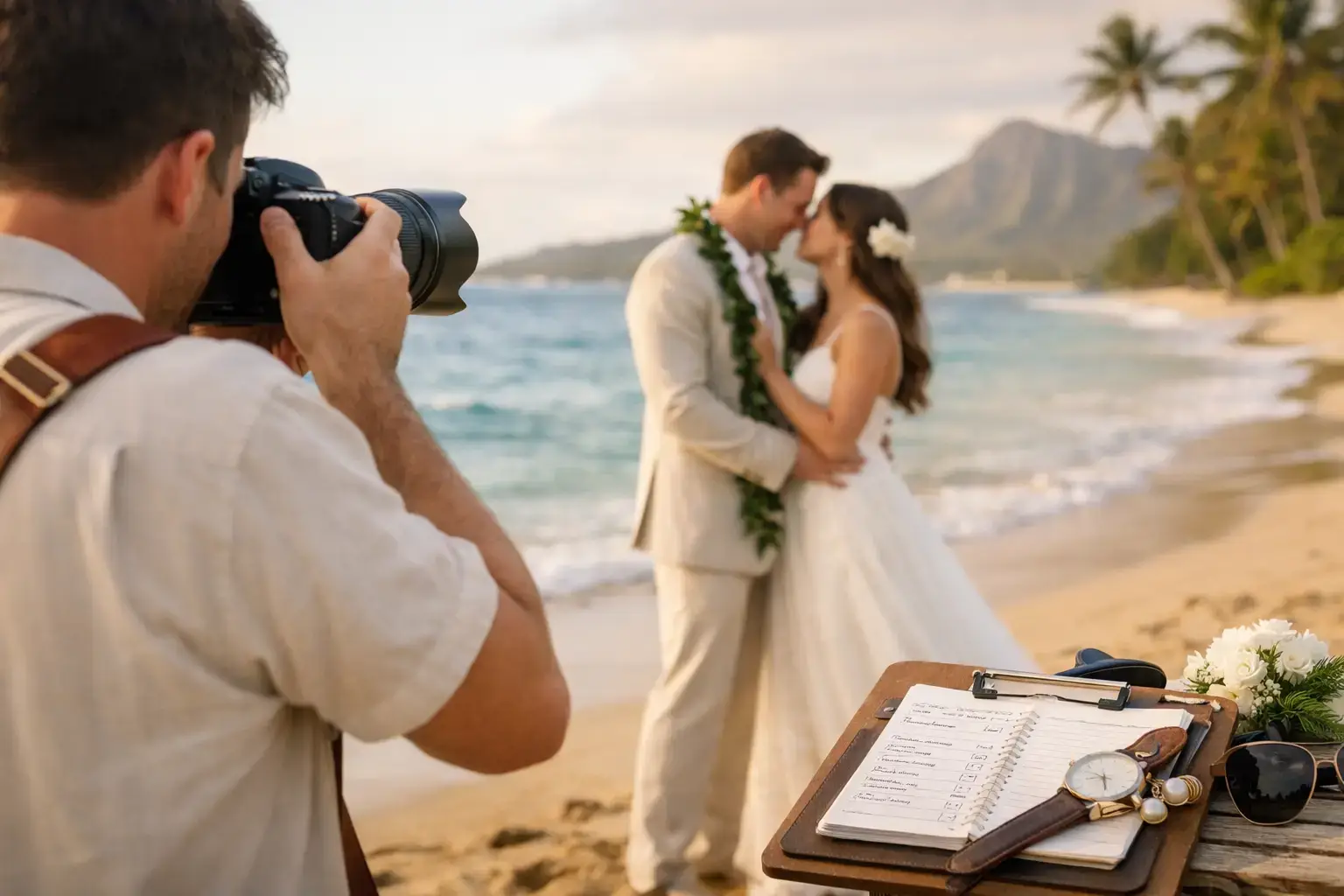
That does not mean every portrait needs to happen at sunset. It means your schedule should be built around which parts of the day matter most visually. If couple portraits are a high priority, plan them during golden hour or split them into two shorter sessions – one earlier for convenience and one near sunset for the best light. If you are having a first look, that can open up more flexibility and reduce pressure later.
This is where experience matters. A photographer who knows Oahu will understand how different sides of the island photograph at different times of day, how fast the light drops, and how weather can shift the plan. Timeline planning should support those realities rather than fight them.
Getting ready coverage needs more time than couples expect
Getting ready is often treated as the easiest part of the day to schedule, but it is one of the most commonly underestimated. If you want detail photos, robe shots with your wedding party, candid moments with family, final touch-ups, and a calm lead-in to the ceremony, this part of the timeline needs structure.
A good rule is to have hair and makeup finished earlier than you think you need. That buffer allows time for touch-ups, getting dressed, and those quieter moments that often become favorites in the final gallery. If everyone is still half-ready when photo coverage begins, the morning can feel rushed immediately.
The space matters too. Clean rooms, good window light, and limited clutter make a real difference in the visual result. Premium wedding coverage is not only about what happens in front of the camera. It is also about setting up an environment that supports polished, natural imagery.
A realistic wedding morning flow
Most couples benefit from a wedding morning plan that includes detail shots first, candid coverage while people are getting ready, then dressing, portraits with close family or the wedding party, and finally departure for the ceremony. The order can shift, but the principle stays the same: avoid stacking every major moment back to back with no margin.
If the ceremony location requires travel, build in more time than the map suggests. Oahu traffic has its own personality, and wedding days should not depend on perfect conditions.
First look or aisle reveal? It depends on your priorities
There is no single right answer here. A first look gives you more portrait time before the ceremony, helps calm nerves, and often makes the post-ceremony schedule easier. It can be especially useful if sunset is early or if family formals need to happen efficiently.
Waiting for the aisle reveal keeps that traditional moment intact and may feel more meaningful for some couples. The trade-off is that more photography has to happen after the ceremony, when family logistics and guest flow can become more complicated.
For Oahu couples planning outdoor weddings, the decision often comes down to timing and light. If your ceremony is late enough to flow naturally into sunset portraits, skipping the first look may work beautifully. If your ceremony is earlier in the day or your reception starts quickly after, a first look can protect both your timeline and your gallery.
Build family photo time with intention
Family portraits are important, but they move fastest when they are planned in advance. A short, organized list is better than trying to improvise combinations in real time. Without a plan, this part of the day can stretch, guests drift away, and the couple loses valuable time.
Keep the list focused on must-have groupings. Assign a relative, coordinator, or trusted friend who knows the family to help gather people quickly. If older family members or small children are involved, schedule them early so they are not left waiting too long in the heat.
This is one of the most practical parts of oahu wedding photographer timeline planning because it directly affects how much relaxed time remains for couple portraits and reception coverage.
Reception timelines should protect real moments
A reception schedule should feel lively, not overpacked. Grand entrance, first dance, toasts, dinner service, parent dances, cake cutting, and open dancing all need room to land naturally. If every event is compressed into a short window, the evening can feel more like a checklist than a celebration.
Photography coverage benefits when the reception timeline has a steady rhythm. Toasts before dinner may keep the evening moving. A sunset break during cocktail hour or early reception can give you a chance to step away for a few minutes of portraits in the best light. Cake cutting can happen earlier if you want the option to greet guests or keep the night flexible afterward.
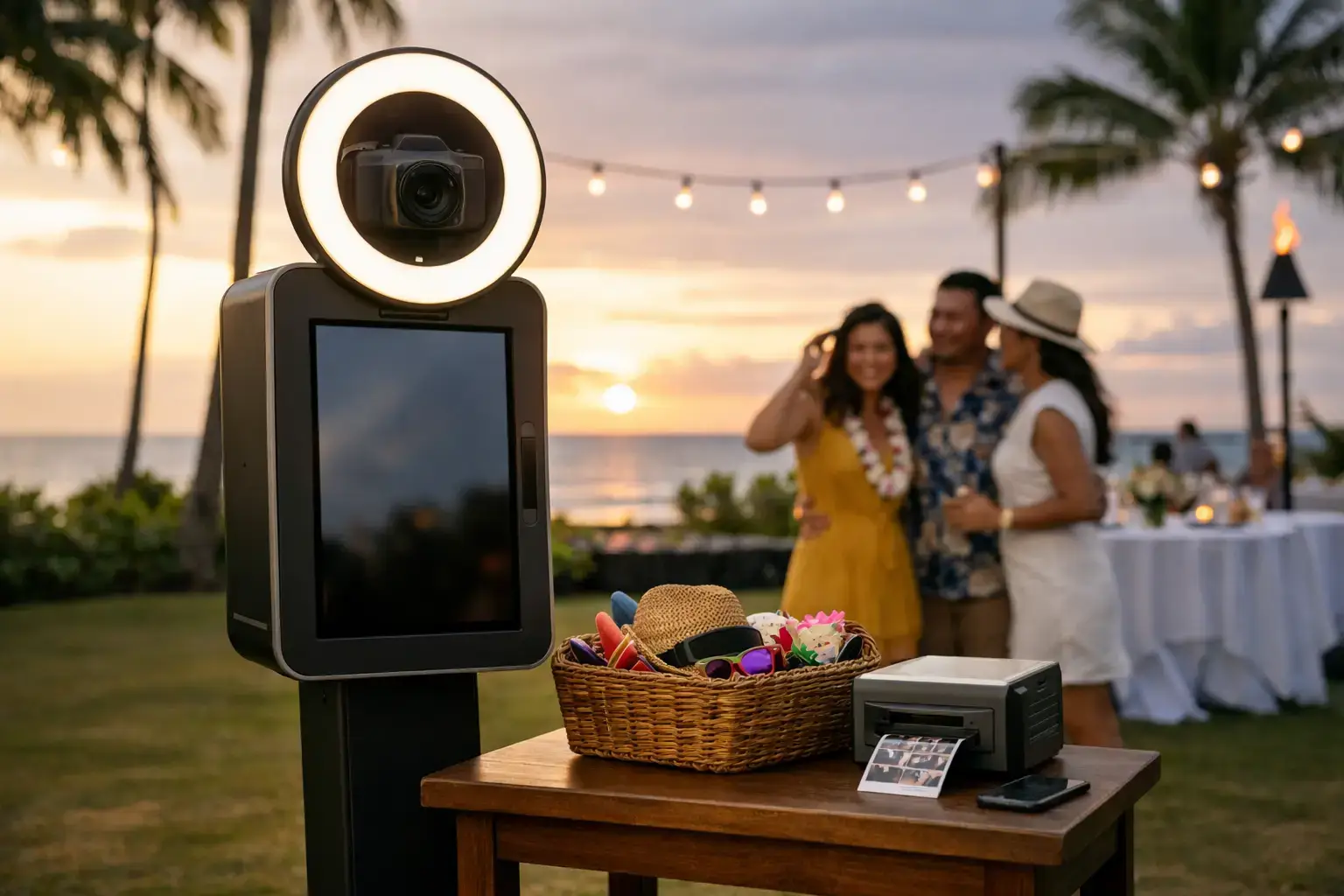
If you are adding a photo booth, place it where guests can access it easily without disrupting the main flow. That creates a better guest experience and gives the event more energy without pulling attention from key formalities.
Common timeline mistakes couples make
The biggest mistake is assuming every part of the day will run exactly on time. Another is scheduling based only on ceremony and reception start times without thinking through travel, lighting, transitions, and the emotional pace of the day.
It is also common to underestimate how long portraits take, especially with a large wedding party or multiple family groupings. Shortening photo time may seem harmless in the planning stage, but it often creates pressure later. The goal is not to spend the whole day posing. It is to make sure the important people and moments are covered well, without rushing.
A final issue is failing to coordinate vendors around one shared schedule. Your planner, photographer, videographer, hair and makeup team, transportation, and venue should all be working from the same timeline version.
How a professional photographer helps shape the timeline
An experienced wedding photographer does more than show up with a camera. They help map the day around light, logistics, and the kind of story you want your images to tell. That guidance matters even more on Oahu, where locations, weather, and travel can all influence the plan.
At Creative Media Production LLC, consultation and planning are part of creating reliable coverage, not an extra detail. The right photography team helps you think through where time should be added, where the schedule can tighten up, and how to preserve a calm experience while still capturing premium, polished results.
If you are early in the planning process, start by identifying your ceremony time, sunset window, travel needs, and top photo priorities. From there, build a timeline that gives each part of the day enough room to happen naturally. The best wedding images rarely come from a rushed schedule. They come from a well-planned day that still feels like your own.