Category: Corporate Media

Professional corporate event photography and videography in Oahu, capturing conferences, product launches, and business events with polished media coverage.

  • Creative event coverage examples to inspire your Oahu celebration

    Creative event coverage examples to inspire your Oahu celebration


    TL;DR:

    • Creative event coverage captures emotional stories and local spirit, making memories last beyond photos.
    • Successful coverage combines storytelling, personalization, guest interaction, and awareness of Hawaii’s unique environment.
    • Collaborate with experienced local teams, communicate your vision clearly, and balance multiple styles for best results.

    Planning an event in Oahu means you’re already working with one of the most visually stunning backdrops on the planet. But here’s the challenge: so is everyone else. From beachfront weddings in Kailua to corporate galas in Honolulu, every event on this island competes for visual impact and lasting memory. What separates the celebrations people talk about for years from the ones that fade into a photo album? Creative, personalized media coverage that tells your story, not a generic version of it. This article walks you through real-world examples, a practical comparison of coverage styles, and a step-by-step plan to get the most out of your Oahu media team.


    Table of Contents

    Key Takeaways

    Point Details
    Define your vision Start by clarifying your event story and what creative moments matter most to you.
    Explore bold ideas Look beyond standard coverage to creative examples that personalize your event’s media.
    Compare your options A side-by-side look at styles helps you choose the best fit for your Oahu gathering.
    Work with local pros Partnering with Oahu creatives ensures coverage resonates with guests and setting.
    Communicate clearly Share your vision and must-haves to help your media team deliver standout results.

    What makes event coverage creative?

    Creative event coverage isn’t about using the fanciest camera or the most dramatic filters. At its core, it means capturing your event in a way that reflects who you are, what you’re celebrating, and the specific energy of your gathering. It’s the difference between a photo that documents what happened and an image that makes you feel what happened.

    For Oahu events specifically, creative coverage requires a few key ingredients:

    • Storytelling with intention: Every shot, clip, and angle should contribute to a narrative arc. A skilled media team plans the story before the event even begins.
    • Personalization: Your Hawaiian wedding on the North Shore is not the same as anyone else’s. Coverage should feel custom, not cookie-cutter.
    • Guest interaction: Some of the most powerful event images involve real, unposed human moments. Creative media teams know how to draw those out naturally.
    • Spirit of place: Hawaii has a cultural depth and a visual identity that mainland coverage styles often miss entirely. The best Oahu media professionals weave aloha spirit, local traditions, and the island’s dramatic scenery into every frame.

    One common misunderstanding is that “creative” means gimmicky. Smoke machines, over-edited HDR photos, or trendy transitions that age poorly are not creativity. They’re noise. True creative lasting event memories come from substance: a candid laugh between grandparents at a birthday lu’au, the way golden light falls on a couple during a beach ceremony, or a CEO’s genuine reaction during a team milestone video.

    Strong visual branding examples from other creative industries consistently show that emotional resonance outperforms visual flash every single time.

    Pro Tip: Before your first meeting with a media team, write down three words that describe the feeling you want your event coverage to evoke. Share those words at the start of your consultation. A great team will build their entire creative direction around them.


    Top creative event coverage examples for Oahu gatherings

    With those criteria in mind, here are some of the most original and effective event coverage ideas we’ve seen across Oahu, organized by event type.

    Weddings

    1. Sunrise first-look at Lanikai Beach: Instead of the traditional pre-ceremony first look in a hotel hallway, couples who choose Lanikai Beach at sunrise get soft pink light, still water, and zero crowds. The resulting images feel cinematic without any manipulation. The key is timing and local knowledge, two things a mainland photographer simply won’t have.

    2. Aerial drone footage of the vow exchange: Drone coverage of a beachfront ceremony creates a perspective that guests on the ground never see. When done correctly, with proper permits and a licensed operator, aerial footage transforms a ceremony into something that looks and feels like a feature film. Our event videography services include aerial options specifically suited to Oahu’s outdoor venues.

    3. Candid guest interview segments: Imagine a short documentary-style “why love?” interview series filmed with guests during cocktail hour. Fifteen-second clips of your grandmother, your college roommate, and your coworker each answering the same question becomes one of the most treasured parts of the wedding video.

    Corporate events

    1. Behind-the-scenes time-lapse of event setup: For corporate conferences and product launches, a time-lapse of venue transformation from empty ballroom to polished event space is both visually striking and useful as brand content. It shows the scale and professionalism of your organization without a single word of copy. The innovative corporate event media ideas that work best in Oahu settings often use the island’s settings as a natural brand asset.

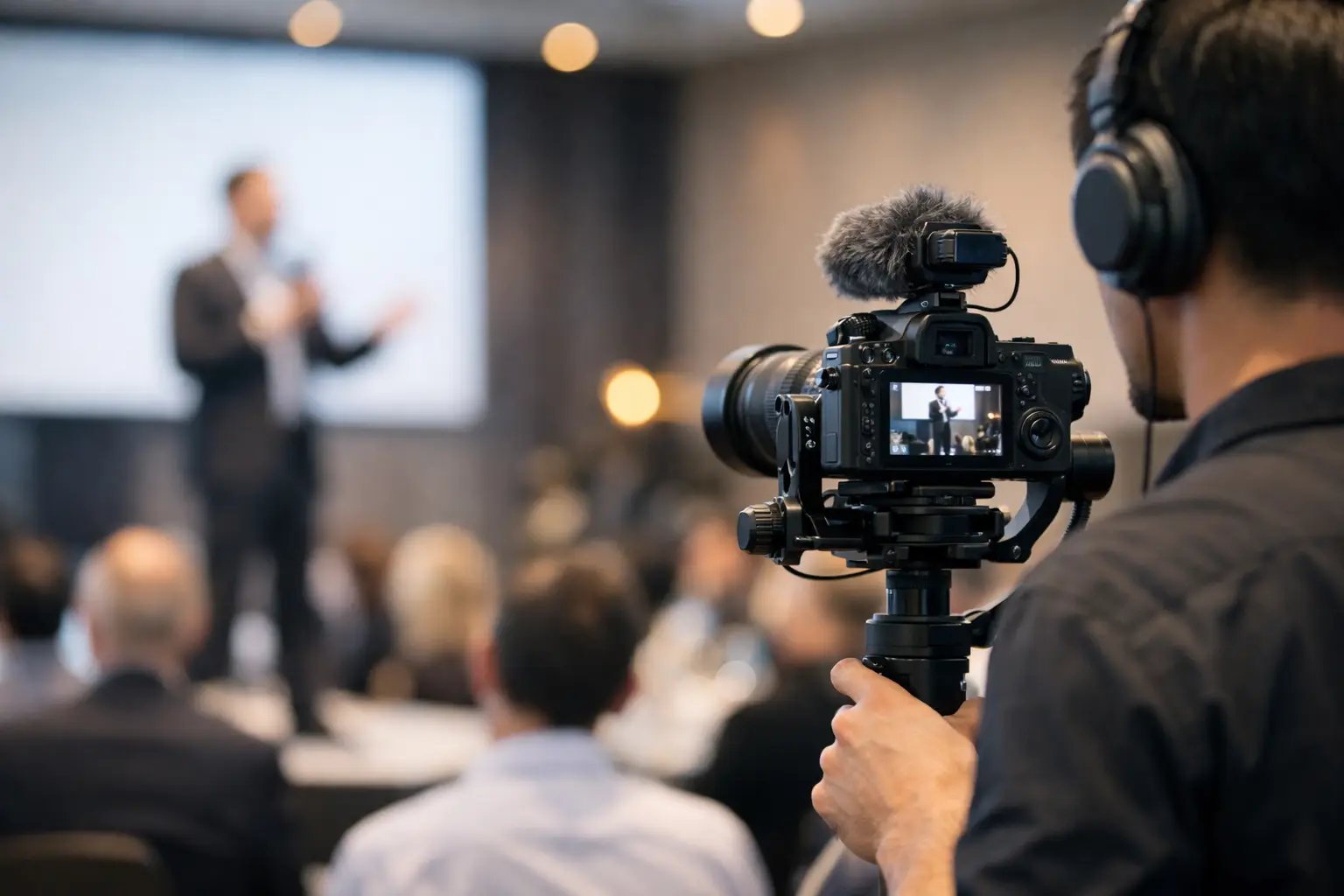
    2. Speaker highlight reels with audience reaction cutaways: Rather than filming a keynote straight through in one wide shot (which almost no one watches in full), a skilled videographer captures the speaker in close-up, audience reactions, key slide moments, and genuine laughter or applause. The edited reel becomes a two-minute piece of content your company can use across social platforms for months.

    3. Branded outdoor group photography with Diamond Head backdrop: A well-composed group photo using photography composition tips with Diamond Head or a lush Ko’olau Mountain backdrop does double duty: it’s a team memory and a compelling piece of visual brand content.

    Personal celebrations

    1. Multi-generational family photoshoot at a heritage location: For milestone birthdays or family reunions, choosing a location with personal meaning, like a neighborhood park in Kaimuki or a beach your family has visited for decades, adds layers of emotion that no studio can replicate.

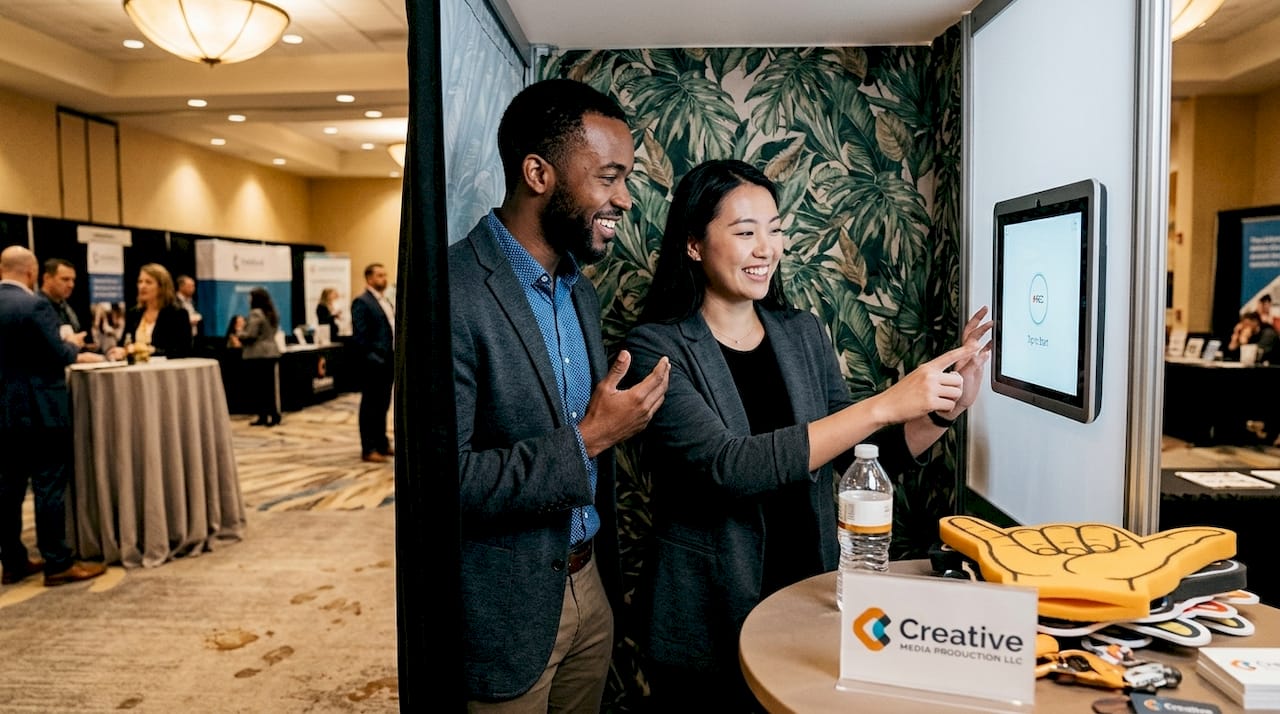
    2. Photobooth with custom Oahu-themed props: A well-run photobooth isn’t just fun for guests. It’s a source of dozens of authentic, unguarded expressions that guests willingly recreate. Custom props like surf boards, hibiscus leis, and Hawaiian-language signs make the experience specific to your island celebration.

    “The shots that stay with people forever aren’t the posed ones. They’re the moments when someone forgot the camera was there. Our job is to be invisible enough that those moments happen, and present enough to catch them.”

    Pro Tip: Ask your media team about a “coverage runway” on either side of your event’s official start and end times. The fifteen minutes before guests arrive and the winding-down moments at the end often produce some of the most genuine, story-rich content of the entire event.
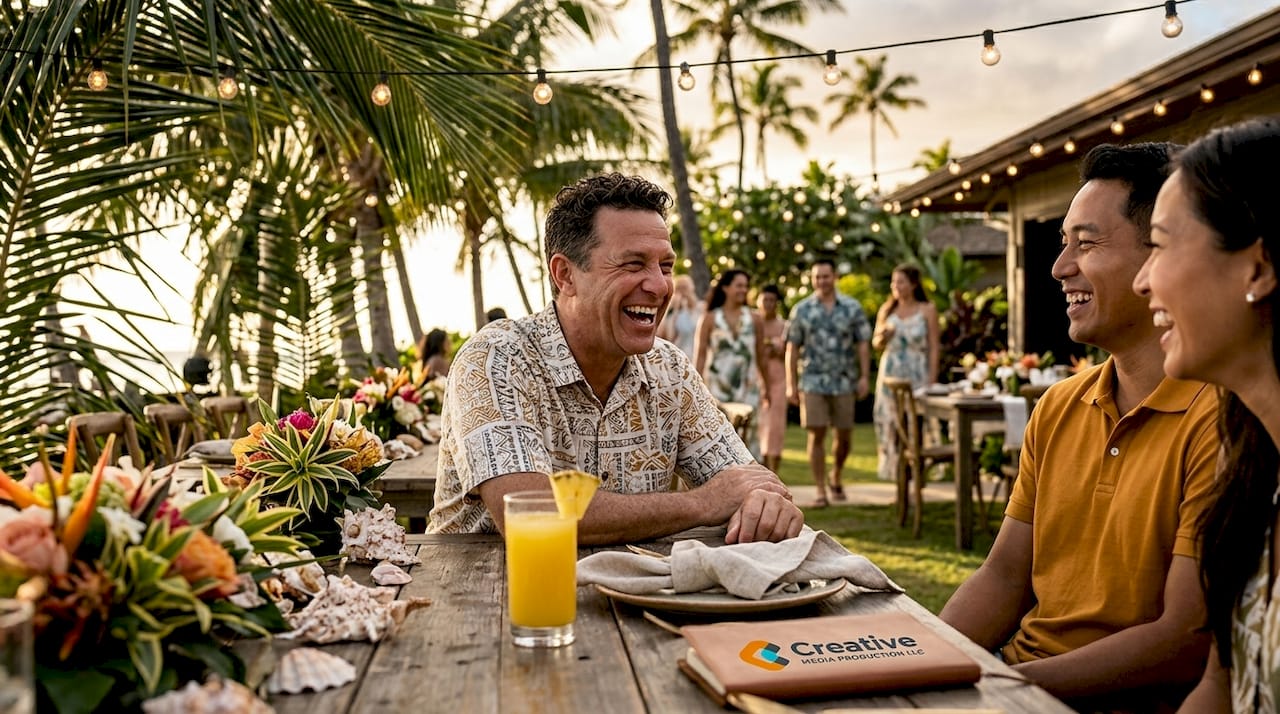
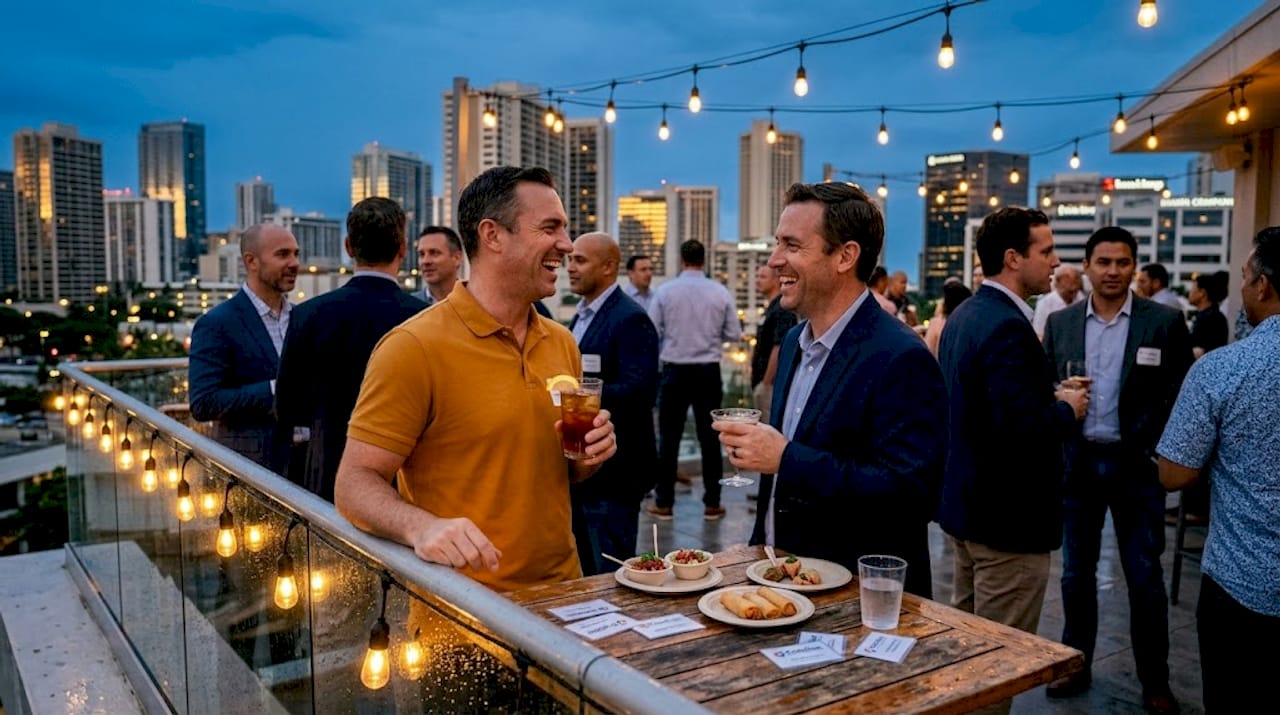
    Guests sharing laughter at Oahu event


    Comparison: What creative approach fits your event?

    After seeing the examples, you might be asking which style truly suits your event’s vision and goals. Here’s how they stack up:

    Approach Best for Why choose it
    Documentary style Weddings, memorials, milestone events Captures authentic emotion and narrative flow without interrupting the event
    Highlight reels Corporate events, product launches, birthday parties Produces shareable, short-form content optimized for social media and presentations
    Interactive photo booths Receptions, galas, family reunions Generates guest participation and dozens of candid, unposed images in one setup
    Candid guest interviews Weddings, retirement parties, anniversary events Adds voice and personality to the visual story; creates lasting documentary-style keepsakes
    Drone footage Outdoor weddings, large corporate retreats, beachfront events Provides scale, drama, and a perspective impossible to achieve from the ground

    Each approach has its ideal use case, and the best event coverage often combines two or three of these styles. For example, an Oahu wedding might use documentary style as the foundation, drone footage for the ceremony and venue reveal, and a photobooth during the reception. Planning event photography with this layered mindset ensures you capture both the grand moments and the intimate ones.

    Understanding the role of video in branding also helps corporate clients see why a highlight reel isn’t just a nice recap. It’s an asset that actively builds trust and awareness long after the event concludes.


    How to select and collaborate for creative results

    Once you know the possibilities, you’ll want practical steps for making creative coverage a reality at your Oahu event.

    1. Identify your event story first. Before reaching out to any media team, answer this: if your event were a short film, what would it be about? A couple’s shared love of the ocean? A company’s ten years of growth? A grandmother’s 80th birthday surrounded by three generations? Your story is the anchor for every creative decision.

    2. Evaluate media teams by their portfolio diversity. A team that only shows polished, well-lit ballroom shots may struggle with a sunset ceremony on a lava field in Kaena Point. Look for range: indoor and outdoor, posed and candid, day and low-light settings.

    3. Communicate creative direction with specifics. Don’t just say “I want it to feel emotional.” Bring reference images, describe a scene from a film you love, or show a clip that captures the mood you’re after. Specifics give creative professionals something to work toward.

    4. Work with local Oahu vendors for situational expertise. Island logistics matter more than you might expect. Parking restrictions near Waimea Bay, tide schedules at Makapu’u, or permit requirements for certain state parks are things a local team will already know. That knowledge protects your timeline and your creative vision. Resources on enhancing event creativity emphasize the value of this local knowledge base repeatedly.

    5. Set expectations about deliverables and turnaround time. Creative coverage that includes drone footage, candid interviews, and a highlight reel will have a different editing timeline than a standard photo package. Clarify what you receive, in what format, and by when, before you sign anything.

    6. Give feedback during a trial run. If your media team offers a pre-event shoot or engagement session, use it. This is your chance to communicate what you love and what you’d adjust before the real event. Following a step-by-step event videography process helps ensure no moment goes undocumented.

    Pro Tip: Create a written “must-have moments” list and give it to your lead photographer and videographer at least one week before the event. Include specific people, relationships, and scenes. “A photo of my dad dancing with my daughter” is more useful than “candid family moments.”


    Creative event coverage: What makes Oahu different?

    Here’s something that doesn’t come up enough in conversations about event photography: standard mainland approaches often underperform in Hawaii, not because they’re bad, but because they weren’t designed for this place.

    The light here is different. The cultural context is different. The emotional register of a gathering that includes a Hawaiian blessing, an ‘oli chant, or a traditional hula performance requires a media professional who understands what they’re witnessing. Shooting through that moment like it’s just another “program element” will show in the final product.

    Oahu’s locations also create specific technical challenges. Bright midday sun at a beach venue can flatten skin tones and wash out color unless the team knows how to position and expose correctly. High humidity can affect lenses. Trade winds can move floral arrangements, veils, and draped fabrics unexpectedly. These are not things you learn from a textbook.

    What we’ve found, after years of documenting Oahu events, is that the most memorable coverage almost always comes from restraint paired with preparation. Not elaborate setups or dramatic post-processing, but a media team that spent time understanding the event’s heart before the camera ever came out of the bag.

    There’s also a meaningful conversation to be had about subtle storytelling versus big showy effects. Clients sometimes arrive with grand ideas about fog machines, neon signs, and elaborate drone maneuvers. We never dismiss those ideas outright. But we do ask: does this serve your story, or does it overshadow it? The couples and families who trust the quieter approach are consistently the most satisfied with what they take home.


    Ready to create unforgettable coverage for your Oahu event?

    If these ideas excite you, it’s time to discover how local media professionals can turn your creative vision into reality.

    At Creative Media Production, we’ve spent over 15 years building a deep understanding of Oahu’s events, venues, culture, and light. Whether you’re planning an intimate beach wedding, a large corporate conference, or a milestone family celebration, our team brings both technical skill and genuine local knowledge to every shoot.
    https://creativemediaprod.com

    Explore our full gallery of event photography types to see the range of styles we offer, or browse our portfolio as an Oahu event photographer to find the look and feel that matches your vision. We also have a curated resource of creative event photo ideas to help you spark your planning. Reach out for a personalized consultation, and let’s start building your event story together.


    Frequently asked questions

    What is the difference between creative and traditional event coverage?

    Creative event coverage customizes the approach to suit your story and guests, while traditional coverage often follows a standard formula that produces predictable results regardless of the event’s unique character.

    How much does creative event coverage cost in Oahu?

    Prices vary based on event size, length, and the complexity of the coverage approach, but creative packages typically carry a modest premium over basic options that more than pays off in the quality and usability of the final content.

    Do you need special permissions for drone coverage at Oahu events?

    Yes, many Oahu locations, including beaches, parks, and areas near airports, require permits and compliance with FAA drone regulations before aerial event coverage can take place.

    Can creative media teams cover both photos and video together?

    Many Oahu media professionals offer combined photo and video services, which creates seamless, cohesive coverage and often saves clients money compared to booking separate teams.

  • How to Capture Authentic Corporate Moments in Oahu

    How to Capture Authentic Corporate Moments in Oahu


    TL;DR:

    • Effective corporate event photography combines staged assets with candid shots to capture genuine emotion.
    • Preparation, proper equipment, and strategic shot selection are essential for authentic and impactful images.
    • Authentic, spontaneous photos build stronger team pride and better reinforce brand personality.

    Corporate event planners invest thousands of dollars in venues, catering, and speakers, only to end up with a gallery full of stiff, forced smiles and empty conference rooms. The problem is not the photographer’s skill. It’s a strategy gap. Truly great event photography blends staged brand assets with candid shots that show genuine interaction, real emotion, and the human energy that makes your company worth working for. This guide gives you a practical, step-by-step approach to building a photography strategy that captures the moments your team will actually remember, and the visuals your brand genuinely needs.

    Table of Contents

    Key Takeaways

    Point Details
    Blend staged and candid Mix professional brand photos with spontaneous moments for a dynamic event gallery.
    Prioritize critical moments Identify speeches, networking, reactions, and branding to ensure no key shot is missed.
    Prepare for low light Use wide-aperture lenses, higher ISO, and bounce flash for clear photos in dim venues.
    Curate for authenticity Select photos that capture true engagement and emotion to strengthen corporate identity.

    Assessing your corporate event’s priorities

    Before a single photo is taken, you need a clear picture of what success looks like. This sounds obvious, but most corporate event galleries fail at this first step. Planners hand a brief to a photographer, assume they share the same priorities, and then discover afterward that half the key moments were missed or shot from the wrong angle.

    Start by listing every segment of your event and assigning it a priority level. Think about what your stakeholders will need the images for. Are these photos going into an internal newsletter to boost morale? Will they appear on your company website or LinkedIn page for recruiting purposes? Will they be sent to sponsors as proof of brand visibility? Each use case demands a different type of shot.

    Key moments you should never miss at a corporate event:

    • Opening remarks and keynote speeches (wide room shots and close-up expressions)
    • Award ceremonies and recognition moments (reactions matter as much as the handshake)
    • Networking breaks and informal conversations (where the most authentic moments live)
    • Team-building activities (movement, laughter, genuine collaboration)
    • Sponsor logos, branded signage, and product displays
    • Group photos with leadership and full-team shots
    • Audience reactions during panels and Q&A sessions

    A best-practices approach to planning corporate event photography starts with a written shot list shared between the planner and the photographer at least one week before the event. This is not a creative constraint. It is a safety net that frees the photographer to focus on authentic captures rather than guessing what matters.

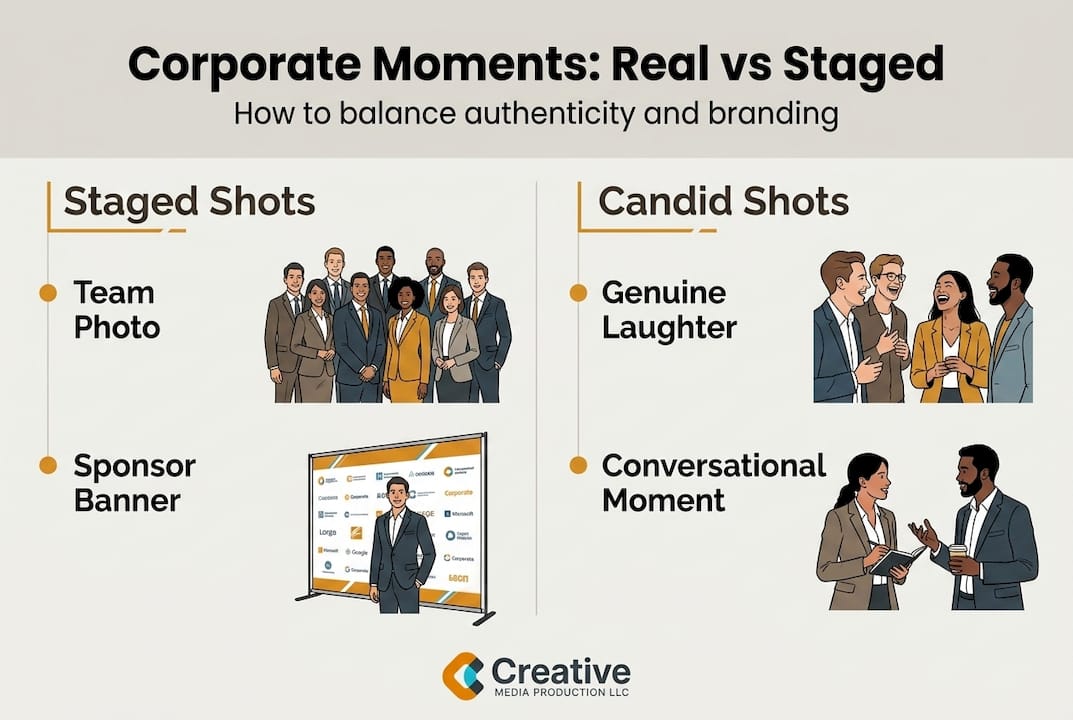
    Category Staged shots Candid shots
    Purpose Brand consistency, formal records Storytelling, emotional connection
    Best for Sponsor deliverables, press releases Internal communications, social media
    Challenges Can feel stiff or rehearsed Harder to control quality
    Lighting needs Controlled setups preferred Must adapt to ambient conditions
    Planning required High: schedules and poses needed Low: photographer stays mobile
    Audience response Professional but forgettable Personal and shareable

    The most powerful galleries include both. As the Cvent event photography guide notes, the best galleries cover context with wide establishing shots, capture audience reactions, document networking interactions, and make sure sponsor and branding details are visible. Use this framework to confirm deliverables with your internal team before you brief any photographer, especially when working with event photography for professional brands where brand standards are non-negotiable.

    Preparing for authentic captures: Tools, settings, and lighting

    Once you know what you need to capture, the next challenge is making sure the photographer can actually do it. Oahu’s corporate venues range from beachfront lanais at sunset to windowless conference rooms in downtown Honolulu. Each environment creates completely different technical demands. This is not the place to cut corners.

    Recommended gear for corporate event photography:

    Equipment Why it matters
    Full-frame camera body (e.g., Sony A7 series, Canon R5) Better low-light performance and dynamic range
    24-70mm f/2.8 zoom lens Versatile for both wide room shots and tighter portraits
    85mm f/1.8 or f/1.4 prime lens Sharp, beautiful subject separation for speaker close-ups
    70-200mm f/2.8 telephoto Captures candid moments from across the room without disruption
    External flash with diffuser Soft, even light that does not flatten faces or distract attendees
    Dual memory card slots Redundancy in case one card fails during a critical moment
    Extra batteries (minimum 3 sets) Corporate events run long, and battery swaps at the wrong moment cost you the shot

    Lighting is the single biggest variable that separates amateur event galleries from professional ones. Industry best practices on low light event photography consistently point to the same principles: wider apertures, higher ISO, and diffused flash. A lens that opens to f/2.8 or wider lets in significantly more light than a standard kit lens at f/5.6. That difference allows you to use a faster shutter speed, which means sharper images of people who are moving, gesturing, or laughing.

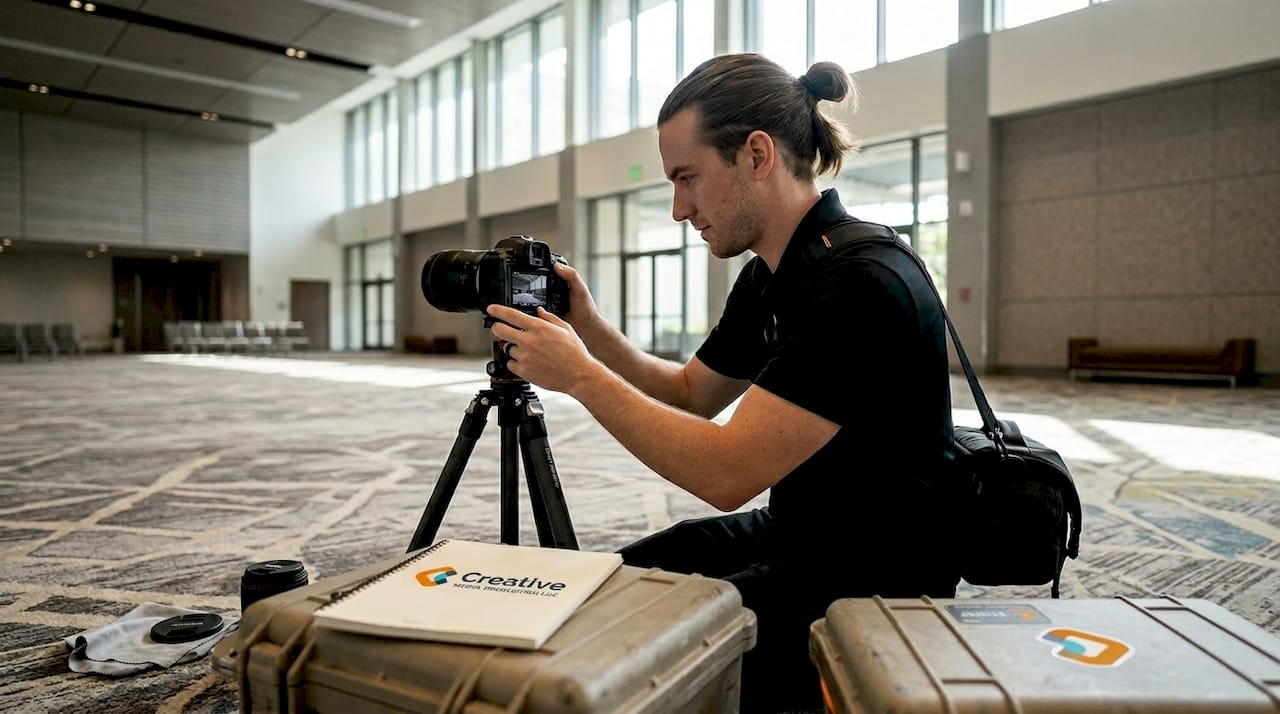
    Photographer adjusting camera in Oahu ballroom

    Pro Tip: When shooting indoors at corporate venues in Hawaii, bounce your external flash off the ceiling instead of firing it directly at your subjects. Ceilings are usually white or light-colored, which turns them into a giant, soft light source. This approach avoids harsh direct flash and gives your images a natural, flattering look that fits the relaxed professionalism Oahu’s business culture is known for.

    Camera settings to adjust across different environments:

    • Ballrooms and conference rooms: ISO 1600 to 3200, f/2.8, shutter speed at 1/125s minimum for moving subjects
    • Outdoor beachfront events at golden hour: ISO 400 to 800, f/4 to f/5.6, watch for harsh shadows
    • Mixed indoor/outdoor transitions: Set Auto ISO with a cap at 6400 and adjust white balance manually for each zone
    • Breakout sessions with projector screens: Expose for the subject’s face, not the screen, and use a telephoto to avoid blocking the room

    Understanding the specific types of event photography needed for your event helps you brief your photographer with precision. A product launch on a Waikiki rooftop needs entirely different gear preparation than an indoor leadership summit at a Honolulu convention center.

    Capturing the moment: Step-by-step execution

    Preparation gets you ready. Execution is where everything actually happens, and where most events lose their most powerful images. The key is having a clear system for the photographer to follow while still leaving room for genuine spontaneity.

    Step-by-step approach for event day photography:

    1. Arrive 45 to 60 minutes early. Walk the venue, identify the best angles for speeches and panels, note where the light is flattering, and locate power outlets for battery management.
    2. Shoot the setup. Empty chairs, branded materials, table settings, and sponsor signage tell the story of preparation and professionalism. These shots are gold for post-event recap content.
    3. Capture arrivals and registration. This is when attendees are relaxed, animated, and naturally interacting. Some of the most genuine expressions happen before the program even starts.
    4. During speeches and presentations, shoot from multiple positions. Get a wide shot showing the speaker and the audience, a medium shot of the speaker’s face and hands, and a close-up of audience reactions. Rotate positions between speakers so the gallery has visual variety.
    5. Prioritize reactions over poses during networking breaks. A group of executives laughing over lunch says more about your company culture than any posed group photo. Work the room quietly and let scenes develop naturally.
    6. Schedule posed group shots at a defined time. Do not try to wrangle everyone for a group photo at the end of the event when energy is low. Build it into your agenda, communicate the time in advance, and give the photographer five to ten minutes of dedicated access.
    7. Shoot branding and sponsor details intentionally. Do not leave this to chance. Walk the photographer through every piece of branded material that needs to be documented before the event begins.

    Pro Tip: The most emotionally resonant corporate images rarely happen during the main program. Watch for side conversations during breaks, the moment someone receives unexpected recognition, or a team member helping a colleague. These are the frames that end up on company walls.

    “The best galleries include context with wide establishing shots, audience reactions, networking interactions, and sponsor or branding details.” Cvent Event Photography Tips

    Understanding the full value of expert event coverage changes how you approach the day. Photography is not just documentation. It is a tool for internal communication, recruiting, and long-term brand building. Consider pairing your photo coverage with event videography services to create a more complete storytelling package that can be repurposed across multiple platforms.

    Reviewing and selecting authentic shots

    The event is over. The photographer delivers a folder with hundreds or even thousands of images. Now comes the work that most planners underestimate: curation. Selecting the right images is just as strategic as capturing them.

    A gallery with 300 generic shots is less useful than a tightly edited collection of 75 images that tell a clear, honest story about your event. The goal is not volume. It is narrative coherence and emotional impact.

    Infographic showing staged versus candid corporate photos

    How to filter and cull your event photos effectively:

    Start by eliminating anything technically flawed. Blurry images, missed focus, closed eyes, and awkward expressions go first. This is non-negotiable, even if the framing is otherwise good. Then remove redundant shots. If you have 20 near-identical frames from the same speech, keep the two or three that show the most energy and expression.

    Criteria for selecting photos that tell your event’s story:

    • Emotional authenticity: Is the subject’s expression genuine? Does it reflect the actual tone of the moment?
    • Contextual clarity: Does the image give the viewer a sense of where they are and what is happening?
    • Brand visibility: Are logos, signage, or branded materials present and legible without being forced?
    • Variety of scale: Does your final gallery include wide shots, medium shots, and close-ups in roughly equal proportion?
    • Diversity of subjects: Are different team members, leadership levels, and departments represented?
    • Narrative sequence: Can you arrange a selection of images that tells the day’s story from setup to close?

    According to event photography best practices, the most effective galleries blend professional staged brand assets with candid in-the-moment images. When you review your photos, ask whether someone who did not attend the event would understand what happened, who was there, and why it mattered. That is the standard your gallery should meet.

    After selecting your final images, consider building a corporate event recap video using the best stills alongside any video footage. This dramatically extends the life of your event content and gives you a ready-made asset for internal communications, social media, and future sponsorship pitches. Your corporate event photographer should be able to advise you on which images will translate best to motion-based formats.

    Our take: Why authenticity elevates your corporate brand

    After more than 15 years of photographing corporate events across Oahu, from leadership retreats in Kailua to industry conferences in downtown Honolulu, we have seen one consistent pattern. The events that invest in authentic documentation build stronger teams and stronger brands than the ones that only invest in staging.

    Here is the uncomfortable truth about perfectly staged corporate photography: your employees can tell the difference. When they see a gallery full of forced smiles and rigid poses, they recognize their own discomfort in those images. That recognition does not build pride or loyalty. It does the opposite.

    The candid shots, the real ones, do something different. When a team member sees themselves captured in a moment of genuine laughter, focused collaboration, or heartfelt recognition, they want to share that image. They show it to their families. They post it. They connect it to a memory that made them feel valued. That is not just good photography. That is internal marketing that no budget can buy.

    Oahu’s corporate culture has its own rhythm. Business here tends to be warmer, less formal, and more relationship-driven than in many mainland cities. That culture shows up in the best event photos when a photographer understands it and knows how to wait for it. Understanding the value of expert documentation means recognizing that authenticity is not a nice-to-have. It is the asset that makes everything else in your event investment worth more.

    Staged photos have their place. You need clean brand assets, sponsor deliverables, and formal group shots. But if that is all your gallery contains, you have missed the most valuable thing your event produced: evidence that your people genuinely showed up for each other.

    Connect with skilled corporate photographers in Oahu

    Putting these strategies into action is much easier when you have an experienced local photographer who already understands Oahu’s venues, lighting conditions, and corporate culture.

    https://creativemediaprod.com

    At Creative Media Productions, we have spent over 15 years documenting corporate events across Oahu with a focus on authentic, story-driven coverage. Whether you need a corporate event photographer in Oahu for a single afternoon or a full-day summit with staged and candid coverage, we tailor every package to your specific goals and deliverables. Our team understands what professional event photography requires in both technical and human terms. Explore our full range of event photography coverage options and reach out today to discuss your next corporate event.

    Frequently asked questions

    What are the most important corporate moments to capture?

    Key moments include panels, keynote speeches, award ceremonies, networking interactions, and branding details. Best practice galleries also prioritize wide establishing shots and genuine audience reactions.

    How do you handle low lighting in corporate event venues?

    Use lenses with wider apertures such as f/2.8 or larger, raise your ISO as conditions demand, and use bounce flash or diffusers to produce soft, even light without harsh shadows on faces.

    How can photos capture brand value and team energy?

    Mix staged brand asset photos with candid in-the-moment shots to show real interaction and emotion. Blending both styles gives you visuals that satisfy sponsor requirements while also resonating with your team.

    What type of photography equipment works best for corporate events?

    Full-frame cameras paired with f/2.8 or wider lenses and an external flash with a diffuser give you the versatility to handle every lighting condition. Low-light corporate venues in particular demand gear that performs well at high ISO without sacrificing image quality.

  • How to Book Event Videography Right

    How to Book Event Videography Right

    The difference between a good event video and a disappointing one is usually decided before the camera ever comes out. It starts with the booking process – how clearly the coverage is planned, how well the team understands your event, and whether expectations are aligned from the beginning. If you are wondering how to book event videography, the goal is not just to hire someone with a camera. It is to secure a professional team that can capture the energy, emotion, and key moments of your event without adding stress.

    That matters whether you are planning a wedding in Waikiki, a corporate event in Honolulu, a birthday on the North Shore, or a memorial service that calls for a respectful, unobtrusive presence. The right videography partner should feel both creative and dependable. You want story-driven coverage, but you also want punctual arrival, clear communication, and fast turnaround when the event is over.

    How to book event videography with confidence

    The first step is to get specific about what you need filmed. Many clients begin with a broad idea like, “We want the event covered,” but videography works best when the priorities are clear. A wedding couple may care most about vows, speeches, and candid guest reactions. A corporate team may need wide room coverage, speaker highlights, branded details, and short clips for post-event marketing. A family hosting a birthday may want a warm, natural record of the celebration, while a memorial service often calls for a quieter, more discreet approach.

    When you know the purpose of the final video, it becomes much easier to choose the right package and ask the right questions. If the footage is mainly for personal keepsakes, your needs may be different from someone who plans to use the video for promotion, social media, or internal business communications. Neither is better – but they require different planning.

    Budget should come next, but it helps to think about budget in terms of coverage value rather than just price. Lower pricing can look attractive at first, yet it often means shorter coverage, fewer cameras, limited editing, slower delivery, or less event planning support. Premium videography is not only about image quality. It also reflects preparation, reliability, audio capture, storytelling, and the ability to adapt in real time when the schedule shifts.

    What to look for before you book

    A strong portfolio should be your starting point. Look for consistency, not just one impressive clip. You want to see that the videographer can handle different lighting conditions, crowded environments, fast-moving timelines, and real emotional moments without making the footage feel staged or chaotic. Clean visuals, stable motion, and clear sound all matter.

    It is also worth paying attention to whether the work feels intentional. Cinematic editing is valuable, but only when it still tells the story of the event. Beautiful shots alone are not enough if the video misses the important moments. For weddings and family celebrations, that may mean emotional pacing and natural interactions. For business events, it may mean a polished structure that reflects the brand and the purpose of the gathering.

    Experience with your specific event type matters more than many people realize. A team that films weddings may be excellent at emotional storytelling and live moment capture. A team that regularly handles corporate events may be stronger at schedule discipline, stage coverage, and creating promotional assets. For funerals and memorials, professionalism includes sensitivity, restraint, and respect for the atmosphere. The best fit is often a company that combines technical skill with the ability to read the room.

    Communication is another early indicator of service quality. If a company is responsive, organized, and clear during the inquiry stage, that usually carries over to the event itself. If getting basic answers is already difficult, that is often a warning sign. Booking should feel straightforward and well managed.

    Questions to ask when booking event videography

    Once you narrow your options, the conversation should move beyond availability and pricing. Ask how coverage is structured. Find out how many hours are included, whether additional time can be added, and how the team handles schedule changes on event day. Events rarely run exactly on time, so flexibility matters.

    You should also ask what deliverables are included. Some packages focus on a highlight film, while others include full-length edits, speech coverage, ceremony documentation, recap reels, or short-form clips for social sharing. This is one of the most common places clients assume more is included than actually is. Clear deliverables prevent disappointment later.

    Audio is another key question. Strong visuals can lose their impact if the vows, speeches, or presenter audio are weak. Ask how microphones are used, how backup audio is captured, and how the team handles loud or unpredictable environments.

    It is smart to ask about turnaround time as well. Fast delivery is especially valuable for corporate clients who want post-event content while the event is still fresh, but families and couples appreciate it too. A premium service should be able to explain the timeline clearly rather than keeping delivery vague.

    Finally, ask how the planning process works. Professional videography should include more than just showing up. A good team will usually review the run of show, identify must-capture moments, confirm location details, and align on the visual style before the event date.

    How packages and pricing really work

    When people try to figure out how to book event videography, pricing can feel inconsistent. That is because two packages with similar hour counts may not include the same level of production. One may use a single videographer and basic editing. Another may include multiple camera angles, professional audio, advanced color correction, drone coverage where appropriate, and a more polished final edit.

    The cheapest package is not always the most affordable decision if the final result falls short. At the same time, the most expensive package is not automatically the right fit either. It depends on the scale of the event, the moments that matter most, and how the footage will be used after the event.

    For example, a simple family gathering may not require all-day multi-camera coverage. A wedding with multiple locations probably does. A corporate conference may need coverage that balances documentary storytelling with marketing-ready clips. The right package should match the event instead of forcing your event into a one-size-fits-all structure.

    This is why consultation matters. A company that asks thoughtful questions before quoting is usually trying to recommend the right level of service, not just push the highest package.

    Red flags to avoid

    One of the biggest red flags is vague communication. If pricing is unclear, deliverables are loosely described, or the booking terms feel rushed, pause before committing. Professional service should be easy to understand.

    Another issue is a portfolio that looks stylish but narrow. If all you see are staged hero shots and very little real event coverage, you may not be getting the full picture of how that team performs under pressure.

    Be cautious if there is no planning process, no discussion of audio, and no clear delivery timeline. Event videography involves too many moving parts to leave those details unspoken. Reliability is part of the product.

    It is also fair to be wary of anyone who treats all events the same. Weddings, corporate events, birthdays, and memorials each require a different presence and filming approach. A professional team should recognize that.

    Booking early and preparing well

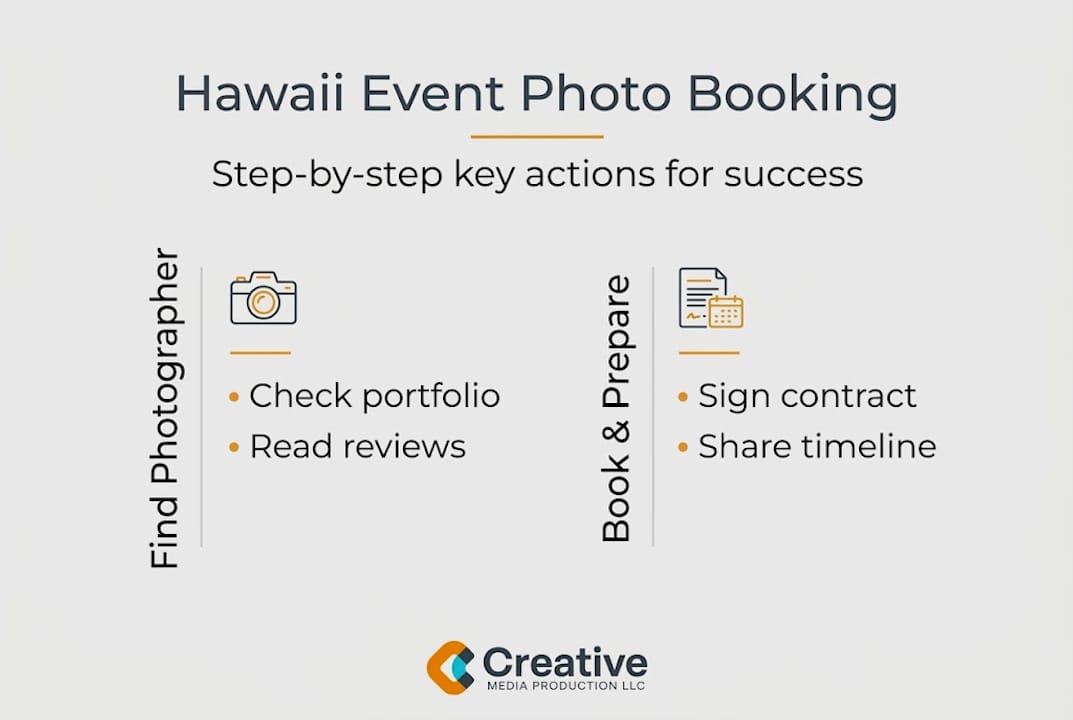
    The best videographers often book out well in advance, especially for weddings, holiday events, and peak seasons on Oahu. If your date matters, reach out early. Waiting too long can limit your options and leave you choosing based on availability alone instead of quality and fit.

    Once you book, preparation makes a major difference. Share the timeline, venue details, names of key people, and the moments that absolutely cannot be missed. If there are cultural traditions, surprise elements, or sensitive parts of the event, bring those up ahead of time. Good planning helps the video team work more smoothly and more discreetly.

    For clients who want both strong coverage and a low-stress experience, this is where a full-service company stands out. Creative Media Production LLC approaches event coverage with both craftsmanship and operational discipline, which is exactly what clients need when the day is moving fast and the moments cannot be recreated.

    Booking event videography should leave you feeling more confident, not more uncertain. When the fit is right, you can step into the event knowing the key moments will be captured with care, professionalism, and a clear eye for the story unfolding in front of the camera. That peace of mind is often just as valuable as the final film itself.

  • Oahu event planning: what to expect and budget for

    Oahu event planning: what to expect and budget for


    TL;DR:

    • Planning a successful Oahu celebration requires managing logistics, vendors, permits, and weather considerations.
    • Professional photography and videography are essential for preserving memories and should be prioritized early in budgeting.
    • Booking vendors and venues 10 to 12 months in advance ensures access to top services and better prices.

    Planning a wedding or celebration in Oahu feels like a dream until the quotes start coming in. Many couples and families assume that paradise handles the heavy lifting, but the reality is that a well-executed event on this island involves layers of logistics, vendor coordination, and real financial commitment. The average Hawaii wedding costs around $34,000, and even intimate celebrations can climb quickly when you factor in venues, catering, and professional media. This guide walks you through every core element of Oahu event planning so you arrive at your big day fully prepared, not blindsided.

    Table of Contents

    Key Takeaways

    Point Details
    Realistic budget planning Expect total costs from $3,000 up to $34,000+ depending on guest count and desired services.
    Media is essential Photography and videography are core investments for preserving your memories, not optional extras.
    Service selection matters Thoughtful vendor choices and clear timelines set the stage for a stress-free Oahu event.
    Consider bundled services Some venues include media and other essentials, simplifying coordination and possibly reducing costs.

    What event planning in Oahu really means

    Event planning is not just finding a pretty beach and showing up. In Oahu, it means orchestrating a dozen moving parts across one of the most in-demand destination markets in the world. Couples and families who underestimate that scope often end up rushed, over budget, or disappointed with how the day was captured.

    At its core, event planning includes venue selection, event coordination, décor design, vendor sourcing, catering management, and guest logistics. Each of those elements carries its own timeline, its own budget line, and its own risks if not handled intentionally. On an island like Oahu, you also have to account for weather windows, permit requirements for beach ceremonies, and vendor availability during peak travel seasons.

    Core components of Oahu event planning:

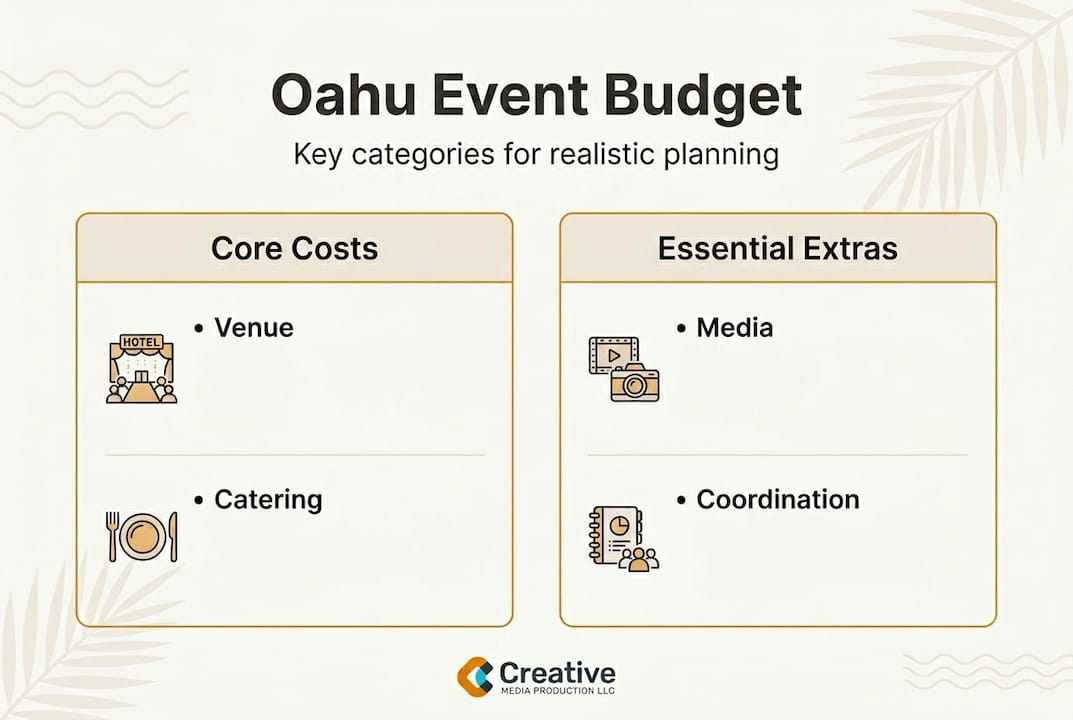
    • Venue: From beachfront resorts to botanical gardens, venue costs typically run $2,000 to $15,000 depending on location, day of week, and guest count
    • Catering: Expect to budget $70 to $150 per person for food and beverage service
    • Décor and florals: Custom touches like custom event tents and tropical arrangements add visual impact and usually run $1,500 to $5,000
    • Entertainment: Live music, DJs, or cultural performers each have different price points and availability windows
    • Photography and videography: One of the most important investments, ranging from $3,000 to $8,000 for professional coverage

    One of the most common misconceptions is that Oahu’s natural beauty does the work for you. While the scenery is stunning, professional media is what actually preserves it. Without skilled photo and video coverage, even the most beautiful ceremony fades into fuzzy phone snapshots and spotty memories.

    Budget category Low estimate High estimate
    Venue $2,000 $15,000
    Catering (per person) $70 $150
    Photography and videography $3,000 $8,000
    Décor and florals $1,500 $5,000
    Entertainment $1,000 $4,000
    Officiant and misc. $500 $2,000

    Understanding what event coverage involves early in the planning process helps you allocate budget wisely rather than treating it as an afterthought. A full Oahu wedding for 20 to 40 guests typically lands between $15,000 and $35,000, while an elopement can range from $3,000 to $10,000 if you prioritize experiences over scale.

    The biggest budget mistakes come from leaving professional media for last. By the time couples realize they want quality coverage, the best photographers and videographers are already booked for their date.

    Essential services for Oahu events

    Once you understand the scope of what you’re planning, you need to get specific about which services are non-negotiable versus nice-to-have. The answer changes depending on your event type, guest count, and personal priorities.

    The five most commonly required services for Oahu weddings and celebrations:

    1. Venue coordination: A venue coordinator manages the physical space, setup logistics, and timeline adherence on the day itself. They are not your personal planner but they are essential for keeping things on schedule.
    2. Catering and bar service: Food and beverage is typically the largest variable cost. Guest count drives this number more than any other factor.
    3. Décor and florals: Oahu has a rich tradition of tropical florals. Local florists who understand the climate and seasonal availability will get you more for your money.
    4. Entertainment: Whether it’s a live ukulele duo for your ceremony or a DJ for the reception, entertainment sets the emotional tone of the event.
    5. Photography and videography: This is the one service where cutting corners costs you the most in the long run. Photo and video typically range from $3,000 to $8,000 and represent one of the highest-value investments in your entire event budget.
    Service Why it matters Typical range
    Venue coordination Keeps timeline and logistics on track Included or $500+
    Catering Fuels guest experience $70-$150/person
    Photography Captures authentic moments permanently $2,000-$5,000
    Videography Brings the story to life in motion $1,500-$4,000
    Entertainment Sets emotional tone $1,000-$4,000

    Understanding choosing an event photographer before you sign any contracts is essential. Not all photographers have experience with the specific lighting challenges of outdoor Oahu ceremonies, midday beach sun, or sunset timing. Experienced teams know how to work the island’s natural light to your advantage.

    A strong photo and video team does more than document. They anticipate moments before they happen, position themselves for the unexpected, and deliver a final product that feels cinematic rather than clinical. The difference between amateur and professional coverage is night and day when you’re watching a wedding film years later.

    Pro Tip: Before booking any photographer or videographer, ask to see a full gallery from a single event, not just highlight shots. A curated portfolio of ten perfect images tells you less than seeing how they handled an entire wedding day from prep through reception.

    Reviewing photography packages explained side by side helps you understand what you’re actually getting at each price point. Hours of coverage, number of edited images, turnaround time, and second shooter availability all vary widely between packages.

    Vendor partnerships and in-house services in Oahu

    Once you know which services you need, the next major decision is whether to book those services independently or lean on your venue’s preferred vendor network. Both paths have real advantages and real risks.

    In-house venue vendors tend to know the property well. They understand the lighting, the timing, the flow of events at that specific location. However, in-house options sometimes limit your flexibility and may not align with your specific creative vision. The pricing may also be bundled in ways that make it hard to compare apples to apples.

    Independent vendors give you freedom to select exactly who you want based on their portfolio, their personality, and their experience with your event style. The trade-off is that you take on more coordination responsibility. You’re now managing multiple points of contact rather than one consolidated vendor.

    Key questions to ask any venue about their vendor relationships:

    • Do you have a required vendor list or a preferred vendor list?
    • Are there fees for bringing in outside vendors?
    • Are any media services included in your package pricing?
    • Do preferred vendors have exclusivity agreements that limit our choices?

    “Choosing the right vendor partners is the difference between a seamless event and one held together with last-minute phone calls.” — Creative Media Productions, Oahu

    Some venues include media teams in their standard packages, which can lower your overall cost but may also mean less control over the style and experience level of your coverage. Always ask to see that team’s specific work before agreeing to use them.

    Smart streamlining event setup through coordinated vendor communication also reduces stress on the event day itself. When your photographer, caterer, and venue coordinator are all working from the same timeline document, the entire day runs more smoothly.

    One of the best things you can do for creative event photo options is work with a media team that has direct relationships with Oahu venues. They know where the light hits best at 4 pm at a specific garden, or which beach access points are permit-free. That local knowledge translates directly into better photos for you.

    Pro Tip: When comparing vendor quotes, always ask for an itemized breakdown. A flat package price may sound convenient, but you need to know exactly what’s included and what triggers additional charges like travel fees, overtime, or extra editing.

    Planning your event timeline and budget

    With your services mapped and your vendor strategy set, the final planning layer is building a realistic timeline and locking in your budget numbers. This is where many couples feel overwhelmed, but it doesn’t have to be.

    Sample Oahu event planning milestones:

    1. 12 months out: Set your date, establish your total budget, research and book your venue
    2. 10 months out: Book your photo and video team (these book fastest in Oahu)
    3. 8 months out: Confirm caterer, entertainment, and officiant
    4. 6 months out: Finalize décor, florals, and guest list
    5. 4 months out: Send formal invitations, confirm vendor timelines and contact sheets
    6. 2 months out: Final headcount to caterer, review all contracts, confirm day-of timeline
    7. 2 weeks out: Final walkthrough with venue, confirm all vendor arrival times
    8. Day of: Trust your vendors, be present, let professionals handle the details

    Detailed budget ranges for Oahu celebrations:

    Item Low budget High budget
    Venue rental $2,000 $15,000
    Catering (50 guests at avg.) $3,500 $7,500
    Photography $2,000 $5,000
    Videography $1,500 $4,000
    Florals and décor $1,500 $5,000
    Entertainment $1,000 $4,000
    Hair and makeup $300 $1,000
    Officiant $300 $800

    Infographic showing Oahu event budgeting categories

    With venue costs ranging from $2,000 to $15,000 and catering running $70 to $150 per guest, your guest count is the single biggest lever in your entire budget. Every additional guest adds food, seating, florals, favors, and sometimes venue tier requirements. If your budget is tight, the most impactful change you can make is trimming your guest list before cutting professional media.

    The timeline matters just as much as the budget. Oahu’s top venues and best-reviewed photo and video teams book 10 to 12 months in advance during peak seasons, particularly May through October. Starting your search late almost always means compromising on your first choices.

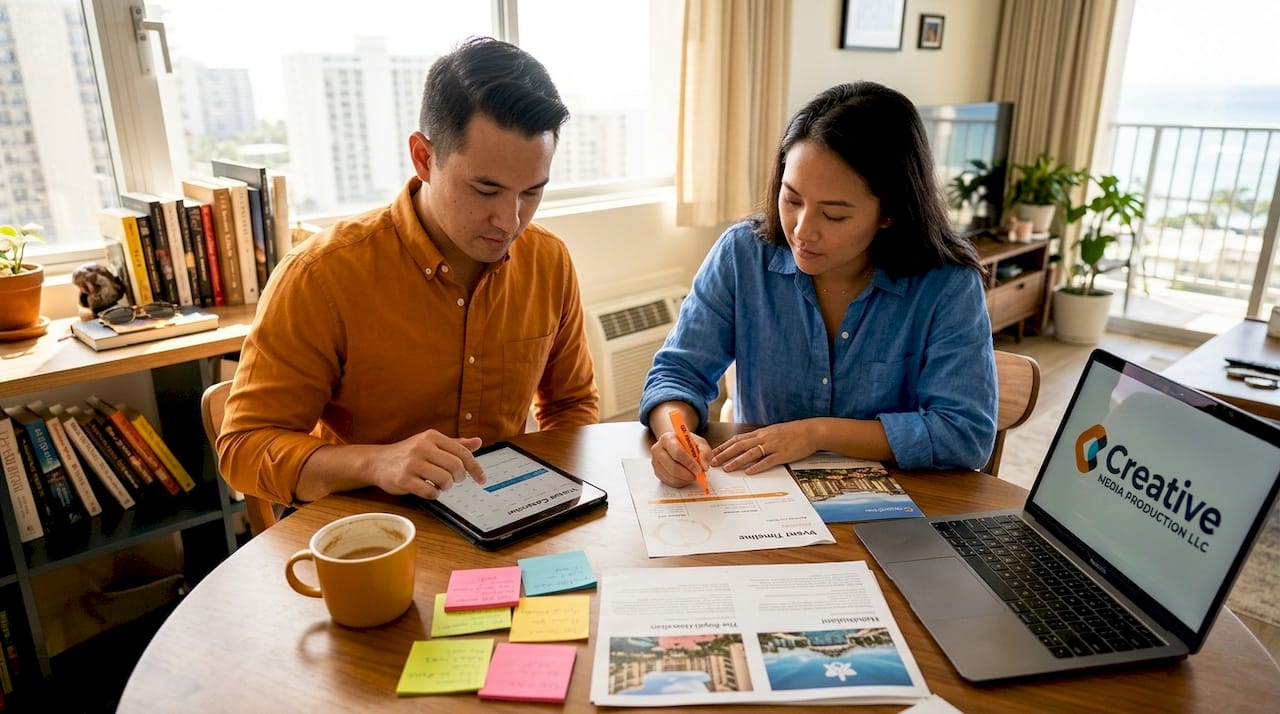
    Couple planning Oahu wedding timeline at table

    Pro Tip: Build a 10 to 15 percent buffer into your total event budget from the start. Unexpected costs appear in almost every event: additional floral substitutions, overtime vendor fees, last-minute rentals, or weather contingency expenses. Having that cushion prevents panic decisions.

    What most event planners miss about capturing Oahu celebrations

    Here’s something we’ve seen over and over in 15 years of covering events on this island. Couples pour months into their venue, their florals, and their catering, and then treat their photo and video coverage as a budget variable to adjust when things get tight. That decision haunts them.

    Think about everything that disappears after an event ends. The flowers get composted. The catering gets eaten. The music stops. The only things that remain, permanently and in full detail, are the photographs and the video. That’s not a small thing. That’s the entire emotional record of one of the most important days of your life.

    We’ve spoken with couples who chose a budget photographer to save $1,500 and ended up with blurry ceremony shots, poorly lit reception images, and no footage of the first dance. That $1,500 saving cost them something that can never be replaced. No refund covers that.

    Oahu event photographer insights from professionals who have worked hundreds of events here reveal a consistent truth: the couples who are most satisfied with their events are the ones who treated their media budget as a foundation, not a luxury. They prioritized it early, booked it first, and let everything else build around it.

    There’s also a less-talked-about dimension here. A skilled photographer or videographer actually shapes the experience of your event in real time. They position guests, guide couples through golden-hour portraits, and create moments that wouldn’t have happened without their direction. The camera is not just recording your day. In many ways, it’s helping create it.

    The real risk of underinvesting in event media is not just poor image quality. It’s the loss of the story. A professional film edit tells the narrative of your day in a way that flat photos never can. Years from now, that 10-minute film will be the thing you return to. Make sure it’s worth returning to.

    Capture your Oahu event the right way

    Planning a beautiful event in Oahu takes real work, real budget, and real professional support. Now that you understand every component, from venue logistics and vendor coordination to realistic cost ranges and planning timelines, the most important next step is making sure your event is captured with the quality it deserves.

    https://creativemediaprod.com

    At Creative Media Productions, we’ve spent over 15 years documenting weddings, birthdays, corporate events, and family celebrations across Honolulu, Waikiki, Kailua, and beyond. We know Oahu’s landscapes, its light, and its moments. Explore our full range of event photography types and our event videography services to find the right fit for your celebration. If you’re planning a wedding, our wedding media packages are designed to give you complete, story-driven coverage from start to finish. Let’s make sure your Oahu event lives on long after the flowers are gone.

    Frequently asked questions

    How much does it cost to plan a wedding in Oahu?

    The average Hawaii wedding costs around $34,000, but smaller gatherings like elopements can range from $3,000 to $10,000 and intimate weddings with 20 to 40 guests typically run $15,000 to $35,000 depending on services selected.

    What does an Oahu event planner do?

    An event planner in Oahu coordinates every vendor, manages the day-of timeline, books venues, handles permits, and ensures your guest experience flows seamlessly from ceremony through reception.

    Is professional photography and videography worth it for Oahu weddings?

    Absolutely, because professional media is the only element of your event you can revisit years later, and cutting corners here is the one budget decision most couples say they regret.

    What timeline should I follow for planning an Oahu wedding?

    Most top venues and experienced media teams on Oahu book 10 to 12 months in advance, so starting your planning process at least a full year out gives you the most options.

    Are media services ever included in venue packages in Oahu?

    Some Oahu venues do include photography or videography in bundled packages, but you should always review that team’s specific portfolio before agreeing, since in-house options vary widely in quality and style.

  • What a portfolio reveals about your event media pro

    What a portfolio reveals about your event media pro


    TL;DR:

    • Portfolios are curated, showing style, adaptability, and storytelling, not just pretty pictures.
    • Evaluate full event coverage for consistency, diversity, and real moments, not just highlight reels.
    • Use portfolios to assess communication, problem-solving, and vendor accountability before booking.

    Most couples planning a destination wedding in Hawaii and families organizing milestone celebrations make the same mistake: they scroll through a photographer’s or videographer’s portfolio looking for pretty pictures and stop there. A portfolio is far more than a highlight reel. It’s a window into how a media professional thinks, adapts, and performs under the pressure of a real, unrepeatable event. When you know how to read one properly, you’ll avoid costly vendor mismatches and walk into your big day with genuine confidence in your chosen team.

    Table of Contents

    Key Takeaways

    Point Details
    Portfolio definition An event media portfolio is a curated selection of a creator’s best real event work, not just pretty snapshots.
    Structure matters The strongest portfolios organize highlights, themed galleries, and clear project stories for easy review.
    Evaluation strategies Look for storytelling, adaptability, and client-focused results—not just visual style—when assessing portfolios.
    Action step Ask for both highlights and full event samples to ensure your chosen vendor can deliver throughout your celebration.

    What is a portfolio in event media?

    Let’s clear something up right away. A portfolio in event media is not a random collection of images on someone’s website. According to Videographer Portfolio Examples, a portfolio is the curated body of work representing a creator’s best past event coverage, presented as galleries or case-style samples that show style, capabilities, and what clients can realistically expect after booking.

    That definition is more loaded than it sounds. The word “curated” tells you something important: a professional has intentionally chosen what to show you and what to leave out. So your job as a couple or family is to think critically about what you’re seeing and what might be missing.

    A well-built event media portfolio essentials page typically includes several distinct elements working together. Here’s a breakdown of the core components you should expect to find:

    • Highlight reel or showreel: A short video, usually 90 seconds to three minutes, showing the best moments across multiple events. Think of it as the front door to everything else.
    • Themed galleries: Separate sections for weddings, birthday parties, corporate functions, family photoshoots, and memorial services. These allow you to compare directly with your own event type.
    • Project descriptions or captions: Short written explanations of the event, the setting, any unique challenges, and the approach the team used.
    • Technical variety: Examples of different lighting conditions, indoor vs. outdoor settings, golden hour shots, and candid vs. posed moments.
    • Client testimonials or outcomes: A note about how the client felt about the final product or how the photos were used.

    “A portfolio isn’t just proof of skill. It’s a communication tool that shows you whether a media professional truly understands the emotional stakes of the events they document.”

    Here’s a simple table to help you understand what each portfolio element actually tells you:

    Portfolio element What it reveals
    Showreel / highlight video Visual style, pacing, and editing sensibility
    Themed galleries Range across event types and lighting conditions
    Project descriptions Communication style and problem-solving approach
    Client testimonials Reliability and client relationship skills
    Behind-the-scenes notes Adaptability and creative decision-making

    When you look at what event media covers in real practice, you’ll see that portfolios from experienced professionals tell a full story. They don’t just show you the ceremony kiss or the cake cutting. They show you Grandma laughing unexpectedly, the nervous groom adjusting his collar, and the flower girls whispering to each other right before they walk down the aisle. Those are the shots that make families cry when they look back at the album twenty years from now.

    How event media portfolios are built and presented

    Now that you know what an event media portfolio covers, here’s how professionals put theirs together and what you should look for as a client.

    A strong portfolio doesn’t just throw everything online and hope for the best. According to Pixpa, a well-structured portfolio for video and event creators is built around a showreel, then supported by deeper, categorized projects with descriptions explaining the creator’s role and approach. This structure acts as a navigation map for decision-makers.

    Here’s the typical build order professionals follow:

    1. The showreel leads: This is the first thing you see and it sets the emotional tone. Pay attention to music choice, color grading, and rhythm. These reflect the pro’s creative voice.
    2. Categorized event sections follow: Organized by event type so you can find what’s relevant to your celebration quickly.
    3. Individual project pages go deeper: These give you a closer look at a single event, often including multiple images, video clips, and a short write-up.
    4. Metadata and context are included: Details like location, number of guests, time of day, and equipment used help you understand whether the pro has handled situations similar to yours.
    5. A clear contact or inquiry path closes it out: A portfolio without a simple next step is a missed opportunity for both the pro and the client.

    Compare the two portfolio styles most common in the Hawaii event media scene:

    Portfolio style Best for Watch out for
    Highly visual, gallery-first Couples who are style-focused and want mood-matched imagery May lack project context or storytelling detail
    Narrative and structured Families and planners who want proof of adaptability Can feel text-heavy if not balanced with strong visuals

    A well-organized event videography showcase on a professional’s website should let you find wedding coverage, birthday documentation, and recap video examples without digging around. If you’re spending more than three clicks finding what you need, that’s a red flag about how the pro communicates in general.

    Pro Tip: When reviewing an event gallery organization page, scroll past the hero images and look at the middle third of each gallery. Highlight reels always look polished, but the middle of a full event gallery shows how consistent and attentive the photographer or videographer was throughout the entire event, not just during the peak moments.

    First impressions matter enormously in event media. If a professional’s portfolio feels cluttered, outdated, or hard to navigate, that’s often a reliable signal of how they manage the overall client experience, from initial contact through final delivery.

    Evaluating a portfolio: What really matters for your celebration

    Understanding how portfolios are put together, let’s dig into how you should assess these samples with your event’s needs in mind.

    Most people scan portfolios and react emotionally. That’s natural and it’s actually part of the process. But you also need to look with a more critical eye. Beauty is a starting point, not a final verdict. What you’re really evaluating is consistency, adaptability, and evidence of professional accountability.

    Start with these key questions as you review:

    • Does the quality stay high throughout a full event gallery, not just the hero shots?
    • Are there examples from events similar to yours in scale, setting, or cultural style?
    • Do the project descriptions mention any specific challenges and how the team handled them?
    • Are there examples from both sunny outdoor Hawaii settings and dimly lit indoor venues?
    • Does the portfolio show a variety of guests, ages, and moments (not just the couple or the guest of honor)?

    Here’s where measurement and accountability come into the picture. In the event and experience industry, measurement methodology and success criteria are increasingly seen as part of vendor accountability. For event media, this means asking whether the professional defines what success looks like before the event, not just after. Did they promise a two-week delivery window and actually meet it? Do they offer a clear revision process? Are they transparent about what’s included in each package?

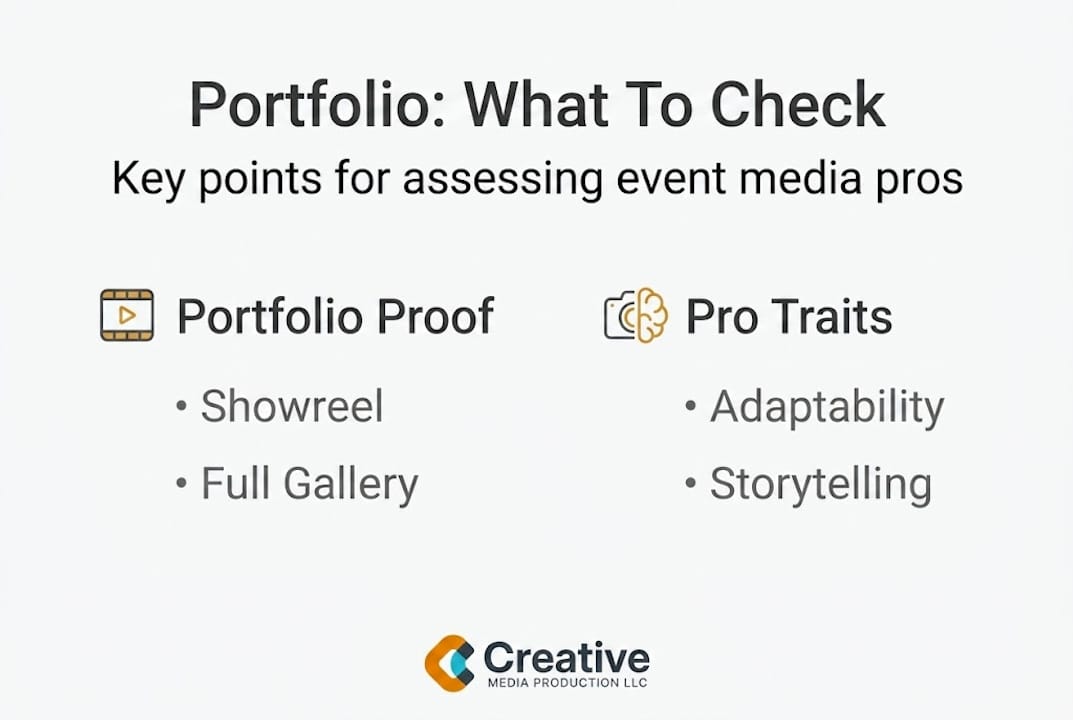
    Infographic showing top event portfolio evaluation points

    When reviewing essential event photography terms, you’ll notice that phrases like “full event coverage,” “edited gallery delivery,” and “rights usage” have specific meanings. A portfolio that includes clear explanations of these details alongside the images shows a pro who respects your time and your investment.

    Pro Tip: Ask any shortlisted vendor to walk you through one specific project in their portfolio verbally. Listen for whether they describe the event from a storytelling perspective or just list what equipment they used. A great event media professional will talk about the people, the light, the unexpected moment, and how they made decisions in real time.

    Watch for these red flags in any portfolio:

    • All images look heavily retouched or staged, with no candid or documentary-style moments
    • No variety in lighting, location, or event type across the entire portfolio
    • Descriptions that are vague (“beautiful wedding on Oahu”) with no context or storytelling
    • No examples of events with large guest counts if you’re planning a big celebration
    • A portfolio that hasn’t been updated in over a year

    Portfolios in action: Using event media samples to choose the right pro

    Knowing what to look for, let’s turn to how you can use all this info when making your final vendor decisions.

    Client reviews event media samples at home

    Reviewing a portfolio is not a passive activity. It’s a research process with clear steps that help you narrow your shortlist and ask the right questions before you sign anything.

    Here’s a practical process for using portfolios actively in your vendor selection:

    1. Start with event type filtering. Only review the sections that match your event. If you’re planning a beachside Hawaiian wedding with 80 guests, focus specifically on outdoor wedding coverage with comparable guest counts.
    2. Score for consistency. On a simple scale of one to five, rate how consistent the quality feels across at least twenty images or two to three full project examples. Consistency beats one or two spectacular shots every time.
    3. Flag storytelling moments. Identify at least three images or video clips in each portfolio that tell a micro-story without any words. If you can’t find them, the pro may be technically skilled but not emotionally attuned.
    4. Read every available description. Look for language that shows self-awareness: phrases like “the lighting changed unexpectedly” or “we adjusted our setup when the ceremony ran thirty minutes late” reveal how a pro handles real-world pressure.
    5. Cross-reference with reviews. Check if client testimonials mention the same qualities you see in the portfolio. Consistency between what a portfolio shows and what clients say builds trust fast.

    As the Pixpa guide notes, a portfolio acts as a navigation map for decision-makers. That means you’re allowed to use it exactly that way: as a tool to navigate your decision, not just something to admire.

    Once you have your shortlist, schedule brief consultations and ask these specific questions:

    • “Can you tell me the story behind one of the events in your portfolio?”
    • “What was the most unexpected challenge you faced at an event and how did you solve it?”
    • “How do you decide what moments to prioritize when everything is happening at once?”

    These questions reveal character, adaptability, and creative judgment in ways that even the most impressive lasting event memories gallery cannot fully capture on its own.

    A photographer’s perspective: What most families and couples miss

    After working with hundreds of couples and families across Oahu over more than fifteen years, the single biggest blind spot we see is this: people evaluate portfolios for beauty and ignore evidence of human connection.

    A technically perfect sunset portrait with soft backlighting is easy to admire. But does it tell you whether the photographer made the grandmother feel comfortable, guided the nervous groom gently, or stayed calm when the flower girl had a meltdown five minutes before the processional? Those skills don’t always make it into portfolio galleries.

    What you should actually be hunting for are the imperfect, unposed, real moments. A great event media professional’s expert portfolio tips page will show laughter with tears in it, kids running wild in the background, and the one blurry-but-perfect shot of someone who didn’t know they were being photographed. Those images are harder to get and infinitely more meaningful than another flawless composed portrait.

    The portfolio also reveals whether a pro adapts. Hawaii’s outdoor venues bring unpredictable rain, harsh midday sun, and shifting golden-hour windows. A portfolio that only shows perfect-condition events might mean the team only books perfect-condition events. That’s a risk for your celebration.

    See the difference: Explore real event media portfolios and book your Hawaii pro

    You now have a clear, practical framework for reading event media portfolios the way professionals do. Putting this knowledge to work is the most rewarding next step you can take toward a stress-free celebration.

    https://creativemediaprod.com

    At Creative Media Productions, we’ve spent over fifteen years documenting weddings, milestone birthdays, family reunions, and special celebrations across Honolulu, Waikiki, Kailua, and beyond. Our event photography samples are organized by event type so you can find examples that match your celebration quickly. Whether you’re ready to book an event photographer or want to explore our wedding media packages first, we’re here to answer your questions and walk you through exactly what your coverage will include. Schedule a no-pressure consultation today.

    Frequently asked questions

    What should I expect to find in a professional event media portfolio?

    You should see highlight reels, themed event galleries, and project descriptions showing the creator’s style and problem-solving approach. A professional portfolio, as defined by industry standards, is a curated selection of past work designed to show clients what they can realistically expect after booking.

    How do I compare portfolios between different event photographers and videographers?

    Look for variety, organization, storytelling, and how each pro explains their role or unique approach for each highlighted project. A strong videography portfolio centers on a showreel, then supports it with categorized project samples and descriptions that reveal how decisions were made.

    Why does measurement or accountability matter in an event media portfolio?

    Measurement shows a pro’s ability to deliver value, not just pretty photos or video, so you can confirm they consistently meet expectations. Clearly defined success criteria are a recognized part of vendor accountability in the event industry.

    Should portfolios include full event galleries or just highlights?

    For major events, review both: highlights show style but full galleries prove consistency throughout an entire celebration. A portfolio as a decision map works best when it gives you both the quick visual overview and the deeper evidence you need to trust a vendor with your most important day.

  • Guide to Event Photography Shot Lists

    Guide to Event Photography Shot Lists

    A missed keynote reaction, a skipped family grouping, a ribbon-cutting without the actual cut – small omissions can turn into big disappointments once the event is over. That is why a strong guide to event photography shot list planning matters. It gives your photographer a clear map of must-have moments while still leaving room for candid, story-driven coverage that feels natural and complete.

    A shot list is not about turning an event into a stiff checklist. It is about protecting the moments that cannot be repeated. For clients planning weddings, corporate gatherings, birthdays, memorials, and community events on Oahu, the right list reduces stress and helps the day move more smoothly from the first arrival to the final farewell.

    What a guide to event photography shot list should actually do

    The best shot list does two jobs at once. First, it identifies the non-negotiables – the people, moments, and details that absolutely need to be photographed. Second, it helps your photography team understand the event rhythm, so they can anticipate important interactions before they happen.

    That second part is where many people go wrong. A weak shot list is too generic. It says things like “guests mingling” or “event decor” without any context. A useful shot list gets specific. It names the VIPs, the family combinations, the branded installations, the ceremony milestones, and the time-sensitive details that matter most to you.

    This is also where professional planning makes a difference. A premium event photographer is not just waiting for instructions. They are using your shot list to build a coverage strategy around timing, lighting, movement, and access.

    Start with the event purpose, not just the photos

    Before listing any shots, define what success looks like for the event itself. A wedding needs emotional storytelling, family portraits, and clean coverage of the ceremony. A corporate event may need speaker images, sponsor visibility, audience engagement, and polished photos for future marketing. A birthday party usually leans more toward candids, decor, and key guest interactions. A memorial service requires an even more thoughtful approach, with respectful documentation that never feels intrusive.

    When the event purpose is clear, the shot list becomes much sharper. Instead of asking for everything, you ask for what matters most. That keeps the photographer focused and improves the final gallery.

    For example, a company hosting a product launch may care less about wide room shots and more about branded backdrops, executive networking, guest reactions, and product demos. A family hosting a first birthday may care most about grandparents, cake-cutting, and quiet in-between moments with parents and siblings. The right priorities change the list.

    Build your shot list in four practical layers

    The easiest way to organize an event photography shot list is by thinking in layers. This keeps the list useful without making it overwhelming.

    1. Establishing shots

    These images set the scene. They usually include the venue exterior, room setup, signage, decor, table styling, floral arrangements, stage design, and wide shots of the crowd. For corporate events, this may also include sponsor displays, registration tables, branded materials, and environmental shots that show attendance and energy.

    These photographs matter more than clients often expect. They are the visual proof of planning, design, and scale. They also tend to disappear quickly once guests arrive and the space gets busy.

    2. Key people

    This part of the list should be very specific. Name the couple, immediate family members, executives, speakers, honorees, birthday hosts, or community leaders who must be covered. If group photos are important, write out the exact combinations ahead of time.

    That level of detail saves time and avoids confusion. Saying “family photos” is vague. Saying “bride with parents, bride with siblings, couple with both families, couple with grandparents” is useful. The same applies to business events. Instead of “leadership team,” list the CEO, keynote speaker, board members, and sponsor representatives.

    3. Key moments

    Every event has points that cannot be recreated. These might include a ceremony entrance, first kiss, keynote speech, award presentation, candle lighting, blessing, toast, dance, cake-cutting, ribbon-cutting, or farewell line.

    Put these in order based on the event timeline. That gives the photography team a clean view of what is happening and when. If a moment has special significance, note that too. A memorial slideshow tribute, for instance, may deserve both wide and close emotional coverage, but with a quiet, respectful distance.

    4. Candid storytelling

    This final layer is where the gallery starts to feel alive. You want guests interacting, laughter during conversations, children playing, applause, behind-the-scenes preparation, and small emotional exchanges that happen between the scheduled moments.

    You do not need to list every possible candid. Instead, guide the photographer toward what kind of atmosphere you want documented. Warm and intimate. Energetic and social. Professional and polished. Respectful and understated. Those cues help shape the visual approach.

    The trade-off between detail and flexibility

    A good shot list is detailed, but not rigid. That balance matters.

    If the list is too short, important moments can be missed. If it is too long, the photographer may spend the day chasing a document instead of reading the room and capturing authentic moments as they unfold. Events move fast. Lighting changes. People arrive late. A speaker runs long. A family member steps away right when portraits are scheduled.

    That is why the best shot lists identify priorities. Mark your top must-have images first, then list secondary requests. This gives your photographer room to adapt without losing the essentials.

    In practice, that might mean making sure the wedding ceremony, immediate family portraits, and reception toasts are protected no matter what, while more casual guest table photos stay flexible. For a corporate event, the CEO remarks, sponsor signage, and crowd engagement may come first, while extra networking candids come second.

    Event-specific shot list tips

    Different events need different coverage strategies.

    Weddings

    Wedding shot lists should cover details, getting ready, ceremony, portraits, family combinations, reception events, and candid guest moments. Timing is everything. If sunset portraits matter, they need to be planned into the schedule, not added as an afterthought.

    Corporate events

    Corporate clients should think beyond documentation and consider marketing value. Include wide crowd shots, speaker images, branded assets, networking, sponsor integration, audience reactions, and polished team photos. If the images will be used for promotion, consistency and clean composition matter just as much as moment capture.

    Birthdays and family events

    These events usually benefit from a mix of posed and candid coverage. Prioritize the host, immediate family, decor, activities, cake-cutting, and guest interactions. If there are elderly relatives or out-of-town guests, make sure they are named on the list rather than assumed.

    Memorials and funerals

    This type of coverage should be handled with care and clarity. Focus on meaningful details, family connections, floral tributes, program elements, and key moments of remembrance if the family wants them documented. Not every moment needs a close-up. Respectful distance is often part of quality coverage.

    What to send your photographer before the event

    A shot list works best when it is paired with context. Send the event timeline, venue name, parking or access instructions, names of VIPs, and any restrictions around certain parts of the event. If group portraits are planned, designate someone who knows the family or team well enough to help gather people quickly.

    If there are visual priorities, say so directly. Maybe you care most about natural emotion and want very few posed photos. Maybe you need clean, brand-ready corporate images with visible signage. Maybe you want coverage to feel discreet during a memorial service. Clear expectations create better results.

    This is also the time to mention any on-site extras that affect photography flow, such as a photo booth, surprise performance, or special lighting setup. Those details influence positioning and timing.

    Why professional guidance improves the final gallery

    Most clients know what they do not want to miss, but they do not always know how to translate that into a workable photo plan. That is where experience matters. A professional team can help refine the list, spot timeline issues, and identify moments you may not have considered.

    For example, many clients remember to request the keynote speech but forget the audience reaction, the branded stage wide shot, and the speaker greeting guests afterward. A couple may ask for family portraits but overlook the importance of setting aside enough time so those images do not feel rushed. Good planning protects quality.

    At Creative Media Production LLC, that consultation mindset is part of delivering reliable service. The goal is not just to show up and shoot. It is to create clean, story-driven coverage with the professionalism, precision, and fast turnaround clients count on.

    A strong shot list gives structure to the day, but the real value is peace of mind. When your photographer understands your priorities, you spend less time worrying about what might be missed and more time being present for the event itself. That is usually when the most meaningful images happen.

  • How to book event photography in Hawaii: step-by-step

    How to book event photography in Hawaii: step-by-step


    TL;DR:

    • Understanding event requirements and Hawaii-specific factors ensures successful photography.
    • Referrals from local vendors and reviews help shortlist experienced, reliable photographers.
    • Proper planning and communication on event day lead to better, authentic photos.

    Planning a special event in Hawaii is exciting, but finding the right photographer to capture every genuine moment can feel overwhelming. The stakes are real. Whether you’re organizing a beachside wedding in Kailua, a corporate celebration in downtown Honolulu, or a milestone birthday near Waikiki, those memories deserve more than blurry snapshots. The photographer you choose shapes how you’ll remember that day for the rest of your life. This guide walks you through every stage of the process, from knowing what to look for and how to search, all the way to preparing for the photographer’s arrival on your big day.

    Table of Contents

    Key Takeaways

    Point Details
    Book early Secure your preferred Hawaii photographer by reserving 6-12 months ahead for peak dates.
    Check local experience Choose professionals who understand Hawaii’s venues, weather, and event logistics.
    Review portfolios carefully Evaluate prior work to ensure your photographer matches your style and event needs.
    Confirm details in writing Contracts should clearly outline timelines, backup plans, and payment policies.
    Prepare for photographer arrival Coordinate schedules, shot lists, and event contacts to maximize photo results.

    What you need to know before booking

    Now that you know the stakes, let’s clarify what you’ll need to get started.

    Before you contact a single photographer, you need a clear picture of what your event actually requires. Skipping this step is the most common reason clients end up frustrated or underprepared. Understanding requirements and expectations is crucial for event photography success in Hawaii, and that starts with the basics.

    Start with these four core details:

    • Event date and time: Hawaii’s light changes dramatically across seasons, and golden hour in December looks very different from June. Knowing your date helps photographers plan lighting and schedule.
    • Venue and location: Indoor venues in Honolulu have different lighting challenges than an open-air beachfront ceremony. Some locations also require photography permits.
    • Event size and scope: A 15-person family reunion needs a different approach than a 200-guest corporate gala.
    • Photography style: Do you want candid, documentary-style coverage, formal posed portraits, or a blend of both?

    Hawaii adds specific local factors that mainland event planning guides rarely mention. Weather on Oahu can shift quickly, especially on the windward side near Kailua and Kaneohe. Outdoor events near the ocean sometimes require permits through the City and County of Honolulu. Travel time between venues across the island adds up, and photographers often factor that into their pricing.

    Here’s a quick look at how event type influences what you should prioritize when choosing a photographer:

    Event type Key photography focus Typical coverage length
    Wedding Ceremony, portraits, reception 6 to 10 hours
    Corporate event Speakers, branding, networking 2 to 6 hours
    Family photoshoot Natural interaction, portraits 1 to 2 hours
    Birthday celebration Candid moments, group shots 2 to 4 hours
    Memorial service Dignified, discreet coverage 1 to 3 hours

    One thing that catches people off guard is pricing. Many first-time clients assume event photography in Hawaii is more expensive simply because it’s Hawaii. That’s partially true, but the bigger driver is experience, equipment quality, and what’s included in the package. Some providers offer low flat rates but charge separately for editing, travel, or additional hours. Reading the fine print matters enormously.

    If you’re planning a wedding or large family celebration, it’s also worth understanding why going pro for Hawaii weddings makes such a measurable difference in the final results.

    Pro Tip: Write down your three non-negotiable moments before contacting anyone. Whether it’s the first dance, the cake cutting, or a sunset portrait session, knowing your priorities helps every photographer give you a more accurate quote.

    How to find and shortlist top Hawaii event photographers

    With requirements in mind, it’s time to start your search.

    Most people start with a Google search, which is fine, but it’s rarely the most effective strategy on its own. The best photographers in Oahu often come through referrals from venues, catering companies, or florists who work events regularly. These vendors see photographers in action and know which ones stay calm under pressure, communicate well, and deliver consistent results.

    Here’s a numbered approach that works well for Oahu specifically:

    1. Ask your venue coordinator first. They typically maintain a preferred vendor list and can tell you which photographers they’ve seen work well in that specific space.
    2. Check local wedding and event planning groups on social media. Oahu has active community groups where real clients share firsthand experiences.
    3. Search dedicated photography directories and look specifically for Oahu event photographers with strong local portfolios.
    4. Review Google and Yelp listings for both ratings and how photographers respond to reviews. A professional who responds thoughtfully to criticism is a good sign.
    5. Ask friends and family who’ve hosted events in Hawaii. Word of mouth remains one of the most reliable filters.

    Once you have a shortlist of four or five candidates, the comparison stage begins. Comparing portfolios and reading reviews is crucial for finding trustworthy event photographers. Don’t just look at their best shots. Look at full event galleries if available, because those show consistency across different lighting conditions, group sizes, and moments.

    Photographer reviewing event images on monitor

    Here’s a simple comparison framework you can use to evaluate your shortlist:

    Criteria What to look for Red flags
    Portfolio consistency Sharp, well-composed images across different events Only a handful of polished shots, no variety
    Local experience Familiarity with Oahu venues and light conditions No mention of Hawaii-specific work
    Reviews and testimonials Specific praise for communication and reliability Vague reviews or gaps in timeline
    Package transparency Clear pricing with itemized inclusions Prices hidden until inquiry
    Response time Replies within 24 to 48 hours Slow to respond before you even book

    When evaluating portfolios, pay attention to how photographers handle the moments between the posed shots. The candid image of a grandmother laughing or a couple stealing a quiet glance tells you far more about a photographer’s skill than a perfectly staged portrait.

    Infographic booking Hawaii event photographer steps

    Pro Tip: Ask each photographer on your shortlist for a full gallery from a recent similar event, not just their highlighted favorites. It’s the most honest preview of what you’ll actually receive.

    Booking process and confirming your event photography

    Once you identify top candidates, it’s time to move from research to action.

    Reaching out to a photographer for the first time sets the tone for your entire working relationship. Keep your initial message clear and organized. Include your event date, location, type of event, expected guest count, and approximate coverage hours needed. This saves back-and-forth time and shows you’re a prepared client, which photographers genuinely appreciate.

    During the consultation, whether by phone, video call, or in person, the goal is to assess both fit and capability. Ask these specific questions:

    1. How many events similar to mine have you photographed in the past year?
    2. Do you bring backup equipment to every event?
    3. Who covers the event if you have an emergency or illness?
    4. How long after the event will I receive my images?
    5. What does your editing process look like, and can I see before and after examples?
    6. Have you worked at my specific venue before?

    The answers reveal a lot. A photographer who hesitates on backup equipment or has no plan for emergencies is a real risk for a once-in-a-lifetime event.

    “Clear communication and contract review are essential when booking a photographer. Every detail, from overtime rates to image delivery format, should be documented before you hand over a deposit.”

    When it comes to contracts, read everything before signing. A solid contract should include the event date, start and end times, location, total fee, deposit amount, payment schedule, cancellation and refund policy, image delivery timeline, and what happens if the photographer can’t make it. If any of these elements are missing, ask for them in writing.

    Deposits typically range from 25% to 50% of the total package price. This is standard and protects both parties. Once you sign and pay the deposit, your date is locked in.

    Spend time on planning a professional shoot before your event date. A well-structured timeline shared with your photographer in advance means nothing gets missed, from the bridal party prep shots to the final family group photo.

    How to prepare for your photographer’s arrival

    After booking your photographer, a little prep sets the stage for flawless execution.

    Many clients assume their job ends at booking. It doesn’t. The preparation you do in the days before your event directly affects the quality of your photos. Preparation on the event day leads to better photo results, and that starts well before the first camera click.

    Here’s a practical checklist to work through in the week before your event:

    • Finalize and share your event timeline. Include specific times for key moments like the first dance, speeches, cake cutting, or award presentations.
    • Create a shot list. This is especially important for group portraits. List every family combination or team grouping you want documented so nothing gets skipped in the chaos.
    • Share VIP information. Let your photographer know which guests are most important to capture. A grandparent celebrating their 80th birthday, a key client at a corporate dinner, or an out-of-town relative who rarely visits all deserve specific attention.
    • Identify your best locations on-site. If you know the venue has a beautiful garden area or a particular backdrop that photographs well, walk the photographer through it before guests arrive.
    • Confirm all contact information. Give your photographer the names and phone numbers of your day-of coordinator, venue manager, and anyone else key to the schedule.
    • Plan for weather. Hawaii weather is generally beautiful but unpredictable. Have an indoor or covered option ready and communicate it to your photographer in advance.

    Working with a well-coordinated photo and video team becomes much smoother when hosts take the lead on logistics. When the photographer knows exactly where to be and when, they can focus on doing what they do best rather than chasing down information.

    On the day itself, introduce your photographer to your coordinator immediately. These two people need to be aligned throughout the event. Also, give your photographer a buffer of at least 30 to 45 minutes before guests arrive to scout lighting, set up equipment, and get oriented.

    Pro Tip: Designate one trusted person at your event as the photographer’s point of contact. This prevents the photographer from getting pulled in multiple directions by well-meaning guests who want to suggest additional shots.

    What most guides miss about booking Hawaii event photography

    Most step-by-step guides treat event photography like a simple service transaction. You need a photographer, you find one, you pay them, done. But that framing misses something important, especially in Hawaii.

    Local expertise isn’t just a nice bonus. It’s often the difference between ordinary coverage and genuinely magical results. A photographer who has spent years working the light at Lanikai Beach or knows how the wind moves through an outdoor venue in Kailua will make decisions in the moment that no newcomer can replicate. They know which direction to face at sunset, which corners of a room hold the best natural light, and how to handle the humidity that sometimes fogs up lenses in coastal settings.

    There’s also a storytelling dimension that rarely gets discussed. Staged shots have their place, but the images people return to years later are almost always the unguarded, authentic ones. Finding experienced local photographers who prioritize story over setup will serve you far better than chasing the lowest price point.

    Speaking of price, the risk of hiring the cheapest available option in Hawaii’s market is real. Some budget providers lack backup equipment, have limited experience with diverse event types, or deliver slow turnaround times. For a corporate event, delayed delivery can impact your marketing cycle. For a wedding, it means waiting months longer than expected for the photos you’ve been anticipating. The emotional and practical costs of those trade-offs almost always outweigh the initial savings.

    Invest in a photographer who feels like the right fit. Less worry on the day, better memories forever.

    Ready to book your event photographer in Oahu?

    You now have everything you need to find, evaluate, and secure a photographer who will do justice to your event. If you’re ready to take the next step, start by exploring the full range of options available to you.

    https://creativemediaprod.com

    Whether you’re planning a wedding, a family reunion, or a major corporate gathering, Creative Media Productions offers tailored packages built for events of every size across Honolulu, Waikiki, Kailua, and beyond. With over 15 years of local experience, our team knows how to capture Oahu events with authenticity and care. Take a look at the types of event photography we cover, explore options to book an Oahu event photographer directly, or review our corporate photography options for your next business event.

    Frequently asked questions

    How far in advance should I book an event photographer in Hawaii?

    For weddings, book 6 to 12 months ahead since peak season availability fills fast. For other events, 3 to 6 months is generally sufficient to secure your preferred photographer.

    What should be included in an event photography contract?

    Your contract should cover timeline, deliverables, payment terms, cancellation policies, and backup procedures. Contract review is essential before you finalize any booking agreement.

    Do Hawaii event photographers offer packages for weddings and corporate events?

    Yes, most offer customizable packages across event types. Understanding what each package includes upfront prevents unexpected costs later.

    What if bad weather disrupts my event in Hawaii?

    Discuss contingency plans with your photographer before the event, such as alternative indoor locations or flexible rescheduling terms, so everyone knows the backup plan.

    How can I make my photos stand out?

    Share your must-have moments and any unique preferences ahead of time. Preparation before the event day gives your photographer the context needed to deliver truly personalized results.

  • Creative event photography ideas for Oahu events

    Creative event photography ideas for Oahu events


    TL;DR:

    • Planning a detailed shot list ensures comprehensive and culturally relevant event photos on Oahu.
    • Balancing 70% candid moments with 30% posed shots creates engaging, authentic marketing visuals.
    • Using local-themed photo booth innovations and proper gear enhances social reach and image quality.

    Every event planner on Oahu faces the same frustrating moment: you’ve invested months into your event, guests had an incredible time, but the photos look flat, generic, and completely forgettable. Whether you’re organizing a corporate gala in Honolulu, a milestone birthday in Kailua, or a beachfront wedding in Waikiki, your photography has to work as hard as your planning does. This guide delivers concrete, actionable photography ideas with real Oahu relevance, so your event visuals drive genuine marketing impact, tell a compelling story, and give guests something worth sharing long after the event ends.


    Table of Contents

    Key Takeaways

    Point Details
    Comprehensive shot planning A detailed shot list ensures every key event moment and sponsor is covered for effective marketing.
    Prioritize candid moments Capturing candid interactions connects better with audiences and boosts visual storytelling impact.
    Innovative photo booths Modern booths with GIFs and instant sharing drive guest engagement and social reach.
    Optimize for unique lighting Choosing the right gear and camera settings helps produce stunning event images in challenging Oahu lighting.

    Build a strategic event shot list

    Before a single photo is taken, the most important work happens on paper. A well-planned shot list is the difference between a gallery that tells your event’s full story and a folder of random images that leave you scrambling for content when marketing deadlines hit.

    Research from event photography planning consistently shows you should develop a detailed shot list covering key moments like venue signage, registration, keynote speakers, award moments, VIPs, sponsor activations, group photos, and candid networking to ensure comprehensive coverage. Without this foundation, even the most talented photographer can miss the moments that matter most to your brand.

    Why a shot list matters for Oahu events specifically

    Oahu events carry layers that mainland events often don’t. A corporate conference at the Sheraton Waikiki has a stunning ocean backdrop worth capturing intentionally. A community fundraiser in Kaimuki might open with a traditional Hawaiian blessing. A product launch in Kakaako could feature local artists and cultural elements that tell your brand’s story in a uniquely Hawaiian way. None of these moments will be captured well if no one planned for them in advance.

    Here are the must-have shots for any Oahu event:

    • Venue entrance and branded signage (exterior and interior)
    • Guest registration and arrival moments, including lei greetings
    • Keynote speakers or emcees during their key moments
    • Award or recognition ceremonies with full audience reactions
    • Sponsor activations, banners, and branded experiences
    • VIP and guest interactions with products, displays, or hosts
    • Traditional cultural elements like hula performances, conch shell ceremonies, or floral arrangements
    • Group photos organized by department, organization, or VIP tier
    • Candid networking moments between guests
    • Scenic venue backgrounds including ocean views, mountains, or lush gardens
    • Setup and decor details before guests arrive
    • Post-event wrap-up and cleanup moments for behind-the-scenes content

    This structured approach to your event shot list guide connects your photography directly to your marketing goals rather than leaving it to chance.

    Shot category Marketing use case Priority level
    Venue and branding Website and social headers High
    Speaker moments Speaker promotion, PR High
    Awards and recognition Press releases, LinkedIn High
    Cultural elements Brand storytelling, local media High
    Candid networking Email campaigns, recaps Medium
    Group photos Internal communications Medium
    Setup and decor Vendor partnerships, behind-the-scenes Low

    Pro Tip: Include your key sponsors and VIP guests in the pre-event shot list conversation. When sponsors know their logo or activation will be intentionally photographed, they’re more likely to fund future events and share your gallery with their own audiences.


    Embrace the candid-to-posed 70/30 rule

    With your shot list locked in, the next creative decision that shapes your entire gallery is how you balance authentic, unscripted moments against planned, formal photos. This balance is where most event photography either soars or falls flat.

    Candid rooftop Oahu event guests mingling

    The 70/30 rule is straightforward in concept but requires real skill to execute well. You should prioritize 70% candid shots capturing genuine interactions, laughter, conversations, and emotional reactions, balanced with 30% posed group shots for authenticity in marketing visuals.

    Why this ratio works for marketing

    Think about the last event photo that stopped your scroll on Instagram. It was almost certainly a candid moment: someone throwing their head back laughing, two colleagues sharing a genuinely surprised reaction to an announcement, or a speaker making a compelling point with a roomful of engaged faces in the background. These photos feel real because they are real. Stock-looking, stiff group poses rarely drive engagement because audiences can feel the artificiality immediately.

    On the other hand, your CEO and board members still need a clean group shot. Your sponsor team needs a posed photo with the award recipient for their press release. Posed photos serve specific, essential functions in your marketing impact photos library. You just shouldn’t let them dominate the gallery.

    Candid vs. posed photo comparison:

    Category Candid photos Posed photos
    Social media performance High engagement, more shares Lower organic engagement
    Authenticity Feels real and relatable Can feel stiff if overdone
    Marketing versatility Great for campaigns and recaps Better for formal PR and press
    Guest reaction Guests often love being surprised Some guests prefer approval
    Production ease Requires skilled, quick photographer Easier to coordinate in advance

    Here’s how to get smooth, natural posed shots without wasting time:

    1. Pre-select your groupings before the event so the photographer isn’t chasing people down.
    2. Assign a point person from your team to round up VIPs and sponsor groups when needed.
    3. Choose a fixed backdrop that reinforces your branding or takes advantage of Oahu’s scenery.
    4. Limit the number of posed shots to the essential groupings agreed on in your shot list.
    5. Keep it fast, aiming for two to three minutes per group to maintain energy and momentum.

    Pro Tip: Give guests mini icebreaker activities or conversation prompts during networking sessions. When people are genuinely engaged in a task or discussion, their body language opens up and you capture the kind of authentic expressions that look incredible in marketing materials.


    Photo booth innovations to drive engagement

    Once your core coverage strategy is solid, a creative photo booth adds an entirely different dimension to your event photography. Photo booths aren’t just a fun activity anymore; they’re a proven marketing engine that extends your event’s reach well beyond the venue walls.

    Modern photo booths have evolved dramatically. Animated content gets 3x social engagement compared to static posts, and photo booths with digital sharing features increase social media posts by up to 60%. For Oahu events looking to build community buzz and extend sponsor visibility, this is too significant to ignore.

    The best innovative photo booth ideas for Oahu events right now include:

    • Green screen setups that place guests against iconic Oahu backdrops like Diamond Head, the North Shore, or a custom branded environment
    • GIF and boomerang stations that create looping animated content guests immediately want to post
    • Instant text and email sharing so guests receive their photos within seconds
    • QR code enabled print stations for touchless sharing and printed keepsakes
    • Branded overlay frames with your event logo, sponsor names, and event hashtag
    • Hawaiian themed props including flower leis, surfboards, ukuleles, and aloha shirts
    • 360-degree video booths that create dramatic, shareable slow-motion clips

    The key to making any of these work at an Oahu event is tying the booth experience to your local identity. A standard branded photo frame reads generic. A green screen that places your guests on a virtual paddle-out at Sunset Beach feels specifically Hawaiian and uniquely shareable.

    For practical implementation, your photo booth setup tips should include enough space for groups of four to six people, strong lighting (ring lights or softboxes work well), and a dedicated booth attendant to keep lines moving and ensure print quality stays consistent throughout the event.

    Pro Tip: Set up your QR code sharing station with a pre-written caption suggestion and your event hashtag. When guests share instantly, you get real-time social coverage during the event rather than a delayed burst of posts the following week.


    Essential gear and settings for Oahu’s lighting

    Creative ideas only pay off when your photographer has the technical foundation to execute them sharply. Oahu presents lighting challenges you won’t find at most mainland venues, and understanding them in advance saves entire sections of your gallery from coming out unusable.

    The island’s outdoor venues deal with rapidly shifting natural light, especially during late afternoon golden hour events where direct sun can create harsh shadows one minute and gorgeous warm tones the next. Indoor venues, particularly hotel ballrooms and event spaces in Honolulu, often use mixed LED and tungsten lighting that creates unpredictable color casts if your photographer isn’t compensating in real time.

    “Use fast lenses (f/2.8 or wider), high ISO (up to 6400), aperture priority mode, continuous autofocus, and burst mode. Avoid direct flash by bouncing or using available light, especially in low-light Oahu venues with mixed LED and tungsten.” This approach from extensive event photography guidance applies directly to Oahu’s most common venue challenges.

    For photographers covering Oahu events, these low light event photo tips translate into a practical gear checklist:

    Gear item Purpose Recommended spec
    Primary camera body Main shooting Full-frame sensor preferred
    Backup camera body Redundancy Same system as primary
    Fast prime lens Low-light portraits 50mm or 85mm at f/1.8
    Fast zoom lens Flexibility 24-70mm at f/2.8
    External speedlight Fill and bounce At least 60 GN rating
    Extra batteries (x4) All-day shooting Charged fully before event
    High-capacity memory cards Storage redundancy 128GB minimum per card
    Reflector panel Outdoor fill light 5-in-1, 42 inch
    Color calibration card White balance accuracy Essential for mixed lighting

    Quick fixes for common Oahu lighting situations:

    • For bright outdoor midday events, position guests facing away from direct sunlight and use a reflector to fill shadows on faces
    • For dimly lit ballrooms, bounce your flash off a white or neutral ceiling rather than pointing it directly at subjects
    • For sunset beach shoots, arrive 20 minutes before golden hour starts and plan your posed group shots for that window
    • Always shoot in RAW format so editing can correct color temperature shifts from mixed venue lighting
    • Carry a second fully charged camera body because batteries drain faster in humid Hawaiian weather

    Our take: Why custom photo concepts beat templates

    Every shot list, ratio, and gear recommendation in this article gives you a framework worth using. But here’s the honest truth we’ve learned after more than 15 years of capturing Oahu events: the photographers and planners who produce truly memorable galleries are the ones willing to throw the template out when the moment calls for it.

    A rigid checklist approach treats every event as interchangeable. It doesn’t account for the unexpected hula performance that breaks out at a corporate dinner, the tears of joy when a longtime community leader receives a surprise award, or the way a particular client’s guests are so genuinely warm that candid moments dominate naturally without any prompting.

    Great Oahu event photography means building an event portfolio that reflects each event’s specific personality, not a standardized output that could belong to any venue in any city. Talk to your clients, walk the venue before guests arrive, and stay curious throughout the event. The most impactful shot rarely appears on the shot list. It shows up because someone was paying attention, camera ready, and trusted their instincts over the checklist.

    Experiment with hybrid formats too, like pairing a traditional still photograph with a short looping video clip from the same moment. In 2026, audiences respond to content variety. Give them both.


    Enhance your Oahu event with expert photography

    Armed with these photography strategies, you’re ready to create an event gallery that genuinely serves your marketing goals and captures the full spirit of your Oahu occasion.

    https://creativemediaprod.com

    Creative Media Productions brings over 15 years of Oahu-specific experience to every event, from intimate birthday celebrations to large-scale corporate conferences. Whether you need a corporate event photographer Oahu with a deep understanding of local venues and cultural elements, or want to set up a photo booth that generates real social buzz, we offer tailored packages and one-on-one consultations to match your vision. Reach out today to discuss your upcoming event and let’s build a photography plan that captures every moment worth remembering.


    Frequently asked questions

    What shots should be on my event marketing photography checklist?

    Key shots should include venue branding, guest registration, keynote speakers, awards, sponsor activations, group photos, and authentic candid moments, as comprehensive event coverage consistently recommends covering all these categories for complete marketing value.

    How do photo booths boost event engagement?

    Photo booths with digital features, GIFs, and instant sharing boost guest engagement and encourage more social media posts, with animated booth content generating three times the social engagement of standard static images.

    What camera settings are best for Oahu event lighting?

    Use fast lenses, high ISO up to 6400, aperture priority mode, and bounce flash or available light for sharp, well-lit shots, following established low-light techniques designed specifically for venues with mixed lighting conditions.

    How do I balance posed and candid photos for marketing?

    Aim for about 70% candid shots to 30% posed, focusing on real interactions while capturing essential group images for PR, which is the ratio event photography research supports for maximizing authentic appeal in marketing visuals.

  • Innovative corporate event media ideas for Oahu planners

    Innovative corporate event media ideas for Oahu planners


    TL;DR:

    • Effective visual storytelling enhances attendee engagement and reinforces brand messaging.
    • Storyboarding and interactive booths create memorable experiences tailored to Oahu’s unique environment.
    • Partnering with local media experts ensures authentic, culturally resonant event content.

    Corporate events in Oahu face a unique challenge: attendees arrive with sky-high expectations, surrounded by one of the most visually stunning environments on the planet. Generic slide decks and standard ballroom setups simply do not cut it anymore. Planners who want to leave a lasting impression need to treat visual storytelling as a core business tool, not an afterthought. This article walks you through proven media strategies, from storyboarding and interactive booths to hybrid event production, so you can create experiences your attendees will talk about long after the event ends.

    Table of Contents

    Key Takeaways

    Point Details
    Prioritize storytelling Craft media around meaningful narratives that connect emotionally with event attendees.
    Use storyboards Visual timelines can improve session retention and survey scores while clarifying objectives.
    Interactive media matters Photo and video booths drive real-time engagement and help amplify your event’s impact.
    Plan for hybrid events Sync on-site and virtual frames with careful prep to enhance the hybrid experience.
    Leverage local expertise Partnering with Oahu media professionals ensures high-quality visual storytelling for your event.

    Defining your event media goals and criteria

    Before you book a single photographer or order a backdrop, you need a clear media strategy. Without one, even the most creative production ideas will miss the mark. Think of your media plan as the blueprint that keeps every visual element aligned with your business objectives.

    Start by asking what your event needs to accomplish. Are you launching a product, recognizing top performers, or building community among a distributed team? Each goal calls for a different visual tone. A product launch might demand high-energy, cinematic video content. A leadership summit might call for intimate, candid photography that conveys trust and authenticity. Mapping your media choices to your business outcomes keeps spending purposeful and results measurable.

    Next, consider your audience. Oahu corporate events often draw a mix of local professionals, mainland executives, and international guests. Local attendees may respond to content that honors Hawaiian culture and place. Remote or virtual participants need a different approach entirely: clear framing, stable lighting, and clean audio that translates well on a screen. Knowing who is in the room and who is watching remotely shapes every media decision you make.

    A practical framework for visual storytelling includes these core elements:

    • Business objective: What action or feeling should the media content drive?
    • Audience profile: Who is attending in person versus watching online?
    • Content lifecycle: Where will photos and videos go after the event? Social media, internal communications, press releases?
    • Brand tone: Should the visual style be formal, celebratory, educational, or energizing?
    • Budget allocation: How much should go to photography, video, and post-production?

    Storytelling transforms corporate events by creating emotional connections through human narratives, interactive activities, and post-event content repurposing. That last point matters more than most planners realize. A well-shot event video does not just document what happened; it becomes a recruiting tool, a client pitch asset, and social proof all in one.

    Working with experienced media production in Oahu professionals from the start ensures your media plan is technically sound and creatively aligned before a single frame is captured.

    Pro Tip: Build your post-event repurposing plan before the event begins. Decide in advance which clips will go on LinkedIn, which photos will anchor your next email campaign, and which footage will appear in your company’s year-end highlights reel. Planning this upfront shapes what your photographer and videographer prioritize on the day.

    Storyboarding and visual timelines: Raising attendee engagement

    Once your goals are locked in, storyboarding is the single most effective tool for turning those goals into a coherent visual experience. Most corporate planners associate storyboarding with film production, but it applies just as powerfully to live events. Think of it as a session-by-session map of how your event will look, feel, and flow on camera.

    Event storyboarding uses visual timelines linking business objectives to audience emotions, boosting session retention by 22% and post-event survey scores by 18%. Those numbers are significant. They mean that when attendees experience a well-paced, visually cohesive event, they absorb more content and leave with a stronger impression of your brand.

    Here is how the impact breaks down at a glance:

    Metric Without storyboarding With storyboarding
    Session retention rate Baseline Up 22%
    Post-event survey scores Baseline Up 18%
    On-site photographer prep time High Reduced
    Content repurposing success Low High

    For Oahu events specifically, storyboarding can incorporate the island’s natural flow: morning light near Diamond Head, midday ocean-facing meeting rooms in Waikiki, or golden-hour networking sessions on a Ko Olina lawn. These are not just backdrops. They are emotional anchors that reinforce the story you are telling.

    Steps for building your Oahu event storyboard:

    • Define key moments: Opening address, panel discussions, award ceremonies, networking breaks, and closing remarks each deserve a visual note.
    • Sketch the emotional arc: Should energy build toward a climax, or stay consistent throughout? Map this explicitly.
    • Assign visual styles per session: Candid for networking, formal for keynotes, wide-angle for group activities.
    • Brief your media team: Share the storyboard with your planning event photography lead at least four weeks out.
    • Review shot lists: Have your step-by-step videography crew walk through the storyboard and flag any technical challenges before the event day.

    “Start your storyboard 10 to 12 weeks before the event. Early planning gives your media team time to scout locations, test lighting, and align on timing without blowing your contingency budget.” Artfolio, Storyboarding Corporate Events

    The most common mistake planners make is treating the storyboard as a rigid script. Use it as a flexible guide. Oahu events often produce unexpected moments, an impromptu hula performance, a stunning sunset that transforms your outdoor reception, or a speaker who generates an emotional standing ovation. A good storyboard gives your media team enough structure to anticipate the expected and enough flexibility to capture the magic.

    Photo and video booth experiences for real-time interaction

    From planning the event narrative, the next step is activating that story in real time. Interactive media booths are one of the most reliable tools for doing exactly that. They pull attendees out of passive listening mode and give them a hands-on experience tied directly to your event theme.

    Professionals record video at media event booth

    Photo booths and video booths serve different purposes, and choosing the right one depends on your event format:

    Feature Photo booth Video booth
    Setup complexity Low to moderate Moderate to high
    Engagement time per attendee 1 to 2 minutes 2 to 4 minutes
    Content output Branded still images Short video clips or messages
    Best for Networking events, galas, team celebrations Product launches, testimonial capture, executive summits
    Social media shareability Very high High with proper format
    Cost range Lower Higher

    For Oahu corporate events, locally themed booth setups add a layer of authenticity that generic studios simply cannot replicate. Consider these backdrop ideas:

    1. Tropical greenery with brand overlay: Combine lush Oahu foliage with a subtle company logo for branded social content that still feels authentic to the island.
    2. Waikiki skyline at dusk: A curated backdrop using actual photography of the Oahu coastline creates instant connection for attendees visiting from the mainland.
    3. Cultural textile patterns: Incorporating Hawaiian quilt patterns or kapa-inspired designs into booth frame overlays honors the local culture while reinforcing your brand’s commitment to place.
    4. Interactive props with local flavor: Leis, surfboards, and local flora make for playful, shareable content without feeling kitschy when executed with care.
    5. 360-degree spin booths: Increasingly popular for executive events, these create short video loops that attendees love to share on LinkedIn.

    Storytelling transforms corporate events through interactive activities that generate emotional connections, and booths are one of the clearest examples of this principle in action.

    Once attendees have content in hand, instant sharing options dramatically increase your event’s social reach. Set up a branded landing page or QR code that pushes photos and video clips directly to attendees’ phones or email inboxes within minutes of capture. Pair this with a branded hashtag and watch your event reach extend well beyond the room.

    A corporate recap video built from booth content, candid footage, and polished b-roll gives you a post-event asset that reinforces your brand story for months.

    Pro Tip: Position your photo or video booth near a natural gathering point, like the bar, registration table, or networking lounge. Forced traffic flow past the booth dramatically increases participation rates without requiring any additional promotion.

    Hybrid event media: Syncing on-site and virtual storytelling

    Oahu’s geographic position makes hybrid events not just a trend but a practical reality. When your team is spread across the Pacific, the continental US, or international offices, reaching everyone in one room is often impossible. Hybrid event media bridges that gap, but only when it is planned with the same rigor as your in-person experience.

    Hybrid events require synced frames for on-site and virtual attendees; budgeting an extra 8% in prep time offsets errors and results in a smoother combined experience. That prep time investment pays off fast. Poorly synced hybrid events frustrate both in-room and remote audiences, generating complaints that overshadow the event’s actual content.

    Here is a practical checklist for syncing your on-site and virtual storytelling:

    • Unified visual language: Use consistent slide templates, color palettes, and lower-thirds for both the live stage and the virtual stream.
    • Dedicated remote camera angle: Assign one camera specifically to capture presenter close-ups optimized for streaming, separate from the wide-angle room camera.
    • Live stream monitor on-site: Give your on-site production team a visible monitor showing exactly what remote viewers see so they can catch framing issues instantly.
    • Synchronized content drops: Release supporting documents, polls, and Q&A prompts at identical times for both audiences.
    • Post-production alignment: Edit the recap video so that both in-room energy and virtual participation are represented fairly, not just the on-site highlights.
    • Audio redundancy: Run dual audio capture with a primary and backup system to protect against the most common hybrid failure point.

    Effective hybrid event media planning starts with your storyboard, then layers in the virtual audience’s needs at every stage. When you treat both audiences as equally important from the start, the production feels seamless rather than stitched together.

    Pro Tip: Assign a dedicated “virtual audience producer” whose only job during the event is to monitor the remote stream, manage chat engagement, and flag technical issues in real time. This single hire consistently produces the biggest improvement in hybrid audience satisfaction scores.

    A fresh approach: Rethinking event media for Oahu business

    Here is an opinion that might push back on what you have been told: the biggest mistake corporate planners make in Oahu is spending money on trendy media gear while ignoring the most powerful visual resource they already have. The island itself.

    Generic photo booths, cookie-cutter recap videos, and stock-photo-style event photography all share one flaw. They could have been shot anywhere. They carry no sense of place, no authentic emotional texture, and no connection to the reason your event happened here instead of in Phoenix or Chicago.

    Oahu’s cultural depth, its landscapes, its people, and its traditions offer a visual vocabulary that no other destination can replicate. The planners who tap into that vocabulary, thoughtfully and respectfully, produce events that attendees remember not just because of what was said but because of how it felt to be there.

    Smarter media integration beats costly trends every time. Rather than chasing the latest 360-degree LED wall or drone flyover, invest in creative media concepts that use authentic local context as the foundation. A well-timed photograph of your keynote speaker against a real Oahu sunset tells a stronger story than any engineered backdrop.

    Look for the overlooked visual cues: the texture of local stone, the movement of trade winds through a tent, the warmth of natural light at 5 PM on the leeward coast. These are your real media assets.

    Boost your Oahu event with local media experts

    Applying everything covered in this article takes more than good intentions. It takes a production partner who knows Oahu’s venues, understands local light and culture, and has the technical depth to execute across photography, video, and hybrid formats.

    https://creativemediaprod.com

    Creative Media Productions has spent over 15 years delivering corporate event coverage for businesses across Honolulu, Waikiki, Kailua, and beyond. Whether you need professional brand event photography for your next leadership summit or full video production services for a hybrid conference, our team builds a custom plan around your goals, timeline, and brand. Reach out for a consultation and see how local expertise translates into media that actually works for your business.

    Frequently asked questions

    How early should event planners start storyboarding corporate event media?

    Professionals recommend starting storyboarding 10 to 12 weeks before the event for maximum effectiveness, giving your media team time to plan, scout, and prepare.

    What impact does visual storytelling have on attendee engagement?

    Event storyboarding boosts retention by 22% and post-event survey scores by 18%, meaning attendees absorb more and leave with a stronger impression of your brand.

    How do hybrid events sync on-site and virtual media?

    Hybrid events use synced frames and budget an extra 8% in prep time to align in-person and remote media, resulting in fewer technical errors and a smoother experience for all audiences.

    What are the best interactive media options for corporate events in Oahu?

    Interactive activities like photo and video booths, instant-share setups, and locally themed backgrounds consistently rank as top choices for driving real-time attendee participation at Oahu corporate events.

  • What Is a Wedding Highlight Video?

    What Is a Wedding Highlight Video?

    A full wedding day moves fast. One minute you are getting ready with your closest people, and the next you are halfway through the reception wondering how the ceremony already happened. That is exactly why couples ask, what is a wedding highlight video? It is the short, cinematic film that brings the best moments of the day back into focus – the emotion, the energy, the vows, the reaction shots, and the atmosphere that photos alone cannot fully recreate.

    For many couples, the highlight video becomes the piece they watch most often. It is designed to be memorable, easy to share, and emotionally strong without requiring you to sit through every minute of the day. When done well, it feels polished and natural at the same time.

    What is a wedding highlight video?

    A wedding highlight video is a condensed edit of your wedding day, usually set to music and built around the most meaningful moments. It often includes portions of the ceremony, speeches, candid reactions, detail shots, and key reception events, all edited into a short film that tells the story of the day.

    Think of it as the cinematic version of your wedding memories. It is not raw footage, and it is not a minute-by-minute documentary cut. Instead, it is carefully shaped to capture the feeling of the celebration.

    Most highlight videos include visual storytelling choices that make the film feel elevated. That can mean steady camera movement, thoughtful pacing, clean audio, color correction, and intentional editing that balances romance, joy, and personality. The goal is not just to show what happened. The goal is to help you feel it again.

    How long is a wedding highlight video?

    The length depends on the coverage, the editing style, and the package you book, but most wedding highlight videos fall somewhere between 3 and 8 minutes. Some couples want a short social-friendly piece around 60 to 90 seconds, while others prefer a more developed film that gives the day room to breathe.

    Shorter is not always better, and longer is not always more meaningful. A 4-minute highlight can be incredibly powerful if the editing is strong and the story is clear. On the other hand, if you want more complete audio from vows and toasts, a longer edit may be the better fit.

    This is one of those decisions where it depends on your priorities. If shareability matters most, a shorter cut often works well. If emotional storytelling matters more, you may want a longer highlight film with more spoken moments woven in.

    What is usually included in the video?

    A professional wedding highlight video typically pulls from the most visually and emotionally important parts of the day. That often starts with details like the dress, rings, florals, invitations, and venue setup. From there, the film usually moves through getting ready, first looks, the ceremony, couple portraits, family interactions, speeches, first dances, and moments from the reception.

    Audio plays a major role. Strong highlight films often include voiceover from vows, officiant remarks, or toasts layered over visual moments from across the day. That is part of what gives the film emotional structure. Instead of feeling like a random montage, it feels like your story.

    A polished video also includes the in-between moments people do not plan for but remember forever. A parent taking a breath before walking down the aisle. A laugh during hair and makeup. The way your partner looks at you before saying a word. These are often the moments that make the final film feel personal rather than generic.

    Wedding highlight video vs. full wedding video

    Couples often hear both terms and assume they mean the same thing. They do not.

    A wedding highlight video is the short, curated film built for emotion and storytelling. A full wedding video, sometimes called a documentary edit or feature film, is usually much longer and includes more complete coverage of the ceremony, speeches, and major events in real time.

    Neither option is automatically better. They serve different purposes.

    If you want something beautiful, concise, and easy to revisit often, the highlight video is usually the favorite. If you also want to preserve full moments exactly as they happened, a longer edit can add value. Many couples choose both because they want the cinematic version and the complete record.

    That choice often comes down to budget, viewing habits, and what matters most to you years from now. Some couples know they will rewatch the vows and speeches in full. Others mainly want a film they can share with family and friends without asking everyone to sit for 45 minutes.

    Why couples choose a wedding highlight video

    The biggest reason is simple. It is the most watchable version of your wedding day.

    A well-crafted highlight video captures the emotional core of the celebration without feeling drawn out. It works for anniversaries, family sharing, and reliving the day when the planning is over and real life settles back in. It also becomes a meaningful keepsake for loved ones who could not attend in person.

    There is also a practical side. Shorter films are easier to share, easier to revisit, and more likely to be watched all the way through. That matters if you want something that stays part of your life instead of becoming a file you save and rarely open.

    For destination weddings and Oahu celebrations especially, the visual setting can add another layer. Ocean views, mountain backdrops, open-air venues, and natural light all contribute to a film that feels cinematic when captured with care. In those settings, a highlight video does more than document the event. It preserves the sense of place.

    What makes a great wedding highlight video?

    Good footage matters, but editing is what turns wedding coverage into a film.

    A great highlight video has structure. It does not just collect pretty clips. It builds momentum, gives space to emotional moments, and creates a clean flow from beginning to end. Music selection, pacing, and audio layering all matter. So does restraint. Not every shot belongs in the final edit, even if it is beautiful.

    Consistency also matters more than couples sometimes realize. Clean exposure, natural color, steady camera work, and clear sound all shape how polished the finished film feels. Premium results come from both creative vision and reliable execution.

    That is why experience matters. A professional team knows how to work under real wedding conditions – changing light, tight timelines, unpredictable weather, and fast-moving moments that only happen once. The best results come from people who can create with precision while staying calm and organized throughout the day.

    How to know if a highlight video is right for you

    If you value emotion, storytelling, and something easy to revisit, the answer is usually yes. A highlight video is especially valuable for couples who want a polished film that captures the heart of the day without requiring a long viewing commitment.

    It may be the right choice if you care about the atmosphere as much as the schedule. Some of the most meaningful wedding memories are not major events at all. They are glances, reactions, movement, sound, and the feeling in the room. Video captures those elements in a way still images cannot.

    If your budget requires trade-offs, this is where a conversation helps. Some couples prioritize a highlight film over a longer documentary edit. Others build a package that includes both. The right decision depends on how you want to experience your wedding memories later, not just what sounds standard on paper.

    At Creative Media Production LLC, that planning process matters. Clear communication before the wedding helps the filming team understand your priorities, your style, and the moments you care most about, which leads to a more personal final edit and a smoother experience on the day itself.

    Questions to ask before booking

    Before you book a videographer, ask what the highlight video includes, how long it will be, whether professional audio is captured, and what the turnaround time looks like. You should also ask to see full examples of recent work, not just a single great clip on social media.

    It is also worth asking how the team approaches storytelling. Some companies create visually attractive edits that feel generic. Others build films that are tailored to the couple. You want to know whether your final video will reflect your actual day or just follow a formula.

    Fast turnaround can be a major plus, but quality should still be consistent. Reliable service means both. You should feel confident that your team will show up prepared, work professionally, and deliver a polished result on time.

    Your wedding goes by once. The right highlight video gives you a way to return to it with clarity, emotion, and all the small details that mattered more than you realized in the moment.