TL;DR:
- Portfolios are curated, showing style, adaptability, and storytelling, not just pretty pictures.
- Evaluate full event coverage for consistency, diversity, and real moments, not just highlight reels.
- Use portfolios to assess communication, problem-solving, and vendor accountability before booking.
Most couples planning a destination wedding in Hawaii and families organizing milestone celebrations make the same mistake: they scroll through a photographer’s or videographer’s portfolio looking for pretty pictures and stop there. A portfolio is far more than a highlight reel. It’s a window into how a media professional thinks, adapts, and performs under the pressure of a real, unrepeatable event. When you know how to read one properly, you’ll avoid costly vendor mismatches and walk into your big day with genuine confidence in your chosen team.
Table of Contents
- What is a portfolio in event media?
- How event media portfolios are built and presented
- Evaluating a portfolio: What really matters for your celebration
- Portfolios in action: Using event media samples to choose the right pro
- A photographer’s perspective: What most families and couples miss
- See the difference: Explore real event media portfolios and book your Hawaii pro
- Frequently asked questions
Key Takeaways
| Point | Details |
|---|---|
| Portfolio definition | An event media portfolio is a curated selection of a creator’s best real event work, not just pretty snapshots. |
| Structure matters | The strongest portfolios organize highlights, themed galleries, and clear project stories for easy review. |
| Evaluation strategies | Look for storytelling, adaptability, and client-focused results—not just visual style—when assessing portfolios. |
| Action step | Ask for both highlights and full event samples to ensure your chosen vendor can deliver throughout your celebration. |
What is a portfolio in event media?
Let’s clear something up right away. A portfolio in event media is not a random collection of images on someone’s website. According to Videographer Portfolio Examples, a portfolio is the curated body of work representing a creator’s best past event coverage, presented as galleries or case-style samples that show style, capabilities, and what clients can realistically expect after booking.
That definition is more loaded than it sounds. The word “curated” tells you something important: a professional has intentionally chosen what to show you and what to leave out. So your job as a couple or family is to think critically about what you’re seeing and what might be missing.
A well-built event media portfolio essentials page typically includes several distinct elements working together. Here’s a breakdown of the core components you should expect to find:
- Highlight reel or showreel: A short video, usually 90 seconds to three minutes, showing the best moments across multiple events. Think of it as the front door to everything else.
- Themed galleries: Separate sections for weddings, birthday parties, corporate functions, family photoshoots, and memorial services. These allow you to compare directly with your own event type.
- Project descriptions or captions: Short written explanations of the event, the setting, any unique challenges, and the approach the team used.
- Technical variety: Examples of different lighting conditions, indoor vs. outdoor settings, golden hour shots, and candid vs. posed moments.
- Client testimonials or outcomes: A note about how the client felt about the final product or how the photos were used.
“A portfolio isn’t just proof of skill. It’s a communication tool that shows you whether a media professional truly understands the emotional stakes of the events they document.”
Here’s a simple table to help you understand what each portfolio element actually tells you:
| Portfolio element | What it reveals |
|---|---|
| Showreel / highlight video | Visual style, pacing, and editing sensibility |
| Themed galleries | Range across event types and lighting conditions |
| Project descriptions | Communication style and problem-solving approach |
| Client testimonials | Reliability and client relationship skills |
| Behind-the-scenes notes | Adaptability and creative decision-making |
When you look at what event media covers in real practice, you’ll see that portfolios from experienced professionals tell a full story. They don’t just show you the ceremony kiss or the cake cutting. They show you Grandma laughing unexpectedly, the nervous groom adjusting his collar, and the flower girls whispering to each other right before they walk down the aisle. Those are the shots that make families cry when they look back at the album twenty years from now.
How event media portfolios are built and presented
Now that you know what an event media portfolio covers, here’s how professionals put theirs together and what you should look for as a client.
A strong portfolio doesn’t just throw everything online and hope for the best. According to Pixpa, a well-structured portfolio for video and event creators is built around a showreel, then supported by deeper, categorized projects with descriptions explaining the creator’s role and approach. This structure acts as a navigation map for decision-makers.
Here’s the typical build order professionals follow:
- The showreel leads: This is the first thing you see and it sets the emotional tone. Pay attention to music choice, color grading, and rhythm. These reflect the pro’s creative voice.
- Categorized event sections follow: Organized by event type so you can find what’s relevant to your celebration quickly.
- Individual project pages go deeper: These give you a closer look at a single event, often including multiple images, video clips, and a short write-up.
- Metadata and context are included: Details like location, number of guests, time of day, and equipment used help you understand whether the pro has handled situations similar to yours.
- A clear contact or inquiry path closes it out: A portfolio without a simple next step is a missed opportunity for both the pro and the client.
Compare the two portfolio styles most common in the Hawaii event media scene:
| Portfolio style | Best for | Watch out for |
|---|---|---|
| Highly visual, gallery-first | Couples who are style-focused and want mood-matched imagery | May lack project context or storytelling detail |
| Narrative and structured | Families and planners who want proof of adaptability | Can feel text-heavy if not balanced with strong visuals |
A well-organized event videography showcase on a professional’s website should let you find wedding coverage, birthday documentation, and recap video examples without digging around. If you’re spending more than three clicks finding what you need, that’s a red flag about how the pro communicates in general.
Pro Tip: When reviewing an event gallery organization page, scroll past the hero images and look at the middle third of each gallery. Highlight reels always look polished, but the middle of a full event gallery shows how consistent and attentive the photographer or videographer was throughout the entire event, not just during the peak moments.
First impressions matter enormously in event media. If a professional’s portfolio feels cluttered, outdated, or hard to navigate, that’s often a reliable signal of how they manage the overall client experience, from initial contact through final delivery.
Evaluating a portfolio: What really matters for your celebration
Understanding how portfolios are put together, let’s dig into how you should assess these samples with your event’s needs in mind.
Most people scan portfolios and react emotionally. That’s natural and it’s actually part of the process. But you also need to look with a more critical eye. Beauty is a starting point, not a final verdict. What you’re really evaluating is consistency, adaptability, and evidence of professional accountability.
Start with these key questions as you review:
- Does the quality stay high throughout a full event gallery, not just the hero shots?
- Are there examples from events similar to yours in scale, setting, or cultural style?
- Do the project descriptions mention any specific challenges and how the team handled them?
- Are there examples from both sunny outdoor Hawaii settings and dimly lit indoor venues?
- Does the portfolio show a variety of guests, ages, and moments (not just the couple or the guest of honor)?
Here’s where measurement and accountability come into the picture. In the event and experience industry, measurement methodology and success criteria are increasingly seen as part of vendor accountability. For event media, this means asking whether the professional defines what success looks like before the event, not just after. Did they promise a two-week delivery window and actually meet it? Do they offer a clear revision process? Are they transparent about what’s included in each package?
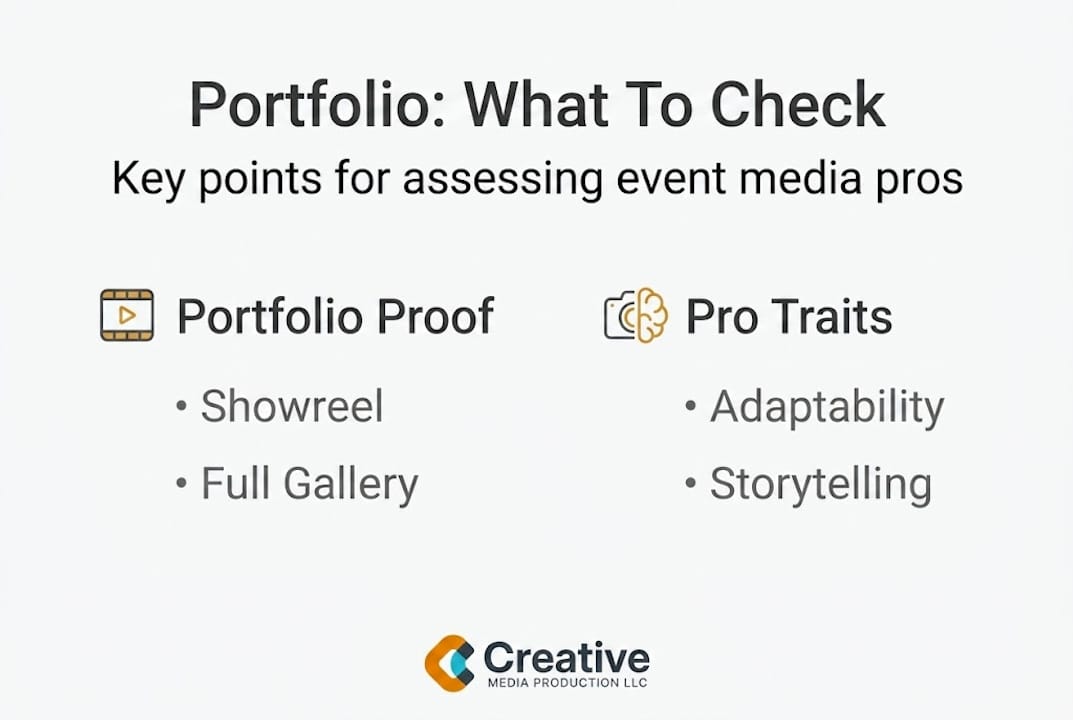
When reviewing essential event photography terms, you’ll notice that phrases like “full event coverage,” “edited gallery delivery,” and “rights usage” have specific meanings. A portfolio that includes clear explanations of these details alongside the images shows a pro who respects your time and your investment.
Pro Tip: Ask any shortlisted vendor to walk you through one specific project in their portfolio verbally. Listen for whether they describe the event from a storytelling perspective or just list what equipment they used. A great event media professional will talk about the people, the light, the unexpected moment, and how they made decisions in real time.
Watch for these red flags in any portfolio:
- All images look heavily retouched or staged, with no candid or documentary-style moments
- No variety in lighting, location, or event type across the entire portfolio
- Descriptions that are vague (“beautiful wedding on Oahu”) with no context or storytelling
- No examples of events with large guest counts if you’re planning a big celebration
- A portfolio that hasn’t been updated in over a year
Portfolios in action: Using event media samples to choose the right pro
Knowing what to look for, let’s turn to how you can use all this info when making your final vendor decisions.

Reviewing a portfolio is not a passive activity. It’s a research process with clear steps that help you narrow your shortlist and ask the right questions before you sign anything.
Here’s a practical process for using portfolios actively in your vendor selection:
- Start with event type filtering. Only review the sections that match your event. If you’re planning a beachside Hawaiian wedding with 80 guests, focus specifically on outdoor wedding coverage with comparable guest counts.
- Score for consistency. On a simple scale of one to five, rate how consistent the quality feels across at least twenty images or two to three full project examples. Consistency beats one or two spectacular shots every time.
- Flag storytelling moments. Identify at least three images or video clips in each portfolio that tell a micro-story without any words. If you can’t find them, the pro may be technically skilled but not emotionally attuned.
- Read every available description. Look for language that shows self-awareness: phrases like “the lighting changed unexpectedly” or “we adjusted our setup when the ceremony ran thirty minutes late” reveal how a pro handles real-world pressure.
- Cross-reference with reviews. Check if client testimonials mention the same qualities you see in the portfolio. Consistency between what a portfolio shows and what clients say builds trust fast.
As the Pixpa guide notes, a portfolio acts as a navigation map for decision-makers. That means you’re allowed to use it exactly that way: as a tool to navigate your decision, not just something to admire.
Once you have your shortlist, schedule brief consultations and ask these specific questions:
- “Can you tell me the story behind one of the events in your portfolio?”
- “What was the most unexpected challenge you faced at an event and how did you solve it?”
- “How do you decide what moments to prioritize when everything is happening at once?”
These questions reveal character, adaptability, and creative judgment in ways that even the most impressive lasting event memories gallery cannot fully capture on its own.
A photographer’s perspective: What most families and couples miss
After working with hundreds of couples and families across Oahu over more than fifteen years, the single biggest blind spot we see is this: people evaluate portfolios for beauty and ignore evidence of human connection.
A technically perfect sunset portrait with soft backlighting is easy to admire. But does it tell you whether the photographer made the grandmother feel comfortable, guided the nervous groom gently, or stayed calm when the flower girl had a meltdown five minutes before the processional? Those skills don’t always make it into portfolio galleries.
What you should actually be hunting for are the imperfect, unposed, real moments. A great event media professional’s expert portfolio tips page will show laughter with tears in it, kids running wild in the background, and the one blurry-but-perfect shot of someone who didn’t know they were being photographed. Those images are harder to get and infinitely more meaningful than another flawless composed portrait.
The portfolio also reveals whether a pro adapts. Hawaii’s outdoor venues bring unpredictable rain, harsh midday sun, and shifting golden-hour windows. A portfolio that only shows perfect-condition events might mean the team only books perfect-condition events. That’s a risk for your celebration.
See the difference: Explore real event media portfolios and book your Hawaii pro
You now have a clear, practical framework for reading event media portfolios the way professionals do. Putting this knowledge to work is the most rewarding next step you can take toward a stress-free celebration.
At Creative Media Productions, we’ve spent over fifteen years documenting weddings, milestone birthdays, family reunions, and special celebrations across Honolulu, Waikiki, Kailua, and beyond. Our event photography samples are organized by event type so you can find examples that match your celebration quickly. Whether you’re ready to book an event photographer or want to explore our wedding media packages first, we’re here to answer your questions and walk you through exactly what your coverage will include. Schedule a no-pressure consultation today.
Frequently asked questions
What should I expect to find in a professional event media portfolio?
You should see highlight reels, themed event galleries, and project descriptions showing the creator’s style and problem-solving approach. A professional portfolio, as defined by industry standards, is a curated selection of past work designed to show clients what they can realistically expect after booking.
How do I compare portfolios between different event photographers and videographers?
Look for variety, organization, storytelling, and how each pro explains their role or unique approach for each highlighted project. A strong videography portfolio centers on a showreel, then supports it with categorized project samples and descriptions that reveal how decisions were made.
Why does measurement or accountability matter in an event media portfolio?
Measurement shows a pro’s ability to deliver value, not just pretty photos or video, so you can confirm they consistently meet expectations. Clearly defined success criteria are a recognized part of vendor accountability in the event industry.
Should portfolios include full event galleries or just highlights?
For major events, review both: highlights show style but full galleries prove consistency throughout an entire celebration. A portfolio as a decision map works best when it gives you both the quick visual overview and the deeper evidence you need to trust a vendor with your most important day.