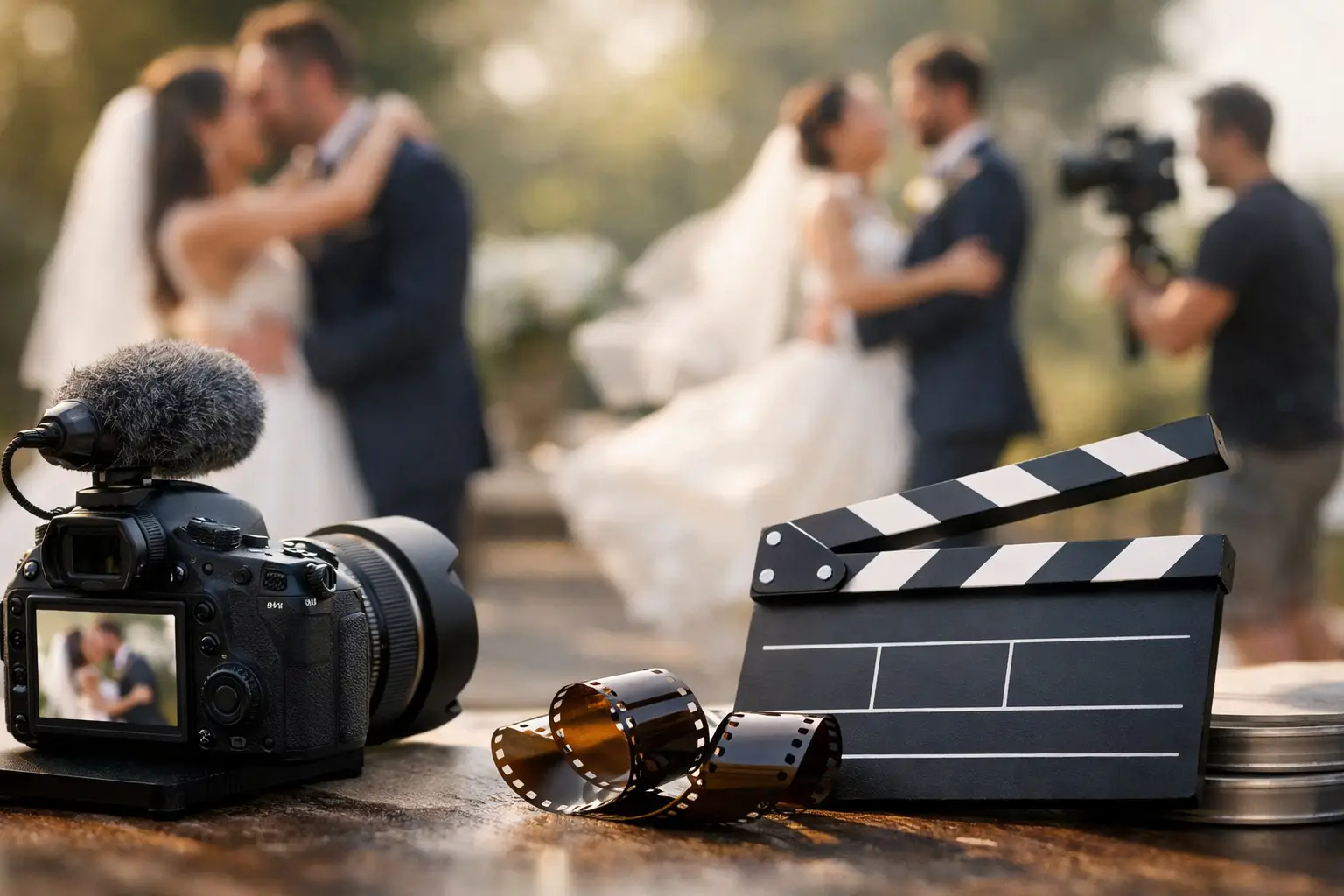
Planning an event in Oahu becomes much easier when you understand the language professional photographers use. Many event planners, couples, and families struggle to communicate their vision because photography terminology feels confusing or technical. This guide breaks down essential photography terms you will encounter when booking photographers for weddings, family gatherings, corporate events, or celebrations across Honolulu, Waikiki, Kailua, and beyond. By learning these key concepts, you will confidently discuss your needs, set clear expectations, and ensure your photographer captures exactly what you envision for your special occasion.
Table of Contents
- Key takeaways
- Understanding core photography mechanics
- Composition and focusing techniques for impactful event photos
- Event photography styles and practical shooting methods
- Lighting, low-light techniques, and post-processing essentials
- Explore professional event photography services in Oahu
- FAQ
Key Takeaways
| Point | Details |
|---|---|
| Exposure triangle basics | Understanding aperture, shutter speed, and ISO helps you anticipate image quality across bright beach ceremonies and dim receptions in Oahu. |
| Composition essentials | Knowing rule of thirds and bokeh guides framing to produce balanced, engaging event photos. |
| Low light planning | Understanding low light methods and equipment options helps you plan for sharp images at indoor receptions. |
| Event terminology clarity | Using standard photography terms streamlines communication and helps you convey your vision for weddings, family gatherings, and corporate events. |
Understanding core photography mechanics
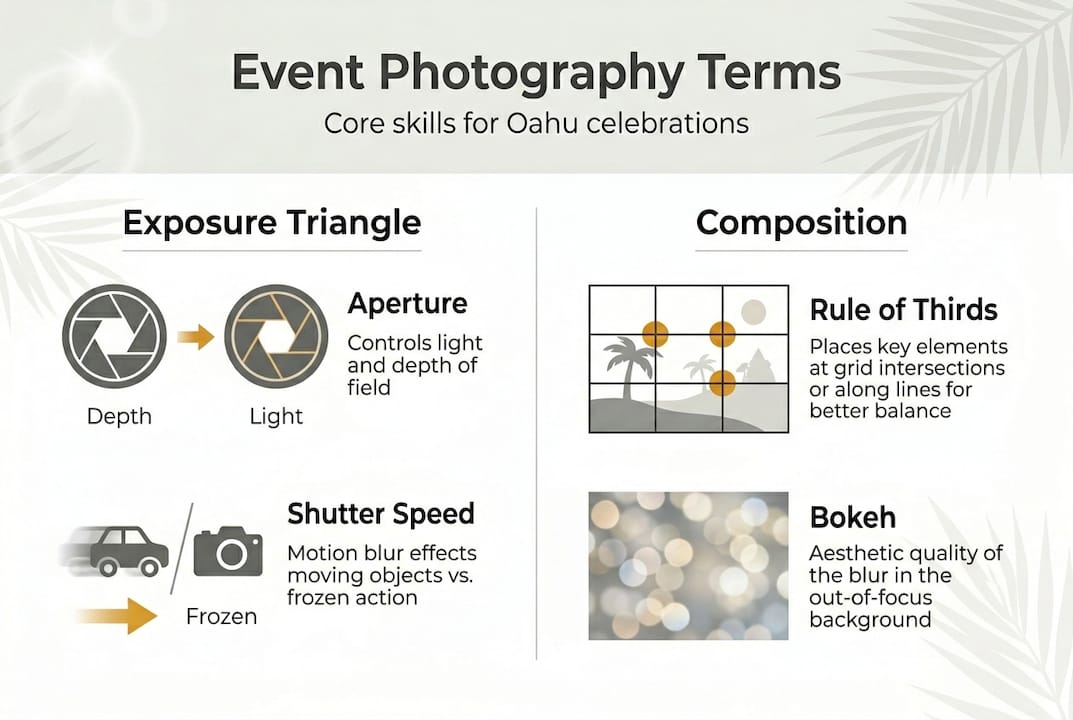
The foundation of every great event photo rests on three interconnected settings known as the Exposure Triangle components control light, motion, and image noise. Mastering these terms helps you understand how photographers adapt to Oahu’s unique lighting conditions, from bright beach ceremonies to dimly lit reception halls.
Aperture refers to the opening in the lens that controls how much light reaches the camera sensor. Measured in f-stops like f/1.8 or f/8, a lower number means a wider opening and more light. Wide apertures create shallow depth of field, blurring backgrounds beautifully for beach portraits or couple shots against Waikiki sunsets. Narrow apertures keep everything sharp, ideal for large group photos where you want every face in focus.
Shutter speed determines how long the camera sensor captures light, measured in fractions of a second. Fast shutter speeds like 1/500 freeze motion perfectly, capturing dancers mid-spin or children running at birthday parties. Slower speeds like 1/30 can introduce motion blur, sometimes used creatively for flowing water or movement. For most Oahu events, photographers use faster speeds to ensure crisp, sharp images of fleeting moments.
ISO measures the camera sensor’s sensitivity to light. Lower ISO values like 100 produce clean images with minimal grain, perfect for outdoor daytime events. Higher ISO settings like 3200 brighten images in dark venues but introduce digital noise or graininess. Modern cameras handle high ISO remarkably well, allowing photographers to capture indoor receptions without sacrificing quality.
| Exposure Triangle Element | Effect on Image | Typical Event Use |
|---|---|---|
| Aperture (f-stop) | Controls light and depth of field | f/1.8-f/2.8 for portraits, f/8-f/11 for groups |
| Shutter Speed | Freezes or blurs motion | 1/250-1/500 for action, 1/60-1/125 for general coverage |
| ISO | Adjusts sensor sensitivity | 100-400 outdoors, 1600-3200 indoors |
Pro Tip: Ask your photographer about aperture priority mode for low-light receptions. This setting lets the camera automatically adjust shutter speed while the photographer controls depth of field, ensuring consistently sharp images even as lighting changes throughout your event. Understanding this helps you appreciate why how to hire an event photographer in Oahu involves discussing their equipment and low-light capabilities.
Composition and focusing techniques for impactful event photos
Once photographers control exposure, they apply composition techniques like rule of thirds and bokeh create balanced, aesthetic images that transform ordinary moments into compelling visual stories. These principles guide where subjects appear in the frame and how backgrounds complement your event’s atmosphere.
The rule of thirds divides an image into nine equal sections using two horizontal and two vertical lines. Placing subjects along these lines or at their intersections creates natural balance and visual interest. Instead of centering a bride in every frame, positioning her at an intersection point with ocean waves or palm trees filling the remaining space produces more dynamic compositions. This technique works beautifully for Oahu beach ceremonies where natural elements enhance the story.
Bokeh describes the aesthetic quality of out-of-focus areas in a photo, typically created by wide apertures. Those dreamy, blurred backgrounds you see in professional portraits result from bokeh, which isolates subjects and eliminates distracting elements. At crowded Waikiki events or busy venues, bokeh helps your family stand out against softened backgrounds, creating magazine-quality images that feel intimate despite the setting.
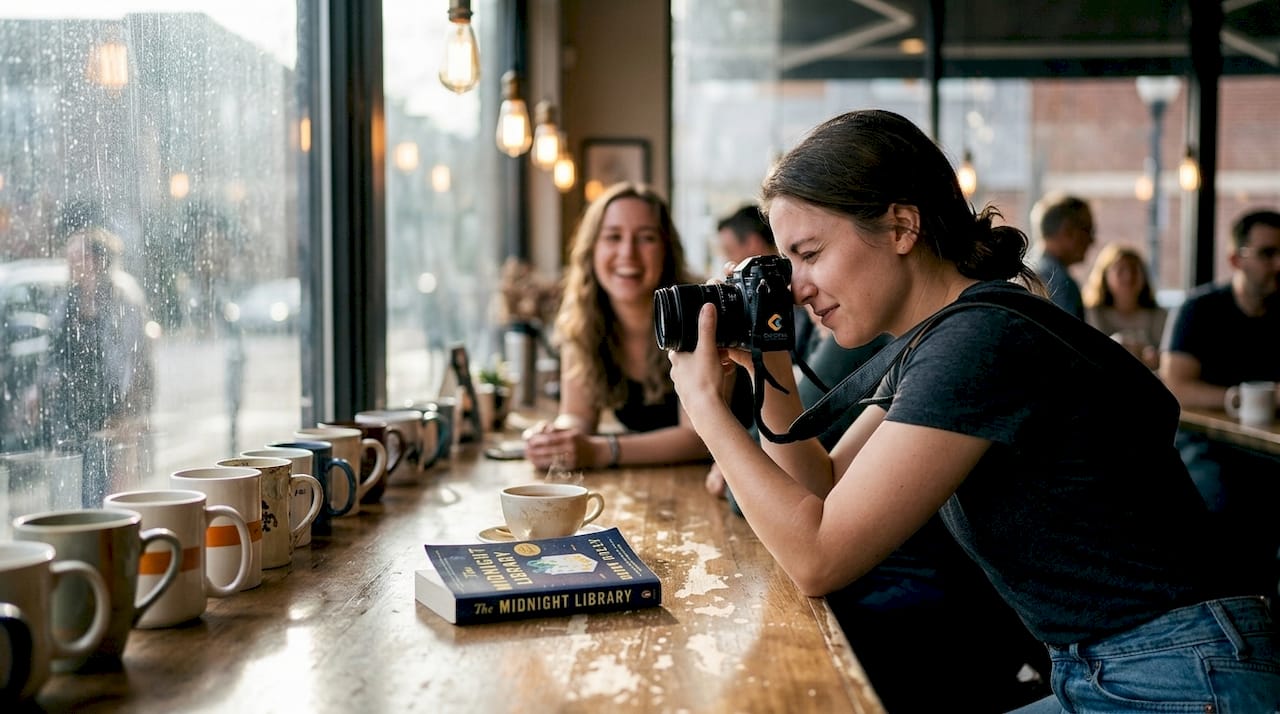
Depth of field refers to how much of the image appears sharp from front to back. Shallow depth of field keeps only the subject in focus while backgrounds blur beautifully, perfect for romantic couple portraits or detail shots of wedding rings. Deep depth of field keeps everything sharp, essential for large family groups where you want every generation clearly visible. Understanding this distinction helps you communicate whether you prefer artistic, selective focus or comprehensive, documentary-style sharpness.
| Depth of Field Type | Best For | Typical Aperture |
|---|---|---|
| Shallow | Individual portraits, couple shots, artistic details | f/1.4-f/2.8 |
| Deep | Group photos, venue shots, ceremony overviews | f/8-f/16 |
Pro Tip: When booking photographers, request sample images showing both shallow and deep depth of field. This reveals their versatility and helps you specify which style matches your vision. Discuss these preferences early, especially when choosing a Kapolei event photographer who can adapt techniques to your venue’s unique characteristics and lighting conditions.
Event photography styles and practical shooting methods
Event-specific methodologies include run and gun, documentary style, second shooters, and shot lists for comprehensive coverage. Understanding these approaches helps you select photographers whose working style aligns with your event needs and personal preferences.
Run and gun describes a fast-paced, spontaneous shooting style where photographers move quickly to capture candid moments as they unfold. This method works exceptionally well for corporate events, birthday parties, or receptions where authentic reactions matter more than posed perfection. Photographers using this approach blend into crowds, documenting genuine emotions and interactions without interrupting the natural flow of your celebration.
Documentary style emphasizes storytelling through unposed, journalistic coverage that captures events as they happen. Rather than directing subjects constantly, documentary photographers observe and anticipate moments, creating authentic narratives of your day. This style suits couples who want their wedding story told naturally or families seeking genuine interactions rather than stiff, formal portraits.
A second shooter provides additional coverage by capturing different angles and moments simultaneously. While the main photographer focuses on ceremony proceedings, a second shooter might capture guest reactions or details like decorations and food. For large Oahu weddings or multi-location events spanning from Kailua beaches to Honolulu venues, a second shooter ensures comprehensive documentation without missing critical moments.
Shot lists are client-approved checklists of must-have images that ensure photographers capture every important moment and specific combination you request. Creating a shot list collaboratively prevents disappointment and guarantees coverage of priority photos, from specific family groupings to detail shots of cultural elements important to Hawaiian celebrations.
Typical shot list items for Oahu events include:
- Bride and groom with immediate family members
- Full wedding party against beach or venue backdrop
- Cultural ceremony elements like lei exchange or hula performances
- Detail shots of rings, invitations, and decorations
- Candid guest interactions during cocktail hour
- First dance and cake cutting moments
- Venue exterior and interior establishing shots
Creating an effective shot list:
- Review your photographer’s portfolio to identify styles you love and want replicated
- List all family combinations and groupings you need documented
- Note specific venue locations or backdrops you want featured
- Identify cultural or personal elements requiring special attention
- Prioritize must-have shots versus nice-to-have bonus images
- Share your list at least two weeks before the event for photographer review
Understanding these methodologies helps you communicate expectations clearly when booking corporate event photography in Honolulu or planning family celebrations, ensuring your photographer’s approach matches your vision perfectly.
Lighting, low-light techniques, and post-processing essentials
Lighting techniques and post-processing terms improve event photo quality and workflow efficiency, particularly important for Hawaii events that transition from bright outdoor settings to dim indoor receptions. Understanding these concepts helps you set realistic expectations for image delivery and final results.
Back button focus separates autofocus activation from the shutter release button, allowing photographers to lock focus independently of taking the photo. This technique produces sharper images in challenging lighting or when subjects move unpredictably, common at energetic Oahu celebrations. By controlling focus precisely, photographers ensure critical moments stay sharp even in chaotic environments.
Burst mode captures rapid sequences of images at 20 to 30 frames per second, essential for freezing split-second expressions during first kisses, cake cutting, or children blowing out birthday candles. This technique guarantees photographers catch the perfect moment even when timing is unpredictable, providing multiple options during editing.
Aperture priority mode lets photographers set the desired aperture while the camera automatically adjusts shutter speed for proper exposure. This semi-automatic setting proves invaluable during receptions where lighting changes constantly as couples move from dance floor spotlights to dimly lit tables. For low-light Oahu venues, photographers typically use aperture priority with settings around f/2.8, ISO 1600 to 3200, allowing shutter speeds of 1/125 or faster to freeze motion while gathering sufficient light.
Off-camera flash involves positioning light sources away from the camera body to create more natural, flattering illumination than harsh direct flash. Photographers use wireless triggers to fire flashes from strategic angles, sculpting light to complement venue ambiance rather than overpowering it. Gels, colored filters placed over flashes, adjust light temperature to match existing lighting, ensuring consistent color throughout images.
Post-processing transforms RAW files, uncompressed image data containing maximum detail and flexibility, into polished final deliverables. This editing phase includes:
- Culling: Reviewing and selecting the best images from thousands of shots, typically delivering 50 to 100 edited photos per event hour
- Retouching: Refining skin tones, removing blemishes, and enhancing details while maintaining natural appearance
- White balance adjustment: Correcting color casts to ensure accurate representation of skin tones and venue colors
- Exposure correction: Fine-tuning brightness and contrast for consistent, professional results
Pro Tip: Modern AI-assisted culling tools speed up selection workflows by 90 percent, allowing photographers to identify keeper images faster and deliver finished photos within one to two weeks instead of months. When discussing timelines with holiday party photographers on Oahu, ask about their post-processing workflow and typical delivery schedules to set appropriate expectations.
Understanding that professional editing requires substantial time helps you appreciate the value photographers provide beyond simply pressing the shutter button. Expect to receive 50 to 100 professionally edited images per hour of event coverage, each carefully selected and refined to showcase your celebration at its absolute best.
Explore professional event photography services in Oahu
Now that you understand essential photography terminology, you can confidently communicate your vision and expectations with professional photographers. Partnering with experienced event photographer in Oahu specialists who speak this language fluently ensures seamless planning and exceptional results for weddings, family celebrations, and corporate functions across the island.
Professional photographers bring over 15 years of expertise capturing authentic moments at Honolulu, Waikiki, Kailua, and Kapolei venues. They understand how aperture priority mode optimizes low-light reception coverage, when off-camera flash enhances natural Hawaiian lighting, and how documentary style preserves genuine emotions throughout your celebration. Whether you need comprehensive wedding coverage with a second shooter or focused corporate event photography in Honolulu, experienced professionals adapt techniques to match your specific needs.
Explore tailored service packages and discover how to hire an event photographer in Oahu who aligns with your vision, budget, and timeline. Armed with photography terminology knowledge, you will ask informed questions, recognize quality portfolios, and collaborate effectively to create stunning visual memories of your special occasion.
FAQ
What is the exposure triangle in photography?
The exposure triangle consists of three interconnected settings: aperture, shutter speed, and ISO. Together, these elements control how much light reaches the camera sensor, determining overall brightness and image quality. Adjusting one element requires compensating with others to maintain proper exposure, which is why photographers constantly balance these settings throughout events as lighting conditions change.
How does composition affect event photography?
Composition arranges visual elements within the frame to create balanced, aesthetically pleasing images that draw viewers’ attention to important subjects. Techniques like the rule of thirds guide photographers in positioning subjects strategically rather than centering everything, producing more dynamic and professional-looking results. Strong composition transforms ordinary moments into compelling visual stories that showcase your event beautifully.
What is a shot list and why is it important for events?
A shot list is a detailed checklist of specific photos clients request, ensuring photographers capture all essential moments, family groupings, and details during an event. This collaborative planning tool prevents missed opportunities and guarantees coverage of your highest priorities, from specific relative combinations to cultural ceremony elements. Shot lists provide clear direction while allowing photographers creative freedom for spontaneous moments between planned shots.
When should off-camera flash be used?
Use off-camera flash in low-light or indoor venues where natural lighting proves insufficient for quality images without introducing excessive ISO noise. This technique allows photographers to control light direction and intensity, creating natural-looking illumination that flatters subjects without harsh shadows or overexposed hotspots. Off-camera flash proves particularly valuable at Hawaiian wedding receptions where ambient lighting alone cannot properly expose both subjects and venue atmosphere.
How can I communicate better with my event photographer?
Learn essential photography terms like aperture priority, documentary style, shot list, and depth of field to express your preferences clearly and understand your photographer’s recommendations. Review sample portfolios together, discuss specific techniques you admire, and create a detailed shot list collaboratively before your event. This shared vocabulary eliminates confusion and ensures alignment between your vision and the photographer’s approach, as detailed in guides on how to hire an event photographer in Oahu.
Recommended
- Event Photographer in Oahu | Weddings & Events in Hawaii
- How to Hire the Best Event Photographer in Oahu
- Oahu Corporate Event Photography for Professional Brands
- Hiring a Holiday Party Photographer on Oahu – Creative Media Production LLC
- Vegas Event Photography Workflow: 60% Fewer Failures | MyVegasLimoTour