The moment the vows begin, the ocean rarely stays quiet out of respect. Waves roll in, wind shifts without warning, and guests settle into the sand just as the most meaningful words of the day are spoken. That is why outdoor beach ceremony audio recording tips matter so much. Beautiful footage can carry a wedding film visually, but if the vows are thin, distorted, or buried under wind, the emotional impact drops fast.
Beach ceremonies are some of the most visually stunning weddings to film, especially here on Oahu. They are also among the most demanding environments for clean sound. Salt air, open space, moving wind, and natural surf all work against audio quality. Capturing clear ceremony sound takes planning, the right gear, and a backup mindset from the start.
Why beach ceremonies are harder to record well
A ballroom gives you walls, a ceiling, and some control over the environment. A beach gives you none of that. Sound disperses quickly in open air, and microphones pick up much more than the officiant and couple. Even a calm-looking shoreline can produce constant low-frequency rumble from the surf, and a light breeze can turn into harsh wind distortion in seconds.
Distance is another issue. If your camera is placed where it should be for a clean composition, it is often too far away to capture usable dialogue on its own. That is why relying on in-camera audio for a beach ceremony is rarely enough. It might work as ambient support, but it should not be your primary source for vows.
Start with a layered audio plan
The strongest outdoor beach ceremony audio recording tips all come back to one principle: never trust a single source. Professional ceremony audio is built in layers. One microphone or recorder may sound excellent during setup, then fail once the wind shifts, clothing rustles, or someone turns away.
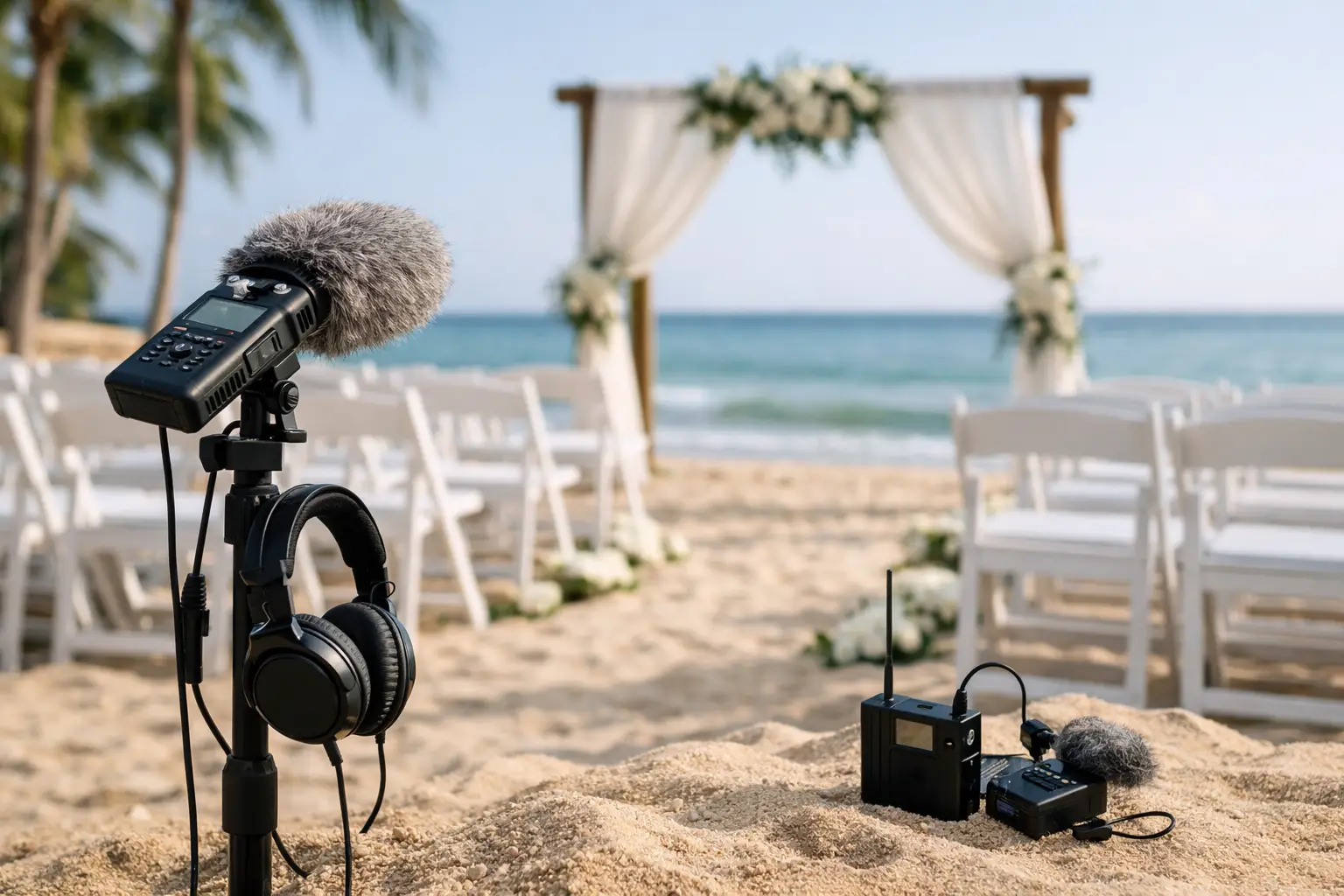
A dependable approach usually includes a lavalier mic on the officiant or groom, a recorder connected to the PA system if one is being used, and on-camera audio to capture natural ambience and crowd response. Each source serves a different purpose. The lav gets you intimate speech, the board feed can provide clean amplified sound, and the camera track helps the final edit feel grounded in the setting.
This is where experience matters. The right setup depends on whether the ceremony is fully unplugged, lightly amplified, or run through a speaker system. There is no one-size-fits-all beach audio setup, because every shoreline, guest count, and ceremony format changes the risk profile.
Mic placement matters more than expensive gear
Good equipment helps, but placement usually makes the bigger difference. A properly placed lav mic on the officiant often captures both the officiant and the couple better than a poorly placed lav on the bride or groom. The officiant usually stands centered, speaks consistently, and remains active throughout the ceremony.
If the groom is mic’d, placement should be secure, shielded from direct wind, and tested for clothing noise. Jackets, loose leis, long hair, and delicate fabrics can all create friction against a mic. On a beach, that problem gets worse because wind pushes fabric around constantly.
Hidden mics can look clean, but concealment creates trade-offs. Tucking a lav too deeply under clothing may reduce visual distraction while also making voices sound muffled. For premium results, the goal is not just hiding gear. The goal is balancing clean visuals with clear, reliable speech.
Use wind protection every time
This is non-negotiable. Even a mild breeze can ruin a clean signal if the microphone is not protected. Foam covers alone are often not enough for oceanfront ceremonies. Professional wind protection designed for lavaliers and camera-mounted microphones makes a major difference, especially when gusts are inconsistent.
It is easy to underestimate wind during setup because beaches can feel calm one minute and completely different ten minutes later. Always plan for more wind than you hear during arrival.
Test the environment before guests sit down
The best time to solve audio issues is before the ceremony starts, not during the processional. Arrive early enough to listen, not just to unload gear. Stand where the couple will stand. Listen for wave intensity, traffic nearby, aircraft overhead, public beach activity, and the direction the wind is coming from.
You should also check whether the ceremony arch, floral install, or seating layout creates noise risks. Fabric draping can flap against stands. Decorative elements can rattle. A speaker placed too close to a recorder can introduce feedback or uneven levels. These are small details that become big problems in post.
On Oahu beaches, conditions can shift quickly based on time of day and beach orientation. A site that looks ideal for portraits may need a slightly adjusted ceremony angle for better sound control. That kind of planning protects both the film and the client experience.
Coordinate with the officiant and DJ
Strong ceremony audio is not just a technical job. It is also a communication job. If there is an officiant, musician, DJ, or planner involved, coordinate with them before the ceremony begins. Confirm who is using a microphone, whether there is a speaker system, and when handheld mics will be passed.
If a DJ provides amplification, ask about a clean output for recording. If that is not possible, place a dedicated recorder near the speaker as a backup. If live musicians are part of the processional or ceremony, make sure your audio levels account for those volume changes. Music can spike much louder than spoken vows.
This coordination also helps avoid a common problem: the officiant stepping away from the couple or turning their body while speaking. Small movement changes affect mic pickup more than many clients realize.
Record backups like you expect one source to fail
That mindset saves weddings. Batteries die. Memory cards fill up. A connector can loosen. Wind can hit one mic harder than another. Backup recording is not overkill for a beach ceremony. It is standard professional practice.
At minimum, record primary speech on more than one device. If the officiant is wired, consider a second recorder on the groom if wardrobe allows. If a speaker system is present, capture that feed separately. Keep camera audio rolling for the full ceremony, even if it will not be the hero track.
Redundancy is what turns a stressful environment into a manageable one. Premium coverage is not about hoping the first setup works. It is about building a system that still works when conditions change.
Don’t let visuals compromise the vows
Couples understandably want a clean, natural look. On a beach, that often means minimal gear in sight. The challenge is that the more invisible the audio setup becomes, the easier it is to lose clarity if the placement is too compromised.
This is where service and guidance matter. A professional team should explain what is worth hiding and what is worth prioritizing. A tiny mic placement adjustment may have almost no visual impact, while dramatically improving the sound of the vows. Those choices are easier to make when they are discussed in advance rather than rushed at the shoreline.
Ambient sound should support, not compete
Ocean ambience is part of the story. It should be captured and preserved. But ambience works best as a supporting layer, not as the main audio track for the ceremony itself. Clean dialogue first, atmosphere second. In the final edit, that balance creates a cinematic result without sacrificing intelligibility.
That is especially important for highlight films and full ceremony edits. Clients want to hear the emotion clearly, not just remember that the beach sounded beautiful in person.
Post-production can help, but only to a point
Audio cleanup tools are useful, but they are not magic. Wind distortion, clipped audio, and heavily muffled vows can only be repaired so much. Noise reduction can reduce surf and background distractions, but aggressive processing can also make voices sound thin or artificial.
The best results come from getting strong source audio in the field, then refining it in editing. That is a craftsmanship issue as much as a gear issue. A polished wedding film depends on both capture discipline and careful post-production judgment.
For couples planning a beach wedding, the practical takeaway is simple: ask how your photo and video team records ceremony audio. Ask what backups they use. Ask how they handle wind. These questions matter because clear sound is part of how your story is preserved.
At Creative Media Production LLC, we treat ceremony audio with the same care as the visuals because the most meaningful moments deserve more than a good-looking frame. When the setting is open, windy, and unpredictable, preparation is what keeps the vows clear and the final film true to the moment.
A beach ceremony should feel effortless for the couple. Behind the scenes, that usually means the audio plan was anything but casual.