Category: Corporate Media

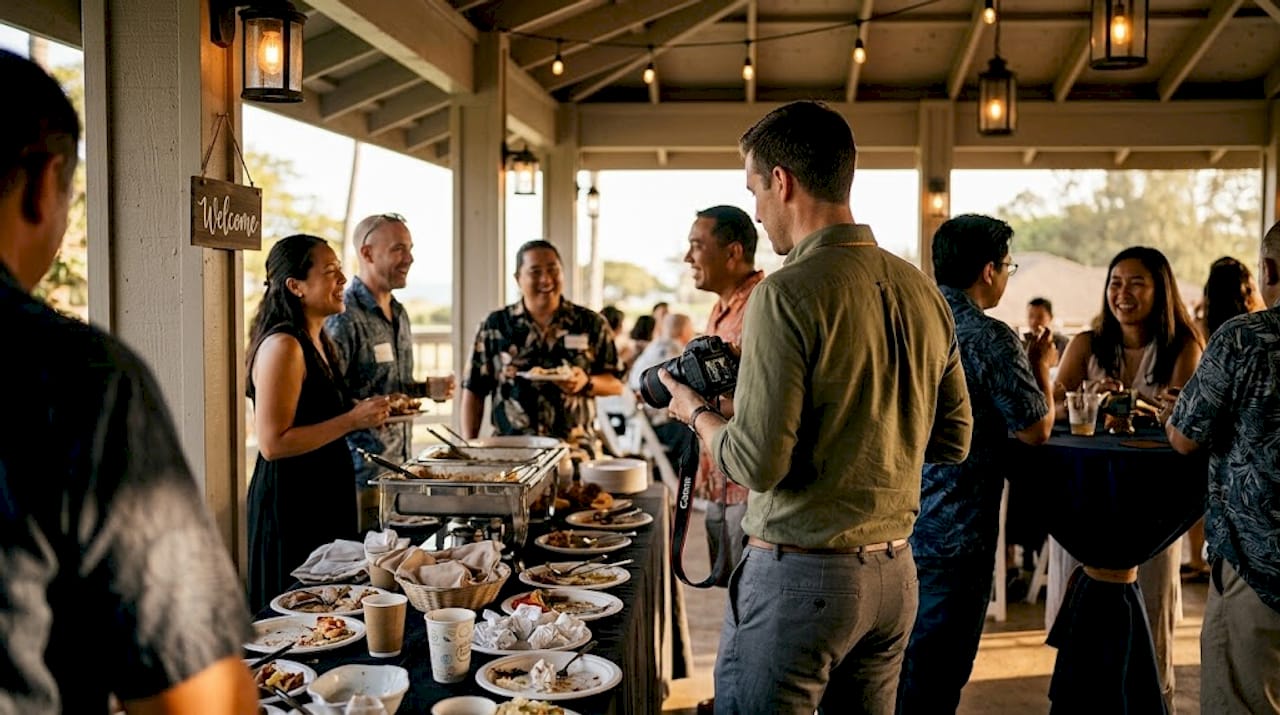
Professional corporate event photography and videography in Oahu, capturing conferences, product launches, and business events with polished media coverage.

  • Why Premium Photography Is Worth It for Special Moments

    Why Premium Photography Is Worth It for Special Moments


    TL;DR:

    • Premium photography relies on skill, composition, and lighting, not just expensive gear.
    • Professional images preserve irreplaceable memories and prevent regrets from missed moments.
    • Investing in expert photographers enhances brand credibility and provides long-term emotional and visual value.

    Most people believe that better photos come from better cameras. That assumption costs families, couples, and businesses more than they realize. A professional with years of skill will consistently outperform amateurs with expensive gear, because technical mastery, emotional awareness, and storytelling instinct simply cannot be bought off a shelf. In Oahu, where your wedding backdrop is a golden beach at sunset and your family reunion happens once every few years, the stakes are real. This article breaks down what premium photography actually means, why expertise delivers returns that amateurs cannot match, and how families, couples, and businesses on the island can make smarter visual investments.

    Table of Contents

    Key Takeaways

    Point Details
    Skill outshines gear Expertise, not equipment, is what delivers memorable and impactful photography.
    Heirloom-quality memories Premium photographers turn life’s milestones into lasting family or brand legacies.
    Business impact Professional imagery boosts brand credibility and drives long-term ROI.
    No second chances Missed moments—personal or professional—can’t be recreated, making quality essential.

    What sets premium photography apart

    Premium photography is not about the camera body sitting in the bag. It is about the person holding it and the years of decisions they make in a fraction of a second. Skill in composition, lighting, and editing separates a photograph that stops you mid-scroll from one you swipe past without noticing.

    Here is what professional skill actually looks like in practice:

    • Light control: Pros read natural and artificial light and adjust on the fly, often without additional equipment.
    • Moment timing: A professional anticipates the laugh before it happens, the tear before it falls.
    • Composition: Framing, depth, leading lines, and negative space are used deliberately to direct the viewer’s eye.
    • Post-production: Editing is where raw files become emotional, print-worthy images. This process can take hours per photo for a seasoned expert.
    • Consistency: Amateurs may get lucky shots. Professionals deliver entire galleries that hold up from first photo to last.

    Amateur mistakes are not always visible during the shoot. Blurry focus, muddy shadows, or awkward cropping often only show up when you view the final files. At that point, there is nothing to fix and nothing to reshoot.

    “The difference between a professional and an amateur isn’t the price tag on the gear. It’s the 10,000 hours of decisions burned into their instincts.”

    For families booking family photographer services or couples exploring premium photography packages, this distinction matters enormously. You are not paying for pixels. You are paying for expertise that protects your memory.

    With the value of skill established, let’s explore the real impacts of choosing experts for life’s milestones.

    Lasting impact for families and couples

    Oahu is not a generic backdrop. The light here shifts fast, the ocean reflects differently by the hour, and the emotional energy at a family reunion or wedding is irreplaceable. One missed moment, one poorly exposed frame, and that memory exists only in someone’s fading recollection.

    Premium photographers understand how to navigate all of that. They arrive early to scout positions. They study the schedule so they know when your grandmother will walk into the room or when the first dance will begin. They manage the chaos so you never have to think about it.

    Here are the real risks of going the amateur route for meaningful events:

    • Missed expressions: Professionals track multiple subjects simultaneously. Amateurs often focus on one while the magic unfolds elsewhere.
    • Poor lighting indoors: Oahu venues range from beachside open-air spaces to dim indoor reception halls. Without lighting expertise, indoor shots suffer.
    • No backup plan: Professionals carry backup gear. Amateurs often do not.
    • Awkward posing guidance: A skilled photographer directs naturally so subjects look relaxed, not stiff.

    Pro Tip: Ask your photographer how they handle sudden weather changes during outdoor shoots. In Oahu, afternoon rain can appear with no warning. A pro has a plan. An amateur usually does not.

    Heirloom-quality storytelling of significant life events is worth the investment precisely because these events are finite. They happen once. Understanding the family photoshoot benefits of working with a skilled local photographer can help families see why preparation and expertise matter more than price alone.

    For couples, professional photoshoots for weddings create the narrative of your entire day, from morning light to final dance. Those images become the story you tell your kids, then your grandkids. And for families who want to capture everyone together during an island visit, Oahu family photo sessions deliver memories that survive long after the trip ends.

    If capturing family and personal history matters, how does this expertise play out for businesses and professional branding?

    Business value: Elevate your brand and ROI

    Your customers form an opinion about your business in seconds. Most of the time, that opinion is based entirely on your visuals. A blurry product shot, a poorly lit team photo, or a flat event image tells potential customers that you do not take quality seriously.

    Business owner reviewing products office scene

    The numbers support this. The business photography services market is growing at a 9.8% CAGR, driven by e-commerce expansion and brands competing for attention in digital-first environments. Businesses that invest in strong visual content consistently outperform those that rely on DIY or stock imagery.

    | Factor | Premium photography | DIY or amateur ||
    |—|—|—|
    | Brand credibility | High | Low to medium |
    | Image consistency | Reliable | Inconsistent |
    | Editing quality | Professional | Basic or none |
    | Long-term ROI | Strong | Unclear |
    | Social media impact | High engagement | Low engagement |

    For Oahu businesses competing in tourism, hospitality, retail, or professional services, your visual identity is your first handshake. Event photography for brands communicates that you value quality and take your audience seriously.

    Pro Tip: Before booking any photographer for a business event, ask to see a full gallery from a past corporate project, not just their best ten shots. Consistency across an entire event tells you more than a single stunning image.

    One common mistake is treating a camera purchase as a business investment. Gear purchases offer joy but not true ROI because skill and creative direction are not features you can download. Reviewing corporate event photography tips before your next event can help you understand what to brief a professional on for maximum brand impact.

    Mastering the business side is powerful, but how do premium and amateur experiences truly compare?

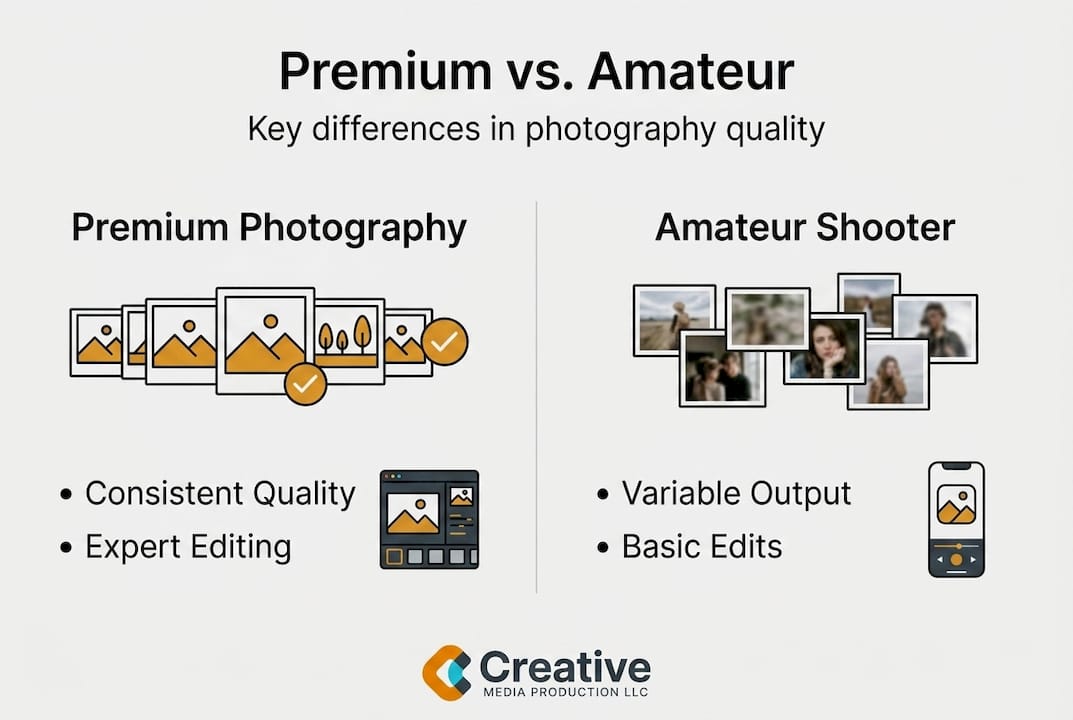
    Premium vs. amateur photography: What you really get

    Let’s make this comparison concrete. Side by side, the gap is wider than most people expect.

    Feature Premium photographer Amateur shooter
    Image quality Consistent, print-ready Variable, often unusable
    Lighting expertise Full control Limited
    Post-production 4 to 8 hours per session Minimal
    Backup equipment Always prepared Rarely available
    Moment anticipation Highly trained Reactive only
    Emotional storytelling Core skill Accidental
    Delivery speed Structured timeline Unpredictable

    Infographic showing premium versus amateur photography

    A pro with basic gear outperforms an amateur carrying thousands of dollars in equipment every time. This is not a theory. It is the lived experience of anyone who has received a gallery from an untrained friend versus a seasoned professional.

    Common hidden costs of amateur photography include:

    • Reshoots: Some moments can be restaged, but most cannot. You may pay twice to get a fraction of what you needed.
    • Editing time: If you receive raw, unedited files, you either accept them or pay someone else to fix them.
    • Brand damage: A single poorly photographed product launch or corporate event can undermine months of marketing effort.
    • Lost heirlooms: A wedding gallery that underdelivers is not just disappointing. It is a permanent gap in your family’s visual history.

    “Quality photography is not a luxury for special events. It is the insurance policy that makes sure those events are remembered the way they actually felt.”

    For couples weighing their options, hiring a pro for weddings means more than beautiful images. It means someone managing the visual record of the most important day of your life. And for families, family photoshoot tips from an expert can make the difference between a session that flows naturally and one that feels forced and frustrating.

    You’ve seen the differences. What’s the big-picture takeaway from years in the field?

    The uncomfortable truth: You can’t redo milestones or branding moments

    After more than 15 years working with families, couples, and businesses across Oahu, one pattern shows up without fail. People who chose the cheaper route for a milestone event almost always regret it. Not immediately. It settles in slowly, usually when they look for a photo to frame or a video to share and realize they just don’t have anything that captures how the day actually felt.

    The mistake is not choosing someone inexperienced. The mistake is assuming that the visual record of an irreplaceable moment is negotiable. It is not.

    True ROI comes from expertise, not from the number of megapixels in a camera body. There is real joy in buying new gear. We understand that completely. But joy in the purchase is not the same as value in the result.

    The smartest investment you can make is finding a creative partner who understands your story, knows the light on your specific beach at 4pm, and cares about your images as much as you do. That kind of partner, a working with a local pro who has spent years developing instincts for Oahu’s events and light, is what separates a gallery you will show your grandchildren from a folder you will quietly forget.

    Ready to invest in your story?

    Whether you are planning a wedding, organizing a corporate event, or scheduling a family session on Oahu, the decision to invest in premium photography is a decision to protect what matters most.
    https://creativemediaprod.com

    At Creative Media Productions, we work with families, couples, and businesses across Honolulu, Waikiki, Kailua, and beyond to create story-driven visual experiences that last. Explore the full range of Oahu event photography options or take a closer look at our wedding media packages and corporate event services. We would love to talk through your vision and build a plan that fits your event, timeline, and goals. Reach out today to schedule your consultation.

    Frequently asked questions

    What is the biggest difference between premium and amateur photography?

    Premium photographers bring advanced skills in lighting, editing, and timing, producing heirloom-quality results that amateurs rarely achieve. Professionals outperform amateurs even when using less expensive equipment because skill is the deciding factor.

    How does premium photography add value to business marketing?

    High-quality images signal credibility and professionalism, helping businesses attract more customers and build a trustworthy brand image. With the business photography market growing at 9.8% CAGR, strong visual content is becoming a baseline expectation, not a differentiator.

    Why not just buy a good camera instead of hiring a premium photographer?

    Buying a camera rarely gives you the skills, creative vision, or editing expertise required for impactful photography. Gear purchases offer joy but do not translate into professional results without years of practice behind them.

    Can premium photography really capture family milestones better?

    Yes, expert photographers know how to capture emotion and tell a story, creating images families will treasure for generations. Heirloom-quality storytelling of significant life events is consistently rated as worth the investment over amateur alternatives.
  • Why document corporate events? Unlock value with expert coverage

    Why document corporate events? Unlock value with expert coverage


    TL;DR:

    • Documenting corporate events creates lasting content that enhances brand storytelling and ROI.
    • Professional photography and videography provide valuable assets for marketing, PR, and stakeholder engagement.
    • Pre-event planning and experienced teams are essential to capture impactful moments despite logistical challenges.

    Corporate events are no longer just internal gatherings. They are strategic brand investments, and the global corporate event market is projected to more than double from $330.9 billion in 2023 to $730.7 billion by 2035. That kind of growth signals one thing clearly: events matter more than ever. Yet many Oahu event organizers still treat photography and videography as an afterthought, something to figure out last minute. This guide breaks down why professional documentation is one of the smartest investments you can make for your corporate event, and exactly how to do it right.

    Table of Contents

    Key Takeaways

    Point Details
    Event documentation drives ROI Professional photo and video coverage turns one-day events into long-term brand assets for marketing, recruiting, and more.
    Overcome common challenges Top documentation teams prepare for lighting, timing, and venue obstacles to deliver consistently impactful results.
    Storytelling is key Intentional, brand-aligned documentation goes beyond snapshots to build an authentic narrative for your organization.
    Oahu expertise available Local professionals bring the technical skill and understanding of Island event culture to deliver standout results.

    The big picture: Why documenting corporate events matters

    Every corporate event your team produces carries real budget, real effort, and real expectations. A product launch in Waikiki, a leadership summit in Kailua, a client appreciation dinner in Honolulu: each one is a live brand moment. Without quality documentation, that moment evaporates the second guests walk out the door.

    The corporate event market reaching $730.7 billion by 2035 tells us that organizations worldwide are betting big on live experiences. Documenting those experiences is how you extract lasting value from that investment. A single well-documented event can generate content for months.

    Think about what professional event documentation for brands actually produces:

    • PR assets: Press-ready images your communications team can pitch immediately
    • Social content: Reels, highlight clips, and photo carousels that drive engagement for weeks
    • Recruiting material: Authentic footage showing your company culture to potential hires
    • Internal communications: Visual recaps that keep remote or off-site teams connected
    • Stakeholder reports: Professional imagery that demonstrates event impact to leadership

    Here is the uncomfortable truth: undocumented events are partially wasted events. You spend tens of thousands of dollars producing an experience, but without strong visuals, your audience shrinks to only the people in the room.

    Documented event Undocumented event
    Content lives on for 6 to 12 months post-event Value ends when the event ends
    Supports PR, social, and recruiting simultaneously No reusable assets created
    Strengthens brand storytelling over time Missed brand narrative opportunity
    Justifies event budget to leadership Harder to prove event ROI

    When you look at building an event photography portfolio for your brand, you are essentially building a bank of trust signals. Every great event photo says: we do things well, we show up professionally, and we are worth paying attention to.

    Business benefits: ROI and brand value from event documentation

    With the stakes established, here is how expert event documentation translates into tangible business advantages.

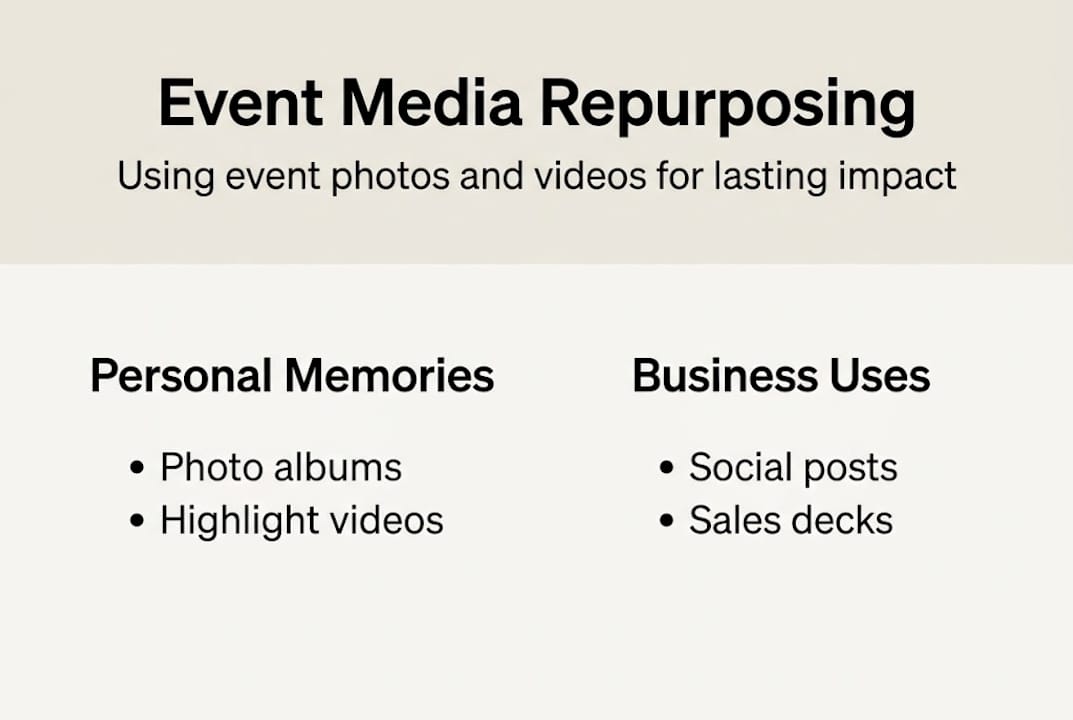
    The most immediate payoff is content multiplication. One corporate event, properly documented, can produce hundreds of usable assets. Photos for your website. Short video clips for LinkedIn. A highlight reel for your next pitch deck. Speaker headshots for press materials. That is not just content creation. It is content leverage.

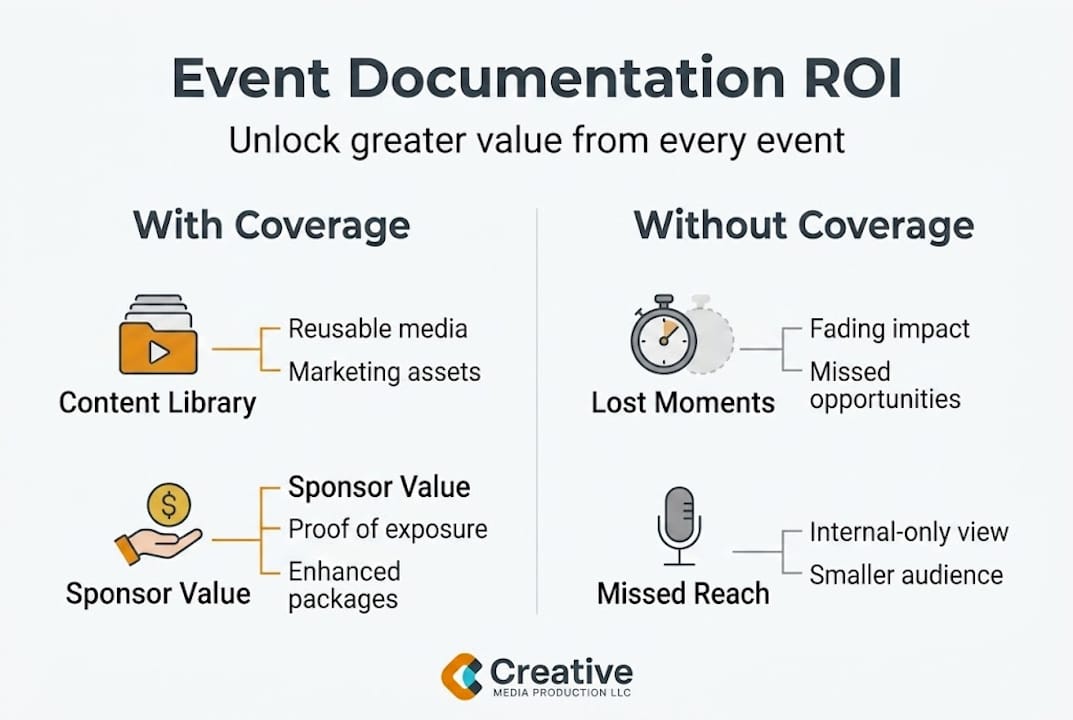
    Infographic comparing event coverage value

    Consistent professional documentation amplifies corporate events across digital platforms and increases engagement far beyond the event date itself. Brands that document consistently build a visual identity that is immediately recognizable.

    Here is a clear breakdown of outcomes:

    With professional documentation Without professional documentation
    Immediate PR-ready visuals Scrambling for smartphone photos
    Sponsor and VIP coverage for relationship building Sponsors feel undervalued
    Polished brand story across all channels Inconsistent or absent brand narrative
    Higher perceived event quality Missed credibility signals

    Documenting your VIPs and sponsors deserves special attention. When a sponsor sees professional photos of their logo, their team, and their name prominently featured in polished post-event content, it strengthens the relationship for next year’s renewal. That visual thank-you carries more weight than an email recap ever could.

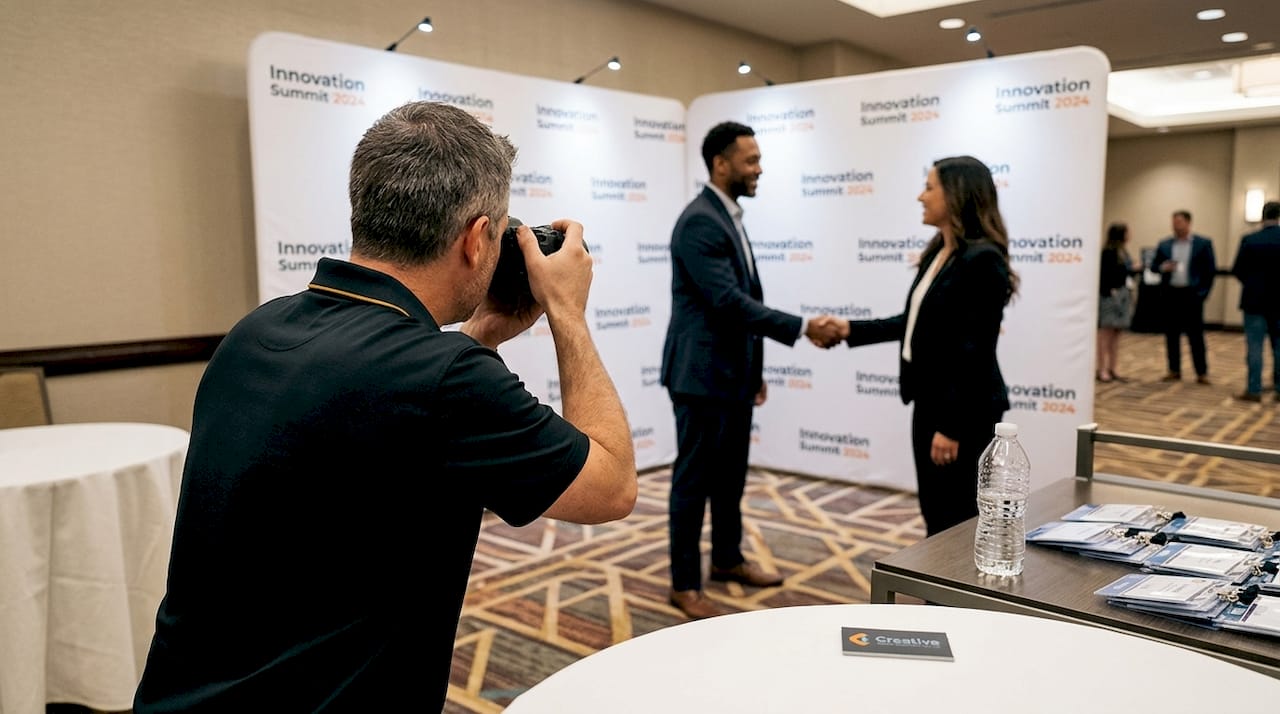
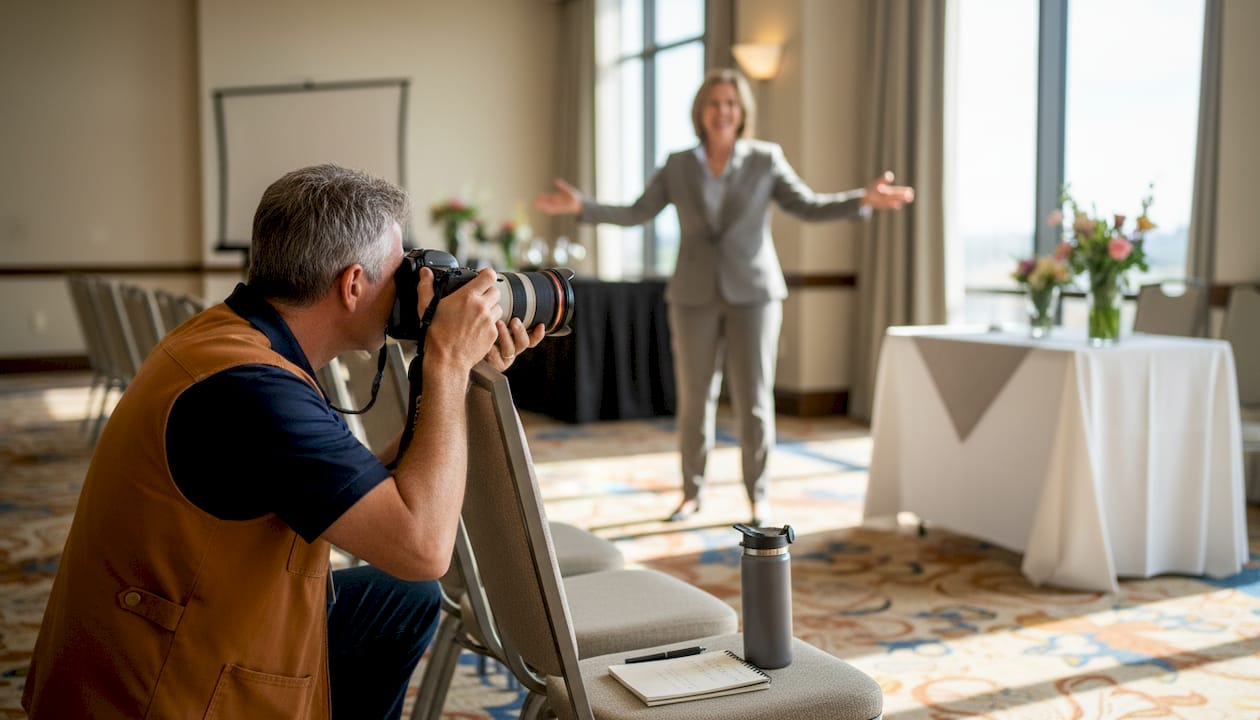
    Photographer capturing sponsors at event

    Pro Tip: Create a short brief for your documentation team that lists every sponsor and VIP by name and explains how they should be featured. This takes 20 minutes but dramatically improves the strategic value of your final content.

    The types of event photography you commission also affect ROI. Editorial-style candids build authenticity. Staged portraits add formality and press utility. Environmental wide shots establish place and scale. A smart mix of all three gives your marketing team maximum flexibility after the event.

    For Oahu-based organizations, there is an added layer of value. Your events happen against one of the world’s most visually compelling backdrops. Properly planning event documentation means making the most of that environment rather than treating it as incidental.

    Best practices: How professionals capture memorable corporate events

    Understanding the benefits is great, but how do professionals consistently achieve impactful event coverage?

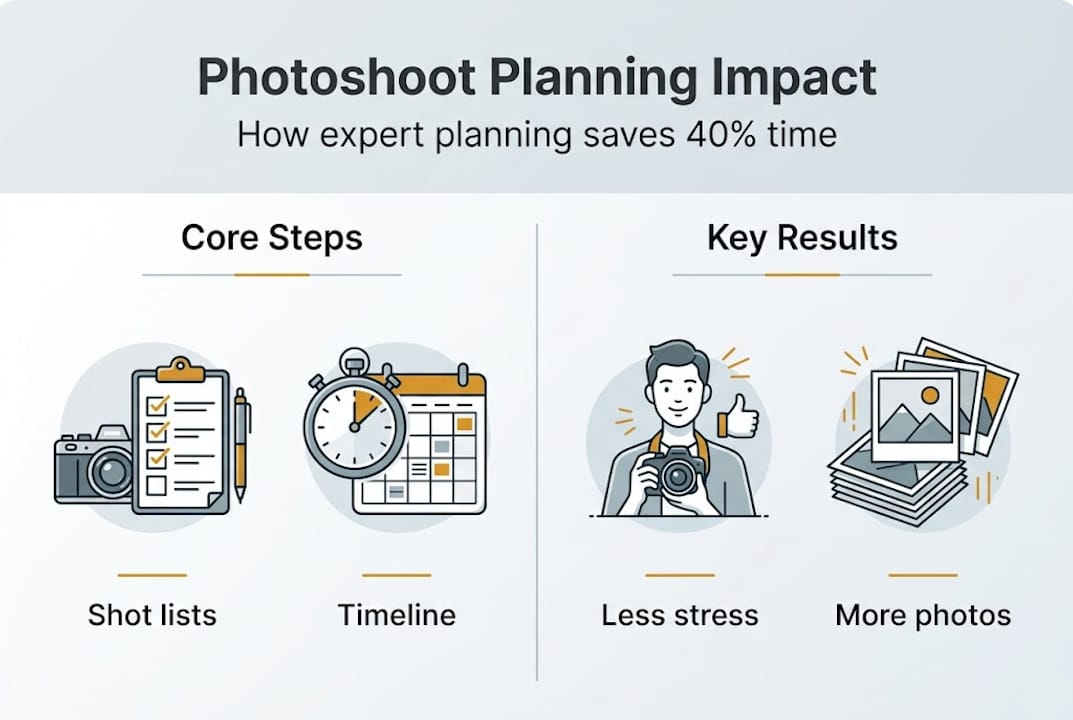
    It starts well before the event itself. Experienced event photographers build a pre-event shot list, arrive early to scout the venue, carry dual cameras, shoot in aperture priority mode, use burst mode for key moments, and balance candid coverage with intentional portraits. These are not optional extras. They are the baseline for professional-grade results.

    Here is the standard workflow that separates quality event coverage from amateur snapshots:

    1. Brief and discovery: Meet with the event team to understand brand goals, key moments, and VIP priorities
    2. Shot list creation: Build a prioritized list of must-capture moments, people, and brand elements
    3. Venue walkthrough: Identify lighting challenges, restricted zones, and ideal angles in advance
    4. Equipment preparation: Test all gear, bring backup cameras and lenses, check battery packs
    5. Day-of execution: Arrive 60 to 90 minutes early, establish positions, coordinate with event staff
    6. Capture the arc: Document setup, arrival, programming, candid networking, and wrap
    7. Post-event delivery: Curate, edit, and deliver content within the agreed turnaround window

    For low light event scenarios, which are common at Oahu corporate dinners and evening receptions, fast lenses with wide apertures are essential. Shooting at f/1.8 or f/2.8 allows clean exposures without disruptive flash in sensitive settings.

    “Covering a corporate event well means adapting constantly. The shot list is your anchor, but the best moments happen between agenda items.”

    Prioritizing VIPs and sponsors, adapting to low light, and covering multi-room events requires both advanced gear and real teamwork. A solo photographer will always miss something. For larger events, two-photographer or photographer-plus-videographer teams are the professional standard.

    Understanding event photography terminology before your first planning meeting puts you in a stronger position to communicate exactly what you need. And working with a team that also understands event videography steps means your photo and video content will feel cohesive rather than disconnected.

    Common challenges in corporate event documentation (and how to solve them)

    Even with preparation, real-time challenges impact event documentation. Here is how pros handle them.

    Lighting is the most consistent villain in event photography. Indoor ballrooms, rooftop venues, and evening settings on Oahu create wildly different exposure conditions, sometimes within the same event. The solution is preparation: visit the venue beforehand, test your equipment in similar conditions, and never rely on a single lighting approach.

    Edge cases like low light, no-flash zones, multi-room logistics, and unexpected weather all require advanced gear and careful planning. A photographer who has not prepared for these scenarios will deliver inconsistent results.

    Here are the most common documentation challenges and the professional fixes:

    • Low light interiors: Use fast primes, high ISO, and off-camera flash where allowed
    • No-flash restrictions: Switch to available light with wide apertures and image-stabilized lenses
    • Simultaneous sessions: Deploy a second photographer or videographer for multi-room coverage
    • Tight schedules: Pre-assign positions based on the run-of-show so no key moment is missed
    • Brand inconsistency: Brief the team on brand colors, logos, and visual standards before arrival

    “The real risk is not capturing a bad photo. It is missing the moment entirely because you were not positioned correctly.”

    For Oahu events, outdoor venues add weather unpredictability to the mix. Trade winds, afternoon rain, and shifting light throughout the day all require experienced judgment calls on the fly. Planning documentation logistics in advance reduces last-minute chaos significantly.

    Choosing the right event team means finding professionals who have handled these exact challenges in local venues. Experience in Oahu’s specific conditions is not a bonus. It is a meaningful advantage.

    Transforming documentation into engaging brand stories

    Once you have captured quality footage, the work is not done. Here is how the best brands leverage it for ongoing impact.

    Event media becomes a primary tool for marketing campaigns, PR, employee recruitment, and stakeholder engagement long after the event itself concludes. The brands that win at content marketing are usually the ones treating every event as a production.

    Here is how to use your event documentation strategically:

    • Website: Refresh homepage imagery and team pages with current, authentic visuals
    • Social media: Schedule a series of posts over four to six weeks using photos and short video clips
    • Press and media: Pitch event coverage to local Oahu publications and industry outlets with ready-to-use imagery
    • Recruitment: Feature culture and team moments in job postings and LinkedIn company pages
    • Internal channels: Share recap videos with employees across locations to build community

    Tailoring your event photo formats for different platforms is equally important. A vertical crop optimized for Instagram Stories performs very differently from a wide landscape shot suited for a website banner. Request multiple crops and formats from your photography team at delivery.

    Content type Best platform Ideal format
    Highlight reel LinkedIn, website 60 to 90 second video
    Candid moments Instagram, Facebook Square or portrait photo
    Speaker portraits Press, website Horizontal, high resolution
    Event recap Internal, email Slideshow or PDF gallery
    Sponsor coverage Partner channels Branded photo with logo

    Using video storytelling is particularly powerful for Oahu-based companies looking to attract mainland or international clients. A well-produced two-minute event highlight video does more for brand perception than any brochure ever could.

    Our take: What most organizers overlook about documenting corporate events

    After more than 15 years covering events across Oahu, we have watched brilliant events leave almost no digital footprint. The organizer checked the photography box, hired someone affordable last minute, and received a folder of forgettable images that never got used.

    The real opportunity is in adopting a content-first mindset before the event even begins. That means briefing your visual team on your actual business goals, not just the run-of-show. It means thinking about where each photo will live and who will see it. It means treating documentation as a storytelling project, not a recordkeeping task.

    The hidden ROI of consistent event storytelling compounds over time. Organizations that document every corporate event well build a visual brand archive that tells a growing story. Sponsors, recruits, and clients see an organization that is active, credible, and worth investing in.

    Bland checkbox documentation is a real risk. Great event photo options paired with intentional creative direction produce assets your team will actually use. That is the difference between documentation and brand building.

    Ready to elevate your corporate event storytelling?

    If you are ready to transform your next Oahu corporate event into a lasting brand asset, we are here to help you do exactly that.

    https://creativemediaprod.com

    Our team of Oahu corporate event photographers brings over 15 years of on-island experience to every engagement. We understand local venues, lighting conditions, and the storytelling goals of Oahu businesses. Whether you need a full photo and video package or targeted event photography options for a specific function, we customize every project to your brand and budget. Explore our professional brand photography services or reach out today for a personalized consultation. Your next event deserves more than a camera in the room.

    Frequently asked questions

    What are the main advantages of documenting corporate events?

    Documenting your event creates reusable brand marketing content, increases ROI, and helps tell your organization’s story across multiple channels. Professional documentation amplifies event reach and post-event impact well beyond the day itself.

    How can I get the best photos and videos at my corporate event?

    Work with a professional team, provide a clear shot list, and communicate key moments and VIPs before the event begins. Pre-event shot lists and venue scouting are industry best practices that directly improve final results.

    What challenges do event photographers face and how are they solved?

    Photographers tackle low light, multi-room setups, and tight schedules with specialized gear, teamwork, and careful advance planning. Low light and multi-room logistics are among the most common challenges requiring professional-level preparation.

    How do event photos and videos support long-term brand goals?

    High-quality visuals are repurposed for marketing, PR, recruiting, and building long-term brand credibility with clients and partners. Event media drives ongoing brand marketing and stakeholder communications for months after the event concludes.

  • Wedding Photography or Video: Which Matters More?

    Wedding Photography or Video: Which Matters More?

    The moment your ceremony starts, the planning shifts from checklists to memory. That is why the question of wedding photography or video matters more than most couples expect. You are not just hiring someone to document a schedule. You are choosing how your day will be remembered, shared, and felt years from now.

    For some couples, photography is the clear priority. A single frame can hold a look, a tear, or a quiet in-between moment with remarkable precision. For others, video carries the emotional weight because it brings back voices, movement, music, and the atmosphere of the day. The right choice depends on what you want to relive later, how you plan to use the final deliverables, and what matters most when the celebration is over.

    Wedding photography or video: Start with what you want to keep

    A practical way to decide is to picture yourself on your first anniversary. Are you more likely to sit down with an album, flip through clean, beautifully composed images, and revisit the day one frame at a time? Or do you see yourselves pressing play and hearing your vows again, watching your first dance unfold, and catching reactions you missed in the moment?

    Photography is often the stronger choice for couples who want timeless keepsakes they can print, frame, share with family, and revisit quickly. Great wedding photography captures expressions, details, and atmosphere with a level of control that translates well across albums, wall art, thank-you cards, and digital galleries. It is also easier to enjoy in short moments. You do not need ten uninterrupted minutes to relive your wedding through photos.

    Video offers something different. It preserves sound, pacing, and personality in a way still images cannot. A well-produced wedding film lets you hear the emotion in a parent’s speech, the tremble in your vows, the laughter during cocktail hour, and the energy on the dance floor. For couples planning destination weddings on Oahu, video can also be especially meaningful for guests who could not attend. It brings them closer to the experience.

    What photography does best

    Wedding photography excels at freezing moments with clarity and elegance. It captures the visual story of the day – the dress, florals, ocean backdrop, family portraits, reception details, and those quick glances that often go unnoticed in real time. If your priority is preserving the look and design of your wedding along with the emotional highlights, photography usually carries the most day-to-day value.

    There is also a practical reason many couples start here. Photos are easier to display and easier to revisit often. A framed portrait in your home becomes part of your life. A gallery can be shared with relatives quickly. A strong photographer also helps guide the day by managing portraits efficiently, keeping things on schedule, and creating calm when timelines get tight.

    That matters more than people realize. Wedding coverage is not just about talent behind the camera. It is also about professionalism, punctuality, and the ability to work smoothly with planners, coordinators, and family members. When your photography team is organized, the whole day feels easier.

    What video does best

    Video captures the living memory of a wedding. It records the pace of the day, not just the highlights. The way your partner laughs before the ceremony. The exact tone of your officiant’s voice. The sound of waves in the background. The way your guests react during speeches. These are the kinds of details couples often say they forgot until they watched their film.

    A cinematic wedding video can also tell a fuller story. Through editing, music, and carefully selected moments, it creates an emotional arc that feels immersive rather than simply documentary. If you value storytelling and want to feel the day again rather than just see it, video becomes very compelling.

    The trade-off is that video is usually less spontaneous to revisit. Couples may look at photos weekly, but save the full film for anniversaries or special occasions. That does not make it less valuable. It just means it serves a different purpose.

    If your budget only allows one

    This is where the answer gets personal.

    If you care most about portraits, family photos, design details, and having something tangible to print and share, choose photography. It is the more universal choice and often the one couples use most consistently over time.

    If the emotional experience matters most – hearing vows, replaying speeches, seeing movement and reactions – choose video. This can be the better fit for couples who are less interested in printed products and more interested in reliving the atmosphere.

    If you are torn, ask yourself one question: what would feel worse to miss? Not having a stunning image of your parents during the ceremony, or never hearing their voices from the toast again? That answer usually points you in the right direction.

    When both wedding photography and video make sense

    For many weddings, the best choice is not wedding photography or video. It is both, especially when the event includes meaningful speeches, live music, cultural traditions, or family members traveling in from far away. Photo and video together create a more complete record.

    This is also where hiring a coordinated team matters. When photography and videography are handled with shared planning, the experience is smoother. The teams can align on timeline, lighting, ceremony positioning, and key moments in advance. That reduces duplication, avoids unnecessary interference, and helps both sides do their best work without competing for the same shot.

    A professional, story-driven team will know how to balance coverage so your experience still feels natural. You should not feel like you are performing for cameras all day. You should feel supported, well-guided, and free to enjoy your wedding.

    Questions to ask before you book

    The quality of your final gallery or film depends on more than gear. Before booking, ask how the team handles planning, what the turnaround time is, how they approach timeline coordination, and whether their style matches the feel you want. Clean, true-to-life storytelling looks very different from heavily posed or overly stylized coverage.

    You should also ask to see full wedding examples, not just highlight reels or social media favorites. A strong portfolio should show consistency across ceremony lighting, family portraits, reception coverage, and candid moments. This is one of the clearest signs that a company can deliver premium results under real event conditions.

    For destination couples, reliability is a major factor. You need a team that communicates clearly, arrives on time, and understands the pace and logistics of local venues. On Oahu, that can mean managing beach light, wind, travel timing, and location permits with professionalism. Artistic skill matters, but dependable execution matters too.

    Style matters as much as format

    Sometimes couples think they are deciding between photo and video, when they are really deciding between styles. A crisp, documentary-style photo team will create a very different memory than a cinematic, editorial-leaning video team. Neither is automatically better. The question is whether the style fits your wedding and your personality.

    If your day is intimate and relaxed, you may want coverage that feels natural, unobtrusive, and emotionally honest. If your event is formal and highly designed, a more polished and guided visual approach may be the better fit. The strongest teams know how to adapt without losing quality.

    That is part of what makes premium service worth it. You are not paying only for files. You are paying for preparation, communication, calm direction, and the confidence that key moments will be captured with care.

    The smartest way to decide

    If you are still unsure, build your choice around priorities instead of trends. Social media can make every wedding film and every photo gallery look essential. Real decisions usually come down to budget, family dynamics, venue, and what memories you return to most.

    For some couples, photography is the anchor and video is the add-on if budget allows. For others, especially those with deeply personal vows or meaningful speeches, video becomes non-negotiable. There is no single right answer, only the right fit for your wedding.

    At Creative Media Production LLC, that is exactly how the conversation should start – not with pressure, but with clarity. When your coverage reflects your priorities, the final result feels personal, polished, and worth revisiting for years.

    The best choice is the one that lets you remember your wedding the way it felt, not just the way it looked.

  • Personalized event coverage: Transform your Oahu event

    Personalized event coverage: Transform your Oahu event


    TL;DR:

    • Personalized event coverage is fully customized to capture the unique story and emotions of each event. It involves pre-event planning, location-specific creativity, and client-driven editing to produce authentic memories. In Oahu, this tailored approach highlights the island’s stunning landscapes and cultural richness, resulting in meaningful visuals that clients cherish for decades.

    Most people assume hiring an event photographer or videographer means getting back a folder of decent shots that look like every other event. You’ve seen them before: wide group photos, a few candid laughs, and a generic slideshow set to royalty-free music. The truth is, standard coverage often misses the moments that made your event yours. Oahu is one of the most visually stunning and culturally rich places on earth, and your wedding, corporate function, or family celebration deserves documentation that reflects that energy. This guide breaks down what personalized event coverage actually means, how it works, and why it changes everything.

    Table of Contents

    Key Takeaways

    Point Details
    Tailored story capture Personalized event coverage delivers custom photos and videos that reflect your unique event vision.
    Oahu-specific expertise Local professionals combine technical skill with island insights for weddings, business, and family occasions.
    Clear process and options Expect consultative planning, on-site creativity, and fast, polished delivery to suit your event’s needs.
    More than documentation This coverage goes beyond standard snapshots, preserving genuine emotion and stories for years to come.

    Defining personalized event coverage: What it really means

    To understand how these services stand out, let’s define what makes event coverage truly personalized.

    Personalized event coverage is not just hiring a photographer and hoping for the best. It is a fully customized approach to photographing and filming your occasion, built around your vision, your people, and your story. As Jenna Lee Pictures puts it, personalized event coverage means tailored photography and videography, customized to a client’s vision and needs. That single definition carries a lot of weight.

    “Tailored coverage isn’t about showing up with a camera. It’s about understanding what matters most to the client before a single frame is shot.”

    Here’s what that looks like in practice. Before your event, a personalized team invests time learning about you. What’s the vibe of your wedding? Is your corporate event formal or energetic? Are there cultural traditions in your family that should be honored on camera? These answers shape every creative decision made on the day.

    Unlike template-based coverage, where a shooter arrives with a preset checklist and leaves with generic output, personalized coverage treats every event as unique. This matters especially in Oahu, where events span beachfront ceremonies in Kailua, polished corporate launches in downtown Honolulu, and intimate family reunions in Kaneohe. Each location and each story calls for a different creative eye.

    You can learn more about event photography basics to understand how professionals approach different event types. The key qualities that separate personalized coverage from generic work include:

    • Pre-event consultation to align on priorities and shot lists
    • Authentic storytelling that blends candid and posed moments
    • Location-specific creativity that uses Oahu’s landscapes intentionally
    • Client-driven edits that reflect the event’s actual tone and personality
    • Flexible delivery formats including highlight reels, full films, and photo galleries

    A skilled Oahu event photographer approaches each booking as a unique project, not a recurring task. And that distinction is exactly what produces images and videos clients keep returning to for decades. When corporate event coverage is done with this level of intention, it also strengthens brand identity and internal culture in ways generic documentation simply cannot.

    How personalized event coverage works: Process and mechanics

    Now that we’ve defined personalized event coverage, let’s look at how the process unfolds from start to finish.

    The best coverage starts well before event day. According to the pre-event process, mechanics involve pre-event consultations, unobtrusive shooting, professional editing, and tailored deliverables. Here’s how that typically breaks down:

    1. Initial consultation — You walk through your timeline, key moments, and any specific shots you need captured
    2. Shot list creation — The team builds a customized guide so nothing important is missed
    3. Venue walkthrough (when possible) — Photographers scout lighting conditions and optimal angles
    4. Day-of coverage — A blend of candid documentary shooting and directed portraits
    5. Post-event editing — Your footage is shaped into a coherent visual story
    6. Delivery — Final photos and videos are delivered within agreed timelines

    Pro Tip: Ask your team to review the event schedule at least one week before. This helps them identify golden-hour lighting windows, speech timing, and key moments that are easy to miss without advance planning.

    Turnaround times are something every client wants clarity on upfront. Here’s a general breakdown:

    Deliverable Typical turnaround
    Edited photo gallery 2 to 4 weeks
    Short highlight video 3 to 5 weeks
    Full event film 4 to 6 weeks
    Same-day edit (add-on) Delivered same evening

    Package structures are also highly customizable. Hourly bookings work well for shorter functions, while full-day packages with add-ons like drone footage or photobooth services suit larger events. Understanding how to choose your photo and video team before committing helps you match the right level of coverage to your event’s complexity. For video-heavy events, professional event videography adds dimensions of storytelling that photos alone cannot achieve.

    Personalized event coverage in Oahu: Local expertise and real examples

    To make this even more concrete, let’s explore how professionals in Oahu turn the concept into real, meaningful memories.

    Oahu’s geography is an event photographer’s dream. Beaches shift from golden to volcanic. Resorts offer grand ballrooms alongside ocean-view terraces. Private estates in the hills above Honolulu catch light differently at every hour. These settings reward creative storytelling, but only when the coverage team knows how to use them. Oahu providers offer story-driven coverage for weddings, corporate gatherings, and birthdays, with client collaboration central to every project.

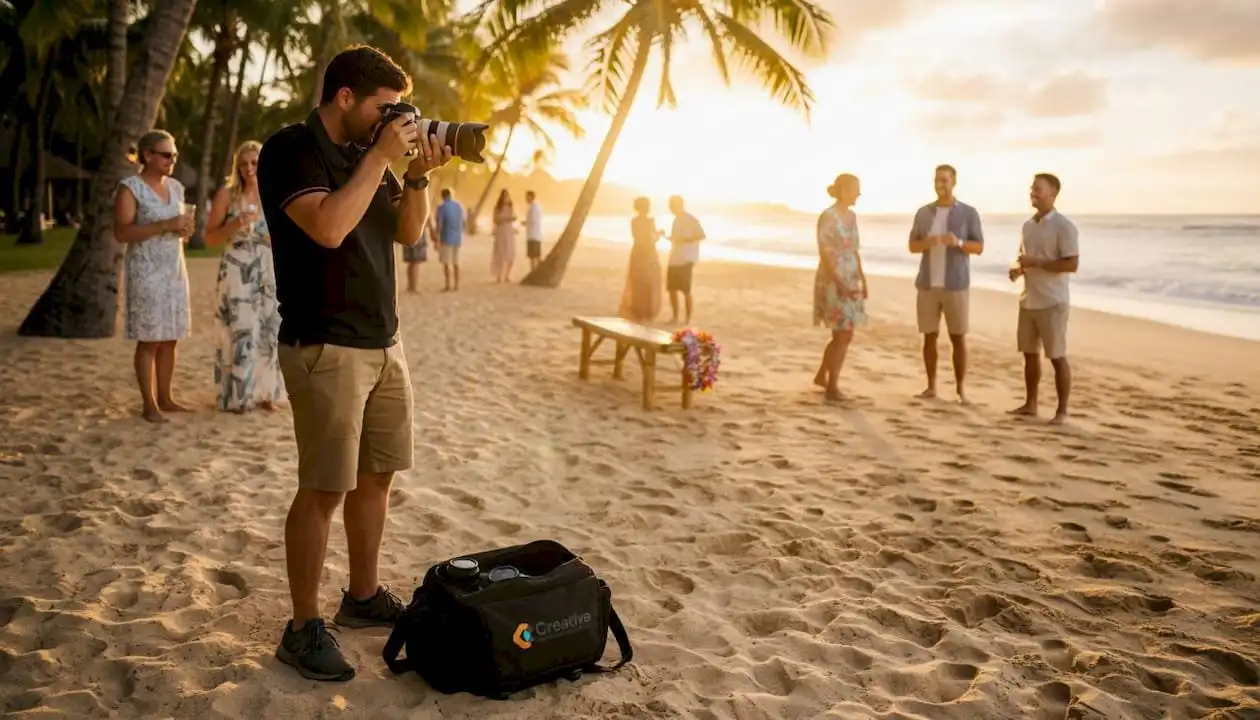
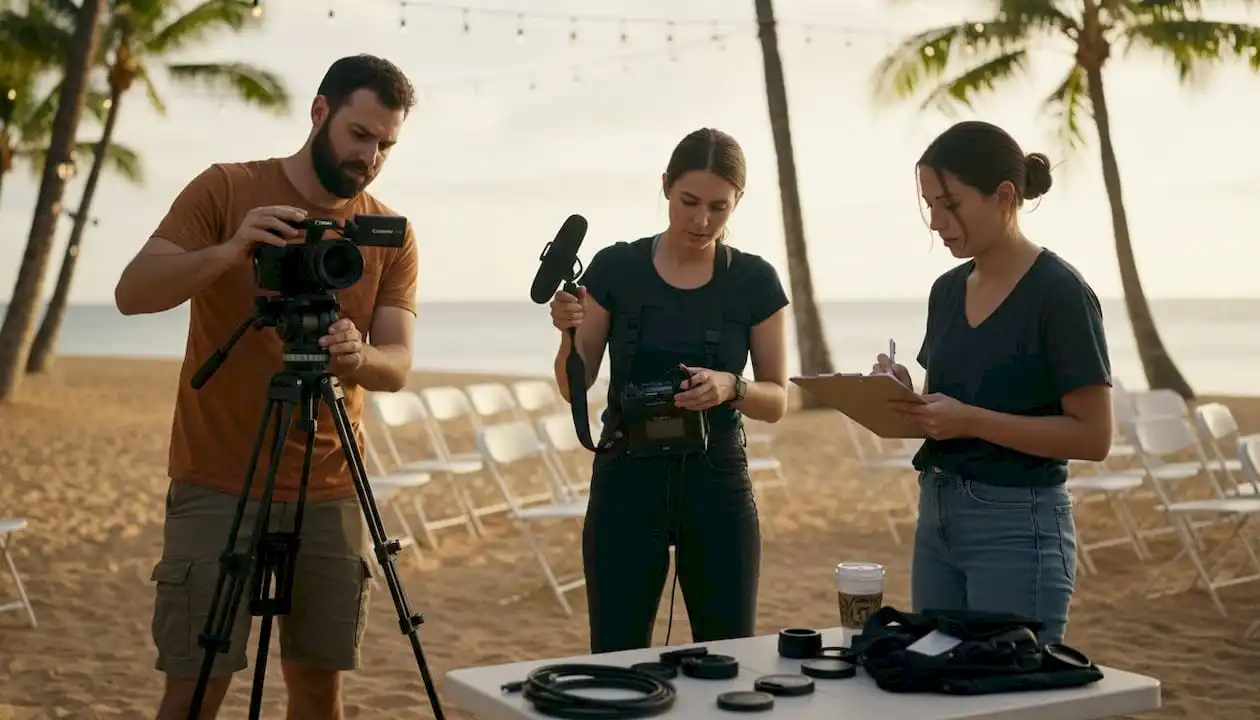
    Photographer at Oahu beach resort event

    Here’s how personalized coverage looks across common Oahu event types:

    Event type Coverage focus Typical add-ons
    Wedding Candid emotion, couple portraits, ceremony details Drone, same-day edit
    Corporate function Team interactions, brand moments, speaker coverage Headshots, highlight reel
    Birthday or family event Genuine laughter, group dynamics, cultural rituals Photobooth, slideshow

    For weddings, the mix of scenic shots, group arrangements, and intimate candid moments creates a visual narrative that holds up for years. Drone footage above a Kailua beach ceremony adds a sense of scale that ground-level shots simply cannot provide. For corporate clients, the approach shifts. Subtlety matters more. The goal is to capture the energy of a product launch or team-building day without disrupting the flow of business.

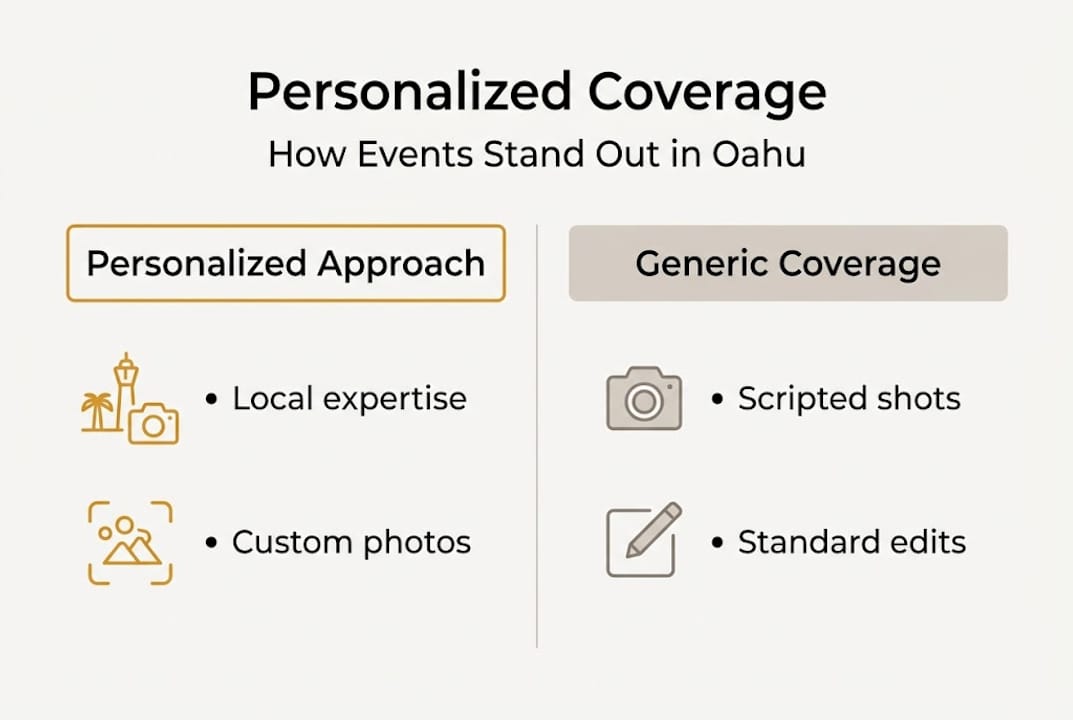
    Infographic contrasting personalized vs generic event coverage

    Family events are where emotional intelligence becomes just as important as technical skill. A 90-year-old grandmother’s expression when she sees all her grandchildren gathered, or a child’s face during a birthday surprise, these are the frames that families treasure most. Explore Oahu videography types to understand which formats suit different event scales. Reviewing a photography portfolio guide also helps clients set expectations and identify their preferred visual style before booking.

    For real-world examples of how corporate event photographer insights translate to on-the-ground results, exploring local portfolios gives you the clearest picture of what’s possible.

    • Work with your photographer to identify the three or four moments that matter most
    • Share cultural or family traditions that should be documented specifically
    • Build buffer time into your schedule for unexpected golden-hour opportunities

    Comparing personalized event coverage to insurance and other services

    Notably, ‘personalized event coverage’ can mean something different in other industries or contexts, so here’s how it compares.

    If you’ve searched this phrase online, you may have landed on insurance-related results. That’s because in the financial world, personalized event coverage refers to customizable liability or cancellation policies designed to protect you if an event goes wrong due to weather, vendor failure, or injury. That is a completely different product from what we’re discussing.

    Separately, the events industry itself uses personalization in a data-driven sense. Event personalization uses data and AI for tailored attendee experiences, but this is not the same as media coverage. Think personalized agendas, targeted session recommendations, and smart networking tools for large conferences.

    Here’s a quick comparison of all three uses of the term:

    Context What it means Who it serves
    Media coverage Custom photo/video documentation Couples, families, businesses
    Insurance coverage Financial protection for event risks Event organizers, venues
    Event personalization tech AI-driven attendee experience tools Conference organizers

    None of these conflict. In fact, many Oahu event clients invest in both media coverage and event insurance for complete peace of mind.

    Pro Tip: Before signing any event coverage contract, confirm whether the provider carries liability insurance. This protects both you and the team on event day.

    When you’re ready to move forward, choosing an Oahu event photographer with a clear understanding of these differences helps you ask better questions and get better results. The right team will cover your memories. A good insurance policy covers your risk. Both have a place in smart event planning.

    Why authentic storytelling beats generic coverage for Oahu events

    Given these distinctions, it’s worth considering why going beyond the generic truly matters for your Oahu event.

    After more than 15 years capturing events across Honolulu, Waikiki, Kailua, and Kaneohe, we’ve seen one pattern repeat: clients who chose cheaper, generic coverage often come back wishing they had invested more. Not because the photos are technically bad, but because they feel empty. They document what happened without conveying how it felt.

    Oahu’s environments are emotionally charged. A beachfront ceremony at sunset, a corporate celebration with a panoramic ocean view, a kupuna’s 80th birthday surrounded by three generations of family. These moments carry weight. Photojournalistic coverage prioritizes candid and authentic moments over simple posed shots, and that approach is what transforms a folder of images into something clients return to again and again.

    Generic coverage plays it safe. It avoids risk by following a script. Personalized coverage earns trust by following your story. Our Oahu brand event storytellers understand that technical skill without emotional intelligence produces technically correct but forgettable work. The best images we’ve ever delivered weren’t the ones we planned. They were the ones we were present enough to catch.

    Ready to make your Oahu event unforgettable?

    If you’re convinced that personalized coverage brings lasting value, here’s how to get started.

    Whether you’re planning an intimate birthday gathering in Kailua or a multi-day corporate summit in Waikiki, Creative Media Production is ready to bring your event to life with story-driven photography and videography built around your vision. Our team has spent over 15 years earning the trust of Oahu families, couples, and businesses.

    https://creativemediaprod.com

    Explore what’s possible by browsing our work as an Oahu event photographer or connecting with us to book corporate event coverage that reflects your brand with precision and heart. From drone footage to same-day edits, our Oahu videography services cover every angle of your most important moments. Reach out today for a custom quote and let’s start planning something worth remembering.

    Frequently asked questions

    What types of events benefit most from personalized event coverage in Oahu?

    Weddings, corporate events, and family celebrations see the greatest value from custom photo and video services, as each involves unique emotional moments and settings that generic coverage tends to miss.

    How much does personalized event coverage typically cost in Oahu?

    Hourly rates start around $280, and multi-hour packages can exceed $900 depending on the services selected and total event length.

    How long does it take to receive edited photos and videos after an event?

    Edited photos take 2 to 4 weeks, while videos typically require 4 to 6 weeks after your Oahu event wraps.

    Is event insurance the same as personalized event coverage?

    No. Event insurance provides financial protection against cancellations and liability, while personalized event coverage refers specifically to custom photo and video documentation.

    What makes Oahu event coverage unique?

    Oahu’s diverse locations combined with a strong emphasis on authentic, culturally rich moments give its personalized event coverage a distinctiveness that’s hard to replicate anywhere else.

  • Event Videography Services That Deliver

    Event Videography Services That Deliver

    A keynote runs long, the bride tears up during a quiet exchange, a child blows out birthday candles before everyone is ready, or a family gathers to honor someone they love. These moments do not wait for perfect timing. That is why professional event videography services matter. They preserve what actually happened, how it felt, and the details you may miss in real time.

    Video is not just a record of an event. When it is planned and captured well, it becomes a story you can revisit, share, and use with purpose. For families, that means keeping genuine memories intact. For businesses, it means creating polished assets that can support marketing, internal communications, and brand presence long after the event ends.

    What event videography services should really include

    Strong event coverage starts before the first camera is turned on. A premium service should include consultation, timeline planning, and a clear understanding of what matters most to you. That may be the ceremony and speeches at a wedding, audience reactions at a product launch, or quiet, respectful documentation at a memorial service.

    On the production side, quality event videography services should balance creativity with reliability. Cinematic visuals are important, but so are punctual arrival, coordinated coverage, clean audio, and the ability to adapt when schedules shift. Events are live environments. There are no retakes. The team behind the camera needs to be prepared, organized, and calm under pressure.

    Deliverables matter just as much as the filming itself. Some clients want a highlight film they can share with friends and family. Others need longer edits, social-ready clips, or branded recap videos for business use. The right approach depends on the event and how you plan to use the footage afterward.

    Why professional event videography services make a difference

    Anyone can point a phone at a stage or dance floor. That does not mean the result will feel watchable, complete, or worth keeping. Professional coverage changes the experience in a few important ways.

    First, you get consistency. Lighting conditions shift, rooms get crowded, and key moments happen quickly. A trained videography team knows how to capture usable footage across changing environments without losing quality. That is especially important for indoor receptions, conferences, evening celebrations, and emotional services where discretion matters.

    Second, you get better storytelling. A polished event film is not just a string of clips. It has structure, pacing, and intention. It captures the wide scene, the close details, the natural reactions, and the moments between the obvious milestones. Those small in-between moments often become the most meaningful part of the final edit.

    Third, you get peace of mind. Event hosts already have enough to manage. You should not be worrying about whether someone remembered to record the speech, whether the audio is clear, or whether the videographer knows where to stand during a sensitive moment. Dependable service reduces friction on the day of the event.

    Event videography services for weddings and family milestones

    Weddings are one of the clearest examples of why video matters. The day moves quickly. Couples often say they remember pieces of it, but not all of it. Video fills in those gaps. It preserves the vows, the movement, the voices, and the atmosphere in a way photography alone cannot.

    The same is true for birthdays, anniversaries, graduations, and family gatherings. These events may feel casual while they are happening, but their value tends to grow over time. A well-made film captures people as they are now, not just how the room looked.

    For family-centered events, the best videography feels natural rather than forced. It should document real interactions without making guests feel like they are performing for the camera. That takes a blend of experience, timing, and a respectful presence.

    Corporate event videography services need a different strategy

    Business events have a different set of priorities. A corporate client may need coverage that is visually polished and also practical for future use. That could mean recapping a conference, documenting a company celebration, highlighting a product launch, or capturing speaker content for internal and external communication.

    In this setting, event videography services should align with the brand and the event goals. If the footage will be used for promotion, the team needs to think beyond recording what happened. They need to capture audience energy, branded details, leadership presence, and clean establishing shots that support marketing later.

    Timing is often tighter in corporate environments, and deliverables may be needed quickly. Fast turnaround is not just a convenience. It can be part of the value of the service, especially when a company wants to post recap content while the event is still fresh.

    Sensitive events require professionalism and care

    Memorials and funeral services call for a different tone entirely. In those moments, families are not looking for spectacle. They want respectful, unobtrusive documentation handled with compassion and professionalism.

    This is where experience matters in a different way. The videography team needs to understand when to stay back, when to move quietly, and how to preserve meaningful moments without intruding on grief. The final film should feel dignified and sincere. For relatives who cannot attend in person, this kind of coverage can carry real emotional value.

    How to choose the right event videography team

    The best fit is not always the cheapest quote or the most dramatic highlight reel. It is the team that can consistently deliver the style, professionalism, and reliability your event requires.

    Start with the portfolio. Look for clean editing, stable footage, natural color, and strong audio. Ask yourself whether the videos feel intentional or just flashy. A polished film should still feel honest.

    Then pay attention to how the company handles communication. Clear planning, fast responses, and a straightforward quoting process usually reflect how they operate on event day. If the experience feels confusing before you book, it probably will not feel smoother later.

    It also helps to ask practical questions. How many videographers will be there? What is included in the package? How long is the turnaround time? Have they covered your type of event before? These details shape the result more than people sometimes expect.

    What to expect from the planning process

    Good videography starts with alignment. Before the event, you should have a chance to discuss schedule, location, priorities, special requests, and the overall style you want. Some clients prefer documentary coverage. Others want a more cinematic approach. Most want a balance of both.

    A strong planning process helps prevent missed moments. If your team knows the family dynamics, the speaker order, the brand goals, or the memorial traditions in advance, they can capture the day with more precision. That preparation also helps the event run more smoothly because everyone understands the plan.

    For clients on Oahu, this local familiarity can make a real difference. Beachfront weddings, hotel ballrooms, corporate venues, and community spaces all come with their own logistics. A team that knows how to work efficiently across Honolulu, Waikiki, Kailua, Kapolei, and the North Shore brings practical value that goes beyond camera skill.

    The value of bundled photo and video coverage

    Many events benefit from having photography and videography handled together. It simplifies coordination, keeps the visual style more consistent, and reduces the chance of teams competing for the same angles or moments.

    For clients who also want a more interactive guest experience, add-ons like a photo booth can make sense. That is especially true for weddings, company parties, birthdays, and community events where guests want something immediate to enjoy and share. The key is making sure those extras support the event rather than distract from it.

    When one provider can manage coverage with a clear plan and dependable execution, the experience tends to feel more organized from start to finish. That is part of what premium service should look like.

    Creative Media Production LLC approaches event coverage with that balance in mind – cinematic storytelling, reliable execution, and fast turnaround designed to serve both families and businesses across Oahu.

    The right video should do more than prove your event happened. It should bring you back to the room, the voices, and the feeling of the day with clarity and care. If you are investing in event videography services, choose a team that treats every moment like it matters, because it does.

  • What Is Event Coverage? Guide for Oahu Planners

    What Is Event Coverage? Guide for Oahu Planners


    TL;DR:

    • True event coverage is a comprehensive, story-driven process capturing all aspects from start to finish.
    • Local expertise in Oahu ensures seamless logistics, permits, weather, and cultural sensitivities are managed effectively.
    • Combining photography and videography offers the most complete documentation of the event’s moments and atmosphere.

    Most people assume event coverage is just a photographer showing up and snapping photos between appetizers and the cake cutting. That misunderstanding costs event hosts some of their most meaningful memories. True event coverage is a strategic, story-driven process that documents every chapter of your occasion, from the nervous energy before guests arrive to the last handshake or dance. For anyone planning an event on Oahu, where venues stretch from beachfront cliffs to hotel ballrooms and cultural traditions run deep, understanding what you’re actually booking makes all the difference between a memory and a masterpiece.

    Table of Contents

    Key Takeaways

    Point Details
    Event coverage is storytelling Professional coverage captures every moment and detail, turning your event into a complete visual story.
    Oahu expertise is essential Knowledge of local venues, permits, and cultural customs is crucial for seamless documentation in Oahu.
    Photo and video go hand in hand Using both photography and videography preserves memories in unique and complementary ways.
    Choose the right coverage Select your coverage type and team based on your event’s goals, logistics, and Oahu-specific challenges.

    What event coverage actually means

    Event coverage is not a single deliverable. It’s a system. Professional photography and videography that comprehensively documents events from start to finish captures candid moments, key speakers, setups, interactions, and details to create a visual story. That definition matters because it shifts the goal from “getting good shots” to “preserving the complete experience.”

    Think about what a full event actually contains:

    • Setup and decor: The venue before guests arrive, floral arrangements, table settings, signage
    • Guest arrivals: First impressions, greetings, candid reactions
    • Key moments: Speeches, ceremonies, performances, announcements
    • Behind the scenes: Organizers, vendors, preparation areas
    • Closing moments: Final toasts, group photos, teardown energy

    None of these elements exist in isolation. Together, they form a narrative arc that tells the story of your event as it actually unfolded. A photographer who only captures posed portraits gives you beautiful images. A team providing true event coverage gives you a documentary.

    Coverage also comes in different formats depending on your event’s scope and budget:

    Full-day coverage follows the event from first setup to final goodbye, ensuring nothing is missed. Half-day coverage focuses on a defined window, such as the ceremony and reception or the keynote and networking session. The risk with half-day is that meaningful moments happen before and after that window more often than clients expect.

    For Oahu events specifically, the stakes are higher. A sunset ceremony at Lanikai Beach happens once. A cultural protocol during a Hawaiian wedding cannot be restaged. Oahu event photography approaches designed for these moments recognize that the story begins long before guests sit down.

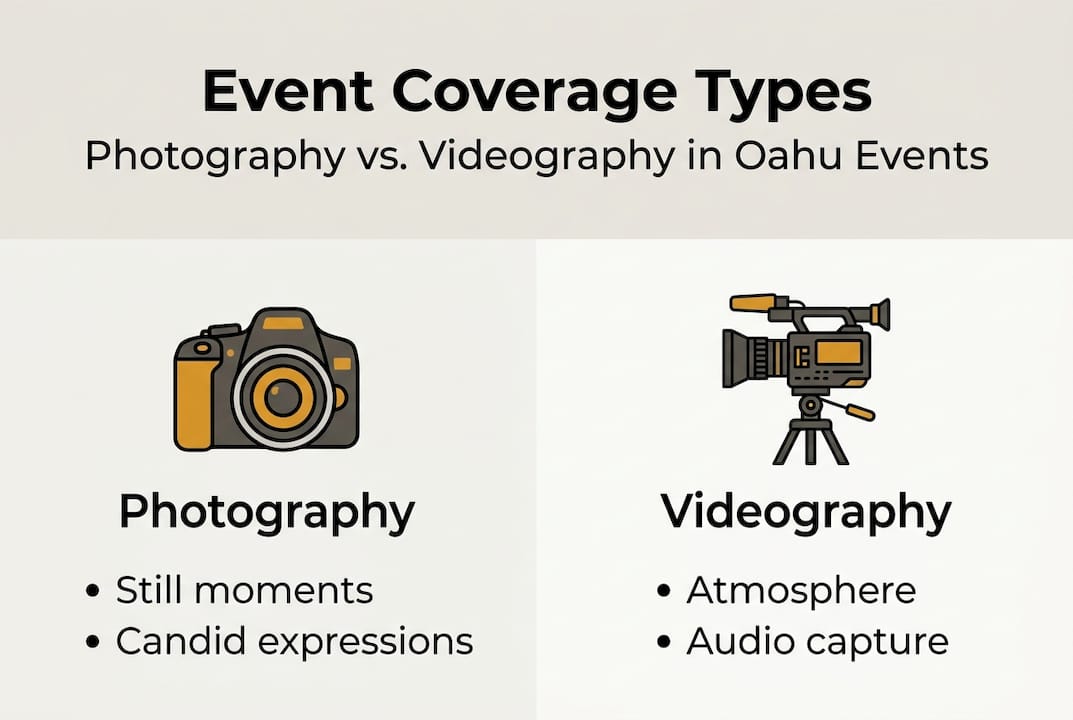
    Photo coverage and video coverage serve distinct purposes too. Photography freezes a single frame with emotional precision. Videography captures motion, audio, and atmosphere over time. For weddings, conferences, and large cultural gatherings in Oahu, combining both through a coordinated Oahu event photo and video team delivers the richest, most complete record of your event.

    Photography, videography, and their roles in event coverage

    Photography and videography are not interchangeable, and understanding what each does well helps you build the right coverage plan.

    Photographers focus on still moments: a couple’s first look, a speaker’s expression during applause, the details of a centerpiece lit by golden Oahu afternoon light. Their deliverables are edited galleries, typically organized by event sequence, that give you hundreds of polished images to choose from.

    Photographer capturing speaker’s candid expression

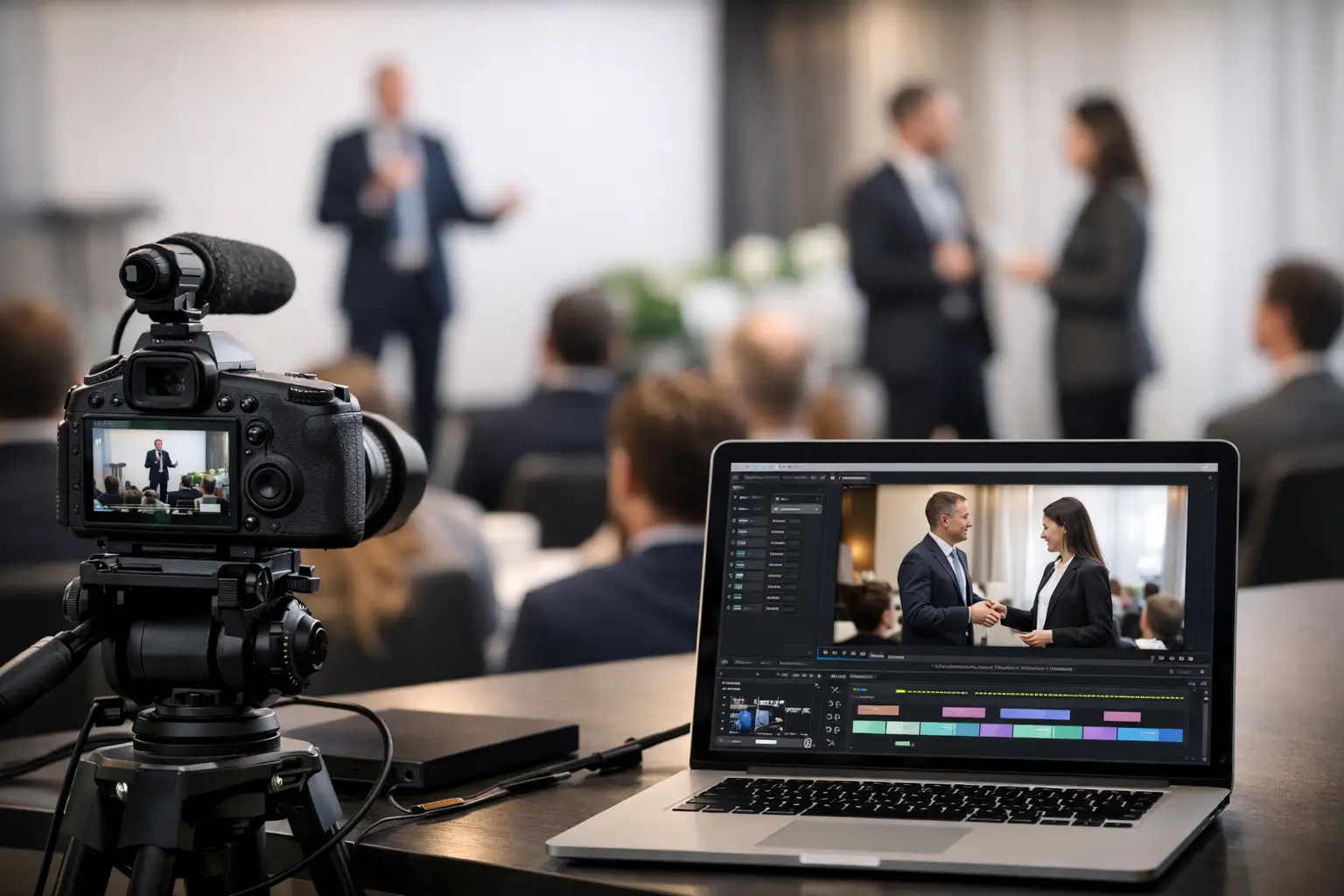
    Videography goes deeper into atmosphere. A professional multi-camera video setup uses two to three cameras (wide, close-up, and roaming), wireless microphones for speakers, a video switcher for live multi-camera direction, and LED panels for interview segments. The standard delivery timeline for highlight reels is five to ten days, and professional multi-camera day rates typically run $2,000 to $5,000.

    Here’s how the two options compare for Oahu event planners:

    Coverage type Best for Limitations
    Photo only Intimate events, tight budgets No audio, no motion storytelling
    Video only Speeches, performances, conferences Fewer shareable still images
    Photo + video Weddings, large corporate events Higher investment, needs coordination
    Half-day photo Short ceremonies or receptions May miss pre/post event moments
    Full-day photo + video Full weddings, multi-session conferences Best coverage, highest value

    Pro Tip: Ask your video team specifically about their audio setup. Outdoor Oahu venues, especially beachfront locations in Waikiki or Kailua, introduce wind noise that cheap microphone setups cannot handle. A wireless lavalier on your officiant or keynote speaker is non-negotiable.

    Exploring Oahu videography services in advance helps you understand which package matches your event’s complexity. And if you want your visuals to stand out, enhancing creativity in Oahu event photos requires intentional planning around lighting, angles, and the natural environment.

    Infographic comparing photography and videography roles

    The Oahu difference: Local expertise and cultural understanding

    Planning an event anywhere in Hawaii is not the same as planning one on the mainland. Oahu’s geography, permitting requirements, and cultural traditions create a specific set of challenges that generic advice simply doesn’t address.

    Local knowledge of Oahu venues covers everything from Waikiki parking logistics and North Shore wind conditions to beach permit requirements. Gear redundancy for changing light and weather is essential, and a discreet style is critical for cultural events like funerals and weddings. These are not minor details. They are the difference between a smooth shoot and a chaotic one.

    Here’s what Oahu-specific event coverage must account for:

    • Permits: Many beach and park venues require advance permits that affect where equipment can be placed and when the team can arrive
    • Weather windows: Trade winds shift quickly, and rain can move in from the Ko’olau Mountains without warning
    • Parking and access: Waikiki venues during peak tourist season require logistical planning that an unfamiliar team will underestimate
    • Cultural protocols: Hawaiian ceremonies often include chants, blessings, and rituals that must be documented with respect and minimal intrusion
    • Backup gear: Power outages, humidity, and salt air demand redundant cameras, batteries, and lenses

    Pro Tip: When interviewing a coverage team, ask them to name specific venues they’ve worked at in Oahu. A team that’s shot at Kualoa Ranch, Turtle Bay, or a Kaimuki restaurant event space will navigate those environments far more confidently than one visiting the island for the first time.

    For families celebrating milestones or businesses hosting conferences, understanding event photography terms in Oahu helps you communicate clearly with your team about expectations before the event day arrives.

    How to choose the right event coverage for your Oahu event

    With a clear picture of what coverage involves and what Oahu demands, here’s a practical framework for making your decision:

    1. Define your event’s purpose. Is this a once-in-a-lifetime wedding, an annual corporate conference, or a family reunion? The emotional and professional stakes should guide how much coverage you invest in.
    2. Set a realistic budget. Know that quality, experienced teams book fast in Oahu, especially during peak wedding season from May through October.
    3. Identify your venue’s requirements. Some venues have restrictions on lighting equipment, drone use, or the number of vendors on-site.
    4. Review local portfolios. Look specifically for work shot at venues similar to yours, under similar lighting and time-of-day conditions.
    5. Ask about contingency plans. What happens if the weather forces an indoor shift? Does the team carry backup gear? Can they adapt their lighting setup on the fly?

    Prioritizing photographers with island logistics expertise for permits, traffic, and weather ensures seamless coverage of weddings and corporate events. That expertise is not a bonus. It’s a baseline requirement.

    Event type Recommended coverage Reasoning
    Beach wedding Full-day photo + video Lighting changes fast; ceremony is unrepeatable
    Corporate conference Half or full-day video Speeches and panels need audio documentation
    Birthday celebration Half-day photo Concentrated highlights; budget-friendly
    Cultural ceremony Full-day photo only Discreet; minimizes intrusion
    Family reunion Half-day photo + video Captures energy and connection

    Choosing the right Oahu event media team means reviewing work samples, confirming local experience, and having a detailed pre-event consultation. Also, consider why professional videography is worth the investment when your event will not happen again.

    What most guides miss about event coverage in Oahu

    Most coverage guides focus on style, equipment specs, and portfolio aesthetics. Those things matter. But after 15 years of working events across Oahu, from Honolulu boardrooms to North Shore shorelines, what actually separates excellent coverage from forgettable coverage is on-the-ground experience and contingency thinking.

    Every minute matters more in Oahu than almost anywhere else. A sunset ceremony at a specific beach only works during a narrow window. A traditional Hawaiian blessing cannot be paused or redone. When a team doesn’t know how long it takes to park and unload at a Waikiki venue on a Saturday afternoon, those minutes disappear, and so do the moments inside them.

    Conventional wisdom says to prioritize a photographer’s artistic style. We’d argue you should prioritize their problem-solving history first. A team with real Oahu event experience has already encountered the unexpected and knows how to adapt without disrupting your guests. Style can be refined. Local knowledge cannot be faked on the day of your event.

    Ready to capture every moment? Find Oahu’s event pros

    You’ve done the research. Now the most important step is pairing that knowledge with a team who has actually delivered results at events like yours across Oahu.

    https://creativemediaprod.com

    At Creative Media Production, we cover the full range of Oahu events, from intimate family gatherings to large corporate functions and beach weddings, with over 15 years of local experience. Browse our types of event photography to see what fits your vision, explore our step-by-step event videography approach, or connect directly with our Oahu event photographer team to discuss your upcoming occasion. Every event deserves to be remembered exactly as it happened.

    Frequently asked questions

    What does full-day event coverage include?

    Full-day coverage captures your event from setup to closing, including behind-the-scenes preparation, key speakers, candid guest interactions, and every major highlight in between.

    How long does it take to receive event photos and videos after an event?

    Highlight reels are delivered within five to ten days in most cases, though timelines vary depending on the provider and the package you’ve selected.

    What makes Oahu event coverage unique?

    Oahu coverage requires local venue expertise for permits, weather adaptability, and cultural sensitivity, all of which ensure your event is documented respectfully and without logistical surprises.

    How much should I budget for professional event videography in Oahu?

    Professional multi-camera videography in Oahu typically ranges from $2,000 to $5,000 per day, depending on crew size, equipment, and post-production requirements.

    Do I need both photography and videography for my event?

    Booking both gives you the most complete record of your event: photography preserves key still moments with precision, while videography delivers the motion, emotion, and sound that still images cannot.

  • How to Create Corporate Event Recap Video

    How to Create Corporate Event Recap Video

    A packed ballroom, a polished keynote, strong audience energy, and a brand team that spent months getting every detail right – then the event ends, and all that momentum disappears by Monday. That is exactly why businesses invest in recap content. When you create corporate event recap video assets with intention, you turn a one-day experience into something your team can reuse for marketing, recruiting, internal communications, and future event promotion.

    The best recap videos do more than prove the event happened. They show the quality of the experience, the professionalism of the brand, and the reaction people had in the room. Done well, they feel cinematic and efficient at the same time. Done poorly, they look like random clips stitched together with music.

    What makes a strong corporate event recap video

    A good recap video has a clear job. Sometimes that job is external marketing. Sometimes it is an internal culture piece. Sometimes it is designed to help fill seats for next year. Those goals affect everything from what gets filmed to how the final edit is paced.

    That is why the first step is not choosing a song or asking for drone footage. It is deciding what the video needs to accomplish. A leadership summit may call for polished speaker moments, networking highlights, branded room details, and audience reactions that communicate credibility. A company celebration may need a warmer, more people-focused tone that shows culture, connection, and energy.

    The strongest event recap videos usually balance four elements: context, people, brand presence, and momentum. Context shows the scale and professionalism of the event. People give the video emotion and relatability. Brand presence reinforces who hosted it and why it matters. Momentum keeps the edit watchable and helps the piece feel current rather than static.

    Before you create corporate event recap video content, define the outcome

    Many recap videos underperform because nobody aligned on purpose before the event started. The marketing team wants promotional footage, leadership wants keynote highlights, and HR wants employee culture clips. All of those are valid, but if the production team is not briefed early, key shots can easily be missed.

    Before filming begins, decide who the audience is and where the video will live. A video for LinkedIn will usually be shorter and more direct than a version intended for a company website or post-event presentation. A sizzle reel for sales outreach may prioritize attendance, branding, and credibility, while an internal recap might include more candid team moments.

    This planning stage should also cover practical details. Identify your must-have moments, event schedule, speaker timing, VIP attendees, room reveals, sponsor obligations, and any branding elements that need to appear on screen. If interviews are part of the plan, choose who will speak and when they can be pulled aside without disrupting the event.

    This is also where professional coordination matters. A reliable video team will help map coverage so the final piece feels story-driven instead of pieced together after the fact.

    The footage you need on event day

    If you want the final edit to look premium, the event-day shot list has to go beyond obvious stage coverage. Wide establishing shots help show scale. Medium shots of conversations and check-ins add realism. Tight detail shots of signage, name badges, branded materials, food, lighting, and product displays make the video feel intentional and polished.

    Speaker footage is essential, but audience footage is what gives it life. People listening, laughing, networking, applauding, and interacting with presenters all help communicate event success. If every shot is on stage, the recap can feel flat even if the event itself was excellent.

    Movement matters too. Smooth camera motion can make a corporate event feel elevated and cinematic, but it should still match the tone of the brand. A formal conference usually benefits from controlled, clean camera work. A launch party or company celebration may allow for more energetic pacing and dynamic shots.

    Audio is another area where quality separates premium work from average work. Even if the final recap is mostly music-driven, clean clips of applause, keynote sound bites, or short testimonial lines can add weight and authenticity. A few seconds of strong natural audio often make the piece feel more grounded.

    Story first, not just highlights

    The phrase recap video sometimes leads teams to think they only need a montage. But the most effective edits have a beginning, middle, and end, even when they run under two minutes.

    The opening should orient the viewer quickly. That might be exterior venue footage, branded signage, attendees arriving, or a keynote line that sets the tone. The middle should build momentum through a mix of presentations, interactions, product moments, and crowd energy. The ending should leave a clear impression – whether that is credibility, celebration, innovation, or anticipation for the next event.

    This is where pacing becomes strategic. Fast edits can create excitement, but if everything moves too quickly, important moments lose impact. Slower pacing can feel polished and premium, but if it drags, viewers stop watching. It depends on the event type, the audience, and where the video will be used.

    In many cases, the smartest approach is to create one core recap and then cut shorter variations from it. That gives your team a polished hero piece plus faster assets for social posting, email campaigns, or future promotions.

    Branding without overdoing it

    A corporate recap video should feel on-brand, but not overloaded. Logos, signage, presentation screens, product visuals, and environmental branding often do that job naturally. If every few seconds includes another graphic treatment, the video can start to feel forced.

    A more effective approach is subtle consistency. Use the company colors in titles if titles are needed. Keep fonts aligned with brand guidelines. Choose music that supports the company image rather than chasing a trend that will feel dated in a few months. If your brand is polished and premium, the edit should reflect that through restraint and precision.

    That same principle applies to messaging. A short, well-placed line from a speaker or attendee can often say more than several text slides. If the event had a central theme, make sure the recap reinforces it. Otherwise, the video may look good but still feel disconnected from the brand’s goals.

    Why professional production changes the result

    Corporate events move fast. Lighting changes. Schedules shift. Key people become unavailable with no warning. That is why professionalism on site matters as much as editing skill.

    An experienced event videography team knows how to work around timeline changes, crowded rooms, mixed lighting, and busy executives without creating friction. They capture the planned moments, but they also anticipate the in-between interactions that often become the most valuable footage later.

    Fast turnaround matters too. Recap content is most useful while the event is still fresh. If delivery takes too long, the marketing window narrows and internal excitement fades. Businesses usually get the best return when the video team can deliver polished footage quickly without sacrificing quality.

    For Oahu businesses hosting conferences, company celebrations, launches, or networking events, that balance of creativity and operational reliability is often what makes the difference. A team like Creative Media Production LLC is built around both – premium visuals, dependable coverage, and a planning process that helps reduce event-day stress.

    Common mistakes that weaken recap videos

    The most common mistake is filming without a clear brief. The second is relying too heavily on stage footage. Another issue is trying to make one video serve every audience equally. A recap meant for public marketing should not look exactly like a video intended for an internal leadership update.

    Some teams also underestimate coverage time. If videography starts only at the keynote and ends before networking finishes, the final piece may miss the atmosphere that gives the event personality. Others skip interviews because they seem optional, then later wish they had strong on-camera comments to anchor the story.

    Music choice can also work against the footage. A track that feels too generic, too aggressive, or too trendy can make a polished event look less credible. Good editing is not just about speed. It is about fit.

    How to measure whether the video worked

    Success is not always just views. A recap video can perform well because it helped the sales team pitch sponsorships, gave leadership a polished post-event asset, supported recruiting, or drove interest for the next event.

    That is why the best measure comes back to the original goal. If the purpose was promotion, watch for engagement, shares, and future registrations. If it was brand positioning, assess whether the final piece communicates professionalism and quality. If it was internal culture, the right result may be stronger employee response and wider internal use.

    A strong recap video should keep working after the event is over. It should save your team time, extend the value of the production budget, and give future audiences a reason to trust the experience your company creates.

    When you create corporate event recap video content the right way, you are not just preserving memories from the day. You are building a polished asset that reflects your brand while the momentum is still real – and that is often what makes people pay attention long after the room has cleared.

  • Event media production: Create lasting memories in Oahu

    Event media production: Create lasting memories in Oahu


    TL;DR:

    • Thoughtful event media production involves strategic planning and candid storytelling to create authentic memories. It requires clear goals, a detailed shot list, and close collaboration between clients and media teams. Candid photography is preferred for emotional authenticity, and media assets can be repurposed for long-term value.

    Most people assume event photography means lining everyone up and saying “cheese.” But the couples, families, and businesses who walk away with truly unforgettable memories know something different. Thoughtful event media production combines strategic planning, candid storytelling, and skilled collaboration to capture moments that feel real, not staged. Whether you’re organizing a beachfront wedding in Waikiki, a milestone birthday in Kailua, or a corporate launch in Honolulu, the difference between ordinary photos and extraordinary memories comes down to how well your media team plans and executes every shot.

    Table of Contents

    Key Takeaways

    Point Details
    Plan for candid moments Organize your event media around genuine, spontaneous shots to tell an authentic story.
    Collaborate for best results Work closely with your photographer, videographer, and event planners to ensure every must-have moment is captured.
    Repurpose event media Use footage and photos for teasers, recaps, and ongoing engagement—boosting ROI well beyond the day.
    Choose local experts Local Oahu professionals offer tailored event media solutions for weddings, family events, and business gatherings.

    What is event media production?

    Event media production is the full process of planning, capturing, and delivering visual content from your event. It goes well beyond pressing a shutter button. It includes pre-event planning, equipment setup, real-time coordination, and post-production editing to create a polished final product.

    The two main pillars are event photography and event videography, and they serve different but complementary purposes. Photography freezes individual moments with emotional precision. Videography captures the flow, sound, and energy of an event as it unfolds. Together, they give you a complete picture of your special occasion.

    Who actually needs event media production? The answer is broader than most people think:

    • Couples planning weddings who want every vow, tear, and first dance preserved
    • Families organizing reunions, birthdays, or holiday gatherings who want shareable memories
    • Local businesses hosting product launches, corporate parties, or team events who need content for marketing
    • Community organizations running fundraisers, memorials, or cultural celebrations

    Understanding the event photography types available to you helps you decide what coverage fits your event best. Similarly, knowing the event videography steps involved helps you set realistic expectations for your team.

    One of the most overlooked elements is the shot list, a pre-planned document that outlines must-capture moments, key people, and creative opportunities. Without one, even experienced photographers can miss the moments that matter most to you.

    “Great event media production starts before the event even begins. The planning phase is where the real storytelling decisions happen.”

    It’s also worth noting that candid over posed shots is the preferred approach for authentic event storytelling. Posed photos have their place, but the moments that make people cry when they look back at their wedding album are almost always unplanned.

    Planning for impact: Goals, shot lists, and collaboration

    With a clear understanding of the field, the next step is designing your media plan so every important moment gets captured and shared.

    The first question to answer is: what do you actually want from your event media? Your answer shapes everything else. Common goals include:

    1. Highlight reels for social media sharing (typically 60 to 90 seconds)
    2. Full event documentation for personal archives or business records
    3. Social recap content for platforms like Instagram and Facebook
    4. Marketing assets for businesses to use in future campaigns

    Once your goals are clear, build your shot list around them. Separate your list into two categories: must-have moments (the first kiss, the cake cutting, the keynote speaker) and creative captures (candid guest reactions, venue details, behind-the-scenes prep). This structure gives your photographer flexibility while protecting the shots you can’t miss.

    Collaboration is just as critical. Defining goals and collaborating with your AV team and event planner dramatically improves your final results. When your photographer knows the lighting setup, the run-of-show, and the key players in advance, they can position themselves perfectly for every moment.

    Pro Tip: Share your shot list with your planner, caterer, and DJ at least two weeks before your event. When everyone knows what’s being captured and when, the whole team works together to make it happen.

    For businesses, planning event photography with a detailed brief is especially important because corporate events often have strict timelines and multiple stakeholders. Knowing the photography terms for Oahu events also helps you communicate clearly with your media team without confusion.

    Common pitfalls to avoid: skipping the pre-event walkthrough, forgetting to account for lighting changes (especially at outdoor Oahu venues), and not confirming backup plans for weather.

    Candid versus posed: Capturing genuine moments

    Now that goals and planning are set, it’s time to focus on the quality of moments captured, where the candid-versus-posed debate makes a real difference.

    Candid photography means capturing people as they naturally are, without directing them to stand, smile, or look at the camera. It’s the grandmother wiping a tear during the vows. It’s the CEO laughing with a team member at the holiday party. These moments are impossible to recreate once they pass.

    Candid photography for event storytelling is widely recommended over posed shots because it produces images that feel emotionally true. When you look at a candid photo, you remember how the moment felt, not just how it looked.

    Photographer capturing candid event moments

    Here’s a quick comparison to help you decide when each approach works best:

    Situation Best approach Why it works
    Wedding ceremony Candid Captures raw emotion in real time
    Family formals Posed Ensures everyone is included and visible
    Corporate keynote Candid Shows authentic engagement and energy
    Award presentations Both Candid reaction + posed with award
    Kids’ birthday parties Candid Children rarely stay still anyway

    That said, posed shots still have real value. Group photos, formal portraits, and branded corporate headshots all require direction. The skill is knowing when to switch modes.

    Experienced photographers optimize the environment for spontaneous moments by:

    • Arriving early to identify natural gathering spots
    • Staying near the edges of the room to avoid disrupting flow
    • Using longer lenses to capture reactions from a distance
    • Timing their positions around key moments on the run-of-show

    Exploring the full range of types of event photography helps you understand which styles suit your specific event. A holiday event photographer in Oahu, for example, will approach a corporate Christmas party very differently than a wedding, even though both rely heavily on candid capture.

    Maximizing ROI: Repurposing media and creating lasting value

    You’ve learned how to capture stunning moments. Now see how event media continues to deliver real value long after the celebration ends.

    Infographic showing event media repurposing options

    Most people think of event photos and videos as keepsakes. Smart couples and businesses think of them as assets. The footage from a single well-produced event can fuel months of content across multiple platforms.

    Here’s how repurposing works in practice:

    Media type Repurposing use Lifespan
    Highlight reel Social media, website homepage 6 to 12 months
    Full event video Internal archive, training content Years
    Photo gallery Blog posts, email newsletters Ongoing
    Short clips Instagram Reels, TikTok, Stories Weeks to months
    Behind-the-scenes footage Brand storytelling, team culture 3 to 6 months

    Repurposing footage for months extends your event ROI significantly, and dedicated event ROI tools can track engagement across every piece of content you publish.

    Businesses can use event footage in sales decks, onboarding videos, and social proof campaigns. A well-edited product launch video, for example, can continue generating leads through paid advertising for six months or more.

    Families can create annual highlight compilations, share galleries with relatives across the mainland, and build a visual archive that grows in sentimental value over time.

    For businesses investing in corporate video production, the math is straightforward: one well-produced event video replaces dozens of individual content creation sessions. And if you’re planning a product debut, working with a specialist in event videography for product launches ensures your footage is built for marketing from day one.

    The truth: What most guides miss about event media

    Here’s what 15 years of capturing events across Oahu has taught us: the biggest factor separating good event media from great event media is not the camera equipment. It’s the relationship between the client and the media team.

    Most guides focus on gear, lighting, and editing software. Those things matter, but they’re table stakes. What actually moves the needle is how well you communicate your vision before the event starts. Couples who share their love story with their photographer get images that reflect who they actually are. Businesses that brief their videographer on their brand values get footage that feels on-message without being forced.

    The uncomfortable truth is that many clients hold back. They assume the photographer “just knows” what to capture. They skip the consultation. They don’t share the shot list. And then they’re disappointed when the final gallery feels generic.

    Defining goals and favoring candid moments while collaborating closely with your team is the single most reliable path to event media you’ll actually love. Our corporate event photography insights show this pattern clearly across hundreds of events: the clients who invest in the pre-event process always get better results.

    Brief checklist for future-proofing your event media: share your goals early, build a shot list, walk the venue with your photographer, and review the run-of-show together. That’s it. Simple, but almost nobody does all four.

    Make every moment shine with Oahu’s top event media experts

    After gaining expert insights and practical steps, the next move is connecting with professionals who can turn your vision into reality.

    At Creative Media Productions, we’ve spent over 15 years capturing weddings, family milestones, and business events across Honolulu, Waikiki, Kailua, and beyond. We bring the planning, the storytelling instinct, and the technical skill so you can stay present and enjoy your event.

    https://creativemediaprod.com

    Whether you’re weighing your options as a couple and want to understand wedding photography vs videography, or you’re ready to book an event photographer in Oahu for your next occasion, we offer tailored packages for every budget and event type. Explore how we capture every moment and reach out today to start planning yours.

    Frequently asked questions

    Why is candid photography preferred over posed shots for events?

    Candid photography captures genuine emotions and unscripted stories that posed shots simply cannot replicate, making your memories feel authentic and personal rather than performative.

    How can I repurpose event media after my wedding or business event?

    Your footage and photos can become social media teasers, recap videos, email newsletter content, and marketing materials. Repurposing event media keeps your content working for months after the event ends.

    What should I discuss with my photographer or videographer before the event?

    Cover your goals, walk through your shot list, and collaborate with your planner or AV team so your media team knows exactly where to be and when for every key moment.

    Do event media services in Oahu offer packages for both weddings and corporate events?

    Yes, most professional providers in Oahu offer tailored packages covering weddings, family gatherings, and business functions with both photography and videography options to match your specific needs and budget.

  • Better photoshoots with expert planning: 40% less time

    Better photoshoots with expert planning: 40% less time


    TL;DR:

    • Careful planning enhances genuine, stress-free event photos by ensuring key moments are captured.
    • The Football Method systematically organizes group photos to save time and reduce stress.
    • Flexibility within a structured plan allows authentic moments while preventing missed memories.

    Most couples and families assume that great event photos are the result of raw talent alone. The photographer shows up, the magic happens, and stunning images appear. But after more than 15 years and hundreds of events across Oahu, we’ve seen a very different truth: the most memorable, authentic photos are almost always the product of careful preparation. Planning is the invisible engine behind every image that makes you stop scrolling and say, “That’s exactly how it felt.” This guide walks you through the real process behind stress-free, story-driven photoshoots, from first consultation to final group portrait.

    Table of Contents

    Key Takeaways

    Point Details
    Upfront planning reduces stress Laying the groundwork with shot lists and timelines leads to smoother, more enjoyable photoshoot experiences.
    Smart group management saves time Using methods like the Football Method can cut family photo time by up to 40% at large events.
    Flexibility captures real moments Balancing structure with adaptability helps photographers deliver both must-have and candid images.
    Clear communication is key Sharing your priorities and event details ensures everyone is prepared to capture what matters most.

    Why planning matters for photoshoots

    There’s a persistent myth that the best event photos are purely spontaneous. In reality, spontaneity has a structure. When a photographer knows your timeline, your family dynamics, and your must-have moments, they can move through your event with confidence and stay ready for the unexpected. Without that foundation, even the most talented photographer is working against the clock.

    Planning does several things at once. It protects you from the most common failure point in event photography: missed moments. A wedding ceremony moves fast. A birthday party’s cake-cutting waits for no one. When there’s no shot list or timeline, key moments slip by while the photographer is still getting oriented.

    Here’s what thoughtful planning actually delivers:

    • Fewer missed moments because everyone knows what’s coming next
    • Reduced stress for couples, families, and the photographer
    • Better group coordination so portraits don’t eat into celebration time
    • More genuine candid shots because the photographer isn’t scrambling
    • Clearer expectations that build trust between all parties

    The planning benefits for photoshoots go far beyond logistics. When families and couples feel organized, they relax. And relaxed people take better photos.

    One of the most compelling pieces of evidence for this comes from the Football Method, a systematic approach to family portrait organization developed from 500+ weddings of real-world data. The core finding: planned approaches consistently reduce rushing, lower stress levels, and produce more genuine, cherished captures than unstructured sessions.

    “The best photoshoot planning isn’t about controlling every moment. It’s about creating the conditions where real moments can happen.”

    When you’re choosing an event photographer on Oahu, ask how they handle planning. Their answer will tell you a lot about the experience you’re about to have.

    Core steps in effective photoshoot planning

    Good planning isn’t complicated, but it does follow a sequence. Skipping steps, even small ones, tends to create bottlenecks on the day of the event. Here’s the process we follow for weddings and private events across Oahu:

    1. Initial consultation. This is where we learn about you. Your priorities, your family structure, your event flow, and any special traditions or moments that matter most.
    2. Shot list creation. Based on your input, we build a detailed list of must-have images. This covers formal portraits, candid moments, key event milestones, and any creative requests.
    3. Timeline design. We map the shot list against your event schedule, building in realistic time blocks for each segment. A wedding timeline planning session is especially important for multi-location ceremonies.
    4. Venue walk-through. Knowing the space in advance means we can identify the best light, the best backdrops, and any logistical challenges before they become problems.
    5. Backup planning. Oahu weather is beautiful but unpredictable. We always have a plan B for rain, wind, or unexpected schedule changes.
    6. Pre-event communication. Final confirmations, reminders to family members, and a clear brief for everyone involved.

    Oahu adds a few unique layers to this process. Travel time between locations like Kailua, Waikiki, and the North Shore can be significant, especially on weekends. Sunrise and sunset windows are narrow and stunning, so timing matters enormously. Pre-wedding coordination that includes shot lists, family consultations, and timeline integration isn’t optional here. It’s essential.

    Pro Tip: Involve both sides of the family early in the planning process. Knowing who needs to be in which group photos, and in what order, can save 20 to 30 minutes on the day of the event. Review your wedding photographer consultation questions before your first meeting so nothing gets overlooked.

    Maximizing group photos: The Football Method and other strategies

    Group photos are the single biggest time drain at most events. Without a system, they become a slow, frustrating shuffle of “who’s missing?” and “can everyone squeeze in?” The Football Method solves this problem with a simple but powerful approach: systematic grouping.

    Instead of calling people together randomly, the Football Method organizes portrait sequences from largest group to smallest, keeping the most essential people (usually the couple or immediate family) in every shot. Outer family members are added and removed in a logical order, like plays in a football game, so no one is waiting around unnecessarily.

    Event organizer coordinates group photo in park

    The Football Method reduces family portrait time by as much as 40% for large families, which translates directly into more time for celebration and candid moments.

    Infographic on planning steps and savings

    Approach Average time for 10 group shots Stress level Missed shots risk
    Traditional (unstructured) 45 to 60 minutes High Moderate to high
    Football Method (systematic) 25 to 35 minutes Low Very low

    For smaller, informal events, the Football Method may feel like overkill. A birthday party with 15 guests doesn’t need the same structure as a 200-person wedding reception. In those cases, a simple priority list of groupings works just as well.

    Pro Tip: Send a brief note to family members before the event. Let them know the approximate time for group portraits, where to gather, and the order of groupings. This one step alone eliminates most of the confusion that slows down portrait sessions.

    For family portrait tips on what to wear and how to coordinate looks, a little advance preparation makes a visible difference in the final images.

    Balancing structure and spontaneity for authentic moments

    Here’s the concern we hear most often: “If we plan everything, won’t the photos look staged?” It’s a fair question, and the answer is a firm no. Planning and authenticity aren’t opposites. They’re partners.

    A well-built plan acts as a flexible framework, not a rigid script. It frees the photographer to focus on real moments because the logistics are already handled. When you’re not scrambling to figure out who goes where, you’re watching for the grandmother wiping a tear, the flower girl spinning in her dress, the groom laughing with his best man.

    Strategies that preserve candor within a structured session:

    • Build in time buffers. A 10-minute buffer between major segments gives everyone room to breathe and creates natural, unscripted moments.
    • Prioritize shots, not sequences. Know which moments are non-negotiable and let the rest flow organically.
    • Collaborate with your vendors. When the photographer, videographer, and event coordinator are aligned, transitions are smooth and stress is low.
    • Trust your photographer. The best images often happen when clients stop performing and start living the moment.

    Rigid planning risks missing the candid magic that makes wedding photos unforgettable. The best photographers balance timelines and shot lists with flexibility and genuine vendor chemistry.”

    For couples preparing for a session, our engagement session tips walk through how to get comfortable in front of the camera before the big day. That comfort carries directly into your wedding photos.

    The most authentic images we’ve ever captured came from sessions where the couple trusted the process, knew the plan, and then forgot about it entirely. That’s the goal: flexible planning for weddings that creates space for real life to show up.

    What most guides miss about photoshoot planning

    Most planning guides treat preparation as a checklist. Do these things, get these results. But after hundreds of events on Oahu, we’ve learned that the real skill isn’t in the list. It’s in knowing when to follow it and when to set it aside.

    Overplanning is a real problem. When every minute is accounted for and there’s no room for a spontaneous sunset moment or an unexpected family reunion on the beach, you lose the images that become your favorites. Underplanning is worse, of course. Chaos produces stress, and stress shows up in every photo.

    The planners who get it right share one quality: they know their clients as people, not just as a shot list. When we understand that your grandmother doesn’t walk quickly, or that your kids do better with a 10-minute break between setups, we can build a plan that actually fits your family. That’s where deeper planning insights separate good photographers from truly great ones.

    The single most overlooked factor in photoshoot planning is empathetic communication. Not just asking the right questions, but listening carefully enough to understand what the answers really mean for your event.

    Expert event photography and videography, planned for you

    Every great photo starts long before the shutter clicks. The planning process we’ve described, from shot lists and timelines to group photo strategies and vendor coordination, is exactly how we approach every event we cover on Oahu.

    https://creativemediaprod.com

    Whether you’re planning an intimate beach ceremony or a large family celebration, our team handles the details so you can stay present for every moment. Explore our event photography options to see the full range of coverage styles we offer. For couples, our wedding media packages combine photography and videography into a seamless, story-driven experience tailored to your vision. Reach out today to start your personalized planning consultation.

    Frequently asked questions

    What is a photoshoot shot list and why does it matter?

    A shot list is a detailed lineup of must-have images agreed upon before the event, ensuring no important moments are missed. Pre-wedding coordination that includes shot lists, family consultations, and timeline integration is one of the most effective ways to protect your most meaningful memories.

    How much time does the Football Method save for family photos?

    The Football Method saves up to 40% of the time typically spent on group portraits by organizing family groupings in a systematic, logical sequence. For large families, that can mean saving 20 minutes or more during your event.

    Will planning make my photos look too posed or stiff?

    No. Expert photographers use planning to set the stage for candid moments, not to eliminate them. Rigid schedules risk missing genuine emotion, which is why the best approach balances structure with real-time flexibility.

    What should I communicate to my photographer before the event?

    Share your key moments, special family groupings, must-have shots, and any unique traditions well in advance. The more your photographer knows about your priorities, the better they can prevent rushing and capture the moments that matter most to you.

  • Essential family photoshoot tips for unforgettable moments

    Essential family photoshoot tips for unforgettable moments


    TL;DR:

    • Genuine moments and natural interactions create memorable family photos on Oahu.
    • Proper planning, outfit coordination, and selecting the right location enhance photo quality.
    • Embracing imperfections and spontaneous joy results in authentic, lasting family images.

    Getting your whole family to look natural in front of a camera is harder than it sounds. Someone blinks, a toddler bolts, and suddenly the “perfect” pose feels anything but. Families across Oahu know this struggle well, especially when a photoshoot doubles as a reunion, birthday celebration, or holiday gathering. The good news is that the most memorable photos rarely come from rigid poses or picture-perfect conditions. They come from real moments, genuine laughter, and a little smart planning. This guide gives you practical, locally-grounded tips to help your next Oahu family photoshoot feel as natural as a walk on the beach.

    Table of Contents

    Key Takeaways

    Point Details
    Plan for personality Start with a clear vision and organized plans to reflect your family’s unique story.
    Coordinate outfits Choose comfortable, harmonious outfits that match Oahu’s natural beauty but don’t overpower personalities.
    Pick meaningful locations Select Oahu spots that feel authentic and offer easy logistics for everyone.
    Embrace candid moments The best photos often come from playful interactions and unplanned expressions.

    Define your vision and plan ahead

    Every great family photoshoot starts long before anyone picks up a camera. When you take time to think through what you actually want from the session, everything flows more smoothly on the day itself. Advance planning reduces stress and leads to better, more relaxed photos, which means your family spends less time adjusting and more time connecting.

    Start by asking yourself a few simple questions. What feeling do you want these photos to capture? Are you going for warm and playful, or elegant and timeless? Do you want sweeping beach landscapes in the background, or something more intimate? Once you have a clear sense of your style, you can build a solid plan around it.

    Here are the top planning steps to follow before your session:

    1. Choose your date and time wisely. Oahu’s weather is generally beautiful, but mornings and late afternoons tend to offer the most comfortable temperatures and best light.
    2. Create a shot wish-list. Write down the specific groupings and moments you want captured, like grandparents with grandchildren, or all the cousins together.
    3. Involve every family member. Ask kids what they’d like to do during the shoot. When children feel included in the planning, they’re far more cooperative on the day.
    4. Communicate your vision to your photographer. Share your wish-list, preferred style, and any special requests well in advance. A good photographer will use this to build a session structure that feels personal.
    5. Plan for candid moments too. Block out time in your session for unscripted interaction, not just posed shots. Some of the best images happen between the formal setups.

    Pro Tip: Schedule your session during golden hour, the 45 to 60 minutes after sunrise or before sunset. The light is softer, warmer, and far more flattering than midday sun, especially on Oahu’s reflective beaches.

    “A relaxed shoot begins before the session ever starts. When families arrive prepared and excited rather than rushed and stressed, the photos show it immediately.”

    If you’re new to the process, reading up on preparing for family photos and understanding what a family photoshoot includes can help set realistic and exciting expectations.

    Outfits, coordination, and styling essentials

    With your planning in place, the next big question is what everyone will wear to look and feel their best. Clothing choices have a bigger impact on your final photos than most families realize. Coordinating outfits makes a significant difference in final photo quality, and the good news is that coordination does not mean everyone needs to match exactly.

    Here are the key outfit guidelines to keep in mind:

    • Stick to a color palette, not a uniform. Choose two or three complementary colors and let each family member interpret them in their own way. Soft neutrals, ocean blues, and warm earth tones all work beautifully against Oahu’s natural backdrops.
    • Avoid busy patterns and logos. Bold stripes, large graphics, and brand logos pull the eye away from faces and expressions, which are the real heart of any family portrait.
    • Dress for comfort first. Clothing that fits well and feels comfortable translates directly into relaxed, confident body language on camera.
    • Add meaning through accessories. A grandmother’s favorite necklace, a child’s beloved hat, or a lei picked up at the local market can add warmth and personality without overwhelming the image.
    • Consider the setting. Flowy fabrics, linen shirts, and light sundresses feel natural on Oahu’s beaches and in its lush parks. Heavy or dark fabrics can look out of place and absorb heat quickly.

    Pro Tip: Lay out every outfit the night before the shoot. Hang them side by side and look for any clashes in color or fit. It’s much easier to swap a shirt at home than to notice a problem on location.

    “Comfort and confidence in clothing shows on camera. When someone feels good in what they’re wearing, their posture opens up and their smile becomes effortless.”

    For more specific guidance on styling, check out what to wear for family portraits and browse family photo poses to see how different outfit choices photograph in real sessions.

    Choosing the perfect Oahu location

    Once your family’s style is set, it’s time to match it with the perfect Oahu backdrop. The island offers an incredible variety of settings, and each one creates a completely different mood and atmosphere in your photos. Oahu’s varied backdrops, from beaches to parks and urban settings, mean there is genuinely something for every family’s personality.

    Family walking barefoot in sunlit park

    Location Best for Best time Key consideration
    Kailua Beach Relaxed, airy beach shots Early morning Can get crowded by mid-morning
    North Shore Dramatic waves, rustic feel Winter mornings Surf season affects access
    Kapiolani Park Lush greenery, family-friendly Any time of day Parking can be limited on weekends
    Waikiki Beachfront Urban energy, iconic views Sunset Very busy; permit may be needed
    Manoa Valley Tropical forest, waterfall vibes Morning Can be muddy after rain

    A few things to keep in mind when choosing your spot:

    • Check permit requirements. Some Oahu parks and beaches require a photography permit for professional sessions. Your photographer can often handle this, but confirm in advance.
    • Plan for parking. Popular spots like Kapiolani Park and Kailua Beach fill up fast on weekends. Arrive early or carpool to reduce stress.
    • Think about your group’s mobility. If you have elderly family members or very young children, choose a location that is easy to walk and doesn’t require long hikes.
    • Scout the location beforehand. Even a quick visit or a look at recent photos online can help you visualize your session and spot any surprises.

    For inspiration, explore Kailua photo ideas and North Shore family photos to see how different environments translate on camera. You can also find a wide range of creative family photo ideas to spark your imagination before booking.

    Making moments authentic: Interactions, poses, and play

    Choosing a location is just the beginning. How you interact during the shoot makes the magic. Posed and candid shots each create different moods, and both are essential for a balanced family album. The best sessions blend structure with spontaneity.

    Here’s a quick comparison of the three main approaches:

    Style Energy level Best for Timelessness
    Formal posed Low, controlled Large groups, milestone events Very high
    Semi-posed Medium, guided Mixed ages, most family shoots High
    Candid High, spontaneous Kids, playful families High with context

    To get the most out of your session, try these interactive prompts:

    1. Have a family tickle fight. Nothing produces real laughter faster.
    2. Walk together holding hands. Simple movement creates natural, flowing images.
    3. Whisper a secret into someone’s ear. The reaction is almost always priceless.
    4. Play a quick game of Simon Says. Kids snap to attention and stay engaged.
    5. Ask the kids to show you their silliest face. Then capture the adults’ reactions.

    Pro Tip: Let your youngest child or even a family pet lead a few shots. Following their energy creates a sense of joy and spontaneity that is nearly impossible to stage.

    For a deeper look at structuring your session, explore family photography poses and learn how photoshoots for Oahu events can be tailored to fit any gathering size or occasion.

    Our take: Why the best family photoshoots are a little imperfect

    After more than 15 years of photographing families across Oahu, we’ve noticed something consistent. The images that families print and hang on their walls are almost never the perfectly posed ones. They’re the shot where dad is mid-laugh, or the toddler is running in the wrong direction, or grandma is caught squeezing someone’s hand.

    Chasing perfection during a photoshoot creates tension. And tension shows. When families try too hard to look a certain way, the photos end up feeling stiff and staged, even if technically everything is correct. The images that truly last are the ones that feel like you, not a catalog version of your family.

    We always encourage families to plan a professional photoshoot with a clear vision, but then let go of the outcome once the session begins. Trust the process. Trust your photographer. And most importantly, trust that your family’s real energy, quirks included, is exactly what makes your photos worth keeping.

    Ready for your Oahu family photoshoot?

    You’ve got the tips, the outfit ideas, the location options, and the prompts to bring out genuine smiles. Now it’s time to put it all together with a photographer who knows Oahu and knows how to capture what matters most.

    https://creativemediaprod.com

    At Creative Media Production, we work with families of all sizes, from intimate couples to large multigenerational gatherings, across Honolulu, Kailua, Waikiki, and beyond. Whether you’re planning a casual beach session or a milestone celebration, we make it easy to get started. Find a family photographer who fits your style, or explore event photography types to see the full range of what we offer. Your family’s story deserves to be told beautifully.

    Frequently asked questions

    What should we wear for a family photoshoot on Oahu?

    Coordinate solid colors and simple patterns that complement Oahu’s natural backdrops. Coordinating outfits enhances photo quality and harmony, so avoid logos or heavy prints for a timeless look.

    How long does a typical family photoshoot take?

    Most family sessions last between 45 minutes and 2 hours, depending on location, group size, and the number of desired images. Family photoshoots usually run about one to two hours for the best results.

    How can we help our kids stay happy and engaged during the shoot?

    Bring snacks, plan short breaks, and build in a few fun activities like games or silly prompts to keep children relaxed and naturally smiling. Fun, interactive approaches encourage genuine family interactions that show up beautifully in photos.

    What if the weather turns bad on photoshoot day?

    Discuss backup indoor options with your photographer before the session, or be prepared to reschedule. Advance planning prepares families for Oahu’s variable weather, which can shift quickly even on otherwise sunny days.