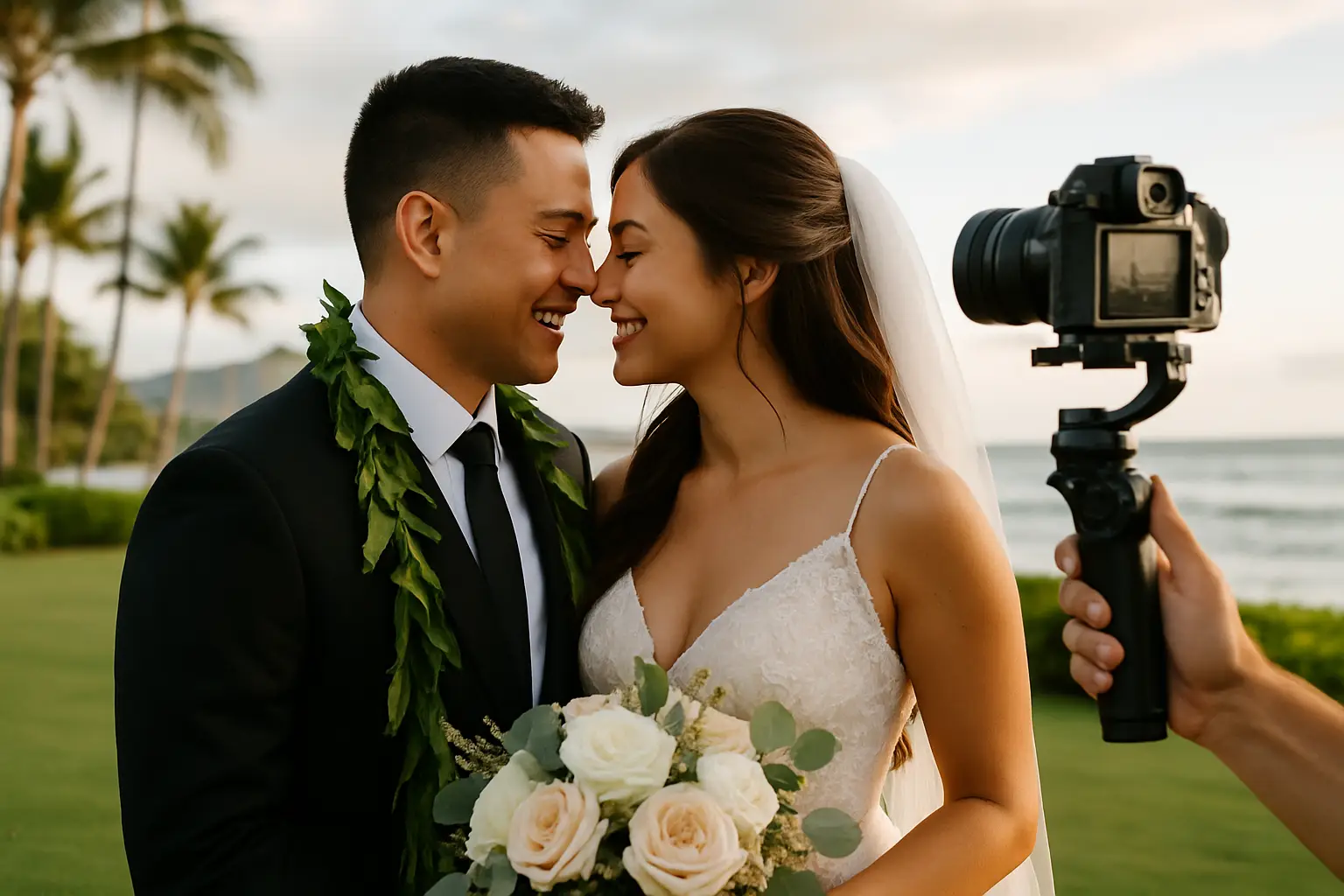
Category: Corporate Media

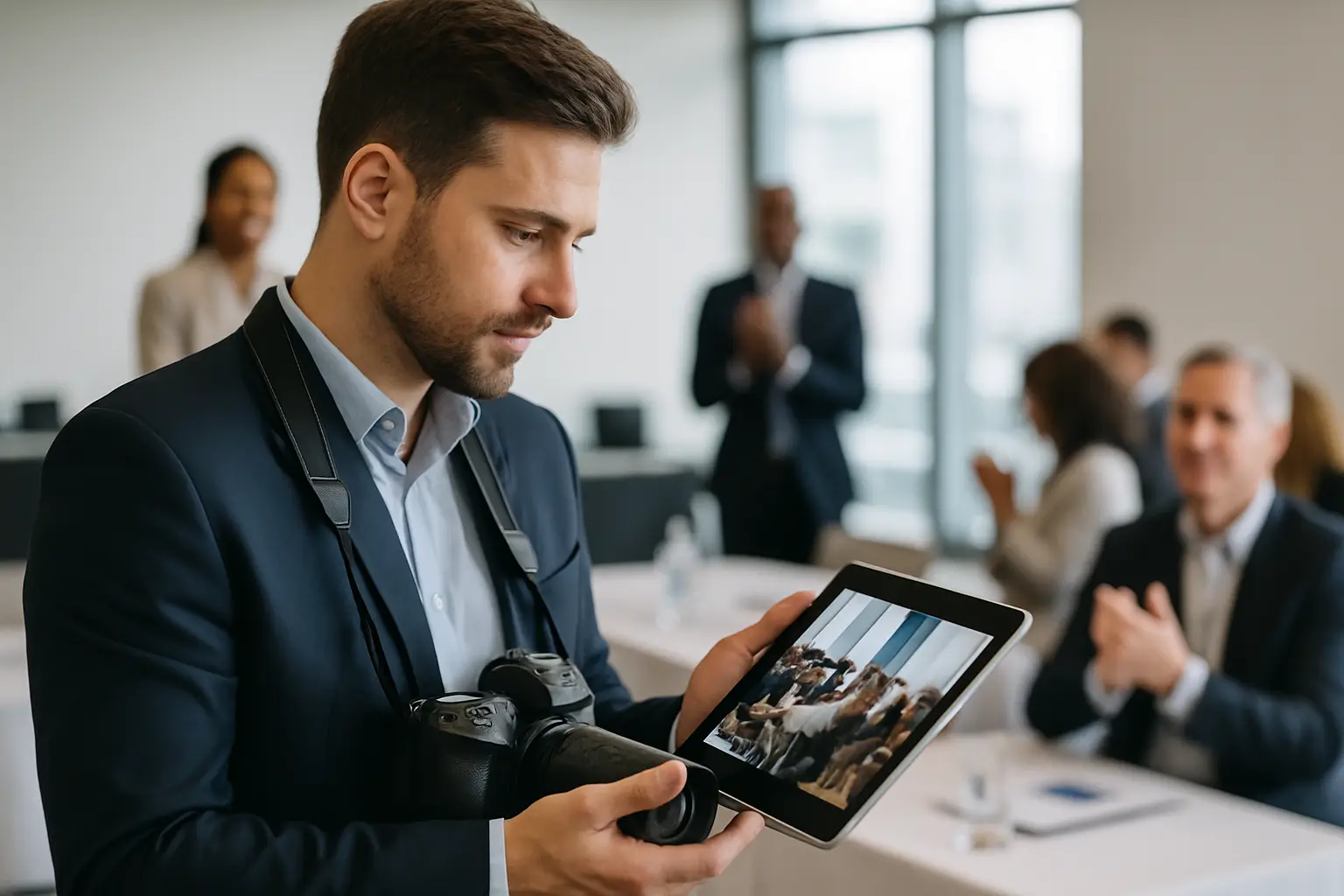
Professional corporate event photography and videography in Oahu, capturing conferences, product launches, and business events with polished media coverage.

  • Oahu Wedding Video: Ceremony to Reception

    Oahu Wedding Video: Ceremony to Reception

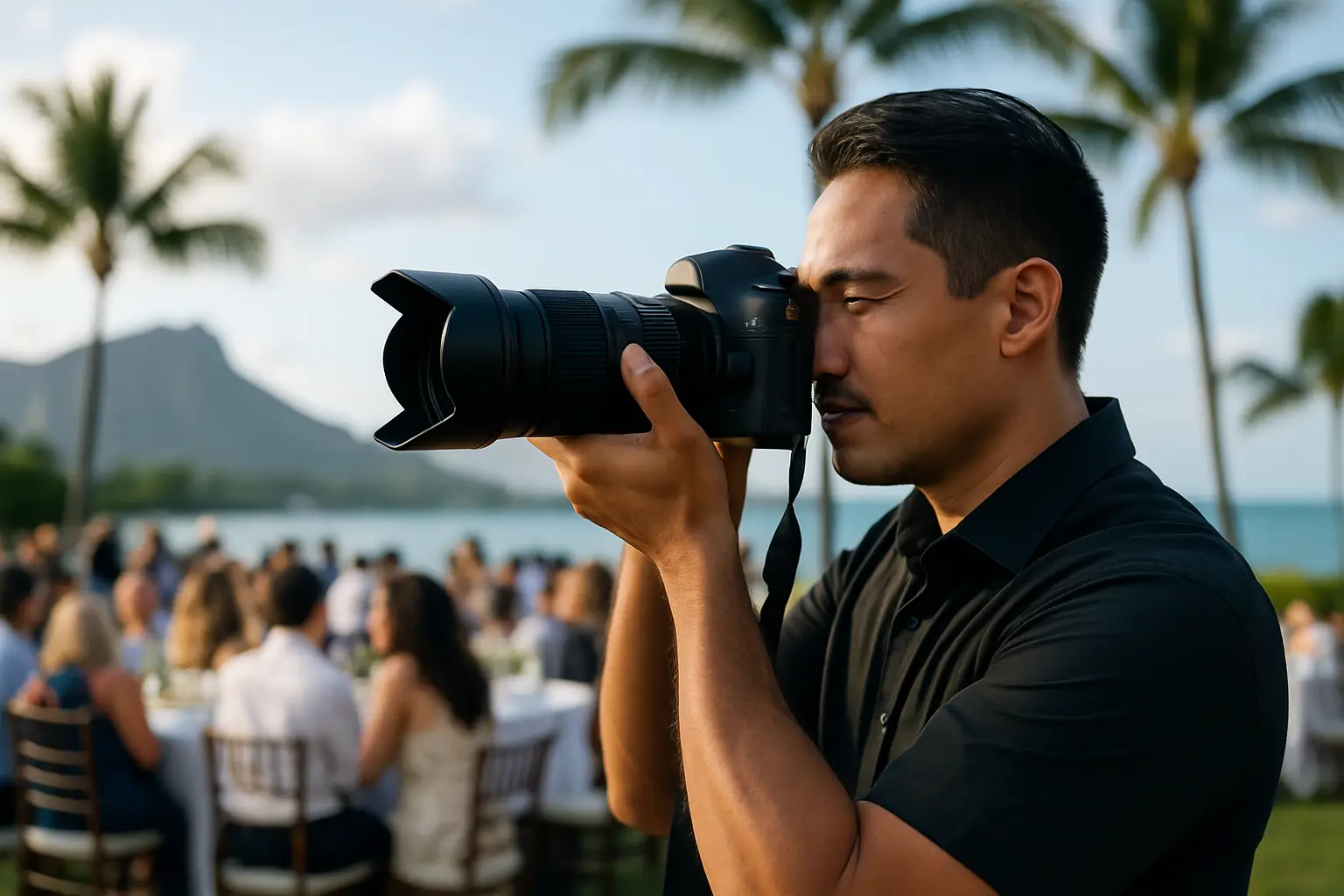
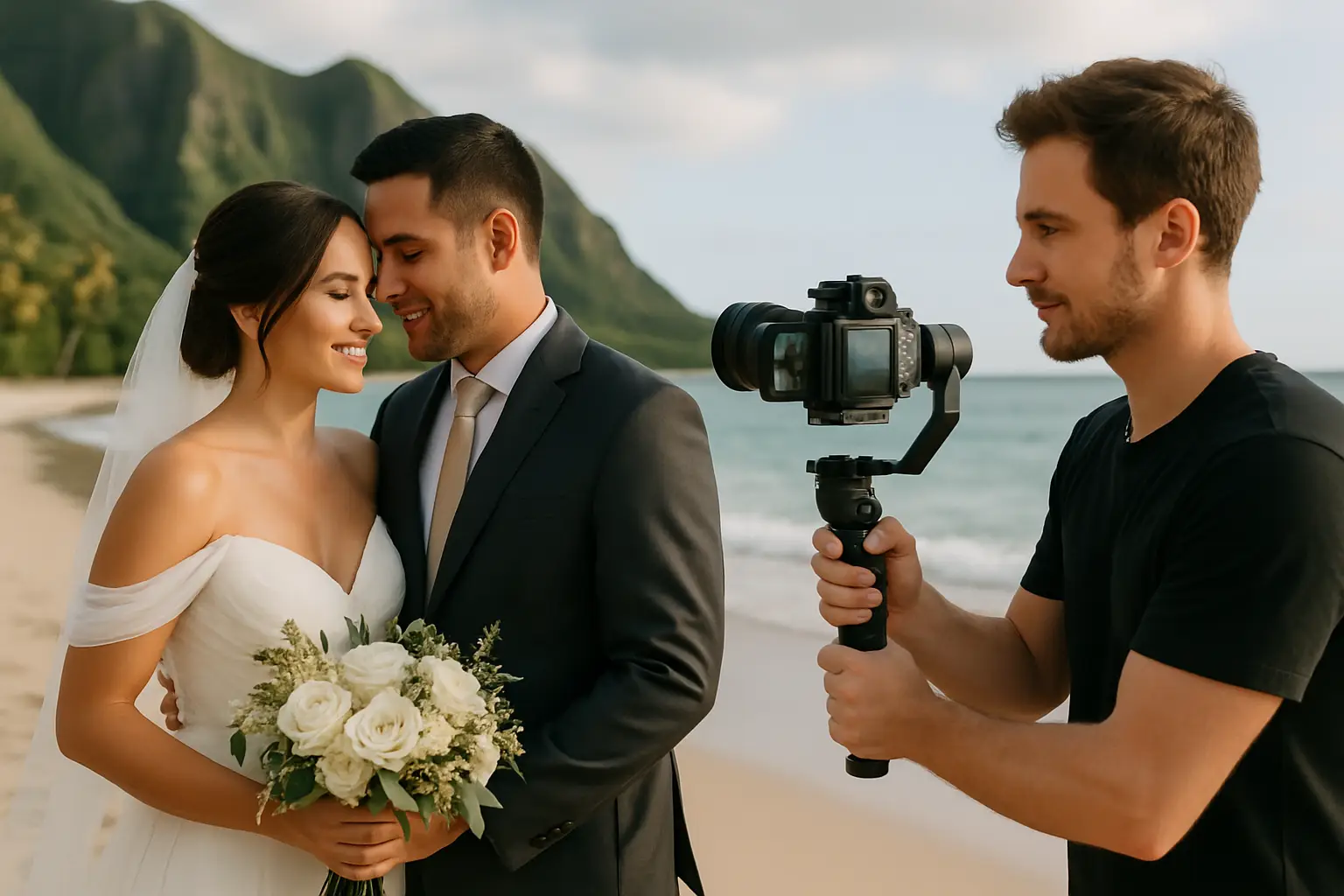
    You can feel it the second the music starts – a light trade wind, a shaky breath before the first look, the way your friends get quiet when you step into the aisle. Oahu weddings move fast, and they move with personality. That is exactly why choosing a wedding ceremony and reception videographer on Oahu is less about “someone who can film” and more about a team that can anticipate moments, manage real logistics, and deliver a film that still feels like you.

    Most couples planning on Oahu are balancing a lot at once: a dream location, a tight schedule, a venue with rules, and a guest list that includes people who traveled far to be there. The right videography approach keeps the day flowing while preserving the parts you will actually want to relive – the vows you meant, the reactions you missed, and the energy of the reception when everyone finally lets go.

    What a wedding ceremony and reception videographer on Oahu really does

    A strong wedding film is built on more than visuals. It is timing, audio, lighting, and people skills – especially on an island where events often shift around sun, surf, and venue access.

    During the ceremony, a professional videographer is quietly solving problems you should never have to think about: capturing clean audio even with ocean wind, keeping camera angles respectful and unobtrusive, and staying ready for the moments that cannot be repeated. During the reception, that same team shifts gears into documenting movement, speeches, and dance floor energy without turning your celebration into a set.

    A common misconception is that ceremony coverage and reception coverage are basically the same job in two locations. They are not. Ceremony filming is controlled, emotionally delicate, and audio-driven. Reception filming is dynamic, low-light, and fast. The best teams plan for both – and they plan differently.

    Why Oahu weddings are uniquely hard to film (and how pros handle it)

    Oahu is stunning, but it is not a studio. Beautiful scenery comes with real trade-offs.

    Wind and waves are the audio challenge

    If you are getting married near the ocean, wind will find your microphones. The difference between a professional result and a disappointing one usually comes down to audio strategy: placing lav mics correctly, using backup recorders, and setting levels for the actual conditions – not the “ideal.” If your vows matter to you, ask any potential wedding ceremony and reception videographer Oahu couples recommend how they record vows and how many redundancies they use.

    Harsh sun and fast-changing light can ruin “pretty” footage

    Beach ceremonies can swing from bright sun to cloud cover in minutes. Receptions can shift from golden hour to dark interiors quickly. Experienced videographers expose for skin tones, protect highlights in the dress, and stay consistent across scenes so your film does not look like five different weddings stitched together.

    Venues and beaches have rules, and they matter

    Some venues restrict where vendors can stand, whether tripods are allowed, and how long you can stay in certain areas. Public beaches may require permits depending on the size and setup. A reliable team asks these questions early, plans coverage around them, and coordinates with your planner or venue so nothing becomes a last-minute scramble.

    Timeline drift is normal on island time

    Hair and makeup runs late. Traffic hits H-1. The sunset does not wait. Great videography is proactive timeline planning – building buffers, planning travel time between locations, and identifying what can flex without losing the story.

    What to look for in a wedding ceremony and reception videographer Oahu couples can trust

    The portfolio matters, but so does the process behind it. A great-looking highlight reel can hide inconsistent audio, shaky delivery timelines, or a lack of planning.

    Start with how they tell a story, not just how they use a drone

    Cinematic does not mean slow motion everywhere. It means the film is structured with intention: setup, emotion, pacing, and payoffs. Ask to see full ceremony edits or longer films, not only highlights. You want to know how they handle real-time events, not just the most flattering 60 seconds.

    Ask direct questions about ceremony audio

    If you want to hear your vows clearly, you need a team that treats audio like the backbone of the film. A confident videographer can explain their mic plan for the officiant, the groom, and any readers, plus how they capture music and ambient sound without drowning out voices.

    Confirm reception coverage expectations

    Receptions are where many films either come alive or fall flat. Talk through what matters to you: entrances, first dance, parent dances, full speeches vs. highlights, cake cutting, bouquet toss, open dancing, and any cultural elements. The key is not filming everything endlessly. The key is filming the right parts well.

    Turnaround time should be a real promise, not a vague estimate

    Couples should not be left wondering when they will see anything. Look for clear delivery expectations, a defined editing style, and communication that feels organized. Fast turnaround does not mean rushed work. It means a professional workflow.

    Professionalism shows up before the wedding day

    Notice how quickly they respond, how clearly they explain packages, and whether they ask thoughtful questions about your timeline and priorities. A premium team is not just showing up with cameras. They are reducing friction.

    Coverage choices that actually change your film

    Not every add-on is necessary, but a few decisions have an outsized impact on how your wedding feels on screen.

    First look vs. aisle reveal: it depends on your priorities

    If you want private, emotional footage with time to breathe, a first look is often easier to film and less stressful. If you care most about the traditional ceremony reveal, plan extra time and be realistic about angles and lighting. Neither is “better.” The best choice is the one that fits your personalities and schedule.

    Multi-camera ceremony coverage is the quiet upgrade

    One camera can capture the ceremony, but multiple angles protect the moment. You get reactions, you get both faces during vows, and you avoid awkward zooming. If your guest count is larger or your aisle is long, multi-camera coverage becomes even more valuable.

    Lighting matters more than most couples realize

    Many receptions on Oahu are outdoors or in mixed lighting environments. If you want your reception to look polished, ask how your videographer handles low light. Some teams bring discreet lighting when appropriate. Others rely on fast lenses and careful exposure. There are trade-offs: added lighting can improve clarity but may slightly change the ambiance. A good videographer will talk through what feels right for your venue.

    How to plan your timeline so video looks premium

    You do not need a rigid schedule, but you do need a realistic one. Small timeline choices can make a major difference in film quality.

    Plan portrait and couple time around the best light when possible. On Oahu, golden hour can be the difference between soft, flattering visuals and harsh overhead sun. If your ceremony is midday, consider building in a short sunset session later, even 10-15 minutes. It is often enough to create the “signature” shots that elevate the film.

    Avoid stacking too many locations unless you have the travel time. Beaches, hotels, and venues can be close on a map and far in real time. A calm, well-paced day almost always produces better footage than a rushed day with constant relocation.

    Finally, talk to your planner and videographer together about the reception flow. The cleanest edits come when entrances, dances, and speeches are organized in a way that keeps energy up and gives vendors time to reset.

    What you should expect from a premium wedding film deliverable

    A professional wedding film is not just a single video file dropped into your inbox.

    Expect clean color, consistent exposure, and crisp audio. Expect a film that feels like it is about you, not a generic template. Also expect files that are easy to share with family, especially those who could not travel to Oahu.

    It is reasonable to ask how your film will be delivered, what resolution you will receive, and whether you will get separate edits like a full ceremony cut or speech edits. Some couples want a short cinematic highlight. Others want longer coverage that preserves the ceremony and key reception moments in real time. The right answer depends on how you plan to rewatch it – privately, with family, or as a keepsake for future generations.

    A local Oahu team vs. flying someone in

    Destination couples often consider bringing a mainland videographer. Sometimes that can work, especially if you already have a relationship with a creator whose style you love. The trade-off is that travel adds cost, reduces flexibility if plans change, and can complicate coordination with venues and permits.

    A locally based team is already familiar with island logistics, common venue rules, and how to work with Oahu weather patterns. They are also easier to meet for planning and more available for timeline adjustments. If you value reliability and a smooth experience, local is often the safer decision.

    If you are looking for a trusted, premium option, Creative Media Production LLC offers story-driven, cinematic wedding coverage on Oahu with a professional planning process and fast turnaround.

    Pricing realities: what drives cost (and what does not)

    Wedding videography pricing can feel confusing because two packages may look similar on paper but deliver very different outcomes.

    Hours of coverage matter, but staffing matters more. A single shooter for 8 hours is not the same as a two-person team for 6 hours, especially when your ceremony and reception are in different lighting environments. Editing also drives cost. A longer film with licensed music, polished color, and clean audio takes time.

    What does not reliably indicate quality is gear alone. High-end cameras help, but the strongest differentiator is the operator: how they frame, how they move, and how they capture sound under pressure.

    Questions to ask before you book

    You do not need an interrogation. You need clarity. Ask how they approach ceremony audio, how many cameras they use for key moments, what their turnaround time looks like, and what happens if weather changes the plan. You should also ask who will actually be filming on the day – the person you met, or a rotating contractor.

    The right wedding ceremony and reception videographer on Oahu will answer confidently, explain trade-offs without pushing, and make you feel like the process is handled.

    If you want one helpful way to decide, picture yourself watching the film on a random weeknight five years from now. Choose the team that will capture the voices, the pacing, and the people in a way that still feels true when the flowers are gone and the day has become a story you get to keep.
  • Cinematic Wedding Video on Oahu: What Matters

    Cinematic Wedding Video on Oahu: What Matters

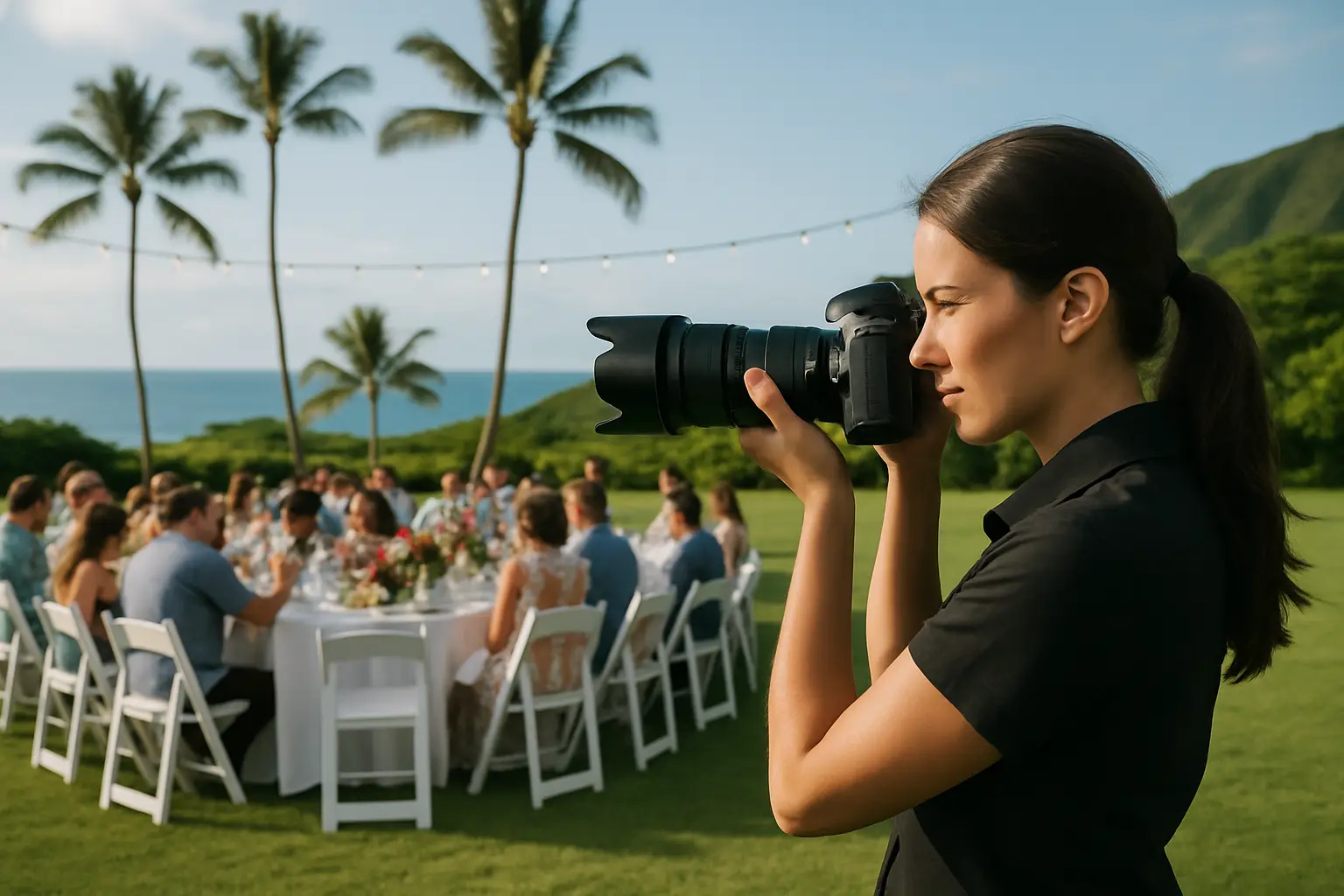
    You only get one chance to capture the way Oahu actually felt on your wedding day – the trade winds lifting a veil at Makapuu, the hush before a first look in Honolulu, the laughter that rolls in fast once the reception hits its stride. Photos freeze the highlights. Cinematic wedding film brings back the pacing, the voices, the tiny reactions you missed while you were living it.

    If you are searching for cinematic wedding videography Oahu couples recommend, it helps to know what “cinematic” really looks like in practice, what choices affect the final film, and how to book a team that is both creative and operationally reliable.

    What “cinematic” actually means (and what it does not)

    A cinematic wedding film is not just a highlight reel with pretty color. It is story-driven coverage built around intentional shooting, clean audio, and editing that feels like a film – with a clear beginning, build, and emotional payoff.

    Cinematic also does not have to mean staged. Some couples want guided posing and multiple takes. Others want a documentary approach with minimal direction. A strong team can do either, but they should clarify the trade-off: the more you “set” moments, the more control you get over visuals, and the more time you spend away from guests.

    The best cinematic work usually comes from three things working together: consistent camera movement (not distracting motion), polished color and exposure across changing light, and audio that makes the vows and speeches feel present, not distant.

    Why Oahu weddings demand a specific approach

    Oahu is stunning, and it is also unpredictable in ways that matter for video.

    Light changes fast here. Beach ceremonies move from bright sun to cloud cover in minutes, and reception lighting can shift from golden hour to DJ uplights quickly. Cinematic results depend on a videographer who can adapt without breaking the flow of the day.

    Wind and waves are beautiful on camera, but they can destroy audio if you are not prepared. If you care about hearing vows clearly, you want a team that treats sound as a priority, not an afterthought.

    Logistics matter too. Parking, permits, and travel time between Waikiki, Kailua, and the North Shore can quietly eat into coverage. A professional crew builds a timeline that protects the moments you are paying to preserve.

    The moments that make a film feel like your film

    Cinematic editing is only as good as what gets captured. The difference between a generic “Oahu wedding” montage and a personal story is often in the small, unplanned beats.

    Those beats usually happen around transitions: the last few seconds before you walk down the aisle, the breath after you say your vows, the way your family reacts during speeches, the energy shift when the dance floor opens. A team with experience will anticipate these moments and position themselves to capture them cleanly without becoming the center of attention.

    If you want your film to feel emotional but not overly sentimental, talk about tone early. Some couples want big music and dramatic pacing. Others want natural audio woven throughout – vows, letter readings, a few lines from toasts – with music supporting rather than overpowering.

    Choosing a style: editorial, documentary, or a balanced approach

    Most couples say they want “cinematic,” but they mean different things.

    An editorial cinematic style is polished, directed, and visually controlled. It is great if you care about perfectly framed shots, intentional movement, and portrait time that feels like a film set – within reason.

    A documentary cinematic style prioritizes real-time coverage and authenticity. It can be deeply emotional, especially when audio is captured well, but it depends on the day unfolding naturally.

    A balanced approach is often the best fit for Oahu weddings. You can plan a short block for guided portraits in the best light, then keep the rest of the day candid and story-forward. This reduces stress and still delivers a film that looks premium.

    What to ask before you book cinematic wedding videography on Oahu

    The goal is not to interrogate your videographer. It is to confirm they can deliver the look you want with the reliability you need.

    Start with portfolio alignment. Ask to see full films, not just 60-second highlights. Highlights are easy to make look great. Full edits reveal consistency, audio quality, and how they handle real timelines.

    Ask how they capture audio for ceremonies and speeches. If your vows matter, you want a clear plan: microphones, backup recording, and an approach that fits your venue and officiant rules.

    Ask about turnaround time and delivery format. Couples often underestimate how much it matters to get your film while the emotion is still fresh. A premium service experience includes clear delivery expectations and dependable timelines.

    Then get specific about coverage and staffing. One shooter can create beautiful work, but it depends on your day. Two shooters can protect key angles and reactions, especially for larger weddings or venues with limited movement.

    Planning details that elevate the final film

    Cinematic wedding videography is not only about the camera. It is also about planning a day that is filmable without feeling like a production.

    Build a timeline with breathing room. If every moment is stacked back-to-back, you will feel rushed and your film will reflect it. Even ten extra minutes around key transitions gives your team time to capture establishing shots, reactions, and details that make the edit feel complete.

    Consider a first look if you want more portrait time. It is not required, and it is not for everyone, but it can reduce pressure and open up space for cinematic shots without stealing time from your cocktail hour.

    Think about lighting at the reception. If you love the moody look, that is fine – just understand the trade-off. Dark rooms require intentional lighting choices to keep faces clean and flattering. A good videographer can work with low light, but the best results come when lighting is planned, not accidental.

    Budget, packages, and what actually changes the outcome

    Wedding video pricing can feel confusing because “hours” is only part of the story. What changes the outcome is coverage design, staffing, and post-production.

    More hours helps if your day has distance between locations or multiple events. More shooters helps when you want both partners getting ready, or when you want ceremony reactions captured while still seeing the couple.

    Editing is where cinematic truly happens. If you care about narrative pacing, sound design, and polished color, that is time-intensive work. It is also what separates an average highlight reel from a film you will want to rewatch on anniversaries.

    If your budget is tight, prioritize the moments that cannot be repeated: ceremony and speeches. You can simplify extras, but do not compromise on capturing the audio and key story beats.

    Destination couples: how to keep it easy from afar

    If you are planning from the mainland, you need a process that reduces friction.

    Look for a team that offers consultation and planning, not just a quote. You should be able to share your venue details, your timeline, and the tone you want, then get practical guidance back – what time to schedule portraits, how to handle travel buffers, and what to expect with Oahu weather.

    Also, make sure your vendor is local or truly familiar with Oahu. Local experience shows up in small ways: understanding traffic patterns, knowing how to work quickly in popular areas, and staying calm when conditions change.

    The real mark of a premium experience

    Cinematic is the creative side. Premium is the service side. You want both.

    Premium service looks like punctuality, clear communication, and a team that blends in while still leading when leadership is needed. It also looks like clean deliverables you can share easily with family, plus options that fit real life – from short social edits to full-length films.

    If you want to add guest experience at the reception, pairing video coverage with an on-site photo booth can round out the night. It keeps guests engaged and gives you extra keepsakes without pulling you away from your timeline.

    For couples who want a story-driven film with dependable planning and fast turnaround, Creative Media Production LLC provides cinematic coverage on Oahu built around professionalism, precision, and clean storytelling.

    How to know you found the right team

    You should feel two things after the call: creatively understood and practically supported.

    Creatively understood means they can describe your film in the same language you use. If you say, “natural, emotional, not cheesy,” they should explain exactly how they will capture that – especially through audio and pacing.

    Practically supported means they ask the questions that protect your day: start times, locations, permit considerations, family dynamics during portraits, and what matters most to you. The right team does not just show up with cameras. They show up with a plan.

    Your wedding day on Oahu will move quickly, and it will be full of moments you cannot replay. Choose a videography team that treats those moments with the craft they deserve – and the reliability that lets you stay present while it all happens.

  • Event Photography Packages in Oahu: What to Pay For

    Event Photography Packages in Oahu: What to Pay For

    You only get one chance to capture the moment the lei goes over someone’s shoulders, the first look before a Waikiki ceremony, or the quiet hugs at a memorial service. On Oahu, events move fast – and the light, venues, and timelines can shift just as quickly. That’s why choosing the right event photography package isn’t about “hours and photos” alone. It’s about buying calm, consistency, and a deliverable set that matches how you actually plan to use the images.

    If you’re comparing event photography packages Oahu clients typically book, you’ll see a wide spread in pricing and inclusions. That range isn’t random. It reflects coverage length, editing depth, delivery speed, the size of the team, and the level of planning that happens before the first shutter click. Below is a clear way to evaluate packages so you can book confidently – whether you’re hosting a corporate event in Honolulu, a birthday in Kapolei, a family session in Kailua, a wedding on the North Shore, or a dignified service for someone you love.

    What “package” really means on Oahu

    A package is a promise: a defined amount of coverage, a predictable process, and a specific style of final images. On Oahu, the best packages do more than show up with a camera. They include planning support, timeline coordination, and reliable delivery – because traffic, beach permits, venue rules, and weather all influence what’s possible.

    Most clients also underestimate how much the edit matters. Two photographers can shoot the same event and deliver very different results. When you compare packages, you’re really comparing an eye for story, technical consistency, and post-production standards.

    Event photography packages Oahu clients book most often

    Package names vary, but the structure is consistent. Think of options in terms of coverage intensity.

    Short coverage (1-2 hours)

    This is ideal when you only need the “core chapter” of the event: a quick ceremony, a surprise proposal, a family mini-session, a small birthday toast, or a focused portion of a corporate gathering like ribbon cutting and networking.

    Short coverage is budget-friendly, but it has trade-offs. There’s less buffer for delays and fewer opportunities for multiple locations, outfit changes, or a full set of group photos. If the schedule is even slightly fluid, you can end up rushing the moments you care about most.

    Standard coverage (3-5 hours)

    This is the sweet spot for many celebrations and business events. You have time for arrivals, key moments, group photos, candid coverage, and venue detail shots that help tell the full story. For corporate clients, this window often covers setup, speakers, branded activations, award moments, and enough attendee candids to support internal recaps and external marketing.

    Standard coverage is also where you can request a more intentional approach: consistent lighting, clean compositions, and a well-paced shot list without turning the day into a photo shoot.

    Full coverage (6-10+ hours)

    This is built for weddings, multi-part cultural celebrations, conferences, and larger events where the story happens across phases and locations. The value here isn’t just more time. It’s continuity. Your gallery feels complete because it includes the quiet in-between moments: the nervous laugh before walking in, the family members who traveled, the way the room looked before guests arrived.

    Full coverage can also make sense when you have strict deliverable needs, like capturing every sponsor sign, every speaker, and wide room shots for proof-of-performance.

    What should be included in a premium package

    You don’t need a complicated checklist to shop well, but you do need clarity. Strong packages typically include:

    Pre-event consultation and planning

    This is where stress disappears. A professional team will ask about your venue, timeline, shot priorities, family dynamics, VIPs, brand requirements, and any sensitive boundaries. For corporate events, this planning may include brand guidelines, content goals, and a must-capture list for leadership.

    If a package doesn’t include planning time, you’re more likely to spend event day answering questions you shouldn’t have to answer.

    Clean, consistent editing

    Ask what “edited” means. Are images color-corrected for skin tones? Are indoor mixed-light scenes handled well? Are outdoor highlights controlled so white dresses and bright shirts aren’t blown out? Premium editing is subtle, polished, and consistent across the gallery.

    A clear delivery timeline and download experience

    Fast turnaround matters for Oahu events because people travel in, schedules move, and corporate teams often need content while the event is still fresh. Look for a defined delivery window and a simple way to view, download, and share.

    Usage rights that match your needs

    Families typically want personal sharing and printing. Businesses often need marketing usage for websites, social media, and internal communications. Your package should match how you plan to use the content. If you’re a corporate client, ask about licensing terms upfront so your team can publish without hesitation.

    Add-ons that are worth considering (and when they aren’t)

    Add-ons can be smart, but only when they support your goals.

    A second photographer is valuable when you have two locations, a large guest list, or simultaneous moments you can’t repeat. For weddings, it can mean one person captures the ceremony while the other focuses on reactions and details. For corporate events, it helps cover speakers and audience engagement at the same time.

    A photo booth is a different kind of deliverable. It’s guest experience plus content. If your priority is candid, social-ready memories with instant sharing and prints, a booth can outperform another hour of roaming coverage. If your event is formal and you want minimal footprint, it may not fit.

    Rush delivery can be worth it when you need next-day content for announcements, recap posts, or internal comms. If your timeline is flexible, standard delivery is often the better value.

    Pricing factors unique to Oahu events

    Clients sometimes assume pricing is mostly about hours. On Oahu, there are a few additional realities.

    Travel time between Honolulu, Kapolei, Kailua, and the North Shore can be significant depending on time of day. A package that includes multiple locations may require more buffer than you expect.

    Venues and beaches can have rules about access, parking, load-in, and permits. A team that plans well reduces the risk of lost time and missed moments.

    Lighting shifts quickly at the ocean, especially near sunset. If “golden hour” portraits matter to you, your package should allow for that timing and for a photographer who knows how to balance bright skies with natural skin tones.

    Choosing the right package by event type

    The best way to decide is to start with your event, then work backward to coverage and deliverables.

    Weddings

    If your day includes prep, ceremony, and reception, the package should be built around continuity. You’re not only documenting what happened – you’re preserving the emotional arc. Ask how the photographer handles timelines that slip and whether they help build a realistic photo schedule.

    Corporate events

    Your company isn’t buying “pretty photos.” You’re buying usable assets: clean speaker shots, branded details, wide room coverage, and authentic attendee moments that look professional on LinkedIn and in press kits. Packages should support punctual execution, consistent editing, and a deliverable set that makes marketing’s job easier.

    Birthdays and family celebrations

    Here, the value is in candid storytelling plus a handful of polished group portraits. Short coverage can work if the event is tightly scheduled. If you have multiple families, elders, or a surprise moment planned, give yourself more time than you think.

    Family photoshoots

    Packages should prioritize comfort and direction. Kids move fast, and the best galleries come from a photographer who can guide lightly without forcing stiff poses. Ask about location suggestions and backup plans if conditions change.

    Funerals and memorial services

    This is where professionalism includes emotional intelligence. Coverage should be discreet, respectful, and highly dependable. Many families want a quiet documentation of the service, key speakers, and the people who came to honor a life – without feeling like the moment was “covered” in an intrusive way. A compassionate team will ask permission-based questions and follow the tone the family sets.

    Questions that quickly reveal a good package

    Before you book, ask a few direct questions. How do you handle low light indoors? What’s your turnaround time, and is it guaranteed? Do you help build a timeline or shot list? How many final images should we expect for the coverage length? Who is actually shooting the event, and what’s the backup plan if something unexpected happens?

    You’re listening for confidence and specifics, not vague reassurance.

    A practical way to pick your package in 10 minutes

    Start with your “non-negotiables” – the moments you can’t redo. For a wedding, that might be first look, ceremony, and family formals. For corporate, it might be keynote, award moments, sponsor wall, and leadership photos. Then decide how much buffer you need for delays, guest transitions, and travel between locations.

    If the schedule is tight or emotionally important, choose the package that gives breathing room. If the event is simple and contained, short coverage can be perfect.

    When you’re ready to talk through options with a local team that prioritizes story-driven visuals, professional execution, and fast turnaround, Creative Media Production LLC offers streamlined packages across Oahu – including photography, cinematic videography, and photo booth rental – with planning support built in.

    A helpful final way to think about it: you’re not just booking coverage for what you expect to happen. You’re booking the ability to handle what happens when the schedule shifts, the light changes, and the real moments show up unannounced – because that’s usually where the best photos live.

  • Same-Day Event Photos: Worth It or Hype?

    Same-Day Event Photos: Worth It or Hype?

    The event ends, guests are still buzzing, and your phone is already filling with shaky videos and dim reception shots. That’s usually the moment the question hits: can we get the real photos today—while it still feels fresh?

    Same-day event photo turnaround is exactly what it sounds like: a curated set of professional images delivered within hours of the final toast, keynote, or candle lighting. Not next week. Not “soon.” Same day.

    That speed, though, is not magic. It’s a service that needs planning, the right workflow, and clear expectations about what “same day” actually includes.

    What “same day event photo turnaround” really means

    Same-day delivery is rarely the full final gallery. The realistic version is a highlight set—edited, color-corrected, and ready to share. Think of it as the best moments that tell the story right away. Meanwhile, the full album gets the deeper, meticulous treatment afterward.

    In practice, same-day collections often land in the range of 20 to 120 images depending on event length, size, and how many photographers are on-site. A two-hour family celebration and a ten-hour wedding don’t produce the same volume. In fact, they shouldn’t.

    The editing is also different from a full delivery. You still get clean, professional work—correct exposure, flattering skin tones, consistent color, and thoughtful composition. What you typically do not get in a same-day set is extensive retouching on every image, complex object removal, or a deep “art edit” pass across hundreds of photos.

    That distinction matters, because the promise is speed without sacrificing quality—but quality still comes from a focused scope.

    Why fast delivery matters more than people admit

    A fast turnaround is not just convenience. It changes what your photos can do for you.

    For corporate events, same-day images can be the difference between posting a quick phone snapshot and posting a strong branded image that matches your company’s standards. If you’re hosting a conference in Honolulu, a product launch in Waikiki, or a team celebration in Kapolei, the most valuable marketing window is often the night of the event. Additionally, the next morning can be important for marketing as well.

    For weddings and destination celebrations, the emotional window is just as real. Guests are still together, group chats are active, and family members who traveled to Oahu are sharing memories while they’re still on the island. A small set of professional images delivered that night can feel like an extension of the experience. In other words, it is not a delayed recap.

    For memorial services, fast delivery can be a quiet form of support. Families may need a respectful set of images quickly for sharing with loved ones who could not attend. Alternatively, it may be needed for a tribute. In these cases, speed has to be paired with discretion and care.

    What it takes to deliver same-day photos without cutting corners

    When same-day delivery is done well, it’s because the production is designed for it from the beginning.

    First, coverage has to be intentional. Your photographer isn’t shooting randomly and “finding it later.” They’re working with a shot plan: key people, key moments, and the parts of the event that carry the story.

    Second, the on-site workflow matters. Professionals who offer same-day turnaround build in time for file management and selection. That can include shooting with dual card slots for redundancy, backing up during the event, and keeping the capture organized. This approach ensures that editing doesn’t become a scavenger hunt.

    Third, editing has to be streamlined and consistent. Same-day editing is about making excellent decisions quickly—selecting the strongest frames, matching color across different lighting conditions, and delivering a cohesive set that represents the event accurately.

    And fourth, delivery has to be reliable. Same-day delivery usually means a private online gallery or download link, sized for sharing and also usable for marketing.

    The trade-offs: what you gain, what you give up

    Same-day event photo turnaround is a premium add-on because it changes the labor curve. The work that typically happens over several days gets compressed into a few hours.

    That compression creates trade-offs. The biggest one is volume versus speed. If you want 800 photos fully edited the night of a wedding, you’re not asking for “fast.” Instead, you’re asking for a full post-production team.

    Another trade-off is complexity. If your event includes dramatic lighting shifts, uplighting, LED walls, or a dark ballroom with fast-moving action, editing takes longer. It can still be done quickly. However, the number of same-day deliverables may need to be smaller to keep the quality where it should be.

    There’s also the question of creative style. If your preferred look is heavily stylized or requires extensive retouching, it’s usually smarter to ask for a same-day highlight set in the core brand style. After that, let the full gallery receive the deeper treatment after.

    The best outcomes happen when you treat same-day delivery as “share-ready highlights now, complete story soon.”

    Who benefits most from same-day turnaround

    Same-day delivery is most valuable when the photos have an immediate purpose.

    Marketing teams and event planners benefit because they can publish while engagement is high. If you have speakers, sponsors, step-and-repeat branding, or a packed room that proves attendance, same-day images let you document outcomes right away.

    Weddings benefit when you have destination guests, a multi-day itinerary, or you’re hosting a welcome dinner or brunch the next day. A same-day set can be shared at the next event. It can also be used in a quick slideshow.

    Birthdays, anniversaries, and family gatherings benefit when the whole point is togetherness. When people are flying back to the mainland from HNL the next morning, a handful of professional images from that night become part of the send-off.

    Photo booth experiences are a different category: they’re designed for instant gratification. If you’re already planning on-site photo booth prints and instant digital sharing, pairing that with same-day highlights from your primary photographer creates a complete “now and later” experience.

    How to plan for same-day event photo turnaround

    If you’re considering same-day delivery, the planning conversation should happen early, not the week of the event.

    Start with the “why.” Do you need images for a press release the next morning? Do you want a wedding sneak peek to share with family that night? Are there VIPs you need photographed and delivered quickly? When you’re clear about the purpose, the photographer can build the right capture plan.

    Then get specific about timing. “Same day” can mean within two hours of the event ending, by midnight, or by the next morning at 8 a.m. Those are very different production demands. Especially if your event ends late, timing is everything.

    It also helps to be realistic about the must-haves. If there are five key moments you absolutely need in the same-day set—like the first kiss, family formals, a keynote on stage, a sponsor photo, and a group shot—say that plainly. That clarity protects you from disappointment. It also helps the team execute.

    Finally, assign one point of contact. Whether it’s a wedding planner, a corporate coordinator, or a family member, one decision-maker keeps the process smooth when the event is moving fast.

    Questions to ask before you book

    The easiest way to avoid surprises is to ask a few direct questions.

    If you’re a business client, also ask about image usage and file formats. You may need web-ready files for social media and also higher-resolution images for internal communications.

    If you’re planning a memorial service, it’s appropriate to ask about approach and discretion. The right team will explain how they document respectfully and unobtrusively. They will also explain how they manage delivery with privacy in mind.

    What same-day turnaround looks like on Oahu

    Oahu events come with their own realities: outdoor ceremonies with strong sun, beach locations with wind and salt spray, venues with mixed lighting, and schedules that involve travel between Honolulu, Kailua, and the North Shore.

    If your timeline includes multiple locations, extra buffer time helps. If you’re doing sunset portraits and then heading into a dim reception, expect the highlight selection to focus on the strongest moments from each segment rather than trying to deliver everything.

    A professional team that knows the island will anticipate these shifts and still deliver a clean, consistent set.

    If you want a premium approach that balances story-driven photography with dependable delivery, Creative Media Production LLC offers event coverage built around professionalism and fast turnaround, with planning support that keeps the day moving.

    Pricing expectations: why it costs more

    Same-day delivery is usually priced as an add-on or as part of a higher-tier package. The cost reflects the extra labor and the need to prioritize editing immediately after capture.

    If a vendor is offering “same-day full gallery” at a bargain price, it’s worth asking how they’re doing it. Sometimes the answer is heavy filters, rushed selection, or minimal correction. Speed is valuable, but only if the images still look premium.

    It’s also fair to ask whether the service includes a dedicated editor or a second shooter. Those resources can make same-day delivery more reliable for larger events.

    A helpful closing thought: when you plan for same-day photos the same way you plan for your timeline, your vendors, and your guests, the turnaround stops feeling like a gamble and starts feeling like part of the experience you’re creating.

  • Choosing an Event Photographer on Oahu

    Choosing an Event Photographer on Oahu

    You can feel it when a photographer is actually in control of the day.

    They show up early and already know the timeline. They move quietly during the ceremony instead of turning it into a production. They catch the hug you didn’t see coming, the laugh during the toast, the moment your team claps because the product finally launched. On Oahu, where lighting changes fast and locations come with real logistics, choosing the right event photographer is less about a pretty Instagram grid and more about hiring someone who can deliver under island conditions.

    This practical guide breaks down how to choose an event photographer Oahu clients can rely on – whether you’re planning a wedding in Kailua, a corporate event in Waikiki, a birthday in Kapolei, or a memorial service where respect matters as much as craft.

    Start with the outcome, not the price

    Most people begin by comparing packages. A better starting point is asking what you need your photos to do.

    If you’re planning a wedding or family milestone, you’re usually buying memory preservation first: natural emotion, flattering portraits, and the full story of the day. If you’re organizing a corporate event, your photos need to work as brand assets: consistent lighting, clean compositions, logo visibility, speaker coverage, and fast delivery for internal comms or marketing.

    That difference should shape everything – how many hours you need, whether you need a second shooter, how much direction you want during portraits, and how fast you need edited images back.

    Look for consistency across real events

    Portfolios can be curated to perfection. What you’re really trying to evaluate is consistency.

    Ask to see a full gallery from an event similar to yours, not just highlights. If you’re hosting a ballroom gala, a beach mini-session won’t tell you much. If your event is indoors with mixed lighting, you want proof they can handle tungsten, LED uplighting, and dark dance floors without blowing out skin tones or turning everything orange.

    As you review full galleries, pay attention to skin tones, sharpness in low light, and whether the photographer captures both the room and the relationships inside it. The best event coverage shows context and emotion – the wide shot that establishes the setting, then the tight moments that make it personal.

    Make sure their style matches your event’s personality

    “Style” isn’t just moody versus bright. It’s also how a photographer behaves.

    Some photographers are highly directive. They’ll pose aggressively, interrupt conversations for “just one more,” and run the day like a checklist. Others are documentary-focused and blend in, stepping in only when needed for family formals or group photos.

    For weddings and family events, most clients want a balance: gently guided portraits, then a mostly candid approach. For corporate events, a confident, efficient presence matters – someone who can get the shot list done without slowing the program.

    During a consult, ask how they approach:

    • Family formals (who organizes people, how long it takes)
    • Candid coverage (how they stay unobtrusive)
    • Timeline pressure (what happens when things run late)

    If their answers feel vague, that’s a signal. Professionals have a plan because they’ve solved these problems before.

    Confirm they know Oahu logistics

    Oahu is beautiful, but it’s not always simple.

    Parking in Waikiki can eat time. Wind on the North Shore can turn a veil, hair, or signage into a constant fight. Beach permits, venue rules, and load-in restrictions are real. Even the sun angle at a specific ceremony site can make or break your portrait window.

    A photographer with local experience will ask location-specific questions early: where to meet, how to access the site, whether there’s shade, what time golden hour hits that side of the island, and how to build buffer time around traffic.

    This matters because your photos depend on it. Great lighting is rarely an accident – it’s planning plus experience.

    Ask about workflow and turnaround – in plain numbers

    Fast turnaround is a premium service feature for a reason. You shouldn’t have to chase updates or wait months to see your event.

    Ask these questions and listen for clear, specific answers:

    How many photos will you deliver for the coverage you’re booking? When will you receive a preview gallery, if offered? When is the full gallery delivered? How are files delivered and archived?

    Also ask how they handle the “right now” needs. Corporate planners often need a small set of edited images quickly for social posts or a recap email. Couples may want a handful of hero shots within a few days to share with family. A professional team can set expectations and build a realistic delivery plan.

    Get clear on what’s included (and what costs extra)

    Event photography pricing can look similar on the surface while the deliverables are completely different.

    Clarify whether coverage includes:

    • A second photographer (huge for weddings and large corporate events)
    • High-resolution edited images and whether you also receive web-sized versions
    • Retouching level (basic color and exposure vs. detailed skin retouching)
    • Usage rights (especially important for businesses)
    • Travel fees for certain parts of the island

    This is where “cheap” can get expensive. If a low package only includes a small number of images, heavy add-ons for extra hours, or long delivery timelines, you may end up spending more to get what you actually wanted.

    Evaluate how they handle people, not just cameras

    The camera is the easy part. Managing humans is the job.

    At weddings, photographers need to coordinate with planners, DJs, and venues while keeping couples calm. At corporate events, they need to work around stage managers, presenters, and VIPs without disrupting the program. At birthdays and family gatherings, they need to earn trust quickly, especially with kids and older relatives.

    A quick way to assess this is to ask how they keep group photos efficient. A confident answer sounds like: they build a list ahead of time, designate a family member or coordinator to help call names, and keep the flow moving.

    If you’re planning a funeral or memorial service, this becomes even more important. The right photographer understands when to step back, how to remain discreet, and how to document the service with dignity. You want someone who treats the space and the family with respect, while still delivering clean, story-driven imagery.

    Don’t skip the professional basics

    Premium results require professional systems.

    Ask about licensing and insurance, backup gear, and how they protect your files. A working pro should have at least two camera bodies, multiple lenses, professional lighting when needed, and a reliable backup process after the event. If they look uncomfortable with these questions, that’s a risk.

    You’re not being difficult by asking. You’re protecting your once-only moments and your company’s investment.

    Align on the shot priorities before the event

    The best event coverage feels effortless because the plan was handled early.

    For weddings, that might mean confirming the must-have family combinations, any cultural moments, and your priorities for portraits versus candids. For corporate events, that usually means a simple shot list: venue signage, registration, keynote speakers, award moments, VIPs, sponsor activations, group photos, and candid networking.

    A photographer who offers consultation and planning is doing more than being helpful. They’re reducing event-day friction. When everyone knows the expectations, you get better images and a calmer day.

    Consider add-ons that improve guest experience

    Some events benefit from more than roaming coverage.

    If you want your guests to leave with something tangible, a photo booth can add a fun, high-quality layer – especially for birthdays, weddings, company parties, and community events. The key is making sure it’s professionally run, produces clean prints, and allows instant digital sharing without creating a line that blocks the room.

    Like photography, a photo booth only feels “premium” when it’s managed well.

    A quick gut-check: how do they make you feel?

    This is practical, not sentimental.

    If a photographer is slow to respond, vague about deliverables, or dismissive of your questions during the inquiry stage, it rarely improves when the event gets closer. On the other hand, when a team is punctual, organized, and specific, you can feel the stress drop because you’re no longer guessing.

    Trust matters because you’re giving someone access to meaningful moments – and depending on them to deliver.

    Choosing a partner you can rely on

    If you want premium, story-driven coverage with dependable execution and fast turnaround on Oahu, you should work with a team that treats planning and professionalism as part of the service, not an afterthought. That’s the standard we build into every booking at Creative Media Production LLC – from weddings and corporate events to family milestones and respectful memorial coverage.

    When you’re ready, choose the photographer who makes the day easier, not harder – the one who brings calm, moves with purpose, and delivers images that feel as real as the moment did.

  • Event Photographer in Oahu | Capture Every Special Moment

    Event Photographer in Oahu | Capture Every Special Moment

    Capture Your Moments: Top Event Photographer in Oahu

    Looking for a trusted event photographer in Oahu? At
    Creative Media Production, we specialize in capturing unforgettable weddings, corporate events, birthdays, and family celebrations across Oahu, Hawaii.

    From Waikiki sunsets to elegant indoor venues in Honolulu, we transform your special occasions into timeless memories — effortlessly.


    Why Choose a Professional Event Photographer in Oahu?

    Oahu offers breathtaking backdrops, but capturing them properly requires experience. A professional
    Oahu photographer understands changing island lighting, weather conditions, and dynamic event environments.

    Whether you’re planning a wedding in Oahu, a corporate function, or a milestone birthday, hiring a professional ensures every meaningful detail is preserved.


    Types of Events Perfect for Professional Photography

    Weddings

    Your wedding day deserves expert storytelling. Our wedding photography services in Oahu capture emotional vows, candid laughter, and stunning sunset portraits.

    Corporate Events

    Professional event photography enhances your brand image. From keynote speakers to networking sessions, high-quality visuals can elevate marketing materials and company presentations.

    Graduations & Senior Celebrations

    Celebrate academic milestones with bold and confident portraits. Explore our graduation and senior photography sessions in Oahu.

    Family Gatherings & Birthdays

    Capture meaningful moments during reunions, anniversaries, and birthdays with our family photography services and event coverage in Oahu.


    Key Features of a Great Event Photographer

    • Discreet Presence: Captures candid moments naturally.
    • Technical Expertise: Adapts to indoor and outdoor lighting.
    • Creative Vision: Tells your story through powerful imagery.
    • Professional Editing: Advanced color correction and retouching.

    Professional editing standards often follow industry best practices outlined by Digital Photography Mentor, ensuring polished and cohesive results.


    How to Choose the Right Event Photographer in Oahu

    Start by reviewing portfolios. Look for consistency, creativity, and emotional depth in their work. A strong portfolio demonstrates experience across multiple event types.

    Client testimonials and clear communication are also critical. Visit our contact page to discuss your event details and receive a customized quote.


    Capturing the Essence of Oahu: Unique Event Locations

    Oahu provides iconic venues and scenic backdrops, including Waikiki Beach, Lanikai, Waimea Valley, and historic Honolulu locations.

    You can explore public venue guidelines through Hawaii State Parks when planning outdoor events.


    Book Your Event Photographer in Oahu Today

    When planning your next event, trust a professional
    event photographer in Oahu who understands storytelling, lighting, and island beauty.


    Schedule Your Event Photography Session →

  • Oahu Photographer: How to Capture Timeless Memories in Hawaii

    Oahu Photographer: How to Capture Timeless Memories in Hawaii

    Oahu Photographer: How to Capture Timeless Memories in Hawaii

    Choosing the right Oahu photographer is about more than just hiring someone with a camera.
    It’s about finding a professional who understands lighting, emotion, and storytelling in Hawaii’s unique environment.

    Why Professional Photography in Oahu Matters

    Hawaii’s lighting and scenery create incredible opportunities — but they also require skill.
    According to the Digital Photography Mentor guide on golden hour lighting, timing and positioning are critical for flattering portraits. At Creative Media Production, we specialize in capturing authentic, cinematic moments across Oahu.

    Our Most Popular Oahu Photography Services

    Graduation & Senior Portraits

    Celebrate your achievement with professional graduation photos in Oahu.

    Whether at the beach or campus, we create bold, confident portraits.

    Wedding Photography & Videography

    Your big day deserves timeless storytelling.
    Explore our wedding photography services in Oahu designed to capture emotion and detail.

    Maternity & Family Sessions

    Capture meaningful milestones with our maternity photography sessions and natural family photography in Oahu.

    Birthday & Event Coverage

    From intimate birthdays to large celebrations, our event photography services preserve every detail.

    Choosing the Right Location in Oahu

    Popular locations include Waikiki Beach, Lanikai, and scenic mountain lookouts.
    You can explore public beach access information through Hawaii State Parks to help plan your session.

    Why Clients Choose Creative Media Production

    • Professional editing and cinematic color grading
    • Local knowledge of Oahu lighting and locations
    • Fast turnaround times
    • Experience in weddings, graduations, maternity, and family portraits

    Looking for a trusted Oahu photographer?
    Visit our contact page to schedule your session.


  • Unlocking the Power of Creative Media Production: Photography, Videography, Corporate and More

    Unlocking the Power of Creative Media Production: Photography, Videography, Corporate and More

    Understanding Creative Media Production

    Creative media production refers to the art and science of generating content in various formats that tell stories, convey messages, and engage audiences. It encompasses a wide array of mediums including photography, videography, graphic design, and corporate content. Each of these forms plays a vital role in shaping narratives and reinforcing brand identities across different platforms. In today’s fast-paced digital landscape, the value of creative media cannot be overstated, as it significantly contributes to effective communication and audience engagement.

    Photography, as a key component of creative media, captures moments and emotions, building a visual narrative that resonates with viewers. It can enhance branding by visual storytelling, allowing businesses to convey their ethos and capture their target audience’s attention visually. Similarly, videography combines moving images, sound, and often text to create compelling stories that can effectively showcase a product or service. This form of content production has become increasingly influential, as video content garners higher engagement rates across social media platforms and websites.

    Photography for corporate content serves a specific purpose, often aimed at both internal and external communication. This includes training videos, promotional materials, and corporate documentaries that effectively communicate an organization’s values and mission. The production of such content requires a blend of creative photography and strategic planning, ensuring that the final product aligns with the brand’s objectives.

    The collaborative nature of creative media production involves various professionals, including writers, photographers, videographers, editors, and graphic designers. Each contributes specialized skills to the project, enhancing the overall quality of the content produced. By working cooperatively, these creators can explore innovative ideas and produce high-quality media that successfully engages and informs their intended audiences.

    The Role of Photography in Creative Media

    Photography serves as a fundamental pillar in the realm of creative media production. Its ability to convey messages visually makes it an indispensable tool for storytelling. Various styles of photography, including portrait, product, and event photography, each offer unique ways to enhance narratives and engage audiences. Portrait photography captures the essence of individuals, providing an intimate glimpse into their emotions and experiences, which can resonate powerfully with viewers. Product photography, on the other hand, focuses on showcasing items in an appealing light, ultimately playing a crucial role in marketing strategies where the visual aesthetics are paramount to consumer decision-making.

    Event photography documents moments in time, from corporate gatherings to personal celebrations, encapsulating the atmosphere and energy of these occasions. Through these styles, photography not only captures attention but also evokes a range of emotions, effectively drawing the audience into the story being told. An understanding of lighting, composition, and subject matter is essential to produce striking images that can convey messages succinctly.

    To elevate photography to a professional standard, the right equipment and post-production techniques are vital. High-quality cameras and lenses can significantly affect the outcome of an image, while tools such as photo editing software allow for adjustments that can refine and enhance the visual narrative. Techniques like color grading, retouching, and cropping can transform a good photograph into an exceptional one, ensuring it meets the expectations of a polished media campaign. As part of a comprehensive media strategy, effective photography not only catches the viewer’s eye but also ensures that the intended message is communicated clearly and effectively, solidifying its role as an essential component in creative media production.

    Exploring Videography: Bringing Stories to Life

    Videography serves as a powerful medium for storytelling in today’s digital landscape. It encompasses a range of styles, including corporate videos, promotional content, and documentaries, each uniquely designed to engage audiences and convey specific messages. Corporate videography focuses on enhancing brand identity, showcasing products or services, and communicating organizational values, all while fostering a connection with potential clients and stakeholders. Promotional content aims to captivate and inform the target audience about particular offerings, utilizing persuasive techniques to spur action. Documentaries, on the other hand, provide an opportunity to explore in-depth narratives and critical issues, often aiming to educate or provoke thought in viewers.

    The process of videography production is systematic and involves several stages that ensure a polished final product. Pre-production is the initial phase where concepts are developed, storyboards are created, and logistics such as location scouting and talent selection are organized. Each component is vital as it sets the tone for the entire project. Following pre-production, the shooting phase brings the vision to life, where cinematographers capture the footage, paying close attention to composition, lighting, and camera movement. This phase demands meticulous planning and adaptability to unforeseen circumstances.

    After filming, the editing stage begins, where raw footage is transformed into a coherent story through cutting, sequencing, and the integration of sound and visual effects. Sound design is particularly crucial, as it can significantly enhance the emotional impact of the narrative. Effective soundscapes complement visuals and foster a deeper connection with the audience. Additionally, the use of visual effects can elevate the storytelling, adding flair and emphasis where needed. To ensure successful videography, it is essential to engage with the audience through authentic narratives, appealing visuals, and relatable content, ultimately facilitating the delivery of powerful stories that resonate.

    Corporate Media Production: Elevating Brand Image

    The realm of corporate media production serves as a vital asset for businesses looking to enhance their brand image. By effectively utilizing photography and videography, organizations can create engaging marketing materials that resonate with their target audience. These creative media forms not only capture the essence of a product or service but also convey a narrative that aligns with corporate messaging. High-quality visuals have the potential to evoke emotions and foster connections, thus playing a crucial role in shaping public perception.

    Moreover, corporate media production can significantly improve internal communications. For instance, video presentations and photo documentation of corporate events can boost employee engagement by showcasing company culture and achievements. These media tools foster a stronger company identity and facilitate transparency, especially when sharing vital information across various departments. This alignment with corporate values is paramount; it ensures that the media content reinforces the brand’s mission and vision.

    To illustrate the impact of effective corporate media campaigns, consider case studies where companies successfully integrated creative media into their marketing strategies. One notable example is a leading technology firm that utilized professional videography to highlight the stories of their employees, which ultimately strengthened their brand image as an innovative and people-centered organization. Another instance involves a financial services company that showcased its community initiatives through impactful photography, promoting positive social responsibility and connecting with local stakeholders.

    Selecting the right creative media production partner is crucial for businesses aiming to achieve these objectives. It is essential to collaborate with professionals who understand the corporate culture and can articulate the brand’s values through tailored visual content. A knowledgeable partner will enhance the overall quality of corporate media production, ensuring that all outputs serve to elevate and reinforce the organization’s brand image effectively.

  • Template for Wedding Media Service

    Template for Wedding Media Service

    Think of a wedding photography timeline template as your secret weapon. It’s the single most important tool for mapping out your entire day, ensuring every last detail gets captured without ever feeling rushed or chaotic.

    This isn’t just some schedule; it’s the blueprint that turns a whirlwind of a day into a smooth, picture-perfect experience.

    Why Your Wedding Photography Timeline Actually Matters

    A wedding day flies by in a blur of beautiful, fleeting moments. Without a solid plan, it’s way too easy to miss out on the photos you’ve spent months dreaming about. A well-crafted timeline gives structure to the day, offering peace of mind for you, your photographer, and honestly, all your other vendors too.

    But this is about more than just scheduling shots. It’s about creating breathing room for genuine emotion. When everyone knows exactly where they need to be and when, you can finally relax and be fully present in the moment. The result? More authentic smiles, more happy tears, and a gallery filled with real memories, not just stiff poses. To get the full picture, it helps to see how this fits into a comprehensive wedding timeline template for the entire event.

    The Foundation of a Stress-Free Day

    Your timeline is really a collaborative roadmap. It gets you and your photographer on the exact same page about all the must-have shots, from the tiny details while you’re getting ready to those epic golden-hour portraits. That kind of clarity prevents any last-minute scrambling and makes sure nothing important gets overlooked.

    With the demand for professional wedding photography higher than ever, being organized is non-negotiable. The global wedding photography market hit a staggering USD 23.36 billion in 2024 and is only expected to grow. This just shows how much couples value capturing their day perfectly, and a solid timeline is how professionals deliver those incredible results.

    A great timeline doesn’t just manage time; it creates it. It carves out precious moments for you and your partner to breathe, connect, and simply enjoy the celebration you’ve spent months planning.

    Building Your Timeline From Start to Finish


    Image


    The best way to build a photography timeline that actually works is to map out the day chronologically. Let’s walk through each part of the wedding day, blocking out realistic times and sharing a few insider tips to keep everything flowing smoothly from the first photo to the last dance.

    It all starts with the morning. A calm, well-paced start is the secret ingredient to a relaxed and joyful wedding day.

    Getting Ready and Capturing the Details

    Time Allotment: 1.5 – 2 Hours

    I always plan to arrive about 30 minutes before my official start time. This gives me a chance to scout the best spots for light and set up my gear without rushing. This first chunk of time is all about capturing the beautiful details you’ve spent months picking out—the dress, the rings, shoes, your invitation suite, and any heirlooms that hold special meaning.

    A little pro tip: have all these items gathered in one spot before I get there. It’s a simple thing, but it saves so much time and guarantees we don’t miss a single detail.

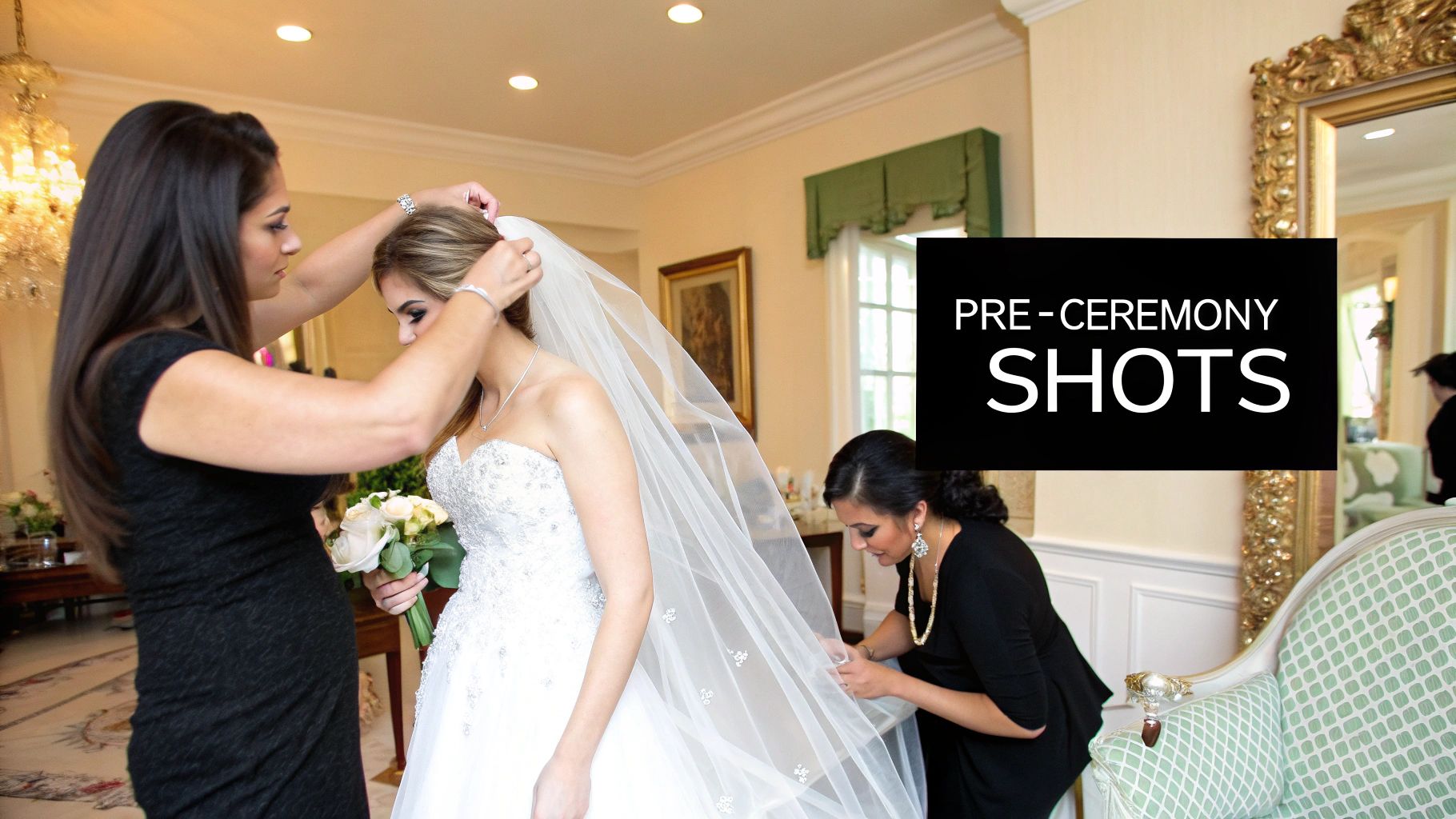
    Remember to build in plenty of buffer time for hair and makeup. Things like getting the perfect bridal hair can often run a little behind schedule, so padding this part of the timeline is always a smart move. Once the details are shot, the focus shifts to candid moments of you and your wedding party enjoying the morning.

    First Look and Pre-Ceremony Portraits

    Time Allotment: 1 – 1.5 Hours

    If you’re doing a first look, you’ll want to protect this time fiercely. It’s such an intimate and emotional moment, and it deserves its own space on the timeline. I recommend setting aside at least 30 minutes just for the reveal and the immediate portraits that follow. This is your chance to breathe and connect before the whirlwind of the day truly begins.

    After you’ve had your moment, it’s the perfect time to knock out the wedding party and immediate family photos.

    • Wedding Party Photos: Plan for 30-45 minutes. We’ll start with the whole crew and then break it down into smaller groups, like just the bride with the bridesmaids or the groom with the groomsmen.
    • Immediate Family Formals: Set aside 30 minutes. The key here is making sure everyone knows where they need to be and when. A quick heads-up text can work wonders.

    Ceremony and Post-Ceremony Photos

    Time Allotment: 1.5 Hours (including buffer)

    Covering the ceremony itself is usually pretty straightforward, typically lasting around 30-45 minutes. The really crucial part of the timeline is what happens right after you walk back down the aisle.

    While your guests head off to cocktail hour, we’ll use that window for any remaining photos. This is often when we capture extended family portraits and, most importantly, those dreamy golden hour photos. The light is just magical. Be sure to look up the sunset time for your wedding day so we can work backward and schedule this perfectly. It also helps to scout out spots beforehand; check out our guide on finding amazing wedding photo locations for some ideas.

    Key Takeaway: Schedule family photos early—either before the ceremony (if you do a first look) or immediately after. This way, everyone is still looking fresh, and we don’t have to go searching for anyone who’s already hit the bar.

    Reception Coverage and Candids

    Time Allotment: 2+ Hours

    Once the reception kicks off, my style shifts to be more documentary and candid. This is where we capture the energy of the party—the laughter during toasts, the tears during the first dance, and all the fun on the dance floor.

    We’ll coordinate with your DJ or band to make sure we’re ready for all the key events like your grand entrance, cake cutting, and parent dances. Capturing these moments, along with the joy on your guests’ faces, is what truly tells the complete story of your celebration.

    How To Customize Your Photography Timeline

    A generic wedding photography timeline is a great starting point, but let’s be real—your wedding day is anything but generic. It has its own unique rhythm, and your schedule needs to reflect that. The single most impactful decision you’ll make is whether to have a private “first look” or stick with a traditional reveal at the ceremony. This one choice completely reshuffles the entire day.

    Opting for a first look means you can get almost all of your formal portraits done before the ceremony even starts. We’re talking couple, wedding party, and immediate family photos—all checked off the list. This frees you up to actually join your own cocktail hour and mingle with guests. On the flip side, a traditional timeline pushes all those photos to after the ceremony, which means you’ll definitely need a longer cocktail hour to avoid keeping everyone waiting.


    Image


    As you can see, the ceremony is the anchor of the whole day. Everything else—from getting ready to golden hour portraits—is scheduled around it. Whether you go for a first look or a traditional reveal, the ceremony time dictates the flow.

    To help you visualize the difference, here’s a quick breakdown of how that single choice impacts the schedule.

    Timeline Adjustments: First Look vs. Traditional

    Timeline Event With First Look Without First Look (Traditional)
    Couple & Wedding Party Photos Done before the ceremony Done during cocktail hour
    Family Formals Usually done before the ceremony Done immediately after the ceremony
    Cocktail Hour Couple can attend and mingle Couple spends this time taking photos
    Timeline Feel More relaxed, front-loaded Tighter schedule after the ceremony

    Ultimately, there’s no right or wrong answer—it’s about what feels right for you and the kind of day you want to experience.

    Accounting for Logistics and Traditions

    Beyond the first look, other details will shape your timeline. Are you getting ready, having the ceremony, and hosting the reception all at one venue, or will there be travel between spots?

    Always, always add a 15-30 minute buffer for travel. I can’t tell you how many times traffic or just gathering people has taken way longer than expected. Planning your locations is key, and our guide to the top spots for photoshoots can help you figure out locations and the travel time needed.

    Cultural traditions are another huge piece of the puzzle. A tea ceremony, a ketubah signing, or other important rituals need their own dedicated time blocks. Make sure you talk these over with your photographer early on so they can be woven into the schedule without feeling rushed.

    A personalized timeline isn’t about control; it’s about creating freedom. By planning for your specific needs, you build pockets of calm into your day, allowing you to relax and be present for every moment.

    Your ceremony time is another big one. A 2:00 PM ceremony creates a totally different schedule than a 5:00 PM one, especially when you’re trying to hit that perfect golden-hour light for portraits. A later ceremony might mean a first look is almost essential if you want to get all your portraits done in the daylight. A great timeline works with the light, not against it.

    A Few Insider Tips for a Flawless Photo Experience

    Having a solid wedding photography timeline is a great start, but a few pro secrets are what really make the day run smoothly. These are the little things that turn a potentially stressful day into the relaxed, joyful experience you’ve been dreaming of.

    First up, your family photo list. Don’t just write “bride’s family.” Get super specific and list every single combination by name, like “Jane & John with Jane’s parents, Sue & Bill.” This tiny bit of prep work saves so much time and eliminates any on-the-spot confusion.

    Next, assign a “photo wrangler.” This is a crucial role for a family member or friend who knows everyone and isn’t shy about gathering the troops. Trust me, having someone dedicated to this can easily save you 20-30 minutes of hunting down a runaway uncle when you’re supposed to be enjoying your cocktail hour.

    Always Be Prepared for the Unexpected

    No matter how perfectly you plan, life happens. That’s where a small emergency kit becomes your best friend. Tucking a few essentials into a bag can be a lifesaver for both your comfort and your photos.

    • Blotting Papers: A quick fix for shine that won’t mess up your makeup.
    • Clear Umbrellas: Don’t let a little rain ruin the day! These look great in photos and let you stick to the plan for outdoor shots.
    • Safety Pins & Fashion Tape: For any last-minute wardrobe malfunctions.
    • Snacks & Water: Staying hydrated and fed is key to keeping your energy up and your smiles genuine.

    Make sure you communicate your absolute must-have shots to your photographer well before the wedding day. While they’re experts at capturing all the important moments, letting them know about a special family heirloom or a surprise you have planned for your partner ensures it gets the attention it deserves. Many professional photography and videography services are pros at weaving these personal touches into your final gallery.

    If there’s one piece of advice I can give, it’s this: trust your photographer. They’ve got a trained eye for finding the most incredible light and stunning backdrops. When you let go and trust their creative vision, that’s when the real magic happens.

    It’s no surprise the global photography market was valued at an estimated $55.6 billion in 2023—couples know that professional expertise is worth it. To get more ideas for keeping your guests entertained, check out this ultimate wedding photo booth guide.

    Get Your Free Wedding Photography Timeline Template


    Image


    Ready to stop guessing and start planning? I’ve put everything we just talked about into a downloadable, fully customizable wedding photography timeline template just for you. Think of it as your head start to a perfectly paced wedding day.

    I built this resource to make your life easier. Inside, you’ll find:

    • Sample timelines for 8, 10, and 12-hour coverage days.
    • A blank, easy-to-use template to build your schedule from scratch.
    • A bonus shot checklist so you don’t miss a single important moment.

    It’s available in both PDF and Google Sheets formats, so you can use whichever works best for your planning style. Grab it and let’s get your day organized

    Common Questions About Wedding Photography Timelines

    Even with the perfect timeline in hand, you’re bound to have a few questions. That’s totally normal! Let’s walk through some of the most common ones I hear from couples, so you can feel confident and relaxed about your day.

    How Much Time Do We Really Need for Family Photos?

    This is probably the biggest question couples have, and for good reason! Family photos can feel chaotic if they aren’t planned well.

    My rule of thumb is to set aside a dedicated 30-minute block just for your immediate family—that’s parents, siblings, and grandparents. If you’re planning on getting shots with a larger group of extended family, it’s smart to add another 15-20 minutes to be safe.

    The real secret to making family photos fast and painless isn’t just about time; it’s about being organized. Having a detailed shot list with everyone’s names and assigning a “family wrangler” (someone who knows everyone) will make things move so much faster.

    What Happens If We Fall Behind Schedule?

    First things first: take a breath and don’t panic. It’s almost expected for wedding days to have a little hiccup or two. This is exactly why we build extra time into your wedding photography timeline template from the start.

    15-minute cushion here and there—like after you finish getting ready or right before the ceremony—is a lifesaver. It can absorb those small delays without throwing the whole day off.

    If something bigger causes a delay, that’s when you can lean on your photographer. We’re pros at adapting on the fly. We can quickly reassess, figure out what’s most important, and adjust. Maybe we shorten the wedding party photo session a bit or combine a few shots to catch up. Open communication is everything, and we’ll get you right back on track.

    Who Else Needs a Copy of the Timeline?

    Should other vendors see your photography schedule? Absolutely! Getting your timeline into the hands of your DJ, wedding planner, and venue coordinator is a simple step that makes a huge difference.

    It ensures everyone is on the same page for all the key moments.

    • The grand entrance
    • Cutting the cake
    • Stepping out for sunset portraits (so the DJ knows not to play your favorite song while you’re gone!)

    When your whole vendor team is aligned, the day just flows. It prevents any last-minute confusion and lets us all work together to make your day feel effortless and capture every moment perfectly.


    Ready to build a flawless timeline for your Oahu wedding? The team at Creative Media Production LLC is here to help you plan every detail and capture every memory. Let’s chat about your perfect day!

    Article created using Outrank

  • Wedding Photography Contract Template Guide

    Wedding Photography Contract Template Guide

    Your wedding photography contract template isn’t just a piece of paper; it’s the bedrock of your business. This document acts as a clear, mutual agreement that protects both you and your clients, laying out everything from payment schedules to what happens if plans change. It’s all about getting on the same page before the first photo is ever taken.

    Why Your Business Needs an Ironclad Wedding Contract

    Let’s be real—nobody gets into photography because they love legal paperwork. But a solid wedding contract is less about scary legal jargon and more about building trust and managing expectations. Relying on a verbal agreement is a recipe for disaster.

    Image

    Think of it this way: your contract is the foundation for a fantastic client relationship. It shields you from potential headaches and financial loss, and it gives your clients peace of mind by spelling out exactly what they’re getting for their investment.

    Setting Professional Standards

    In a field packed with talent, a professional contract immediately sets you apart. It shows you’re a serious business owner who values clarity and professionalism. After all, the global wedding photography market was valued at around USD 23.36 billion and is expected to climb to USD 43.6 billion by 2033. A contract is your ticket to being taken seriously in that massive market.

    A well-written agreement nails down the crucial details before they can become problems.

    • Image Delivery: When will they get their photos? And how? This section spells it out.
    • Coverage Hours: You’re there from 2 PM to 10 PM. Not noon to midnight. This defines it.
    • Usage Rights: Clarifies who can do what with the final images, from social media posts to portfolio use.

    Getting this stuff in writing avoids the kind of misunderstandings that can ruin an otherwise great client experience. For instance, a contract can specify if you’ll be covering multiple locations, a topic you can explore further at https://creativemediaprod.com/amazing-wedding-photo-locations/.

    Contract vs Handshake Agreement Key Differences

    Here’s a quick breakdown of why a formal contract is non-negotiable for professional wedding photographers.

    Aspect Handshake Agreement (Informal) Written Contract (Formal)
    Clarity Relies on memory; details can be forgotten or misremembered. Provides a clear, written record of all agreed-upon terms.
    Enforceability Very difficult to prove and enforce in a dispute. Legally binding and enforceable in court.
    Expectations Ambiguous, leading to potential misunderstandings. Explicitly sets expectations for both parties, preventing disputes.
    Professionalism Can appear unprofessional and leaves you looking vulnerable. Signals that you are a serious, established professional.

    Ultimately, a handshake leaves too much to chance. A written contract ensures everyone knows their rights and responsibilities from the start.

    A great contract does more than just protect you legally; it builds client confidence. When couples see that every detail is accounted for, they feel secure in their investment and trust you to capture their day perfectly.

    To really solidify those client relationships, starting with a basic contract template for services is a smart move. It ensures a smooth, conflict-free experience for everyone, turning a good booking into a great one.

    The Essential Clauses Your Contract Cannot Skip

    When you’re building out your wedding photography contract, the goal is clarity, not confusion. Think of each clause as a pillar supporting the entire working relationship you’ll have with your client. Let’s cut through the legalese and talk about the absolute must-haves for any solid agreement.

    First up, you need to clearly define the Parties Involved. This sounds basic, I know, but getting it wrong can cause major headaches. Use the full legal names of your business and the clients. If you’re working with a wedding planner or the couple’s parents, the contract must specify who has the final say and, more importantly, who is financially responsible.

    Next is the Scope of Services. This is where you spell out exactly what you’re being hired to do. Vagueness is your worst enemy here, so get granular.

    • Coverage Hours: Don’t just say “full-day coverage.” State the exact times (e.g., “8 continuous hours of coverage, from 2:00 PM to 10:00 PM”).
    • Locations: List every single agreed-upon spot, from the hotel where they’re getting ready to the reception hall.
    • Personnel: Clearly mention if a second shooter or an assistant is part of the deal.

    This level of detail is your best defense against scope creep. It ensures your clients know precisely what their investment gets them. If you’re looking for a broader overview of what goes into professional photography and videography, our services page offers more context: https://creativemediaprod.com/photography-videography/

    Detailing Payments and Deliverables

    A rock-solid Payment Schedule is non-negotiable. Break it down completely: the total fee, the non-refundable retainer needed to book the date, and the due dates for the remaining balance. I always recommend using the term “non-refundable retainer” instead of “deposit.” A deposit can sometimes be interpreted as refundable, whereas a retainer is a fee paid to reserve your services, taking you off the market for that date.

    The image below gives you a great visual breakdown of how these pieces fit together to create a protective agreement.

    Image

    This flow really highlights how starting with the basics—client details, services, and terms—builds a contract that protects everyone involved.

    Just as critical is the Deliverables clause. How many photos can the couple expect, and when will they get them? Setting realistic expectations upfront is key. Something like, “a final gallery of approximately 500-700 edited, high-resolution images will be delivered via a private online gallery within 6-8 weeks of the wedding date” is perfect. It’s specific and manageable.

    From my experience, one of the biggest points of conflict comes down to image rights. You need to state very clearly that you, the photographer, retain the copyright to all images. Then, you grant your clients a personal use license. This allows them to print, share on social media, and enjoy their photos for any non-commercial purpose.

    This small but mighty distinction protects your artwork and your business’s future. To make sure you’ve covered all your bases, it can be a lifesaver to look at some professionally drafted photographer contract templates. They provide a fantastic starting point for creating your own bulletproof document.

    Protecting Your Business From the Unexpected

    Let’s be real—a wedding day is a beautiful, chaotic mix of planned moments and total surprises. As a photographer, your job is to capture the beauty, but your business needs to be ready for the chaos. What happens if the couple postpones? Or, the nightmare scenario: your main camera dies mid-ceremony? This is where your contract becomes your financial safety net, tackling the tough “what-ifs” before they spiral into a full-blown crisis.

    Image

    This means getting specific with clauses that protect your income without being unfair to your clients. A solid cancellation policy is your first line of defense. It needs to be crystal clear that the retainer is non-refundable (it’s for holding the date, after all) and then spell out what happens if they cancel closer to the day. For example, you might require 50% of the balance if they cancel within 90 days, and 100% if it’s within 30 days.

    Drafting Clauses for Unforeseen Events

    Beyond a simple change of plans, you have to account for things nobody can control. This is where a Force Majeure clause is absolutely essential. It’s a legal term that basically means “superior force,” and it gets both you and the client off the hook for unavoidable catastrophes—think hurricanes, floods, or even government shutdowns. The pandemic taught every wedding professional just how critical this clause really is, as it became the go-to section for navigating postponements.

    Here are a few other must-have protective clauses I always include:

    • Limitation of Liability: This is your shield against catastrophic equipment failure or data loss. It essentially caps what you could owe the client, typically limiting your liability to the total amount they’ve paid you. It’s a tough topic, but a necessary one.
    • Associate Photographer: What if you get seriously ill or have a family emergency? This clause gives you the right to bring in a substitute photographer of equal skill and style. It shows the couple you have a backup plan to ensure their day is covered no matter what.

    A great contract isn’t just about listing worst-case scenarios; it’s about providing clear solutions. When you address these possibilities upfront, you’re not being negative—you’re being a professional. It gives your clients total confidence that you’ve got a plan for anything.

    Finally, remember that legal paperwork is only one piece of the puzzle. Protecting your business also means actively managing your brand’s image. Understanding the importance of online reputation management is key to safeguarding your business from the fallout of a negative review. A well-written contract actually prevents the kinds of misunderstandings that lead to bad reviews in the first place, creating a powerful circle of protection for the business you’ve worked so hard to build.

    How to Customize Your Contract for Any Wedding

    Your standard contract template is a fantastic starting point, but it should never be the final word. Every wedding is different, and a one-size-fits-all contract just won’t cut it in the real world. I like to think of my contract as a living document, something I can adapt to fit the unique puzzle of each wedding.

    This kind of flexibility isn’t just a nice-to-have; it’s essential for protecting your business. As more photographers carve out specific niches, a solid, detailed contract becomes the bedrock of a successful client relationship.

    Adapting for Specific Scenarios

    Let’s take a destination wedding, for example. Your base contract needs a serious upgrade here—you’ll want to bolt on a dedicated travel addendum. This is way more than just adding a line item for airfare.

    To make sure you’re truly covered, a destination wedding clause needs to spell out a few key things:

    • Accommodation: Get specific about the lodging. I always stipulate a safe, reputable hotel and clarify who is responsible for booking and payment.
    • Travel Days: Your time is valuable. State your fee for the days you’re in transit, because that’s time you can’t be shooting for someone else.
    • Per Diem: Don’t forget a daily allowance for meals and other small expenses. It keeps things clean and avoids awkward conversations later.

    This same mindset applies to pretty much any non-standard situation. A three-day cultural celebration will demand a complete overhaul of your coverage hours and pricing. An intimate elopement might seem simpler, but it still needs clear language around travel, specific hours, and location permits if necessary.

    A pro tip: Never just verbally agree to add a service. If the couple wants to add an engagement session, a rehearsal dinner, or drone footage, create a simple, one-page addendum. It should clearly state the deliverables, the cost, and the timeline. This keeps your main agreement tidy and ensures every single detail is on paper.

    Building a library of these pre-written clauses saves you from scrambling before every booking. When you can quickly pull the right language for any situation, you can customize your wedding photography contract template in minutes. A well-defined contract also makes it much easier to plan the day itself, which you can read more about in our wedding photography timeline template guide.

    Getting the Contract Signed to Lock in the Date

    How you present the contract is a huge part of the client experience. I’ve found that it can really set the tone for your entire working relationship. Think of it less as a rigid legal document and more as a way to get everything down on paper so you’re both protected and on the same page.

    Image

    When I send it over, I keep the language simple and reassuring. Something like, “Here’s the agreement that just formalizes everything we’ve already talked about. It makes sure there are no surprises for either of us down the road!” This small touch immediately puts couples at ease.

    Making the Signing Process a Breeze

    Honestly, technology is your best friend here. Using a client management system like HoneyBookDubsado, or Studio Ninja makes this step look incredibly professional. You can send the contract, collect digital signatures, and process the retainer all in one smooth motion. It’s a game-changer for efficiency and shows clients you’re organized.

    When you email the contract, always offer to hop on a quick call to review it together. It’s a great chance to highlight the most important parts and answer any questions on the spot. I usually point out:

    • The Payment Schedule: Just a quick confirmation of the retainer amount and when the final balance is due.
    • What They’re Getting: I’ll reiterate the delivery timeline for their photos and the number of hours of coverage.
    • Image Rights: A simple explanation of what they can do with their photos (like printing and sharing online).

    This is my golden rule: A date is never officially booked without a signed contract and a paid retainer. Until both are in my hands, that date is still available to other couples. No exceptions.

    If a client asks for a small tweak, like fixing a typo in a name, that’s no problem at all. But if they want to make significant changes to core clauses, you need to be ready to stand your ground and explain why those terms are in place to protect both of you.

    Getting that signature and retainer is the final step. It officially welcomes them as your clients and builds a solid, professional foundation for an amazing wedding day.

    Answering Your Wedding Photography Contract Questions

    Even with a rock-solid template, you’re going to get questions. It just comes with the territory. Let’s walk through some of the most common ones I hear from photographers, so you can handle them with confidence and keep your bookings on track.

    “Do I Really Need a Lawyer to Look at This?”

    I get it, lawyers are expensive. But my honest-to-goodness answer is yes. Think of a good template as a fantastic starting point—it gives you the solid framework you need. But it’s not a magic shield against legal trouble.

    A lawyer who specializes in creative businesses can spot issues specific to your state or city laws that a generic template might miss. This isn’t just about covering your bases; it’s a smart investment in protecting your entire business down the road.

    Retainer vs. Deposit: Why the Words You Use Matter

    This is a big one, and it directly affects your cash flow. The terms “retainer” and “deposit” are often used interchangeably, but legally, they can mean very different things.

    • deposit can sometimes be seen as just a down payment on the final bill, which might make it refundable in a dispute.
    • non-refundable retainer is a fee paid to reserve your time. When a couple pays this, you’re officially taking their wedding date off your calendar and turning away any other inquiries for that day.

    My advice? Always, always use the term “non-refundable retainer” in your contract. This small change in wording is your best protection if a client cancels. It clarifies that the payment compensates you for the lost opportunity of booking another wedding.

    What if a Client Wants to Change My Contract?

    First off, don’t panic. It’s normal for clients to read through and have questions. Simple fixes like correcting a name or an address? No problem at all.

    But if they start asking to change your core clauses—things like your liability limits, cancellation policy, or image rights—that’s when you need to pause. These clauses are in there for a reason: to protect both of you.

    Your best move is to calmly and professionally explain why that particular clause is a standard part of your agreement. If they push back hard on something non-negotiable, it could be a sign of a difficult client relationship ahead. Sometimes, the wisest decision is to politely walk away.

    Can I Add a Social Media Clause?

    You absolutely can, and you should! You just have to do it the right way.

    This is typically handled with a “model release” clause. This is the part of the contract where your clients give you permission to use the photos for your own marketing—think your website portfolio, blog posts, and social media.

    You can also include a separate line that politely requests clients credit your business (e.g., Photo by @YourStudioHandle) when they share their images. You can’t really force them to do it, but framing it as a professional courtesy usually does the trick.


    At Creative Media Production LLC, we know that a great client experience is built on a foundation of trust and clarity. A solid contract is the first step, ensuring a smooth process so we can focus on what truly matters: capturing your incredible moments. Find out more about how we build strong client relationships at https://creativemediaprod.com.

    Article created using Outrank