A polished highlight film can make any wedding videographer look impressive online. What matters more is how they handle your day when the timeline shifts, the light changes fast, and the moments you care about happen once. If you are looking for the best questions for wedding videographer interviews, the goal is not to fill a checklist. It is to find out whether the team can deliver cinematic work with the professionalism, planning, and reliability your wedding deserves.
On Oahu, that matters even more. Beach light can be harsh at noon, wind can affect audio, traffic can alter timing, and destination weddings often come with tighter planning windows. The right questions help you spot the difference between a beautiful reel and a dependable service.
Why the best questions for wedding videographer matter
Most couples start by asking price and package details. That is understandable, but it rarely tells you how the experience will feel or how strong the final film will be. A lower price may come with limited audio coverage, a slow delivery timeline, or a solo shooter trying to manage too much at once.
The best conversations go deeper. You want to understand how the videographer prepares, communicates, adapts, and tells a story. Wedding films are not only about capturing clips. They are about preserving vows, reactions, atmosphere, and the small in-between moments that photographs alone cannot fully hold.
Start with style and storytelling
Before you discuss logistics, ask how the videographer approaches storytelling. A useful question is: How would you describe your filming and editing style?
That answer should be specific. Some teams lean documentary and unobtrusive. Others create more stylized, cinematic edits with directed shots. Neither approach is automatically better. It depends on whether you want your day captured as it unfolds naturally or shaped into a more editorial look.
You should also ask: How do you make each wedding film feel personal instead of repetitive?
This is where experience shows. A strong videographer will talk about learning your priorities, identifying key relationships, using live audio thoughtfully, and building the edit around your actual day instead of applying the same template to every couple. If the answer sounds vague, the films may be polished but not truly personal.
Ask what moments they prioritize
Not every couple values the same parts of the day. Some care most about vows and speeches. Others want the energy of the reception or the quieter moments getting ready with family. Ask: What moments do you always make sure to capture, and how do you learn what matters most to us?
This question reveals both creative judgment and planning habits. A professional team should already have a strong sense of the essential moments, but they should also make room for your priorities. If a first look, private vow exchange, or cultural tradition matters to you, it should not be treated like a side note.
It also helps to ask whether they work from a shot list, a timeline, or both. The best answer is usually a balanced one. A rigid shot list can make coverage feel staged, but no planning at all can lead to missed opportunities.
Coverage questions that protect your timeline
A beautiful film is easier to create when the day is organized well. Ask: How many hours of coverage do we actually need based on our wedding plans?
This question often leads to a more honest recommendation than simply choosing a package. If your ceremony and reception are at different locations, or if you want full getting-ready coverage, eight hours may not be enough. If your event is compact and local, you may not need all-day coverage.
You should also ask: Will you be the one filming our wedding, and will there be a second shooter?
That matters for consistency and for coverage depth. A single videographer can absolutely do strong work, especially on smaller weddings, but there are limits. Two shooters can capture multiple angles during the ceremony, reactions from both partners, and more complete reception coverage. The trade-off is higher cost, so it is worth asking when a second shooter is necessary and when it is simply nice to have.
Another smart question is: Have you worked at our venue or in similar conditions before?
This is especially relevant for outdoor weddings in Hawaii. Bright sun, ocean breeze, and changing weather all affect video differently than photography. Familiarity with those conditions helps a team prepare for sound, exposure, and movement without slowing down your day.
Audio is where good wedding films become great ones
Couples often focus on visuals and forget to ask about sound. That is a mistake. Ask directly: How do you record audio for vows, speeches, and the ceremony?
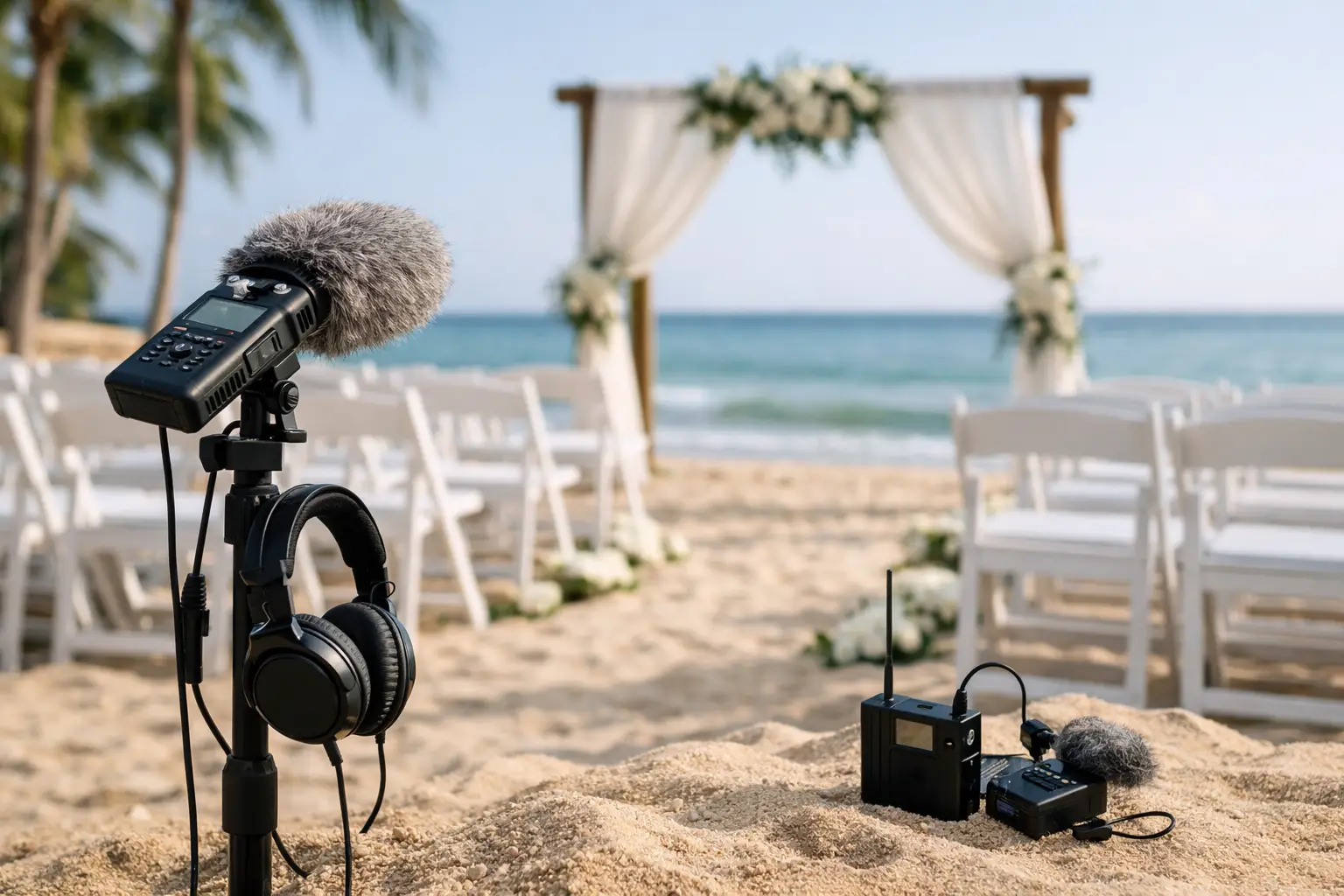
The answer should include real process, not just reassurance. Professional videographers typically use multiple audio sources, such as lav mics, recorders on the officiant or DJ system, and on-camera backup audio. Clean audio is what gives a wedding film emotional weight. Without it, even stunning footage can feel flat.
Follow with: What happens if there is wind, technical interference, or a sound issue?
No one can promise that every environment will be perfect, but experienced teams plan backups. You are listening for problem-solving, not perfection. In a premium service, redundancy is part of the job.
Clarify editing, delivery, and turnaround
One of the best questions for wedding videographer candidates is simple: What exactly will we receive, and when will we receive it?
Ask whether the package includes a highlight film, full ceremony edit, full speeches, teaser, or social-media-ready clips. Couples sometimes assume these are standard, then realize later they only booked a short recap video.
Turnaround time matters too. Fast delivery is valuable, but only if quality stays high. Ask for a realistic timeline and whether there are rush options. If the answer is extremely broad, that can be a warning sign. Clear expectations reduce stress after the wedding, when you are eager to relive the day.
It is also worth asking: Can we request edit revisions?
Some revisions are reasonable. Unlimited revisions usually sound generous but can signal an unclear editing process. A professional studio should explain what is included, what kind of feedback is welcome, and how they maintain quality control.
Questions about professionalism and reliability
A wedding day moves fast. Reliability is not a bonus. It is part of the product. Ask: How do you coordinate with our planner, photographer, DJ, and venue team?
The strongest videographers know how to work smoothly with other vendors. They do not compete for space or create friction during key moments. Good collaboration protects your timeline and results in cleaner coverage.
You should also ask: What is your backup plan if you are sick, equipment fails, or there is an emergency?
This question may feel uncomfortable, but it is one of the most important. Professional businesses have backup gear, file protection practices, and contingency plans for staffing. Weddings do not have retakes. Dependable coverage means preparing for what could go wrong before it does.
Insurance is another practical topic. Ask whether they carry business liability insurance and whether your venue requires proof. It is not glamorous, but it is part of hiring a serious professional.
Pricing questions that go beyond the quote
Price matters, but context matters more. Ask: What is included in this package, and what typically becomes an add-on later?
That question helps you compare quotes fairly. One videographer may look less expensive until you discover travel, extra hours, drone coverage, raw footage, or additional edits cost more. Another may appear premium but include planning support, multiple shooters, and faster turnaround.
You can also ask: Based on our wedding plans, where would you recommend investing more and where could we scale back?
This is a strong test of honesty. A service-oriented professional will help you spend wisely instead of pushing the biggest package by default. For some couples, extended ceremony and speech edits are essential. For others, a beautifully crafted highlight film matters most.
Read the answers, not just the portfolio
A portfolio shows what a videographer can produce under the right conditions. Their answers show how they think, how they communicate, and whether they can be trusted with a live event.
Look for clarity, not sales pressure. A strong team should be able to explain their process in a calm, confident way. They should make you feel more certain, not more confused. That balance of artistry and dependable service is what turns wedding coverage into a smooth experience instead of a source of stress.
For couples who want premium, story-driven coverage, this is where the right fit becomes obvious. Creative Media Production LLC, for example, builds its approach around cinematic storytelling, careful planning, and reliable delivery because those things matter just as much as the final edit.
The best wedding videographer for you is not simply the one with the flashiest reel. It is the one who listens well, plans thoroughly, captures clean emotion, and gives you confidence before the day even begins. Ask better questions, and the right answer usually becomes clear.