
Low light changes everything fast. A ballroom can look bright to the eye and still be difficult for a camera. A sunset beach wedding on Oahu can shift from warm and glowing to dim in minutes. A corporate dinner may have beautiful ambiance, but that same atmosphere often means mixed lighting, dark corners, and fast-moving subjects.
That is why low light event photography tips matter so much. In event coverage, there are no do-overs for the first dance, the keynote laugh, the candle lighting, or the embrace between family members. The goal is not simply to make a dark room look brighter. It is to preserve the mood of the event while delivering clean, professional images that feel natural, polished, and usable.
Low light event photography tips start with exposure control
When light is limited, exposure becomes a balancing act between aperture, shutter speed, and ISO. Open the aperture too wide and you may lose depth of field in group shots. Drop the shutter speed too far and motion blur starts to show up in hands, faces, and gestures. Push ISO too high and noise can soften the premium look clients expect.
There is no single perfect setting for every event. A wedding reception, memorial service, and brand launch all call for different decisions. In a quiet ceremony, you may be able to work with slower shutter speeds because people are more still. At a birthday party or dance floor, you need more speed to freeze motion, even if that means accepting higher ISO.
The best approach is to decide what cannot be compromised in that moment. If the image must be sharp because it captures a key emotional expression, protect shutter speed first. If the scene depends on atmosphere and layered background detail, keep aperture and ambient light in mind instead of flattening everything with aggressive flash.
Start with fast lenses when possible
A fast lens gives you options. Lenses like a 35mm f/1.4, 50mm f/1.8, or 85mm f/1.8 let in more light and help maintain image quality in darker venues. They also create a refined, cinematic separation between subject and background.
That said, very wide apertures are not always the right move. During toasts or portraits, they can look beautiful. During large family groupings or corporate networking coverage, they can leave some faces soft if the focus plane is too shallow. Premium event work often means knowing when to stop down slightly for consistency.
Protect shutter speed based on the moment
A useful rule is to match your shutter speed to the amount of movement in the frame. For standing conversations, you may be comfortable around 1/160. For entrances, dancing, or candid crowd reactions, 1/250 or higher may be safer.
The trade-off is straightforward. Faster shutter speeds reduce blur but demand more light. If the venue is especially dark, that usually means raising ISO or adding flash support. Choosing the right compromise is part of professional event coverage.
Use flash to support the scene, not overpower it
Flash is one of the most misunderstood tools in event photography. Used poorly, it can make an elegant event feel harsh and flat. Used well, it adds clarity, flattering skin tones, and consistency while still preserving the ambiance clients spent time and money creating.
For most indoor events, bounce flash is often the cleanest option if the ceiling and walls are neutral enough. Bouncing softens the light and keeps it from looking overly direct. In venues with dark wood ceilings, colored uplighting, or open outdoor spaces, bounce may not be effective, so a diffuser or carefully controlled direct flash can be more reliable.
The key is restraint. If every background goes black and every face looks overly lit, the image stops feeling like the actual event. Strong event photography should still show the room, the decor, the candles, the stage lighting, or the city view that helped define the experience.
Watch for mixed lighting
Low light venues often combine tungsten chandeliers, DJ lights, LED uplights, window light, and flash. That mix can create skin tones that are difficult to correct later. A technically sharp image can still feel off if the color looks unnatural.
Whenever possible, set a consistent white balance strategy instead of relying fully on auto. You may still need adjustments in post-production, but controlled capture creates a stronger starting point. This matters even more when clients need fast turnaround and expect a polished gallery without uneven color shifts.
Focus needs a backup plan in dark conditions
Autofocus systems are better than they used to be, but low light still challenges them. Dim rooms, low-contrast clothing, and moving subjects can all cause missed focus, especially during fast moments.
One of the most practical low light event photography tips is to focus on contrast whenever you can. Look for edges around eyes, lapels, jewelry, or facial features instead of flat areas with little definition. If your camera includes focus assist tools, use them. If a scene is especially dark and predictable, pre-focusing on a spot where the action will happen can save the shot.
This is especially useful during aisle walks, speeches, award presentations, or cake cutting. Event photography rewards anticipation as much as reaction. When you already know where the moment will land, focusing becomes more controlled.
Position matters more than gear alone
Good low light coverage is not just about camera settings. It is also about where you stand in relation to the available light. Even in a dim venue, there are usually stronger pockets of illumination near stages, candles, window edges, dance floor lights, or practical fixtures.
Moving a subject two steps closer to better light can improve the image more than changing settings alone. For portraits during receptions or corporate mixers, a quick adjustment in position often creates cleaner skin tones and better catchlights without interrupting the flow of the event.
For candid coverage, this means reading the room constantly. Experienced photographers do not just chase moments. They anticipate where moments will look best and place themselves there first.
Noise is acceptable. Missed moments are not.
Many photographers hesitate to raise ISO because they want perfectly clean files. In real event conditions, that can lead to shutter speeds that are too slow or underexposed images that fall apart in editing.
A moderate amount of grain is usually far less damaging than motion blur or missed expression. Clients care most about whether the moment was captured well, whether they look flattering, and whether the final gallery feels consistent and professional. Clean storytelling wins over technical perfection every time.
Of course, there is a limit. Every camera handles high ISO differently, and every brand has its own quality standard. The point is not to ignore noise. The point is to treat it as one variable, not the only one.
Shoot for the final gallery, not just the single frame
A strong event gallery needs variety. In low light, it is easy to fall into survival mode and shoot everything the same way – same lens, same flash look, same tight composition. That may get the job done, but it can leave the final story feeling repetitive.
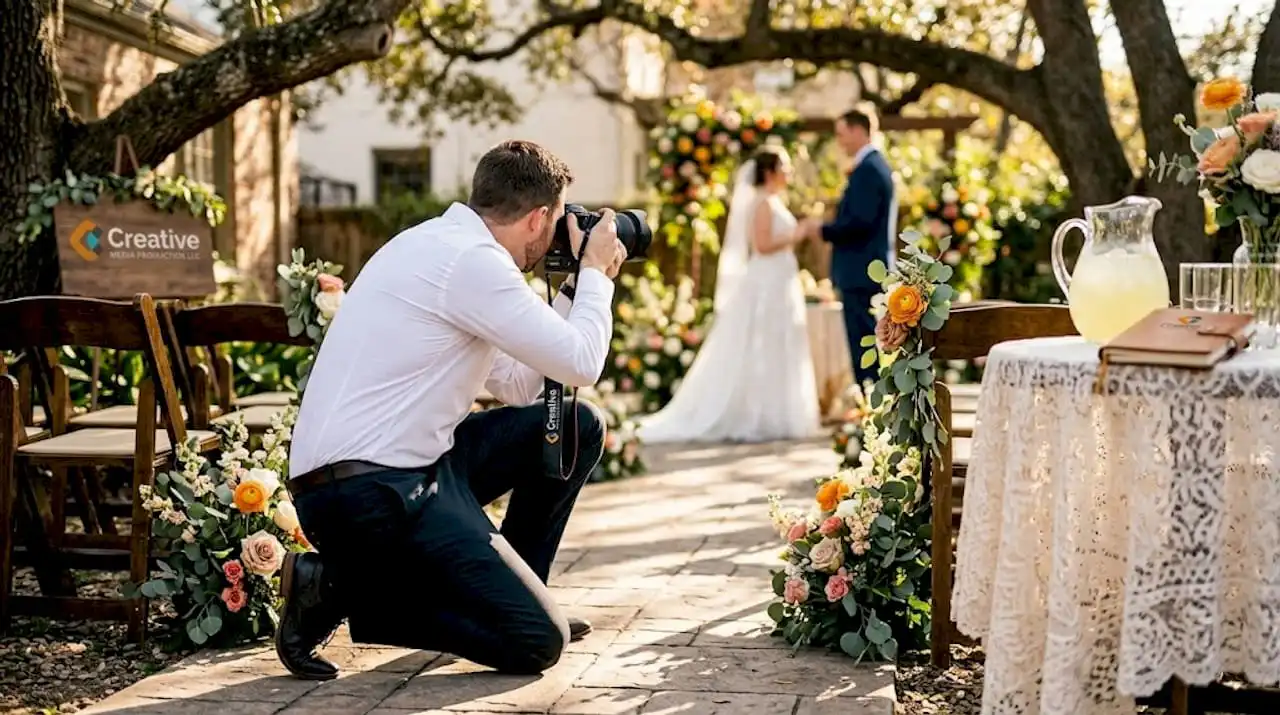
Make room for a mix of wide establishing images, mid-range interactions, and close emotional details. Capture the atmosphere of the room, then the expressions inside it. This is especially important for weddings, memorial gatherings, and corporate events where the environment carries meaning alongside the people.
At Creative Media Production LLC, that story-driven mindset is part of what separates basic coverage from premium coverage. Clients are not only booking photos. They are trusting a team to document the feeling of the event with consistency, professionalism, and care.
Preparation before the event reduces problems during it
Some of the best low light event photography tips happen before the first photo is taken. Ask about the venue, the timeline, the lighting plan, and any restrictions on flash use. If possible, review the space in advance or arrive early enough to test settings before key moments begin.
This is especially important for weddings, memorials, and corporate programs where timing is tight and there is little room for disruption. A quick lighting check at the reception ballroom, conference stage, or chapel can help identify problem areas before they affect important shots.
Planning also helps with client expectations. If the event intentionally uses candlelight, moody uplighting, or a darker reception aesthetic, the photography should honor that look while still keeping subjects clear and flattering. Professional coverage is not about making every event look the same. It is about matching the visual approach to the event while protecting quality.
Editing should refine the image, not rescue it
Post-production can improve exposure, reduce noise, and correct color, but it should not be the first line of defense. Files that are captured with solid intent hold up better, edit faster, and produce a more consistent final gallery.
That matters for clients who value fast turnaround. It matters even more for businesses that need timely assets for marketing and for families who want to relive meaningful moments without a long wait. Efficient editing begins with disciplined shooting.
Low light will always be part of event photography because many of the most memorable moments happen after sunset, under soft reception lighting, in candlelit rooms, or on dimly lit stages. The real skill is not fighting that reality. It is using technique, judgment, and preparation to turn difficult conditions into images that still feel clean, emotional, and true to the event.
If you are planning an event and want coverage that stays polished even when the light gets challenging, the right photographer brings more than good gear. They bring calm decision-making, consistency under pressure, and the ability to preserve the atmosphere without losing the moment.



One response to “9 Low Light Event Photography Tips”
[…] recording methods, especially in chapels, mortuaries, outdoor sites, and graveside services where sound conditions can change […]